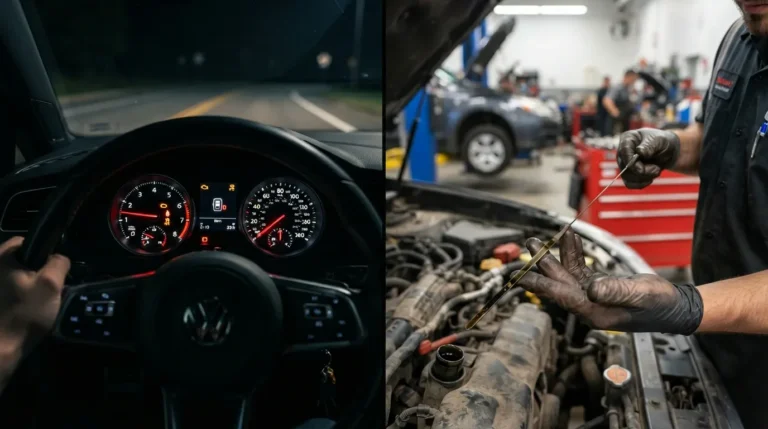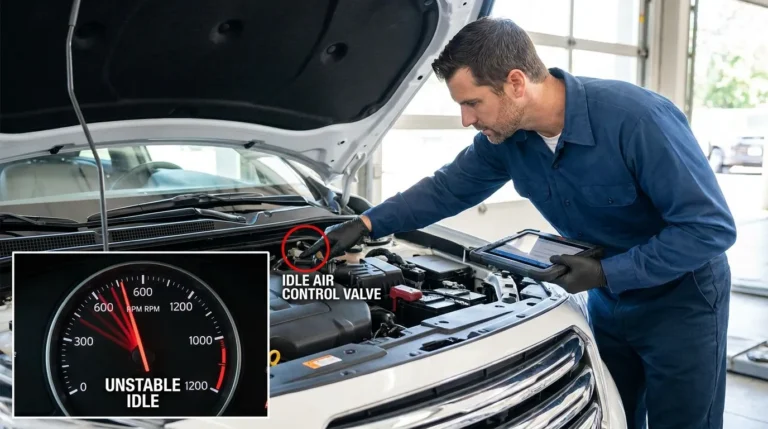
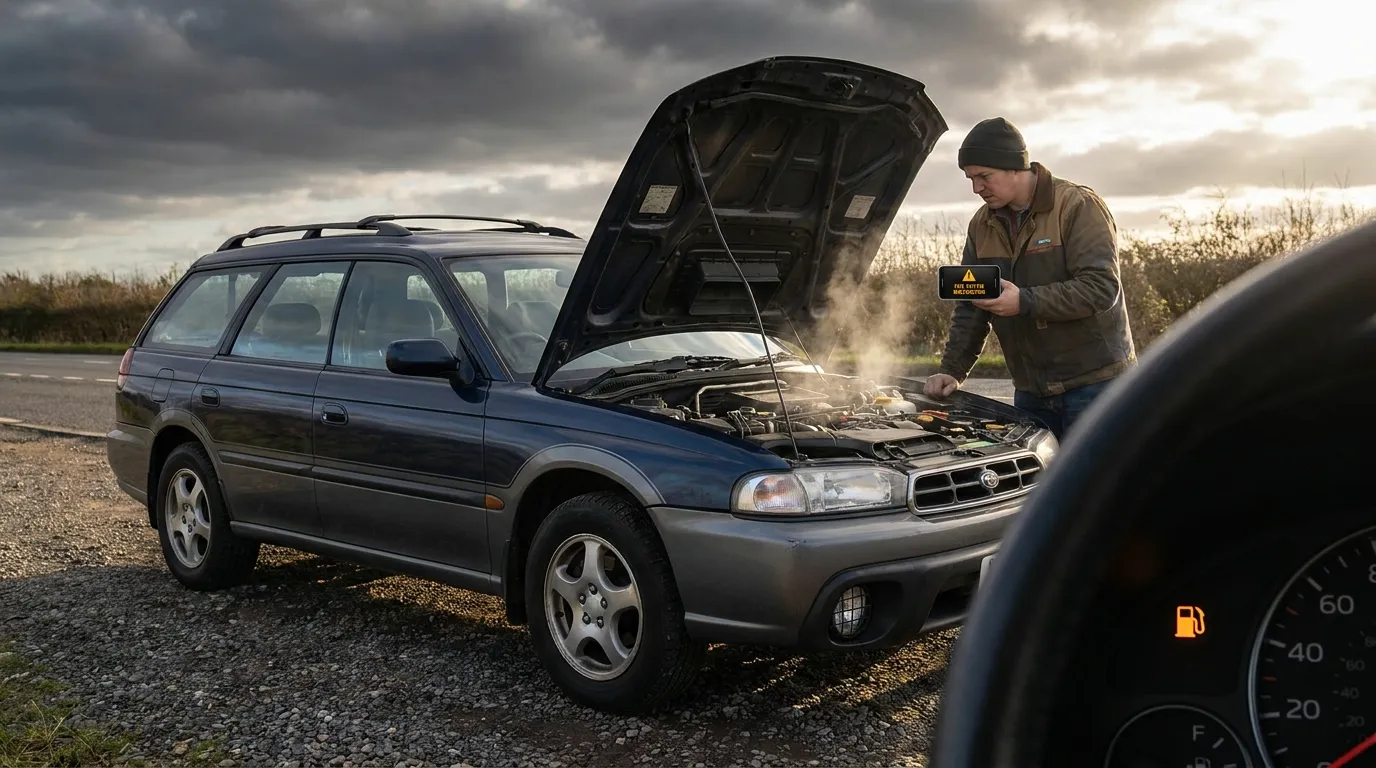
Most cars show stalling, sputtering, and loss of power when the fuel pump fails.
I write from years of hands-on work diagnosing and fixing cars, so I know how confusing and costly fuel pump failure symptoms can feel. This guide lays out clear signs, causes, tests, fixes, and maintenance tips so you can spot fuel pump failure symptoms early, avoid a breakdown, and decide if you can DIY or need a pro. Read on for practical steps, real examples, and trusted best practices.
What is a fuel pump?
A fuel pump moves gas from the tank to the engine at the right pressure. Most modern cars use an in-tank electric pump. The pump keeps fuel flowing so the engine can run. When the pump fails, the engine will not get steady fuel. That results in common fuel pump failure symptoms like rough idling and no-starts.

Common fuel pump failure symptoms
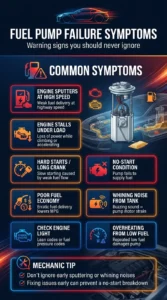
Here are the main fuel pump failure symptoms to watch for. I list them from mild to severe so you can spot trouble early.
- Engine sputters at high speed.
Sputtering at highway speed often points to low fuel delivery from a failing pump. This is one of the earliest fuel pump failure symptoms. - Engine stalls or dies under load.
The car may die when you accelerate or climb a hill. That loss of power is a classic fuel pump failure symptom. - Hard starts or long crank times.
The engine cranks but takes longer to fire. Weak fuel flow causes slow starts and is a common fuel pump failure symptom. - No-start condition.
You turn the key and the engine does not run. A failed pump can cause a true no-start by not supplying any fuel. - Poor fuel economy.
An erratic pump can change how the engine runs and lower MPG. This may show alongside other fuel pump failure symptoms. - Loud whine from the fuel tank.
A buzzing or whining noise near the tank often means the pump motor is straining. That sound is a reliable fuel pump failure symptom. - Check Engine Light (CEL).
The ECU may log lean codes or fuel pressure codes. Codes plus any of the above are strong signs of fuel pump failure symptoms. - Overheating pump after low fuel use.
Running the tank very low can cause the pump to overheat and age faster. Repeated overheating leads to fuel pump failure symptoms over time.
Why these symptoms happen
Understanding cause helps fix the problem right away.
- Electrical failure.
Wiring, relays, or fuses can fail and stop the pump. Electrical faults produce sudden fuel pump failure symptoms like no-start. - Wear and tear.
Pumps wear out. The motor and bearings fail. That gives slow decline and the gradual fuel pump failure symptoms above. - Contaminants and clogging.
Dirt or rust in the tank can clog the pump or strainer. Clogs reduce flow and cause many fuel pump failure symptoms. - Bad fuel pressure due to filter.
A clogged fuel filter makes the pump work harder. Over time this causes pump damage and related fuel pump failure symptoms. - Overheating and low fuel levels.
Fuel cools the in-tank pump. Low fuel makes the pump run hot and fail. That creates progressive fuel pump failure symptoms.
How to diagnose fuel pump failure symptoms
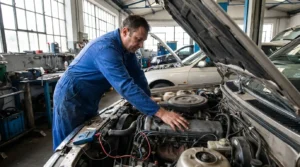
Follow simple checks to confirm pump problems. Start safe and low-cost.
- Listen at key-on.
Turn the key to ON (do not start). Listen for a 2-second whine from the tank. No sound can mean pump failure. This quick test catches common fuel pump failure symptoms. - Check fuses and relays.
Inspect the pump fuse and relay. Swap a similar relay to test. Electrical faults mimic pump failure. - Scan for codes.
Use an OBD2 scanner. Look for fuel pressure or lean codes. Codes help tie symptoms to fuel delivery problems. - Fuel pressure test.
Use a gauge at the fuel rail. Compare reading to spec. Low or no pressure confirms the pump is weak or dead. - Fuel flow and volume test.
Measure fuel flow to be sure. Low flow shows the pump or filter is failing. - Inspect fuel filter and lines.
A clogged filter often gives the same symptoms. Replace the filter before replacing the pump when in doubt.
Personal note: I once chased intermittent stalling on a road test only to find a loose fuel pump connector. The car showed classic fuel pump failure symptoms but needed a wiring fix. Lesson: start simple. Check connectors, fuses, and filters before buying a new pump.

Repair, replacement, and cost
Fix choice depends on cause and car type.
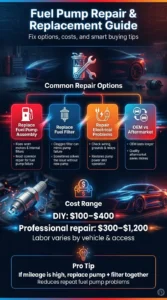
- Replace pump assembly inside the tank for most modern cars.
This fixes worn motors and internal filters. It is the common cure for persistent fuel pump failure symptoms. - Replace fuel filter and test again.
If the filter is clogged, replacing it can resolve symptoms without replacing the pump. - Repair electrical faults.
Fix wiring, grounds, and relays to restore proper pump function. - Cost range.
DIY parts cost can be $100–$400 for many cars. Professional replacement may cost $300–$1,200 depending on access and model. Labor and diagnostic time vary. - OEM vs aftermarket.
OEM pumps often last longer but cost more. Quality aftermarket pumps are available. Choose parts with good ratings to avoid repeat fuel pump failure symptoms.
Practical tip: If your vehicle is high mileage and the pump shows signs of wear plus a clogged filter, replace both pump and filter. That cuts the chance of repeat failures.
Prevention and maintenance
Small habits stop many fuel pump failure symptoms.
- Keep the tank at least a quarter full.
This helps cool the pump and reduces overheating risk. - Use quality fuel and periodic tank cleaning.
Clean fuel reduces clogs and contaminants that cause pump wear. - Replace the fuel filter at recommended intervals.
A fresh filter lowers pump load and extends pump life. - Check electrical connections during service.
Good grounds and tight connectors reduce surprise failures. - Add fuel system cleaner as needed.
Cleaners can help dissolve varnish and keep strainers clear.

When to seek professional help
Some signs need immediate pro attention.
- The car is dead and won’t start.
This may need a tow and a pro diagnosis to avoid wasting time and parts. - Repeated stalling on highways.
For safety, get it checked before driving long distances. - Diagnostic codes point to pump or pressure faults.
Professionals have the right tools to test pressure and flow precisely. - Complex modern systems.
Cars with layered fuel systems or direct injection may need dealer-level tools.
Source: bostechauto.com
Frequently Asked Questions of fuel pump failure symptoms
How do I know if my fuel pump is failing?
Listen for a faint whine from the fuel tank when you turn the key to ON. Combine that with stalling, hard starts, or low pressure to confirm fuel pump failure symptoms.
Can a bad fuel pump cause a no-start?
Yes. If the pump cannot deliver fuel, the engine will crank but not start. No fuel flow is a primary fuel pump failure symptom.
Is a loud fuel pump always bad?
A loud whining sound can mean the pump is strained or failing. Check fuel level and electrical connections, since noise is a common early fuel pump failure symptom.
Can a clogged fuel filter mimic pump failure?
Yes. A blocked filter reduces flow and causes many fuel pump failure symptoms. Replace the filter before replacing the pump.
How long does a fuel pump last?
Fuel pump life varies with use and maintenance, often 100,000 miles or more. Running on low fuel, dirty tanks, or poor maintenance shortens life and increases fuel pump failure symptoms.
Can I drive with early fuel pump failure symptoms?
Short drives may be possible but risky. Stalling or sudden loss of power can be dangerous, so address symptoms quickly to avoid a breakdown.
Conclusion
Spotting fuel pump failure symptoms early saves time, money, and stress. Watch for sputtering, stalls, long cranks, whining from the tank, and diagnostic codes. Start with simple checks like fuses, relays, and the fuel filter before replacing the pump. From my experience, careful diagnosis prevents needless parts swaps and gets you back on the road faster.
Act now: check the simple items listed here, schedule a pressure test if symptoms persist, and share your experience or questions below. If this helped, consider subscribing or leaving a comment so I can cover related topics you want to know.