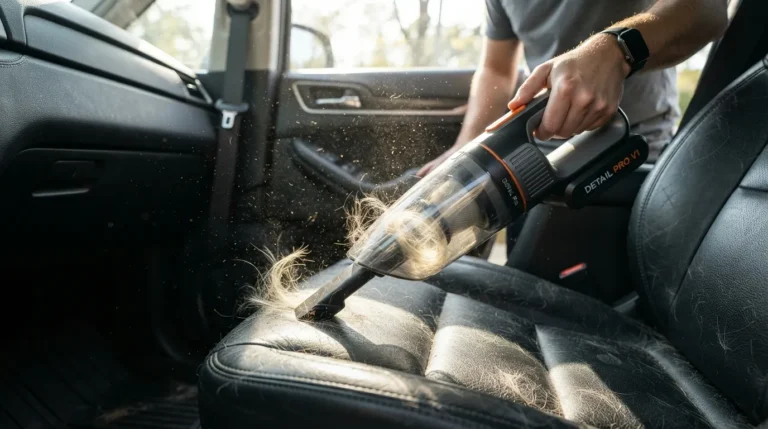
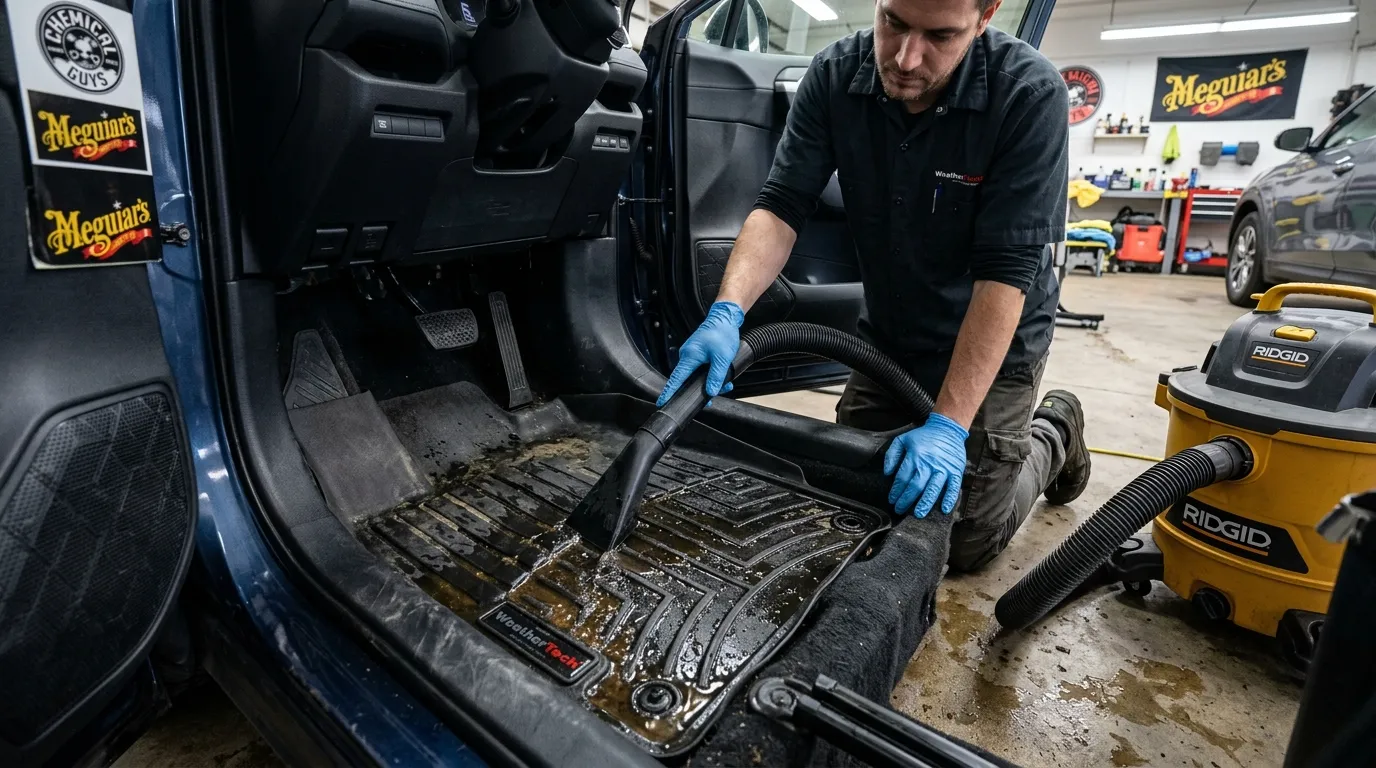
A shop vacuum for cars is a powerful, wet/dry tool that makes fast, deep cleanups easy.
If you care about a tidy ride, a shop vacuum for cars is your best friend. I’ve cleaned beach sand, pet hair, winter slush, and kid crumbs across dozens of vehicles, and nothing beats the speed, suction, and versatility of a good wet/dry vac. This guide breaks down what matters, how to choose, how to use it like a pro, and how to avoid common mistakes—so you get a cleaner car with less effort, every time.
What Is a Shop Vacuum for Cars?
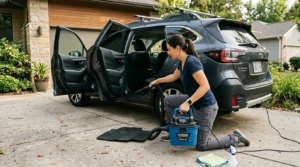
A shop vacuum for cars is a wet/dry vacuum with strong suction, rugged parts, and a large tank. It pulls up dry debris like dirt and pet hair, and can also handle wet spills. You can use it in the garage, on the driveway, or at a car wash bay with power.
Unlike small handheld vacuums, a shop vacuum for cars is built for heavy use. It moves more air, uses bigger hoses, and supports many attachments. That means faster cleaning and better results in tricky spots like seat rails and deep pile mats.
Why Use a Shop Vacuum for Car Detailing?
Speed, power, and reach are the big wins. A shop vacuum for cars lifts grit from carpet backing and grabs stubborn hair from fabric seats. It can also pull moisture after a coffee spill or rain-soaked mats.
You also save time. Larger hoses and tanks mean fewer trips to empty or recharge. With the right nozzle, you clean vents, tracks, and tight seams without fuss. For home detailers, this tool brings pro-level results on a budget.
Types and Power: Picking the Right Format
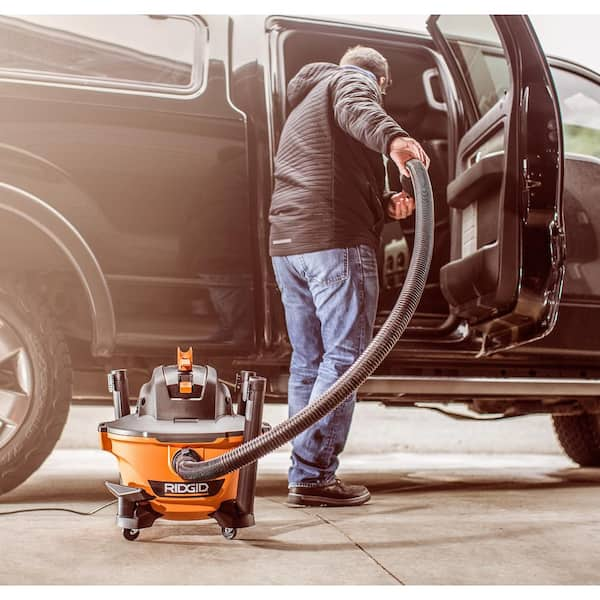
Shop vacuums come in corded and cordless forms. Corded models give steady power and are great in a garage. Cordless models are portable and work well in parking lots, but run time is shorter.
Key power terms:
- CFM measures airflow. Aim for 90–150 CFM for car interiors.
- Water lift measures sealed suction. Look for 50–80 inches for deep pull.
- Hose diameter affects airflow speed. A 1-7/8 inch hose balances power and control for cars.
Tank size matters too. A 2–6 gallon unit is easy to carry and store. A 9–16 gallon unit suits garages and frequent cleanups. Wet/dry function is essential for real-world messes.
Key Features to Look For
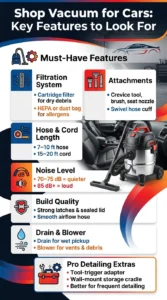
When choosing a shop vacuum for cars, focus on features that change results:
- Filtration and bags Use a cartridge filter for dry debris. Add a HEPA or fine-dust bag to trap allergens and keep the tank clean.
- Attachments Look for a long crevice tool, soft dusting brush, claw nozzle for seats, and a hose cuff that swivels.
- Hose and cord length A 7–10 foot hose and a 15–20 foot cord reduce moving the unit around.
- Noise level Quieter units run near 70–75 dB. Louder units can top 85 dB.
- Build and seals A sturdy latch, gasketed lid, and smooth hose interior improve suction and durability.
- Drain port and blower A drain helps with wet pickup. A blower port helps clear crumbs from vents before vacuuming.
If you detail often, consider a tool-trigger adapter for power tool dust and a wall-mount cradle for space saving. Both make a shop vacuum for cars even more useful.
How to Choose the Right Shop Vacuum for Cars
Match the vacuum to how you live:
- Apartment or small space Choose 2–4 gallons, cordless or compact corded, with a fine-dust bag.
- Garage or driveway Go 6–12 gallons, 1-7/8 inch hose, 100–150 CFM.
- Pets and kids Prioritize HEPA-level bags, a turbo or claw nozzle, and strong water lift.
- Wet climates Wet pickup with a float shutoff is a must. A drain port saves time.
Budget tips:
- Spend on filtration and hose quality before chasing “peak HP” claims.
- A mid-size corded unit often beats pricier cordless for heavy cleaning.
- Check that common accessories fit standard 1-1/4 inch or 1-7/8 inch ports.
- Is a cordless shop vacuum for cars enough? Yes for light, frequent cleanups; no for deep spring detailing.
- Is bigger always better? Not if you have stairs or tight parking; portability matters.
- Do bags reduce suction? Quality bags keep suction steadier by protecting the filter.
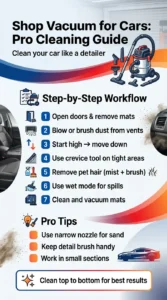
How to Use a Shop Vacuum for Cars Like a Pro
Try this simple workflow:
- Open all doors and remove floor mats. Shake mats outside.
- Use the blower function or a soft brush to loosen dust from vents and seams.
- Start high and move down. Seats, console edges, then floors.
- Use a crevice tool along seat rails, seatbelt anchors, and door pockets.
- For pet hair, lightly mist fabric with water, then use a claw nozzle or rubber brush followed by the vacuum.
- For wet spills, remove the dry filter if your manual requires it, and use wet mode. Empty and dry the tank after.
- Finish with mats. Beat, brush, and vacuum both sides.
Pro tips from the field:
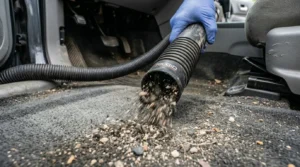
- Use a reducer to a narrow nozzle to boost air speed for sand in carpet ribbing.
- Keep a small detail brush in your pocket to flick debris toward the nozzle.
- Work in sections the size of a notebook for even, visible progress.
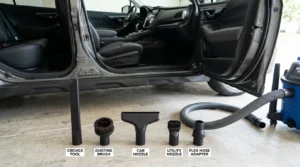
Essential Attachments and When to Use Them
- Long crevice tool Reaches tight gaps under seats and along tracks.
- Soft dusting brush Safely cleans vents, screens, knobs, and delicate trims.
- Claw or upholstery nozzle Lifts hair and lint from seat fabric and trunk liners.
- Narrow rigid tube Focuses air to lift compacted grit from carpet backing.
- Flexible micro kit Cleans window switches and emblem letters.
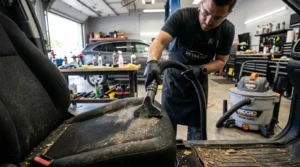
My go-to kit for a shop vacuum for cars includes a 1-7/8 inch hose, a 14–16 inch crevice tool, a round brush, and a claw nozzle. With those four, I can detail 95% of interiors.
Maintenance, Filters, and Safety
Good upkeep keeps suction strong:
- Use collection bags for dry work to protect the cartridge filter.
- Tap out the filter outside after each job. Replace when torn or caked.
- Rinse the tank after wet pickups and leave the lid off to air-dry.
Safety notes:
- Unplug before changing filters or hoses.
- Do not vacuum hot ash or solvents. Check your manual for limits.
- Wear ear protection for long sessions and a mask if you are sensitive to dust.
A well-kept shop vacuum for cars lasts years, keeps noise lower, and holds suction steady job after job.
Limitations and Smart Alternatives
A shop vacuum for cars is not a carpet extractor. It will not remove set-in stains by itself. Pair it with a fabric cleaner and a brush for best results.
For quick touch-ups, a small handheld vacuum is fast but weaker. For flood-level messes, rent an extractor or visit a pro. Use the right tool for the job and you will save time and protect your interior.
Real-World Lessons and Mistakes to Avoid
From hundreds of cleanups, here is what actually matters:
- Do not skip the bag on dry jobs Filters clog fast without it, and suction drops.
- Do not press hard with a brush Let the airflow work; heavy pressure can mar trim.
- Do not run wet with a dry filter Many units need the filter removed for wet mode.
- Do not chase peak HP ratings Look at CFM, water lift, hose size, and seals first.
The biggest win I learned is to prep first. A 60-second crumb blowout and a quick brush pass can cut vacuum time in half. That is how a shop vacuum for cars turns into a pro tool, not just a louder vacuum.
Frequently Asked Questions of shop vacuum for cars
What size shop vacuum is best for cars?
For most people, 4–8 gallons is the sweet spot. It balances power, capacity, and easy storage.
How much suction do I need for deep cleaning?
Aim for 90–150 CFM and 50–80 inches of water lift. This pulls grit from carpet and handles pet hair well.
Can I use a shop vacuum for cars on wet spills?
Yes, if it is a wet/dry model. Remove or swap the filter as the manual states, and dry the tank after.
Do I need HEPA filtration for car interiors?
It helps if you have allergies or pets. A HEPA bag plus a fine cartridge traps fine dust and dander.
Is cordless good enough for a full car detail?
It works for small cars and spot jobs. For SUVs or deep cleaning, corded power is faster and more consistent.
Which hose size works best?
A 1-7/8 inch hose offers strong airflow with good control. Use reducers for tight spaces when needed.
How often should I change the filter?
Inspect after each job and replace when damaged or caked. Using bags extends filter life a lot.
Conclusion
A shop vacuum for cars gives you fast, deep, and flexible cleaning at home. Focus on airflow, water lift, hose size, and filtration to get real results. Use smart prep, the right attachments, and simple maintenance to keep suction strong.
Set up your car-cleaning kit this week and test the workflow above. You will see a big jump in speed and finish on the very first pass. Want more guides like this? Subscribe, share your questions, or drop a comment with your setup and results.