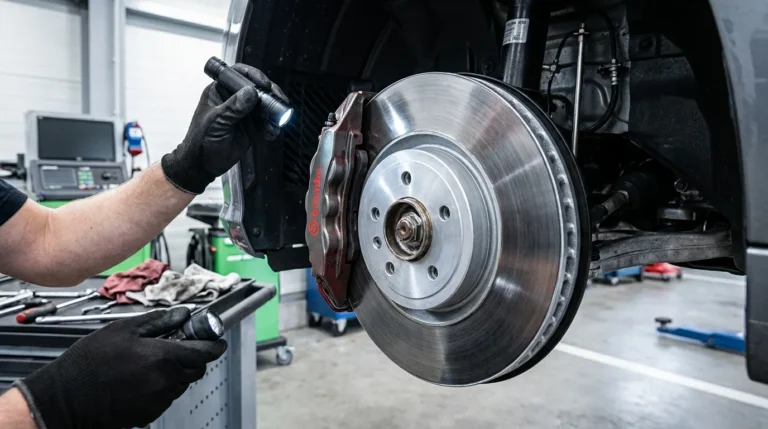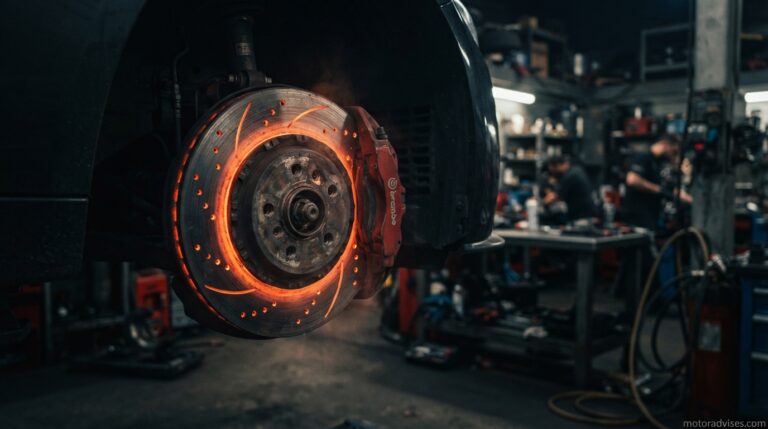
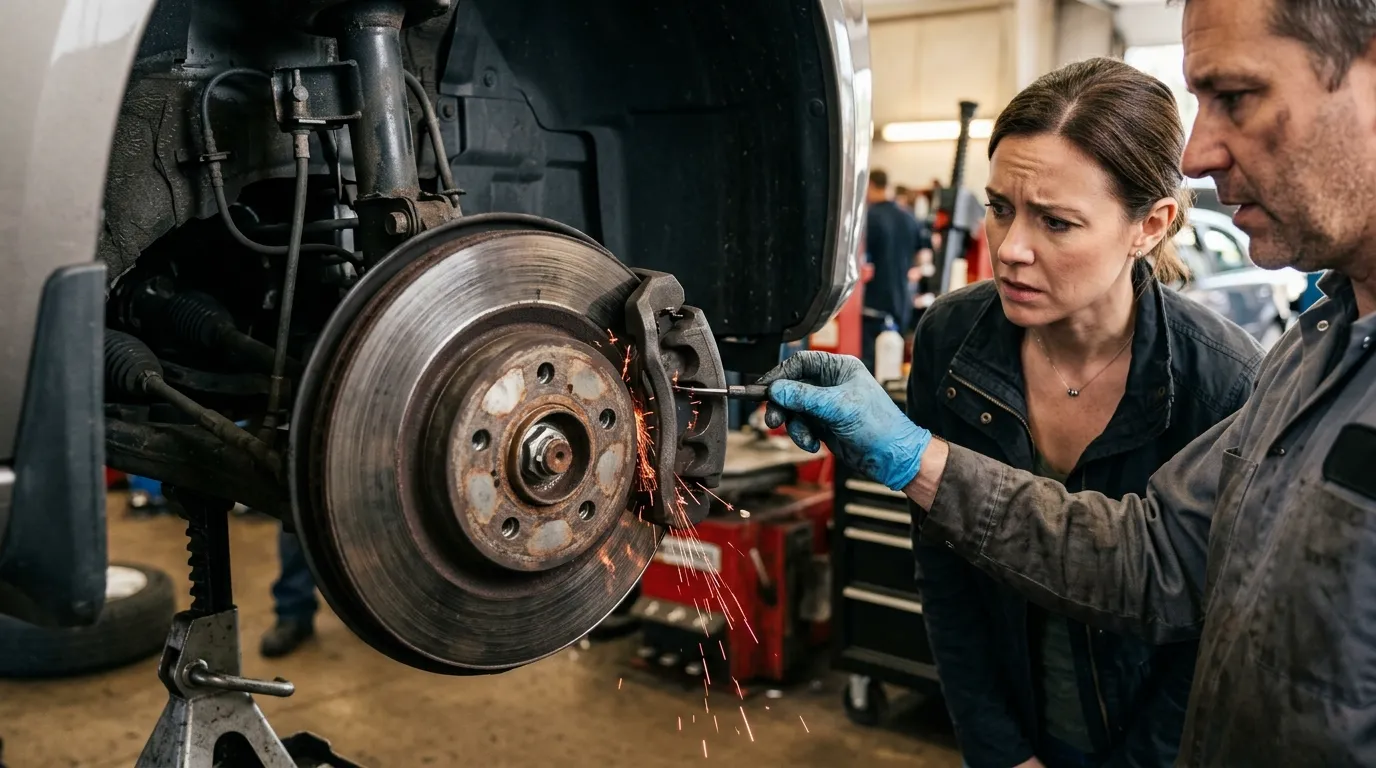
Most grinding while braking comes from worn pads, damaged rotors, or stuck hardware.
If you have ever wondered what can cause a grinding noise when braking, you are in the right place. I have spent years diagnosing brake sounds in real cars, from daily drivers to track toys. In this guide, I will break down the causes, show you simple checks, and share shop-tested tips so you can act fast and stay safe.
What can cause a grinding noise when braking? The mechanics
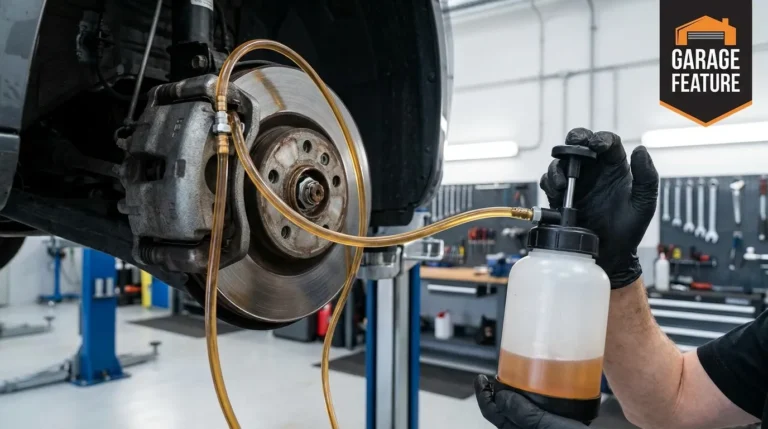
Brakes turn motion into heat. Most cars use disc brakes with a caliper that squeezes pads against a rotor. When parts wear or bind, hard surfaces touch and you hear grinding.
Grinding is friction you are not supposed to have. Think of sand in a door hinge. If pads are used up, the steel backing hits the rotor. If debris is trapped, it scrapes each time the wheel turns. That is what can cause a grinding noise when braking and why it gets worse over time.
On drum brakes, shoes press out against a drum. If the lining is gone or the drum is scored, you also get a harsh grind. The sound is a warning to fix the source, not just the noise.
What can cause a grinding noise when braking? The common causes
Below are the issues I see most in the shop. These are ordered from most common to less common, but any can happen.
Worn brake pads down to metal
When pad friction material wears out, the metal backing plate contacts the rotor. This is the classic metal-on-metal grind. If you ask what can cause a grinding noise when braking, this is the number one cause.
Signs to check:
- Brake warning light may turn on if your car has a wear sensor.
- Deep grooves on the rotor face.
- Longer stopping distance and a harsh pedal feel.
Damaged or scored rotors
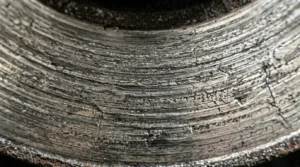
Rotors get grooves from heat, rust ridges, or trapped grit. Once the surface is rough, the pads scrape and grind each stop.
Watch for:
- Visible scoring or a lip on the rotor edge.
- Pulsing in the pedal from uneven wear.
- Rust flakes after a long sit, which can grind until they scrub off.
Stuck caliper or seized slide pins
Calipers must move freely. If a piston sticks or slide pins seize, one pad drags hard on the rotor and grinds.
Clues:
- One wheel gets very hot.
- Car pulls to one side when braking.
- Inside pad wears much faster than the outside pad.
Debris between pad and rotor
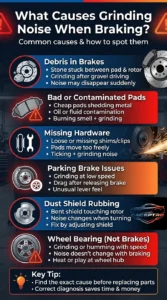
A small stone or road salt chunk can wedge in the pad. It makes a sharp, constant grind that changes with wheel speed.
How it shows up:
- Noise began right after driving on gravel or through construction.
- Grinding even with light brake pressure.
- Noise may vanish once the debris falls out.
Low-quality or contaminated pads
Cheap pads can shed metal chunks. Oil, grease, or brake fluid on pads can glaze the surface. Both can cause grinding plus a burning smell.
Check for:
- Shiny, glass-like pad surface.
- Squeal and grind together.
- Dark streaks on the rotor from contamination.
Missing shims or loose hardware
Pads need shims and anti-rattle clips. Without them, pads chatter and grind against the bracket or rotor.
Look for:
- Metallic ticking along with the grind.
- Pads that move too freely in the bracket.
- Hardware that looks rusty or bent.
Parking brake shoe problems (drum-in-hat)
Many rear rotors hide small parking brake shoes inside. If the lining delaminates or a return spring breaks, the shoe scrapes the rotor hat and grinds.
Watch for:
- Grinding at low speeds with or without the foot brake.
- Rear wheel drag after releasing the parking brake.
- Parking brake lever travel feels odd.
Bent or rubbing dust shield
A thin metal dust shield sits behind the rotor. If bent during a tire change, it can scrape and sound like grinding.
Check:
- Consistent scrape that changes when turning.
- Shield very close to the rotor edge.
- Noise stops if you gently flex the shield back.
Wheel bearing failure that sounds like brakes
A bad bearing hums or grinds with speed, even off the brakes. Pressing the brake may not change the tone. It is not the brake system, but many drivers mix it up.
Spot it by:
- Drone grows with speed, not brake force.
- Wheel play when lifted.
- Heat at the hub after a drive.
This list covers what can cause a grinding noise when braking in most cars and light trucks. Finding the exact cause saves parts, time, and money.
How to diagnose the noise at home, safely
Start simple and be safe. If the sound is severe, do not drive far. Grinding means damage is active right now.
Try these steps:
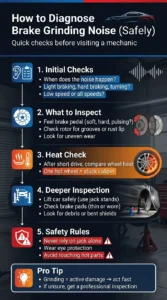
- Note when the noise happens. Light braking, hard braking, turning, or at low speed.
- Feel the pedal. Is it harsh, soft, pulsing, or normal?
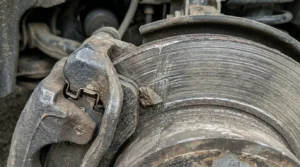
- Do a walk-around. Look through the wheel at the rotor. Deep grooves or a heavy rust lip point to rotor damage.
- Check for heat. After a short, careful drive, hover a hand near each wheel. One wheel much hotter hints at a stuck caliper.
- Lift and inspect if you can. Remove the wheel. Look for thin pads, missing shims, bent shields, or debris.
Quick safety rules:
- Use jack stands, not a jack alone.
- Wear eye protection. Brake dust is harsh.
- Do not touch hot parts. Rotors get very hot.
What can cause a grinding noise when braking can be clear after a five-minute check. If not, a shop can measure rotor thickness, run-out, and caliper movement to confirm.
Quick answers to common checks
- Is it safe to drive with grinding brakes? Only to reach a shop. Metal-on-metal can fail fast and damage more parts.
- Can rotors be resurfaced or must they be replaced? Light scoring can be machined if within spec. Deep grooves or thin rotors need replacement.
- The grind goes away after a few stops. Is that okay? A light rust scrub can clear up. If it keeps coming back, inspect pads and shields.
Risks of ignoring grinding brakes
Grinding is a red flag. The longer you wait, the higher the bill and the risk.
Here is what can happen:
- Stopping distance grows. That puts you and others at risk.
- Rotors get ruined. Pads down to metal cut deep grooves fast.
- Calipers overheat. Seals cook, pistons seize, and brake fluid boils.
- Bearings and hubs can suffer from heat transfer.
- What can cause a grinding noise when braking today can lead to full brake failure tomorrow.
Fixes, costs, and when to stop driving
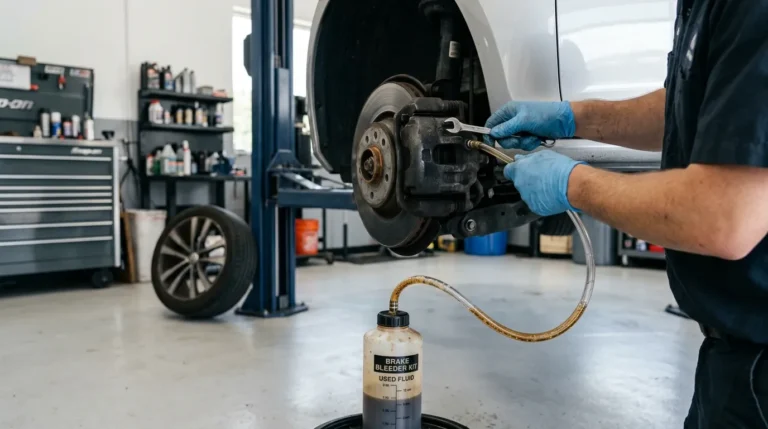
Fix the cause, not just the sound. Use quality parts and follow torque specs.
Common fixes and rough US costs per axle:
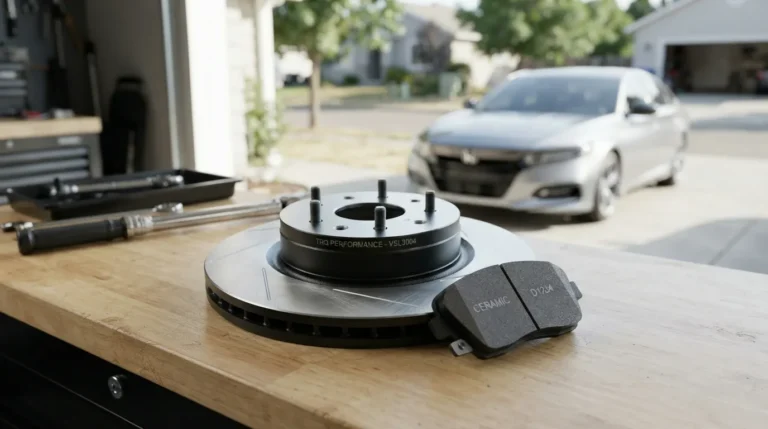
- New pads and rotors: 250 to 600 parts and labor, more for premium or performance.
- Caliper service or replacement: 150 to 400 per side plus pads and rotors if damaged.
- Hardware kit and shims: 15 to 40, cheap and worth it.
- Parking brake shoe service: 200 to 450 depending on rust and hardware.
- Debris removal and shield adjustment: Often low cost if no damage.
Practical tips from the bay:
- Replace pads and rotors as a set for even bite and break-in.
- Lube slide pins with high-temp brake grease. Stuck pins are a repeat offender.
- Bed the brakes as the pad maker says. It prevents pad material transfer and noise.
- Torque lug nuts with a torque wrench. Over-torque can warp rotors and cause noise.
As a rule, if you hear loud, constant metal-on-metal, do not drive far. That is what can cause a grinding noise when braking to turn into a larger repair fast.
Preventive maintenance to avoid grinding
Small habits stop big bills. These steps keep your brakes quiet and strong.
Do this:
- Inspect brakes every 6 months or 6,000 miles. Catch thin pads early.
- Wash wheels and rotors after salty or muddy drives. Rinse off grit.
- Use quality pads that match your driving. Cheap pads can grind and dust.
- Replace hardware with every pad change. Fresh clips keep pads aligned.
- Bed in new pads and rotors. Follow the maker’s steps for smooth, quiet stops.
- If the car sits, drive it weekly. Light stops clear rust film before it bites deep.
Use these habits and you will rarely ask what can cause a grinding noise when braking. You will hear smooth, safe silence instead.

Source: reddit.com
Frequently Asked Questions
What can cause a grinding noise when braking at low speeds?
Low-speed grinding often points to worn pads, a rust ridge on the rotor, or debris. A bent dust shield can also scrape at parking lot speeds.
Can new brakes grind?
Yes, light grinding can happen during the first few stops while bedding in. If it lasts more than a day or sounds harsh, recheck hardware and rotor finish.
Does ABS cause grinding sounds?
ABS makes rapid pulses and a buzz under hard stops, not a harsh grind. If you hear grinding in normal braking, inspect the pads and rotors.
Why does the grinding stop after it rains?
Water can wash away dust or small debris, so the sound may pause. If parts are worn or damaged, the grind will return once dry.
How do I know if it is a wheel bearing instead of brakes?
A bearing hums or grinds with speed, even when you are not braking. If braking does not change the sound, check wheel play and hub heat.
What can cause a grinding noise when braking but the pads look fine?
Look for a stuck caliper, missing shims, or debris caught in the pad. Also check the inner pad and the parking brake shoes, which are easy to miss.
Will resurfacing rotors stop grinding?
If rotors are thick enough and only lightly scored, machining can help. Deep grooves or heat cracks call for rotor replacement.
Conclusion
Grinding brakes are your car asking for help. Find the cause fast, fix it right, and you protect your safety and your wallet. Start with a quick check, plan smart repairs, and build habits that prevent the problem from coming back. If you are unsure, book a pro inspection today, and share your symptoms in the comments so others can learn from your case.