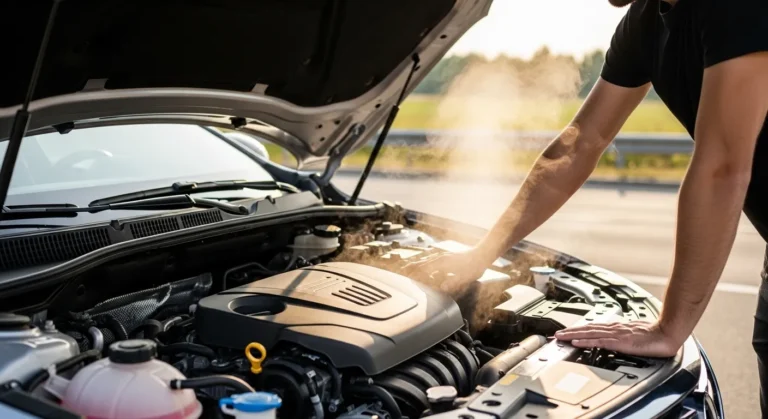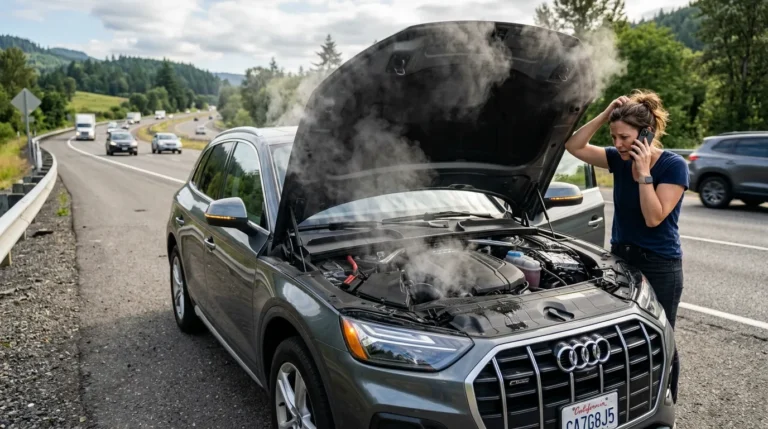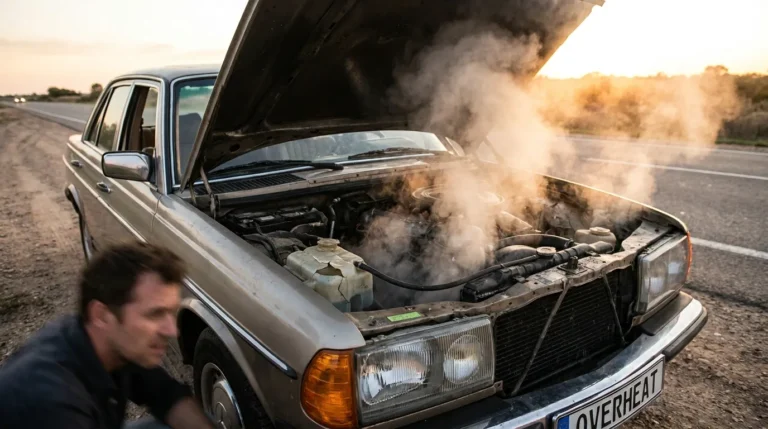
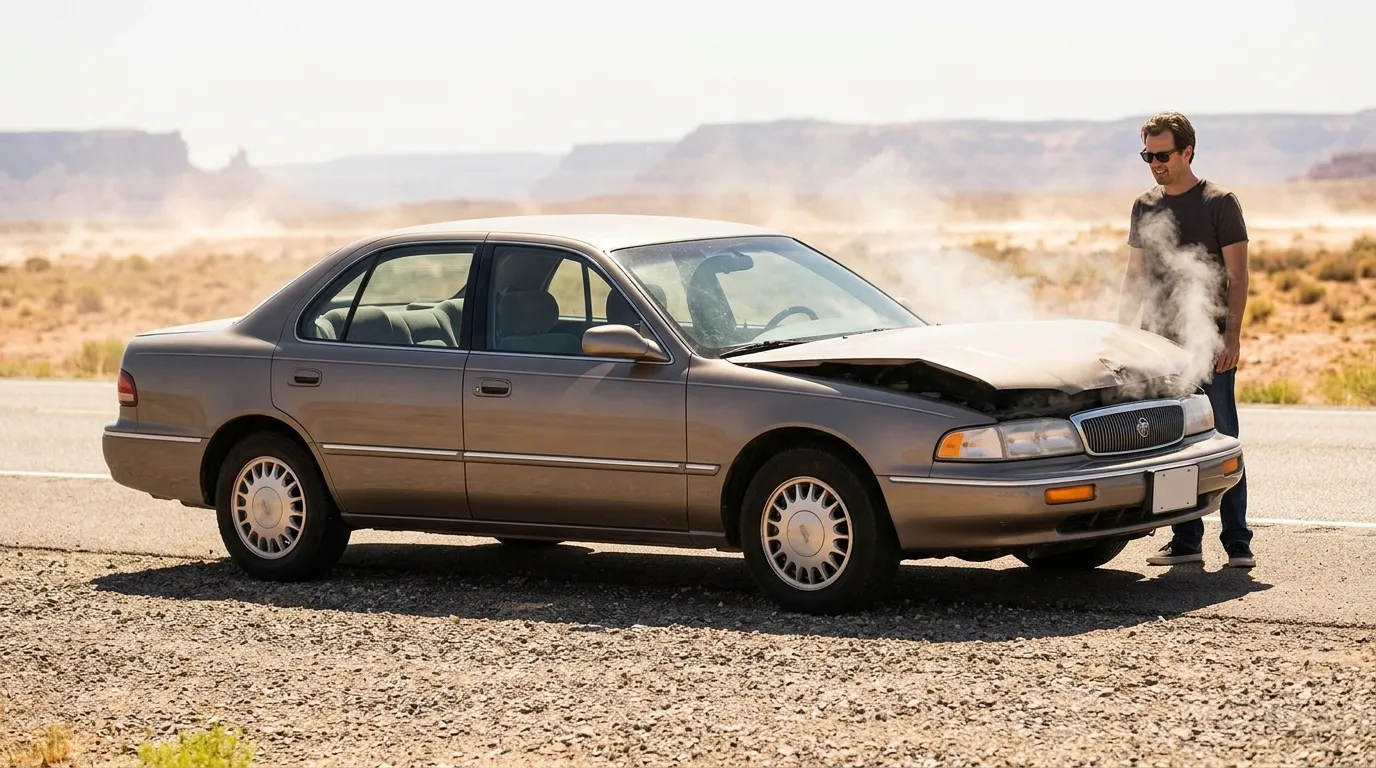
Car overheating at idle usually means poor airflow or weak coolant circulation.
If your car overheating at idle makes your heart race at every stoplight, you are not alone. I have diagnosed hundreds of cooling issues in daily drivers and track cars. This guide breaks down why car overheating at idle happens, how to fix it fast, and how to keep your engine safe for the long run. Stick with me, and you will leave with a plan you can trust.
What car overheating at idle really means
Engines make heat from fuel and friction. The cooling system moves that heat to the radiator. When you drive, air rushes through the radiator to cool the coolant. When you stop, the electric cooling fan must do that job.
At idle, the water pump spins slower. Airflow is near zero. So weak fans, low coolant, or a stuck thermostat show up fast. That is why car overheating at idle is common in traffic but not on the highway.
Normal coolant temperature sits near 195–220°F. If the needle climbs at a red light but drops once you move, the fan or airflow is often at fault. If it climbs and stays hot, think coolant level, thermostat, pump, or a clog.
Common causes of car overheating at idle
Below are the issues I see most in the shop when a car is overheating at idle. Each cause comes with a simple way to spot it.
Electric cooling fan not running or weak
- Symptom: Temperature rises at stops. Drops once you drive.
- Quick check: Turn on A/C. Many cars command the fan on. If no fan noise, suspect a failure.
- Usual culprits: Blown fuse, bad relay, failed fan motor, corroded plug, or a bad control module.
Low coolant or air pocket in the system
- Symptom: Gurgling heater, weak cabin heat, random hot spikes.
- Quick check: When cool, check the reservoir and radiator. Low level or bubbles show a problem.
- Causes: Small leaks, old hoses, loose clamps, recent service without proper bleeding.
Stuck thermostat
- Symptom: Slow warm-up or sudden hot spike. Top radiator hose stays cold then surges hot.
- Quick check: Feel upper hose as engine warms. It should warm smoothly as the stat opens.
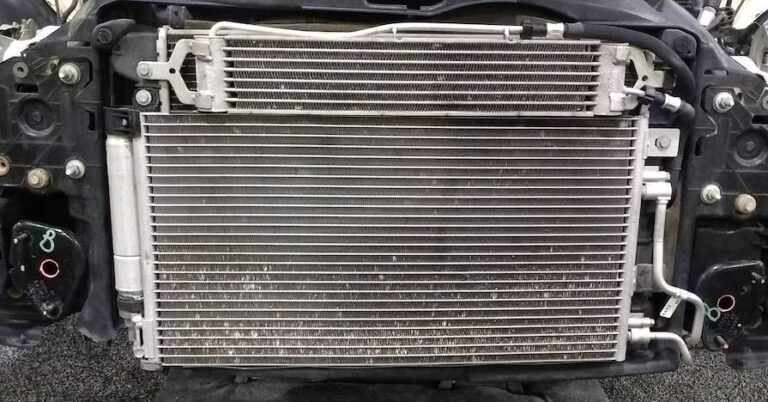
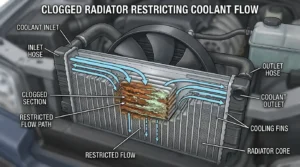
Clogged radiator or condenser packed with debris
- Symptom: Overheats at idle and with A/C on. Fan may run hard with little effect.
- Quick check: Shine a light through the fins. If light cannot pass, airflow is blocked.
Weak water pump or slipping belt
- Symptom: Heat at idle, squeal noise, wobble, or small leaks at the pump weep hole.
- Quick check: Watch belt and pulleys. Check for play. Some pumps lose vane strength with age.
Bad radiator cap
- Symptom: Coolant boils into the overflow. Sweet smell. Soft hoses.
- Quick check: Cap fails to hold pressure. Pressure test confirms it.
Head gasket leak (less common but serious)
- Symptom: White exhaust smoke, milky oil, constant pressure in the system.
- Quick check: Chemical block test or exhaust gas in coolant test.
A/C load and heat soak
- Symptom: Overheats at idle only with A/C on.
- Quick check: The condenser dumps extra heat into the radiator. A weak fan cannot keep up.
ECU sensor faults
- Symptom: Fan comes on late or not at all. Scan shows bad coolant temp sensor.
- Quick check: Compare dash gauge with scan tool data. Replace sensor if data is off.
In most cases, car overheating at idle ties back to airflow or coolant flow. Fix those first.

Source: autonationmobileservice.com
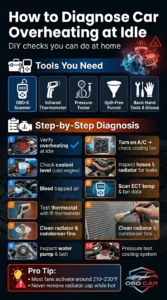
Step-by-step diagnosis you can do at home
You can solve many idle overheating problems with a few tools and calm steps.
Tools I like
- OBD-II scanner to read coolant temp and fan commands.
- Infrared thermometer to check hose and radiator temps.
- Cooling system pressure tester and a spill-free funnel.
- Basic hand tools and safety gloves.
Steps
- Verify the symptom. Let the car idle with the heater off. Watch the temp gauge and listen for the fan.
- Force the fan on. Turn on A/C. If the fan still does not run, check fuses and relays first.
- Check coolant level cold. Top up with the correct mix if low. Never open a hot cap.
- Inspect for leaks. Look for dried coolant near hoses, pump, radiator tanks, and the heater core area.
- Bleed air. Use a spill-free funnel. Run engine with the heater on. Squeeze upper hose to burp bubbles.
- Scan data. Watch engine coolant temp (ECT) and fan command. Most fans kick in near 210–230°F.
- Test the thermostat. Compare upper and lower radiator hose temps with the IR gun.
- Examine airflow. Clean leaves, plastic bags, or dirt from the radiator and condenser fins.
- Assess the water pump. Listen for noise. Check belt tension. Look for wobble or leaks.
- Pressure test. Pump to cap rating and watch for a drop. A drop means a leak to find.
PAA-style quick answers inside this section
Does coolant type matter for idle overheating?
Yes. Mixing the wrong types can form sludge that blocks the radiator. Always use the coolant your owner’s manual calls for.
Is it safe to keep driving when the temp climbs at a stop?
No. Heat can warp heads fast. Pull over, cool down, and diagnose before damage grows.
Can a clogged heater core cause this?
Rarely. The heater core is small. But a clogged core plus other issues can push temps up at idle.
Fixes, costs, and when to see a pro
Most car overheating at idle repairs are simple and not too pricey.
Common fixes and ballpark costs
- Fan fuse, relay, or connector: low cost parts. Quick to replace.
- Electric cooling fan assembly: moderate cost parts. One to two hours labor.
- Thermostat and gasket: low to moderate cost. One to two hours labor.
- Radiator cap: very low cost. Replace every few years.
- Coolant flush and bleed: low cost. Helps with air and minor clogging.
- Radiator replacement: moderate to high cost. More if it is a tight engine bay.
- Water pump and belt: moderate cost. More on timing-belt-driven pumps.
- Head gasket repair: high cost. Only after solid testing confirms it.
DIY tips I use in the bay
- Always match coolant spec. Wrong chemistry eats seals and forms gel.
- Use a spill-free funnel to burp air. It saves time and mess.
- Replace the cap if you replace the thermostat. Cheap insurance.
- If the fan motor is slow or noisy, replace the whole assembly, not just the motor.
- Clean the radiator fins from the engine side out. Gentle water stream, not high pressure.
When to see a pro
- The temp climbs within minutes of a cold start.
- Coolant vanishes with no visible leak.
- You see oil in coolant or white smoke from the tailpipe.
- The scan tool shows erratic temp data or fan commands that do not match reality.
Prevent it from coming back
You can prevent car overheating at idle with a few steady habits.
Simple schedule that works
- Check coolant level monthly. Top up if low.
- Replace coolant every 3–5 years or as the manual states.
- Inspect the cap, hoses, and clamps at each oil change.
- Clean radiator fins at least once a year, more if you drive dusty roads.
- Test the thermostat and cap when you do a big service.
- If the gauge creeps up at a light, turn on the cabin heat to draw heat away. Then pull over.
- Avoid resting the bumper against snow banks or tall grass that blocks airflow.
- Do not idle long with heavy A/C load if the fan is weak. Fix the fan first.
I have seen fleets run all summer with zero issues by doing only those checks. Small steps beat big bills.
Special cases and edge scenarios
Car overheating at idle can change with the vehicle type and climate.
Hybrids and start-stop
- Some hybrids stop the engine at lights. Electric pumps and fans must pick up the slack.
- Software updates can fix odd fan timing. A scan at a shop can confirm.
Turbo and performance cars
- Turbos add heat. Heat soak shows up fast at idle.
- Use the right oil and coolant. Make sure the fan strategy is correct after mods.
Older cars and trucks
- Mechanical fans need a strong clutch. A weak clutch slips at idle.
- Scaled radiators from hard water reduce flow. A re-core or new unit may be best.
Climate notes
- Hot, high humidity days load the condenser and radiator.
- Cold winters can hide low coolant until spring. Check levels year-round.
Coolant chemistry
- HOAT, OAT, and silicate blends do not always mix. Cross-mixing can gel and clog.
- If in doubt, flush and refill with the OEM spec.
Quick answers to common searches
These short answers cover things people search right before panic mode. If your car overheating at idle matches any item here, you know where to look next.
Why does my car only overheat at idle but not while driving?
Airflow is the key. Your fan is weak or off, or airflow is blocked at the radiator or condenser.
Can a bad thermostat cause car overheating at idle?
Yes. A stuck-closed thermostat traps hot coolant in the engine and pushes temps up fast at stops.
Will running the heater help when the gauge spikes at a light?
Yes, for a short time. The heater core acts like a small radiator and can buy you time to pull over.
Frequently Asked Questions of car overheating at idle
What is the first thing I should check when my car is overheating at idle?
Check if the electric cooling fan is running. Then confirm coolant level when the engine is cool.
Can low coolant cause overheating only at idle?
Yes. Low coolant and air pockets slow heat transfer at slow pump speeds. You get hot spikes at stops.
How do I know if my radiator cap is bad?
If coolant boils into the overflow or hoses collapse, the cap may not hold pressure. A pressure test can confirm it.
Could my water pump be the reason for car overheating at idle?
Yes. A weak pump moves less coolant at low RPM. Look for leaks, bearing noise, or wobble.
Is a head gasket failure common in idle-only overheating?
It is less common but possible. Test for exhaust gas in the coolant before making that call.
Conclusion
Car overheating at idle is a warning you should not ignore. Most fixes are simple: restore fan function, set the right coolant level, bleed air, and make sure the thermostat and cap are healthy. If the basics check out, look at the radiator, pump, and sensors.
Take action today. Do a 10-minute check, clean the radiator fins, and scan for codes. Your engine will thank you with a cool, steady gauge. Want more hands-on guides like this? Subscribe, save this page, and drop your question in the comments.