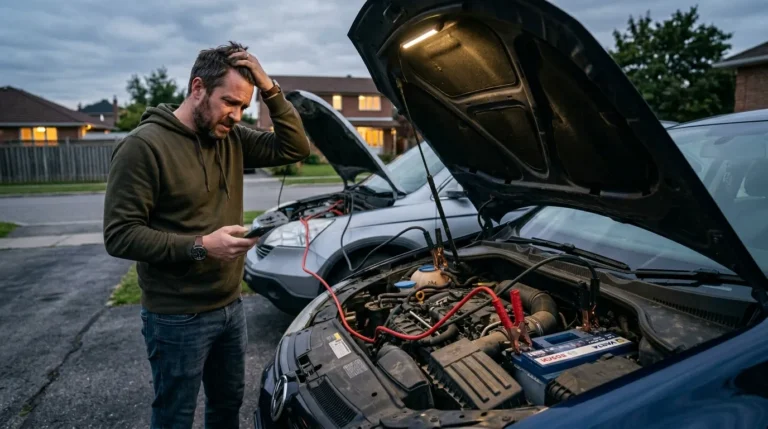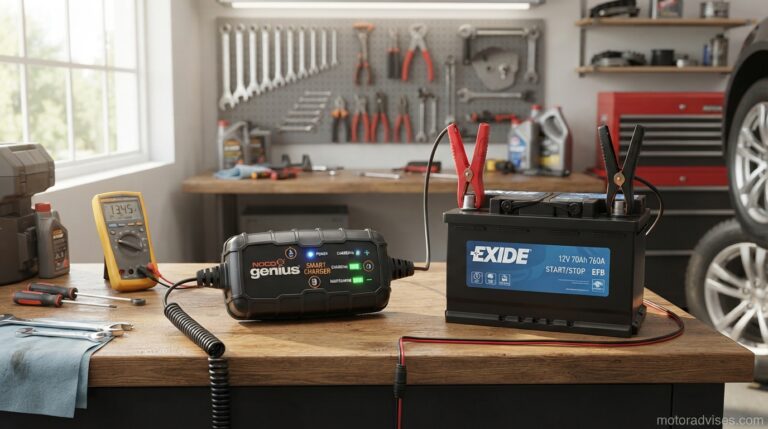
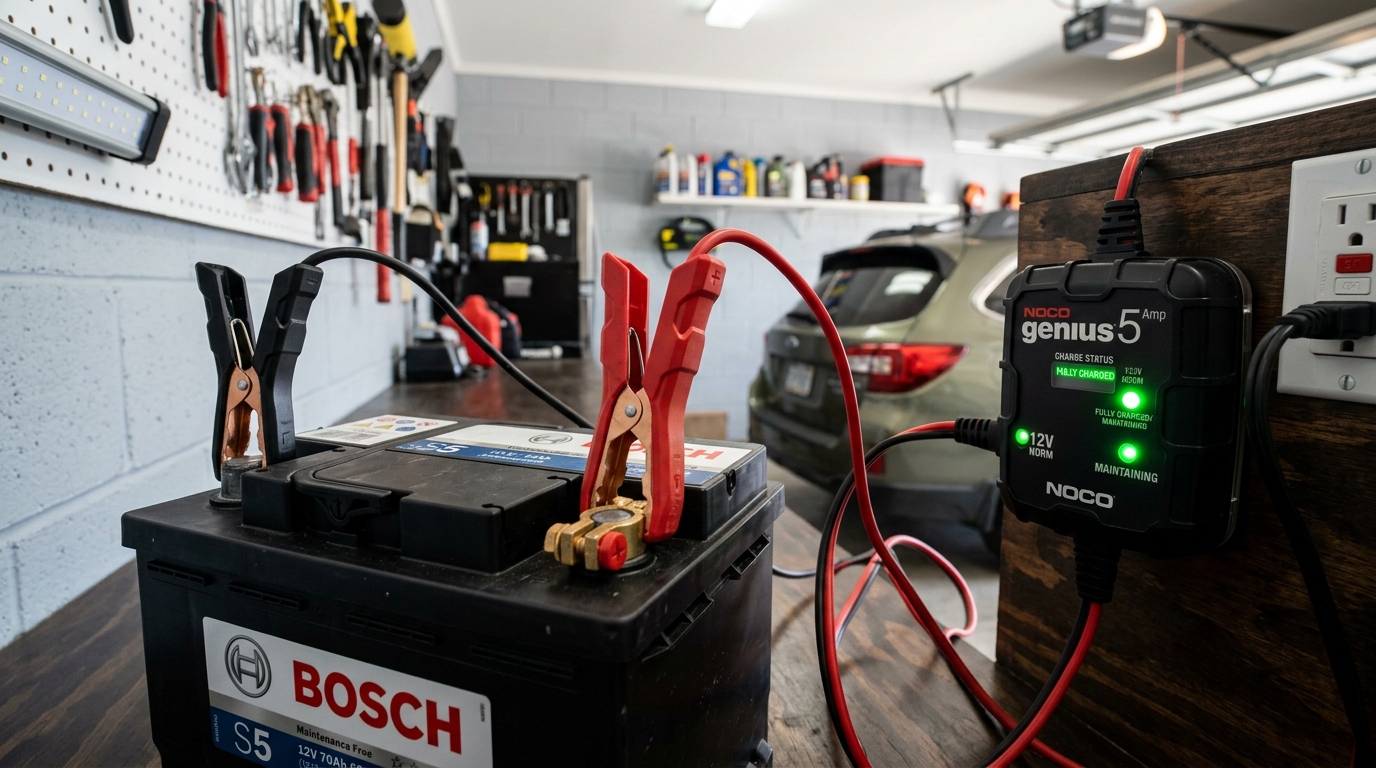
A battery maintainer is a low-current charger that keeps a battery topped up without overcharging.
I have worked with cars, boats, and backup systems for over a decade, and I will walk you through what is battery maintainer, how it works, when to use one, and how to pick the right model. This guide blends hands-on tips, clear technical facts, and plain advice so you can protect batteries, avoid surprises, and make a smart buy.
How a battery maintainer works
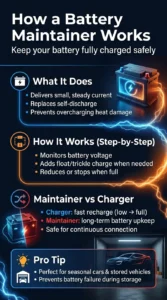
A battery maintainer delivers a small, steady current to a battery to replace self-discharge. It senses the battery voltage and supplies only what is needed. That keeps the battery at full charge without the heat or harm of constant charging.
Key steps in how it works:
- It monitors voltage and state of charge.
- It applies a float or trickle current when the battery drops.
- It stops or reduces current when the battery is full.
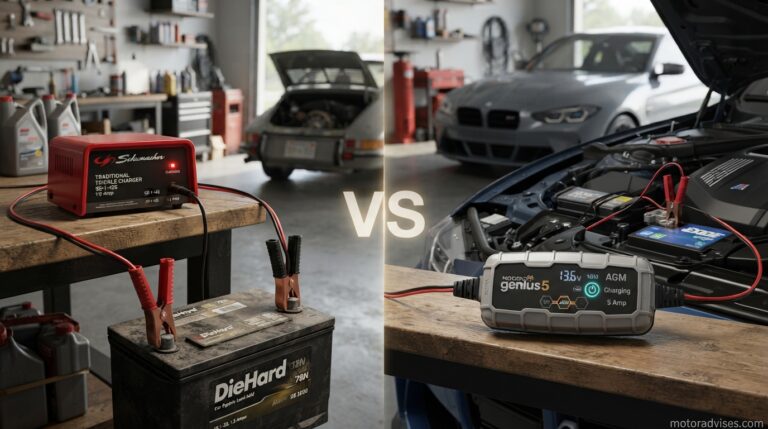
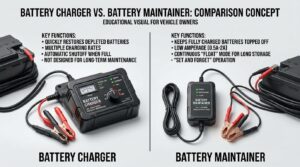
People asking what is battery maintainer often confuse it with a regular charger. A regular charger is for recharging from low to full fast. A battery maintainer is for long-term upkeep and is safe to leave connected. In my shop, I use maintainers on seasonal gear and idle cars. They saved batteries that otherwise would have failed after months of storage.
Types of battery maintainers
There are a few common types. Each fits a use case.
Float-style maintainers
- Provide constant low voltage to hold charge.
- Best for modern sealed lead-acid and flooded lead-acid batteries.
Smart or microprocessor maintainers
- Monitor battery and switch between bulk, absorption, and float modes.
- Good for mixed use and long-term connection.
Solar maintainers
- Use panels and controllers to top up batteries off-grid.
- Ideal for boats, RVs, and remote systems.
Multi-chemistry models
- Support lead-acid, AGM, gel, and some lithium batteries.
- Useful if you work with different battery types.
Knowing what is battery maintainer and the types helps you match the device to your battery chemistry and use pattern.

Source: caranddriver.com
Benefits of using a battery maintainer
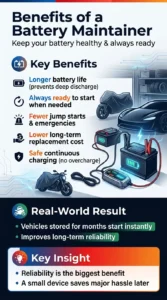
A maintainer gives clear gains for people who store vehicles or rely on standby batteries. Benefits include:
- Longer battery life by preventing deep discharge cycles.
- Ready-to-use batteries when you need them.
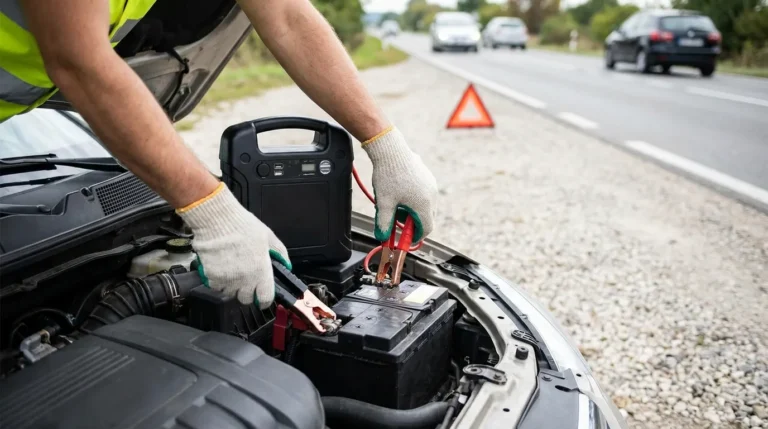
- Less need for jump starts and emergency replacement.
- Lower cost over time due to fewer battery purchases.
- Safe long-term connection without overcharging.
From my experience, the biggest win is reliability. A bike that sits unused for months starts on the first try when a maintainer is used. That real-life result shows why many ask what is battery maintainer and then invest in one.
Limitations and risks
A maintainer is useful but not magic. Understand limits and risks:
- It will not revive a badly sulfated or damaged battery.
- Using the wrong voltage or mode can harm some battery chemistries.
- Cheap units may lack proper safety circuits or correct charging profiles.
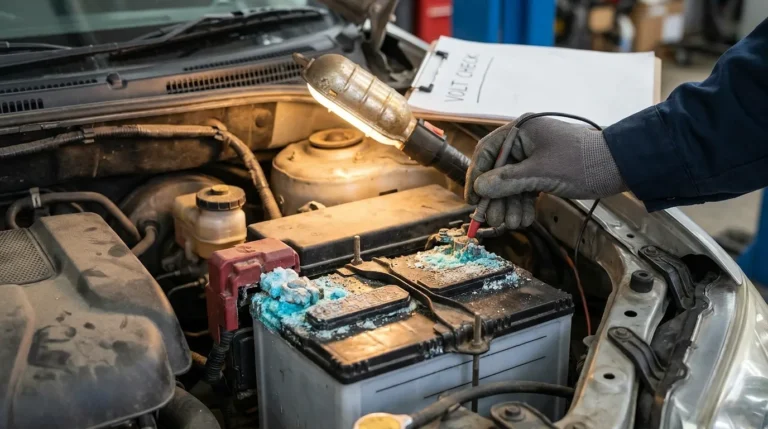
- Leaving a maintainer on a defective battery can hide a deeper electrical problem.
I once used an old maintainer on a battery with internal shorting. The unit falsely indicated a maintained charge. The lesson: test the battery health first and use a quality maintainer.
How to choose the right battery maintainer
Choose a suitable maintainer with a few clear checks:
- Match the chemistry: confirm support for lead-acid, AGM, gel, or lithium.
- Check output voltage and smart charging features.
- Look for safety features: reverse-polarity, thermal regulation, and short-circuit protection.
- Pick the right amperage: small batteries need 0.5–2 amps; larger bank systems may need higher smart rates.
- Read real-world reviews and check build quality.
My practical tip: buy a smart unit from a trusted brand and avoid no-name, sub-$20 units. They often lack proper control and can cause issues. If you own multiple vehicles, pick a unit with clamps and a quick-disconnect cord to keep using it easily.
Installation and practical tips
Install and use a maintainer the smart way.
Basic steps:
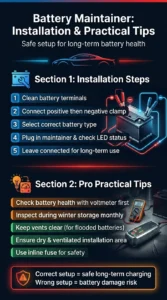
- Clean battery terminals and inspect cables.
- Connect positive then negative clamp or use a manufacturer accessory port.
- Set the correct battery type on the maintainer if required.
- Plug the maintainer into power and confirm the status LED or meter.
- Leave it connected for weeks or months as needed.
Practical tips I learned:
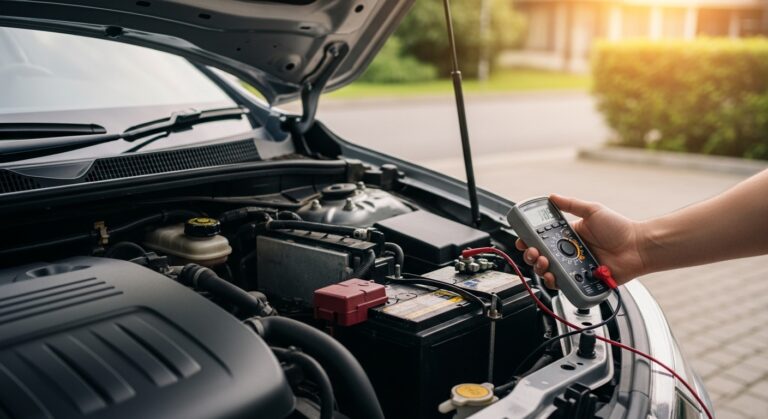
- Use a voltmeter to check battery health before committing to long-term maintenance.
- For winter storage, check the maintainer monthly and ensure vents are clear if the battery is flooded.
- Keep the maintainer in a dry, ventilated spot and use an inline fuse for added safety.
Common quick questions (PAA-style)
Q: Can I leave a battery maintainer connected long term?
A: Yes. Proper maintainers are made to stay connected and will switch to float mode to avoid overcharge.
Q: Is a maintainer the same as a trickle charger?
A: Not exactly. Maintainers are smart and regulate charge; trickle chargers often do not and can overcharge.
Q: Will a maintainer fix a dead battery?
A: No. It can prevent discharge but will not bring back a badly sulfated or internally damaged battery.

Frequently Asked Questions of what is battery maintainer
What is the main difference between a battery maintainer and a charger?
A maintainer keeps a battery at full charge safely over time. A charger restores a low battery to full charge, often faster and with higher current.
Can a battery maintainer damage my battery?
A quality maintainer will not if matched to the battery type. Low-quality devices or wrong settings can cause harm.
How long can you leave a maintainer on a battery?
You can leave a maintainer connected for months. Smart units monitor and reduce output to safe float levels.
Do maintainers work on lithium batteries?
Some maintainers support lithium, but you must confirm compatibility and the correct charging profile before use.
How do I know if my battery needs a maintainer?
If a vehicle or backup battery sits unused for weeks or months, it will benefit from a maintainer to prevent self-discharge and shorten battery life.
Conclusion
A battery maintainer is a simple and effective tool that keeps batteries healthy, ready, and longer lasting. Use one when batteries sit idle for long stretches or when you want dependable starts and reliable backup power. Start by testing your battery, pick a smart maintainer that fits your battery type, and follow safe connection steps. Take action now: inspect your batteries, consider a maintainer that fits your needs, and enjoy fewer dead-battery headaches. Leave a comment with your battery setup or subscribe to learn more about battery care.