
Quick answer
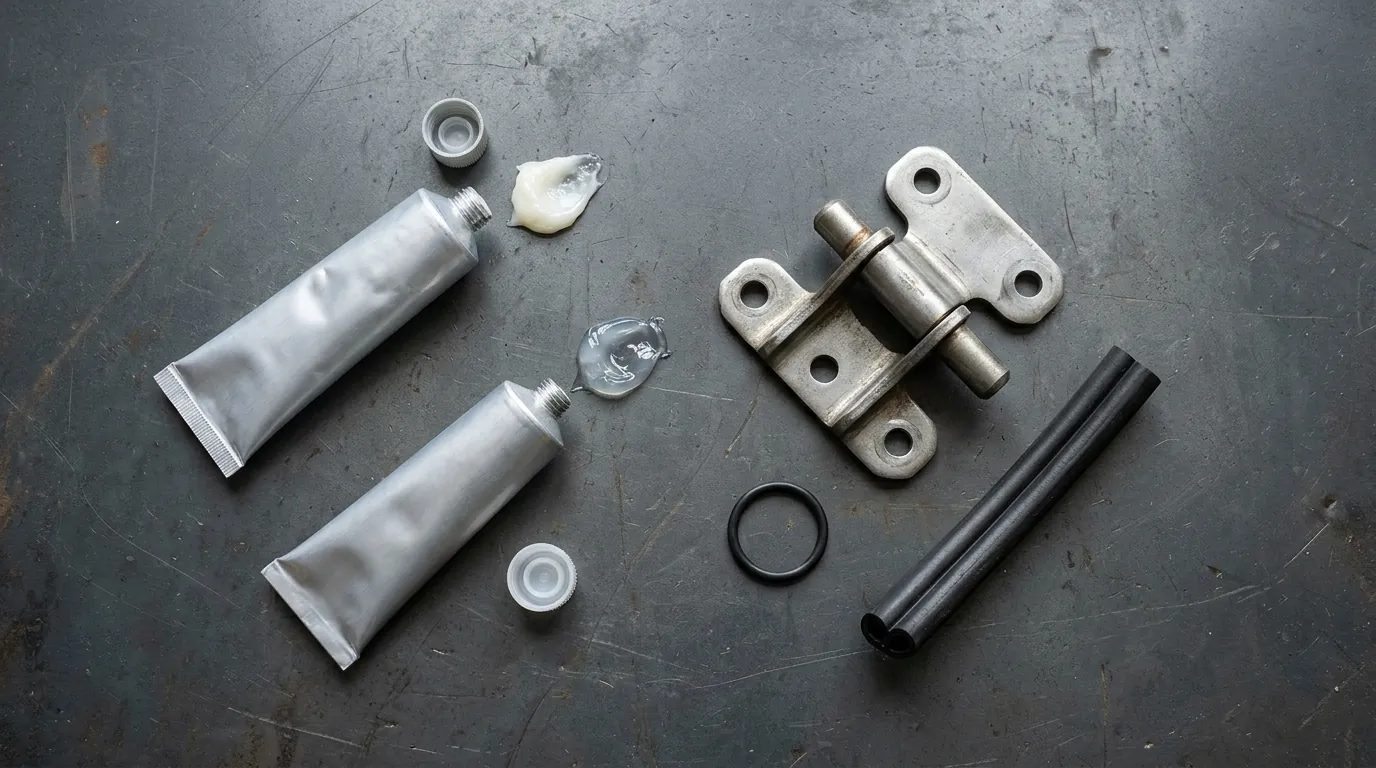
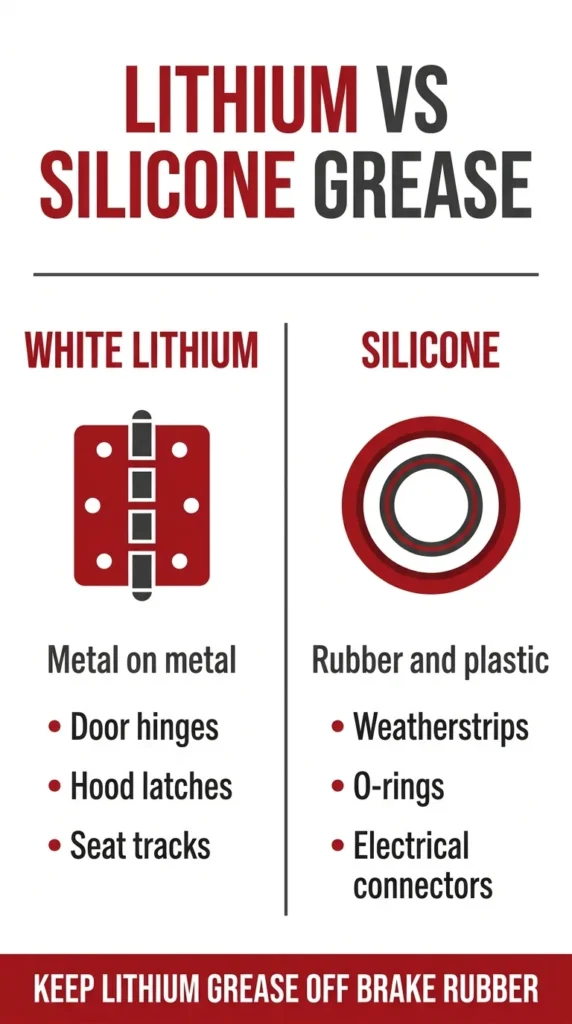
Use white lithium grease for metal-on-metal parts such as door hinges, hood latches, seat tracks and trunk hinges. Use silicone grease anywhere rubber or plastic is involved: weatherstrips, O-rings, rubber bushings, electrical connectors and (if the product is rated for it) brake caliper slide pins. White lithium grease is usually petroleum-based, and petroleum can swell or soften some rubber, so keep it off rubber seals and brake parts.
In this guide
Both greases sit side by side in auto parts stores, and both are sold as “multi-purpose”. They are not interchangeable. The base oil decides where each one is safe to use, and choosing the wrong one can make a rubber seal swell or a lubricant wash out early.
Lithium grease vs silicone grease at a glance
| Point | White lithium grease | Silicone grease |
|---|---|---|
| What it is | Usually petroleum (mineral) oil thickened with lithium soap; zinc oxide gives the white color | Silicone oil thickened, often with silica |
| Safe on rubber and plastic | Not always; petroleum can swell some rubbers, such as EPDM used in brake seals | Yes; it is the usual choice for rubber and plastic parts |
| Load carrying | Good for metal-on-metal contact | Lower; not meant for heavily loaded metal parts |
| Water resistance | Moderate | Very good; repels water |
| Electrical | Not used on connectors | Does not conduct electricity; dielectric grease is a type of silicone grease |
| Typical car uses | Door and hood hinges, latches and strikers, seat tracks, trunk hinges, parking brake cable guides | Door and trunk weatherstrips, O-rings, rubber bushings, bulb sockets and connectors, rated brake slide pins |
| Watch out for | Brake rubber, wheel bearings (use wheel bearing grease), dirty areas (it attracts dirt) | Surfaces that will be painted; silicone residue causes paint defects |
What is white lithium grease good for?
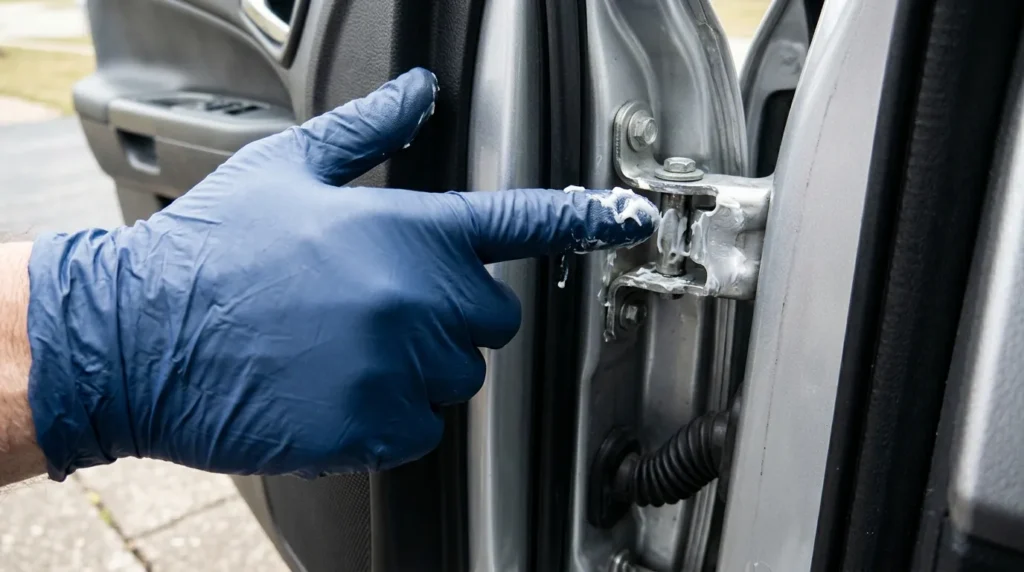
Lithium grease is one of the most common greases in the world. Lithium soap thickens an oil into a paste that stays put on moving metal. The white versions add zinc oxide. On a car, it suits parts that slide or pivot metal-on-metal and don’t touch rubber:
- door hinges and door check straps;
- hood latches, hood hinges and trunk or tailgate hinges;
- seat tracks and sliding mechanisms;
- metal parking brake linkage pivots.
When not to use white lithium grease:
- Brake rubber parts. Caliper boots, slide-pin bushings and piston seals are often EPDM rubber, which can swell with petroleum products. A swollen boot can bind a slide pin and cause dragging brakes.
- Wheel bearings and chassis grease points. These need a grease made for that job, usually labeled for wheel bearings or chassis use (NLGI GC-LB).
- Hot brake parts. General white lithium greases are not made for the heat at disc brake contact points.
- Dirty areas. It attracts grit; clean and wipe off excess.
What is silicone grease used for?
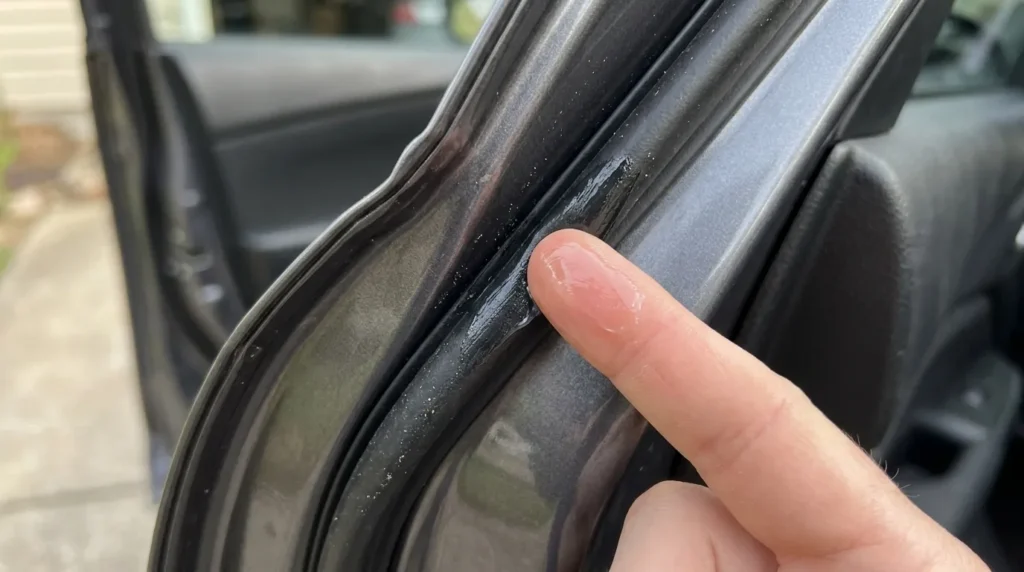
Silicone grease uses silicone oil instead of petroleum. It stays stable over a wide temperature range, repels water, and does not attack most rubber and plastics. On a car it is the go-to for:
- Weatherstripping on doors and the trunk, to keep rubber supple and stop it sticking or squeaking, especially in freezing weather.
- O-rings and rubber seals when reassembling parts.
- Electrical connectors and bulb sockets, where it keeps out moisture. Dielectric grease is a silicone grease made for this.
- Brake caliper slide pins, but only if the grease is labeled for brakes. Many brake shops use a silicone-based, high-temperature caliper grease here.
Keep silicone away from any surface you plan to paint or repair. Even a small residue can cause “fisheye” spots in fresh paint and is hard to remove.
Which one should you buy?
For most home garages, owning one tube or can of each covers almost everything:
- White lithium grease (tube or aerosol) for hinges, latches and other metal parts.
- Silicone grease (a small tube) for rubber, plastic, O-rings and connectors.
For brakes, buy a dedicated caliper or brake grease and follow the brake part maker’s instructions. For wheel bearings and grease fittings, use the grease your owner’s manual specifies.
Common questions
What’s the difference between grease and lithium grease?
“Grease” is any oil thickened into a semi-solid. Lithium grease is a grease that uses a lithium soap as the thickener. Other greases use calcium, aluminum complex, polyurea or silica thickeners, and the base oil can be mineral, synthetic or silicone.
When not to use white lithium grease?
Avoid it on rubber seals and boots (especially in brakes), on wheel bearings, on hot brake contact points, and on plastic parts unless the label says it is plastic-safe.
What is silicone grease used for?
Lubricating and protecting rubber and plastic parts: O-rings, weatherstrips, rubber bushings, electrical connectors and, with brake-rated versions, caliper slide pins.
What’s better, white lithium grease or silicone lubricant?
Neither is better overall. White lithium is better for loaded metal-on-metal parts; silicone is better on rubber and plastic and in wet conditions. Pick by the material you are lubricating.
Is dielectric grease the same as silicone grease?
Dielectric grease is a silicone grease that is used to seal electrical connections from moisture. It is not conductive, so it goes around the connection, not as a replacement for good metal contact.
Greases worth considering
How we chose: we looked at Amazon listings on November 18, 2026 and kept only items rated 4.7 stars or higher with at least 1,900 ratings. Details come from the makers’ listings. We have not tested these products ourselves. As an Amazon Associate we earn from qualifying purchases.
1. Permatex 80345 White Lithium Grease

A small tube of white lithium grease for door hinges, hood latches and other metal-on-metal parts.
Why it’s a good pick
- About 6,900 ratings at 4.7 stars
- Small size that is easy to keep in the garage
Keep in mind
- A small amount; buy a larger size for frequent use
- Keep it off brake rubber parts
2. Lucas Oil 10533 White Lithium Grease (2 pack)

Two 8 oz squeeze tubes of white lithium grease, enough for regular hinge and latch care on several vehicles.
Why it’s a good pick
- About 8,900 ratings at 4.8 stars
- Squeeze tubes are easy to apply
Keep in mind
- More than most single-car owners need
3. Super Lube 92003 Silicone Lubricating Grease with PTFE

A translucent silicone grease with PTFE for O-rings, weatherstrips and other rubber or plastic parts.
Why it’s a good pick
- About 4,400 ratings at 4.8 stars
- Safe choice for rubber and plastic
Keep in mind
- For brakes, use a grease that is labeled for brake use
4. AGS Sil-Glyde Silicone Grease

A silicone grease sold as a brake and rubber lubricant. Check the listing for its temperature range and follow your brake part maker’s instructions.
Why it’s a good pick
- About 1,900 ratings at 4.8 stars
- Labeled for brake and rubber parts
Keep in mind
- Larger tube than most DIY jobs need
Bottom line
Match the grease to the material. White lithium grease is for metal parts that pivot or slide; silicone grease is for rubber, plastic and electrical connectors. For brakes and wheel bearings, use the specific grease the part maker or your owner’s manual calls for.
Related guides: Brake cleaner vs degreaser · Brake caliper wind-back tools · How to inspect brake pads · Ceramic vs semi-metallic brake pads
Sources
- Wikipedia: Silicone grease
- Wikipedia: Lithium soap
- Wikipedia: Grease (lubricant)
- Brake & Front End: Brake lubricants
- Your owner’s manual and the brake part maker’s instructions (grease type for brakes and wheel bearings)