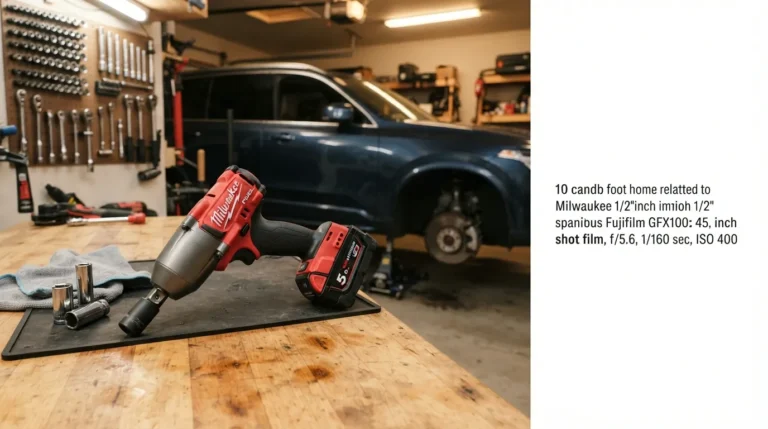

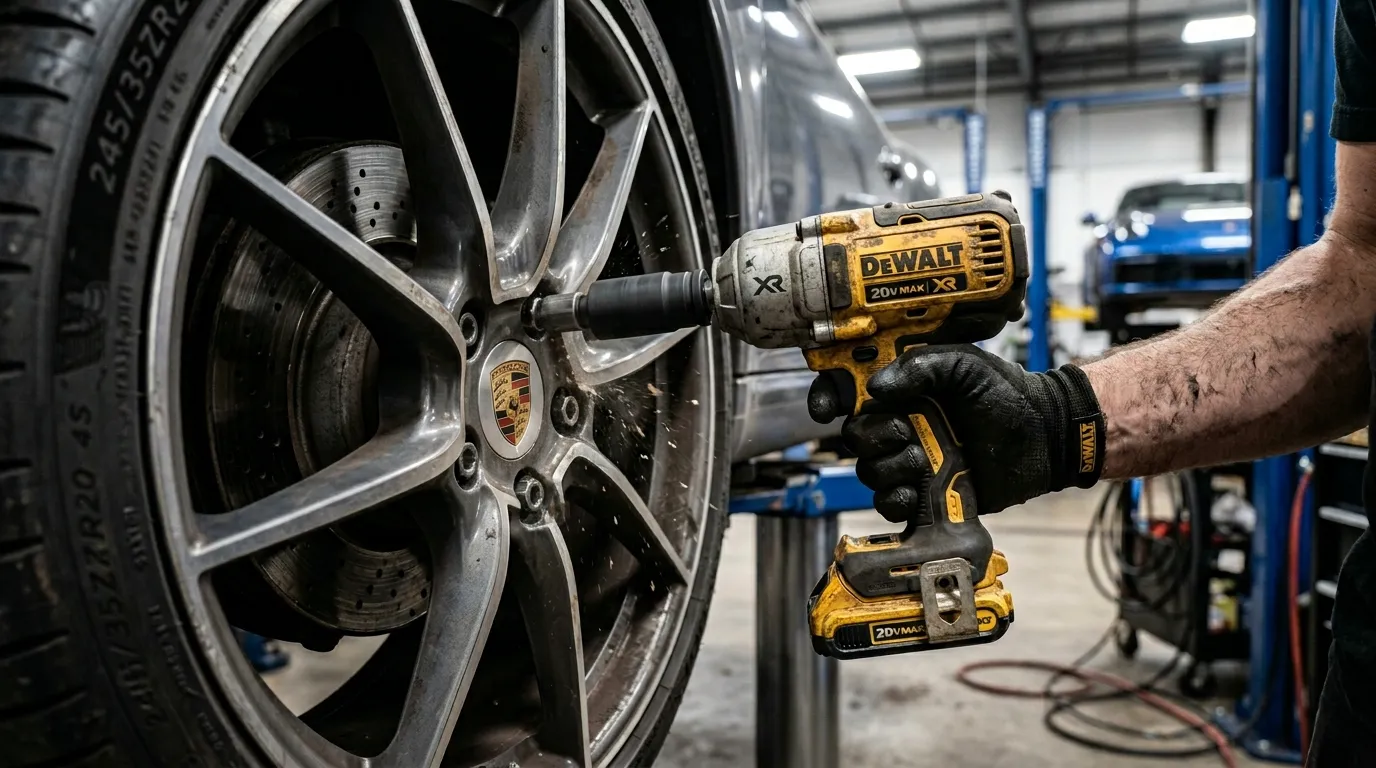
An impact wrench is the tool that makes the rattling noise you hear in tire shops. It removes a lug nut in a second or two, where a hand wrench might take a lot of effort.
Here is what an impact wrench is good at, which type to choose and, just as important, the jobs where you should not use one.
What you’ll learn
- How an impact wrench works
- Common uses on cars and beyond
- Cordless vs air vs corded
- When not to use one
Quick answer
An impact wrench is a power tool that delivers rapid, powerful rotary hammer blows to turn nuts and bolts. It is mainly used to remove and install lug nuts, break loose rusted or high-torque fasteners such as suspension, axle and crank pulley bolts, and speed up repetitive bolt work in shops and construction. Use it with impact-rated sockets, and finish critical fasteners like lug nuts with a torque wrench, because an impact wrench cannot set exact torque.
In this article

How an impact wrench works
Inside the tool, a motor spins a heavy hammer. When the fastener resists, the hammer disengages, spins up again and strikes an anvil connected to the square drive, many times per second. Each blow delivers a burst of torque.
Because the force comes in short blows rather than a steady twist, very little of it reaches your wrist. That is why a hand-held tool can break loose bolts that would need a long breaker bar.
What an impact wrench is used for
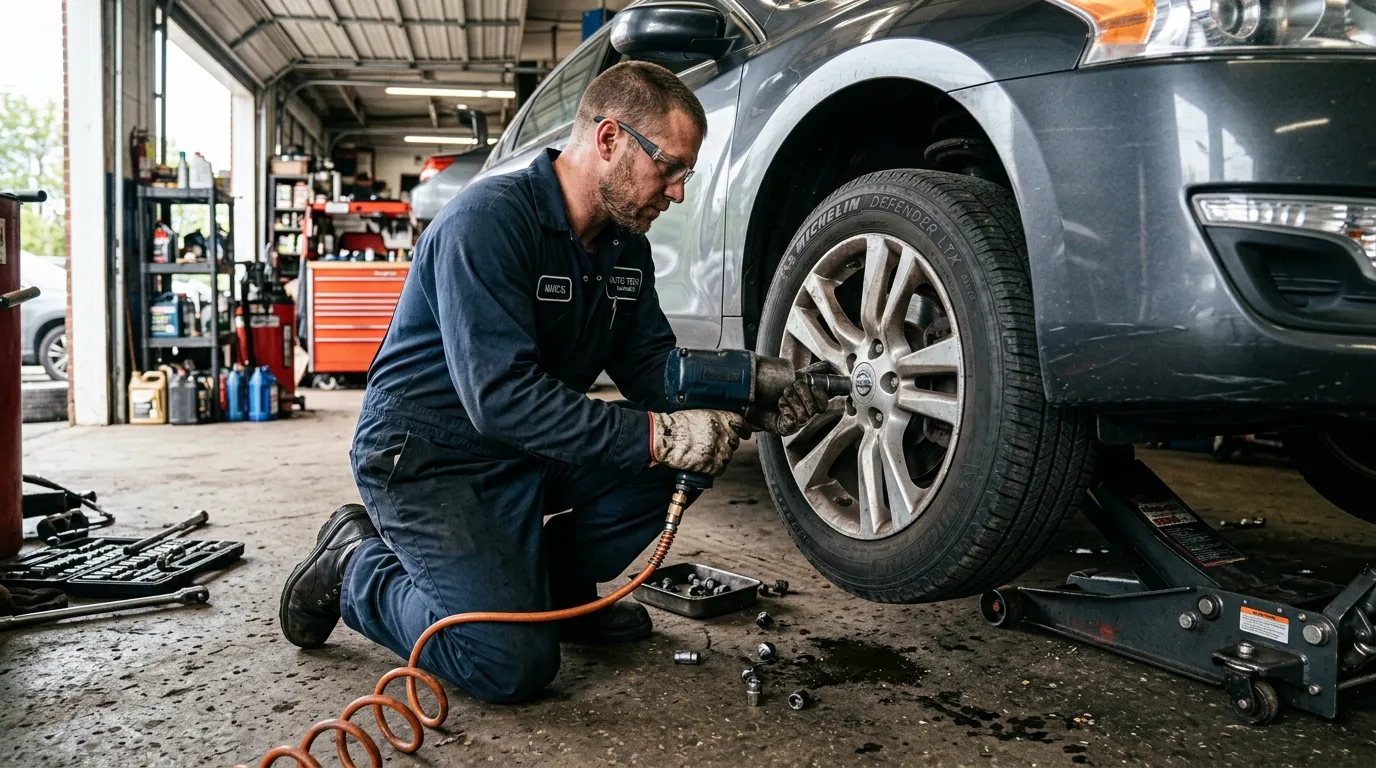
- Lug nuts: removing wheels for tire changes, rotations and brake work, and spinning nuts back on before final torque.
- Suspension and steering: control arm, strut, tie rod and sway bar bolts.
- Axle and hub nuts: large, high-torque nuts that are hard to move by hand.
- Crankshaft pulley bolts: the impact helps stop the engine turning while the bolt breaks loose.
- Rusted or seized fasteners: the hammering action often frees bolts that a steady pull would round off.
- Outside the garage: construction, steel framing, farm equipment and heavy machinery.
Types and sizes
- Cordless (battery): the most popular choice for home garages. No hose or cord, and modern 1/2-inch models are strong enough for lug nuts and most suspension work.
- Air (pneumatic): light and powerful for the price, but needs a compressor that can supply enough air (CFM). Common in professional shops.
- Corded electric: steady power and no batteries, but less common now.
- Drive size: 3/8 inch for smaller bolts and tight spaces, 1/2 inch for lug nuts and general car work, 3/4 and 1 inch for trucks and heavy equipment.
An impact driver is a different, smaller tool with a 1/4-inch hex chuck for screws and small bolts. It is not a substitute for an impact wrench on lug nuts.
How to choose one
- Torque: makers list “fastening” and higher “breakaway” (nut-busting) torque. For lug nuts and most car work, a 1/2-inch tool with a few hundred ft-lbs is plenty. Very high numbers mainly help with rusted bolts.
- Speed settings: several modes, or an auto-stop mode, help prevent over-tightening and stripped threads.
- Size and weight: a compact or stubby model reaches tight spaces in wheel wells and engine bays.
- Battery platform: if you already own batteries from one brand, staying with that brand saves money.
For full buying advice and more models, see the best impact wrench for a home garage.

Safe use and when not to use one
- Use impact-rated sockets only. Chrome hand sockets can crack under impact; see impact socket vs regular socket.
- Wear safety glasses and gloves, and keep the socket fully seated on the fastener.
- Start lug nuts by hand so they do not cross-thread.
- Snug lug nuts on a low setting or with torque sticks, then finish them in a star pattern with a torque wrench. See how to use a torque wrench correctly.
- Check the lug nuts again after the first 50 to 100 miles.
Do not use an impact wrench for small or delicate fasteners such as spark plugs, oil drain plugs, valve covers, sensors or bolts threaded into aluminum, or anywhere an exact torque matters. Over-tightened lug nuts can stretch studs and warp brake rotors.
Impact wrenches to consider
One cordless and one air model, both with a 1/2-inch drive for car work:
How we chose: We have not tested these tools ourselves. We picked a widely sold cordless model and a long-running air model from established tool brands, based on the maker’s listed specs and large numbers of Amazon ratings, and checked that both were in stock on November 3, 2026.
1. DEWALT 20V MAX Cordless Impact Wrench (DCF900P1)

A 1/2-inch cordless impact wrench that DEWALT rates at 1,030 ft-lbs fastening and 1,400 ft-lbs breakaway torque, with four speed modes and an LED light.
Why it’s a good pick
- More than enough torque for lug nuts and rusted suspension bolts
- Four modes help avoid over-tightening
- Part of a large 20V battery platform
Keep in mind
- Expensive; much more torque than lug nuts need
- Heavier than compact models
- Check the listing for what is included with your kit
2. Ingersoll Rand 231C 1/2-inch Air Impact Wrench

A long-running air impact wrench with a twin-hammer mechanism and an adjustable power regulator. Ingersoll Rand rates it at up to 600 ft-lbs of reverse torque.
Why it’s a good pick
- Proven design used in many shops
- Power regulator lets you limit output
- No batteries to charge or replace
Keep in mind
- Needs an air compressor, hose and fittings
- Small home compressors may not keep up
- Louder than most cordless models