Most cars need a coolant change every 2–5 years or 30k–150k miles, per your owner’s manual.
If you want your engine to last, you need to know how often to change coolant. I’ve serviced hundreds of vehicles, from daily drivers to track toys, and I’ve seen how a simple coolant schedule can prevent big repair bills. In this guide, I’ll break down the exact intervals, what affects them, and the easy checks you can do at home.
How often to change coolant: the recommended intervals
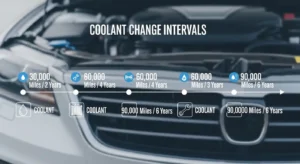
If you only remember one thing, make it this: follow your owner’s manual. Every brand sets its own timeline. That said, here are safe, research-backed ranges that match most OEM guidance. These also align with the chemistry inside your radiator fluid.
- Older green IAT coolant: every 2 years or 30,000 miles
- Dex‑Cool and most OAT coolants: every 5 years or 150,000 miles
- Many HOAT and P‑HOAT coolants (common in Asian and European cars): first change at 10 years or 120,000 miles, then every 5 years or 60,000 miles
- Heavy‑duty diesel with SCAs: test often; change based on test strip results or at 2–3 years
This covers the broad answer to how often to change coolant. Still, severe use, climate, and mixing types can shorten these timeframes. When in doubt, shorter is safer.
What coolant does and why the interval matters
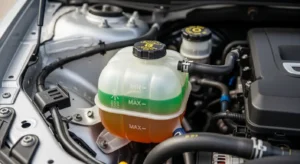
Coolant, also called antifreeze, is more than colored fluid. It protects your engine in four key ways.
- Stops freezing in winter and boil‑over in summer
- Prevents corrosion inside the radiator, water pump, and heater core
- Lubricates the water pump seal
- Stabilizes temperature for sensors, gaskets, and the head gasket
Inhibitors inside coolant wear out. Once they fade, rust starts. Scale builds up. Thermostats stick. That’s why how often to change coolant is not guesswork. It is a schedule that preserves those protective additives.
What changes your interval
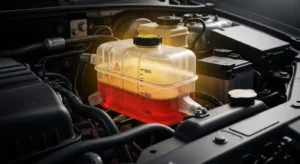
Even if two cars use the same coolant, their ideal schedule can differ. Here are the biggest factors that adjust how often to change coolant.
- Driving style
- Lots of short trips keep the engine from fully warming up. Acids build faster.
- Towing and track days run hotter. Coolant breaks down sooner.
- Climate and storage
- High heat and desert roads age coolant quicker.
- Cold winters stress freeze protection. Weak mix can slush or freeze.
- Cooling system condition
- Leaks let in air. Air speeds up corrosion.
- Old radiator caps lose pressure. Lower pressure reduces boil protection.
- Coolant chemistry and mix
- Wrong coolant for your car shortens life.
- Hard water or tap water adds minerals. Scale forms faster.
As a rule, if any of these apply, tighten your plan. If the manual says 5 years, aim for 3–4. It’s a smart move if you’re unsure how often to change coolant in a used car with unknown history.
Signs you should change coolant now
You do not need to wait for the exact due date. These red flags mean it is time.
- Color has turned brown, cloudy, or rusty
- You see flakes, debris, or sludge in the reservoir
- Sweet smell after a drive or damp spots near hoses
- Temperature swings or the car runs hot under load
- Low coolant light comes on more than once
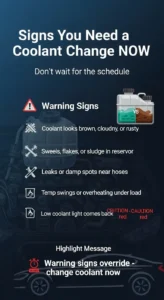
Any of these signs override the calendar. If you are asking how often to change coolant and you see these issues, the answer is now.
How to check coolant health at home
You can get a quick read in minutes with basic tools.
- Look and smell
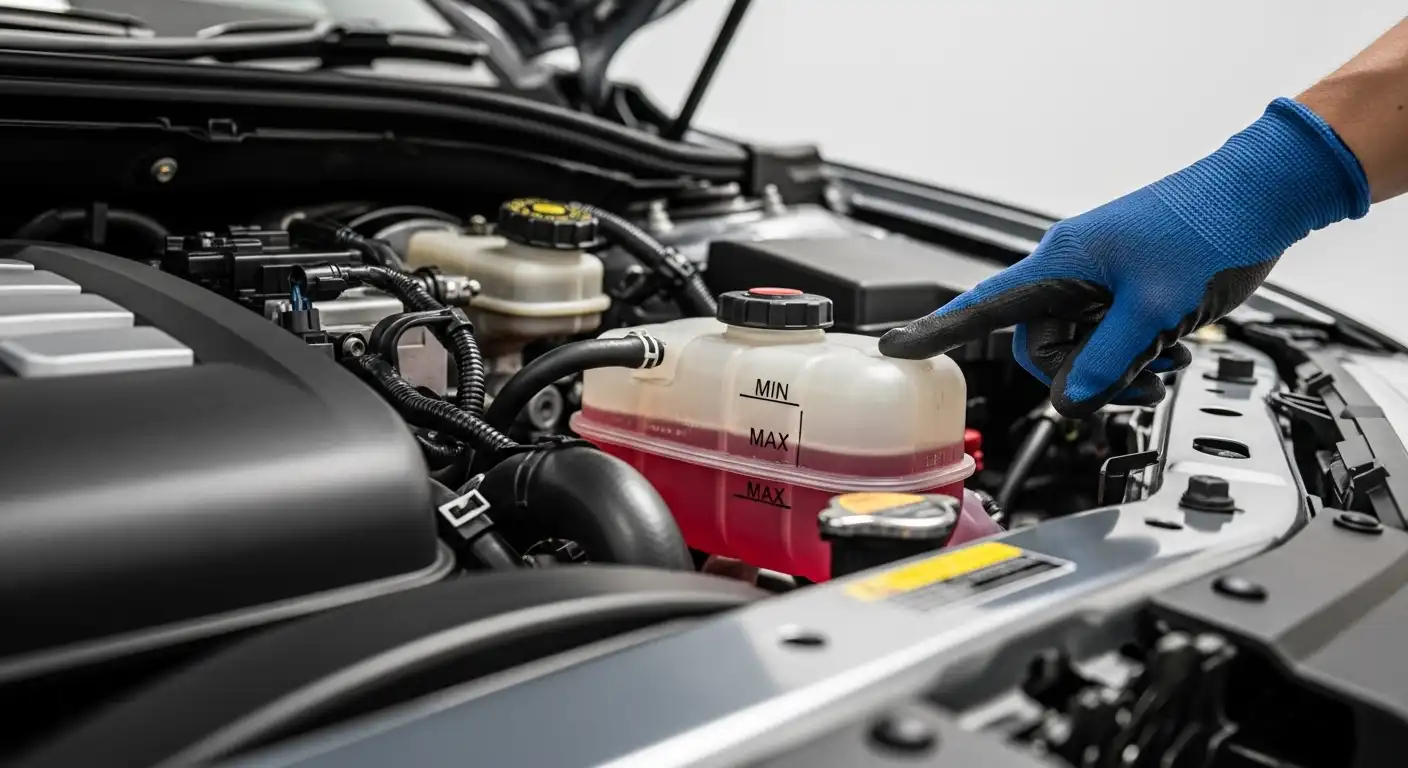
- Good coolant is clear and even in color. It should not smell burnt.
- Oil sheen or foam points to other issues. Stop and get a pro check.
- Test freeze and boil protection
- Use a hydrometer or refractometer. Aim for a 50/50 mix for most cars.
- Many newer cars prefer premixed 50/50. Do not top with straight water unless in an emergency.
- Test pH and inhibitors
- Test strips can show acidity and additive levels.
- If pH is low or reserve alkalinity is poor, plan a change.
If you bought a used car and do not know how often to change coolant in its past, start fresh. Replace it and reset the clock.

DIY coolant change: a simple, safe process
Here is my shop‑tested method. Always work on a cold engine.
- Gather supplies
- Correct OEM‑approved coolant and distilled water if not premixed
- Catch pan, funnel, gloves, safety glasses
- New radiator cap or clamps if needed
- Service manual for bleed screws and capacity
- Drain
- Open the petcock or remove the lower radiator hose.
- Drain into a pan. Capture every drop. Pets can be harmed by antifreeze.
- Optional flush
- If fluid is dirty, fill with distilled water and run the engine with the heater on until warm.
- Cool it down. Drain again. Repeat until clear.
- Refill and bleed air
- Close drains. Add the right mix or premix.
- Open bleed screws if your car has them.
- Start the engine, heater on high, and top off as bubbles purge.
- Watch the temp gauge. Squeeze the upper hose to help burp air.
- Final checks
- Cap the reservoir and radiator.
- Road test and recheck the level the next day.
If you want an easy baseline for how often to change coolant, log the date, mileage, and brand you used. Stick the note near the radiator support.
Coolant types and compatibility
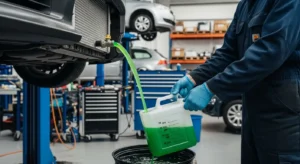
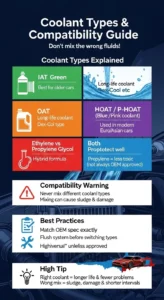
Not all coolants play nice. Mixing types can shorten life and cause sludge. This affects how often to change coolant more than people think.
- IAT
- Classic green. Short life. Good for older cars that expect it.
- OAT
- Long‑life. Often orange or red. Includes Dex‑Cool variants. Extended intervals.
- HOAT and P‑HOAT
- Hybrid mixes. Common in European and Asian cars. Often blue, pink, or purple.
- Many have long first intervals, then shorter after.
- Ethylene vs propylene glycol
- Both protect well. Propylene is less toxic but not always OEM‑approved.
Best practice
- Match the exact spec in your manual.
- If you must switch, fully flush first.
- Do not top with universal green unless it meets your OEM spec.
Choosing the right type locks in a safe plan for how often to change coolant without guesswork.
Costs, shops, warranties, and the environment
Money and rules matter here too.
- Cost
- DIY: 2–4 gallons of premix plus supplies. Often 40–120 dollars.
- Shop: Labor plus coolant. Often 120–250 dollars, more for complex bleeds.
- Warranties and service records
- Many powertrain warranties assume fluid changes on time.
- Keep receipts to prove how often to change coolant in case of a claim.
- Disposal
- Used coolant is hazardous. Take it to a recycler or parts store that accepts it.
- Never pour it on the ground or into drains.
- EVs and hybrids
- Most use glycol loops for batteries, inverters, and motors.
- Intervals vary by brand. Many are 5–10 years. Check the service guide.
Proper records protect your wallet and your engine. They also answer future buyers who ask how often to change coolant on your car.
Personal experience and pro tips
From years in the bay, a few lessons stick.
- Shorter is cheaper
- I have replaced many heater cores because coolant went too long. The bill hurts. A timely change avoids that.
- Caps and clamps count
- A weak radiator cap causes slow boil‑off. People top off with water. Corrosion follows. Replace the cap every few years.
- Bleeding takes patience
- Air pockets cause hot spots. Follow the OEM bleed steps. One customer’s “mystery overheat” was only trapped air.
- Use distilled water
- Tap water creates scale. Scale acts like a sweater on metal. Temps creep up.
- Keep a sample
- After a drain, fill a clear bottle with a few ounces of old coolant. If you ever wonder how often to change coolant next time, you can compare color and clarity.
Frequently Asked Questions of how often to change coolant
How often to change coolant in most cars?
Every 2–5 years or 30,000–150,000 miles, depending on the coolant type and the car. Always match the interval in your owner’s manual.
How often to change coolant in a Toyota or Honda?
Many modern models go 10 years or 120,000 miles for the first change, then every 5 years or 60,000 miles. Confirm the exact spec for your engine and year.
How often to change coolant if I tow or drive in extreme heat?
Shorten the interval by 25–40 percent. Extra heat and load stress the additives and move corrosion forward faster.
Do I need a coolant flush or just a drain and fill?
If the coolant is clean and on time, a drain and fill is fine. If it is rusty, brown, or contaminated, flush with distilled water until clear.
Can I mix different coolant colors?
No, color is not a spec and mixing types can cause sludge and shorter life. Use the exact OEM‑approved coolant and flush before switching types.
How often to change coolant in an EV?
Most EVs still use glycol loops and often specify 5–10 years. Check the service section of your EV’s manual for each loop.
What happens if I never change coolant?
Additives die, corrosion spreads, and scale blocks flow. That can lead to overheating, pump failure, and costly repairs.
Conclusion
Coolant is cheap insurance. Set your schedule, match the OEM spec, and keep clean fluid moving through the system. If you are still unsure how often to change coolant for your car, check the manual, test the fluid, and err on the safe side. A one‑hour service today can save a four‑figure repair tomorrow.
Take five minutes now to note your current coolant type and date. Set a reminder for the next change. Have a question or a tricky case? Drop a comment and I’ll help you dial in the right plan.