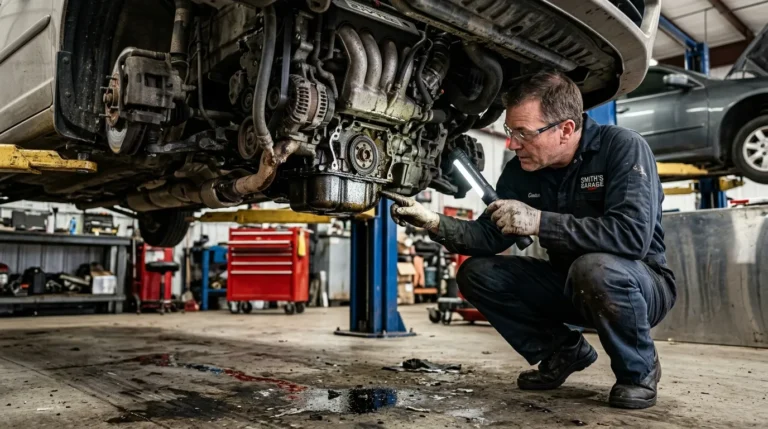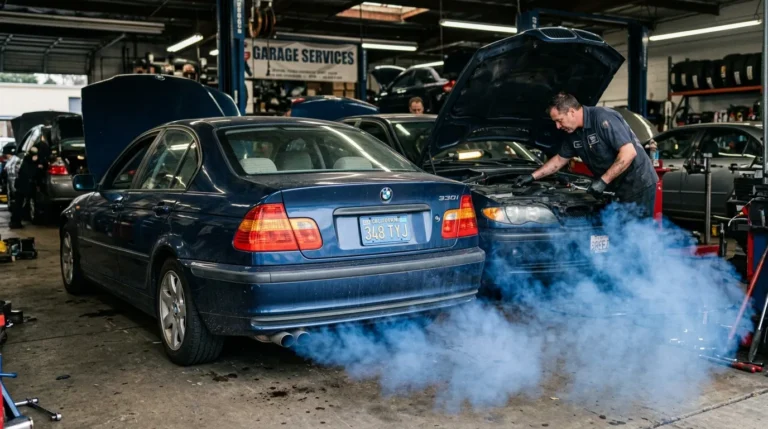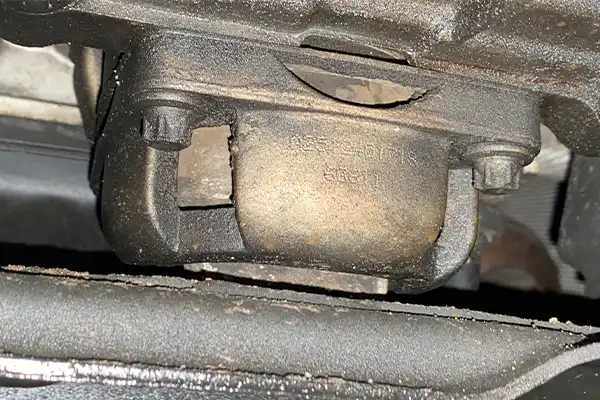
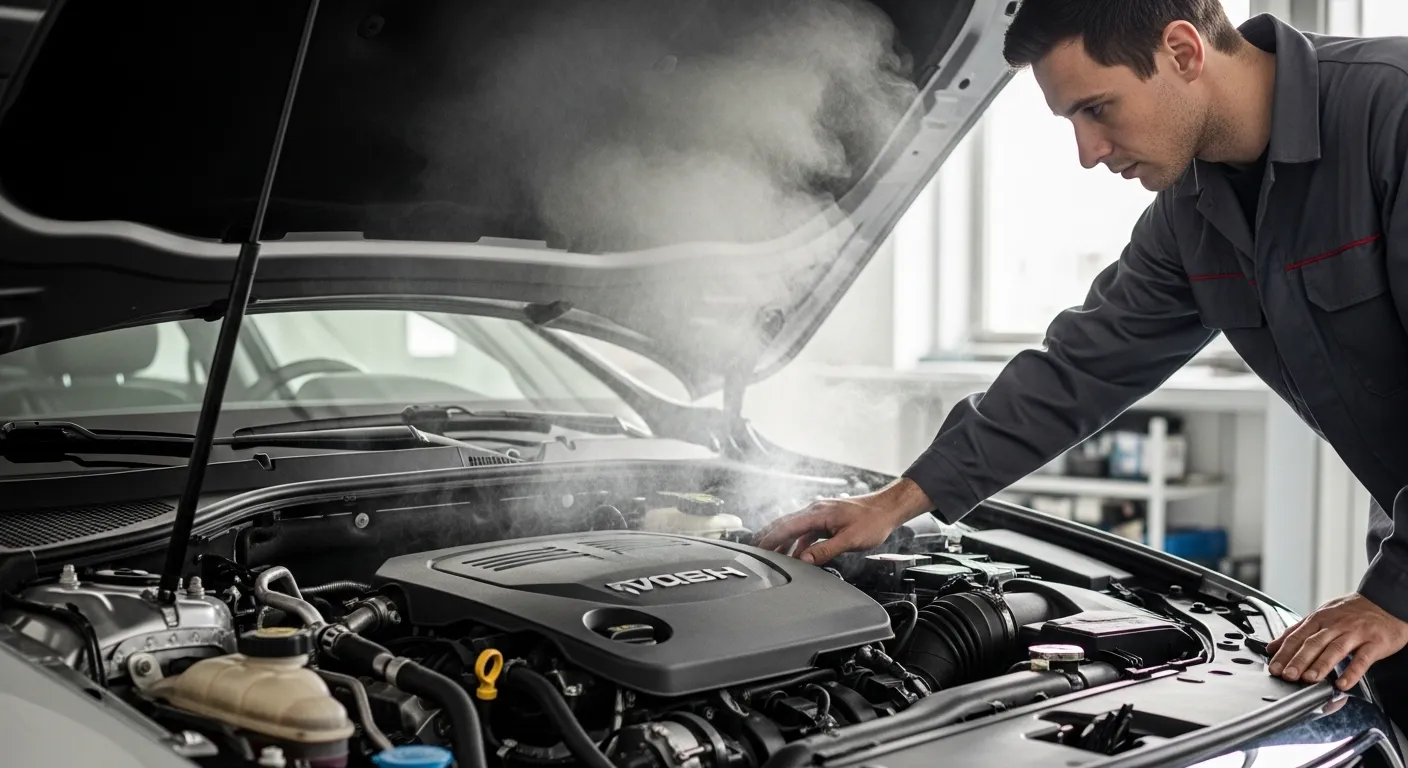
A burning oil smell means oil is hitting hot engine parts and cooking.
If your car smells like burning oil, that is your engine asking for help. I’ve diagnosed hundreds of these cases in the shop, from simple spills to major gasket leaks. In this guide, I break down what that smell means, how to find the source, what it costs to fix, and when to stop driving. You’ll learn how to spot the clues, avoid common mistakes, and protect your engine and wallet.
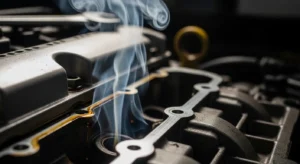
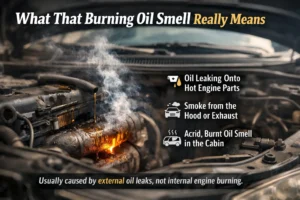
What that burning oil smell really means
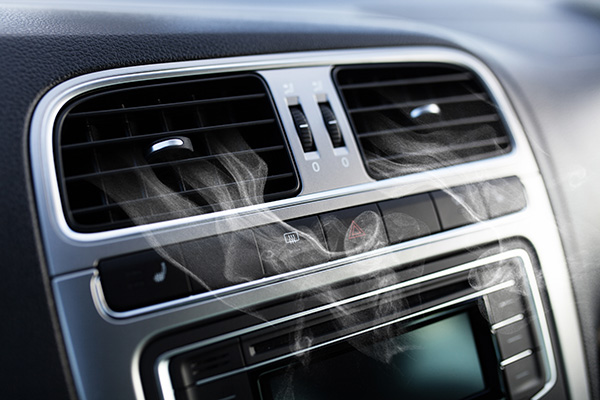
When oil leaks onto a hot surface, it vaporizes and creates a sharp, acrid smell. The odor can drift into the cabin through the vents or gaps in the firewall. You may notice faint smoke from the hood or see light bluish haze near the exhaust.
Most often, oil drips onto the exhaust manifold, catalytic converter, or turbo housing. It can also pool on engine covers and slowly cook. If your car smells like burning oil, it is almost always an external oil leak or a spill, not internal engine burning. Internal burning usually shows as blue tailpipe smoke and low oil level over time.
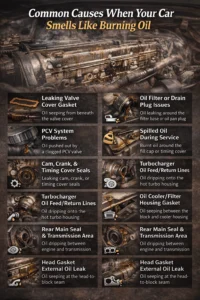
Common causes when your car smells like burning oil
Leaking valve cover gasket
A brittle or shrunken valve cover gasket lets oil seep down the engine. It often drips onto the exhaust manifold. Look for wet edges around the cover and baked-on residue.
Oil filter or drain plug issues
A loose filter, a double-stacked old filter gasket, or a crushed drain plug washer can weep oil. The leak may appear soon after an oil change. Check for fresh oil around the filter base and pan.
PCV system problems
A stuck PCV valve or clogged hose raises crankcase pressure. That forces oil out of seals and gaskets. You may also see idle issues or whistling.
Spilled oil during service
A small spill near the fill cap or on the timing cover can smoke for days. It is common right after an oil change. Clean the area and monitor.
Cam, crank, and timing cover seals
Aging seals at the front or rear of the engine can leak onto belts or exhaust parts. You might hear belt squeal if oil reaches the belt. Inspect behind the crank pulley and along the timing cover.
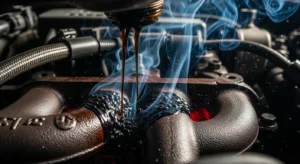
Turbocharger oil feed or return lines
Turbo engines run very hot. A leaking banjo fitting or line drips right onto the turbine housing. Look for wet lines and baked oil on the turbo.
Oil cooler or filter housing gasket
Many engines have a cooler or housing that seals to the block. The gasket can fail and leak onto the downpipe. Check joints with a mirror and light.
Rear main seal and transmission area
A rear main seal leak leaves oil between the engine and transmission. It can mist onto the exhaust if airflow pulls it back. Inspect the bellhousing area.
Head gasket external oil leak
Less common, but an external oil passage can seep at the head. It will show as a wet line at the head-to-block seam. Do not confuse this with coolant leaks, which smell sweet.
If your car smells like burning oil after driving, start with these suspects. Most are visible with a light and patience.
Quick diagnosis at home
- Park in a safe spot and let the engine cool. Do not touch hot parts.
- Check the oil level. If it is low, top up. Note how much you add.
- With a flashlight, look for wet or shiny spots around the valve cover, oil cap, filter, and drain plug.
- Start the engine. Watch for light smoke from the manifold area. Sniff near the front of the hood, not at the tailpipe.
- Place clean cardboard under the car overnight. Note drip spots and locations.
- Wipe suspected areas clean. Drive 10 minutes. Recheck for fresh oil tracks.
- Dust suspected areas with talc or baby powder. Fresh leaks cut clear paths through the powder.
- If you have a UV kit, add oil dye and scan with the light. It makes hidden seeps glow.
- Turn the heater on. If the smell gets stronger, oil is likely near the exhaust or cowl area.
- Scan for engine codes. PCV and misfire codes can back up a leak diagnosis.
If your car smells like burning oil but you cannot find a leak, it may be a small weep that only shows when hot. In that case, a shop pressure wash and dye test help a lot.

Source: fremontforeignauto.com
Is it safe to drive when your car smells like burning oil?
Short trips can be okay if the leak is tiny and the oil level stays full. But heat and oil are a risky mix. Oil on a catalytic converter can smoke heavily and, in rare cases, ignite.
Stop driving and get help if:
- Oil level drops fast or the oil light turns on.
- You see heavy smoke from under the hood.
- The smell is strong in the cabin and you feel lightheaded.
- Belts slip or squeal, or you see oil on a hot exhaust.
If your car smells like burning oil and you keep driving, you risk fire, damaged rubber parts, and engine wear from low oil.

Fixes by cause and typical costs
Prices vary by vehicle, engine layout, and region. These ranges reflect common shop figures and manufacturer labor guides.
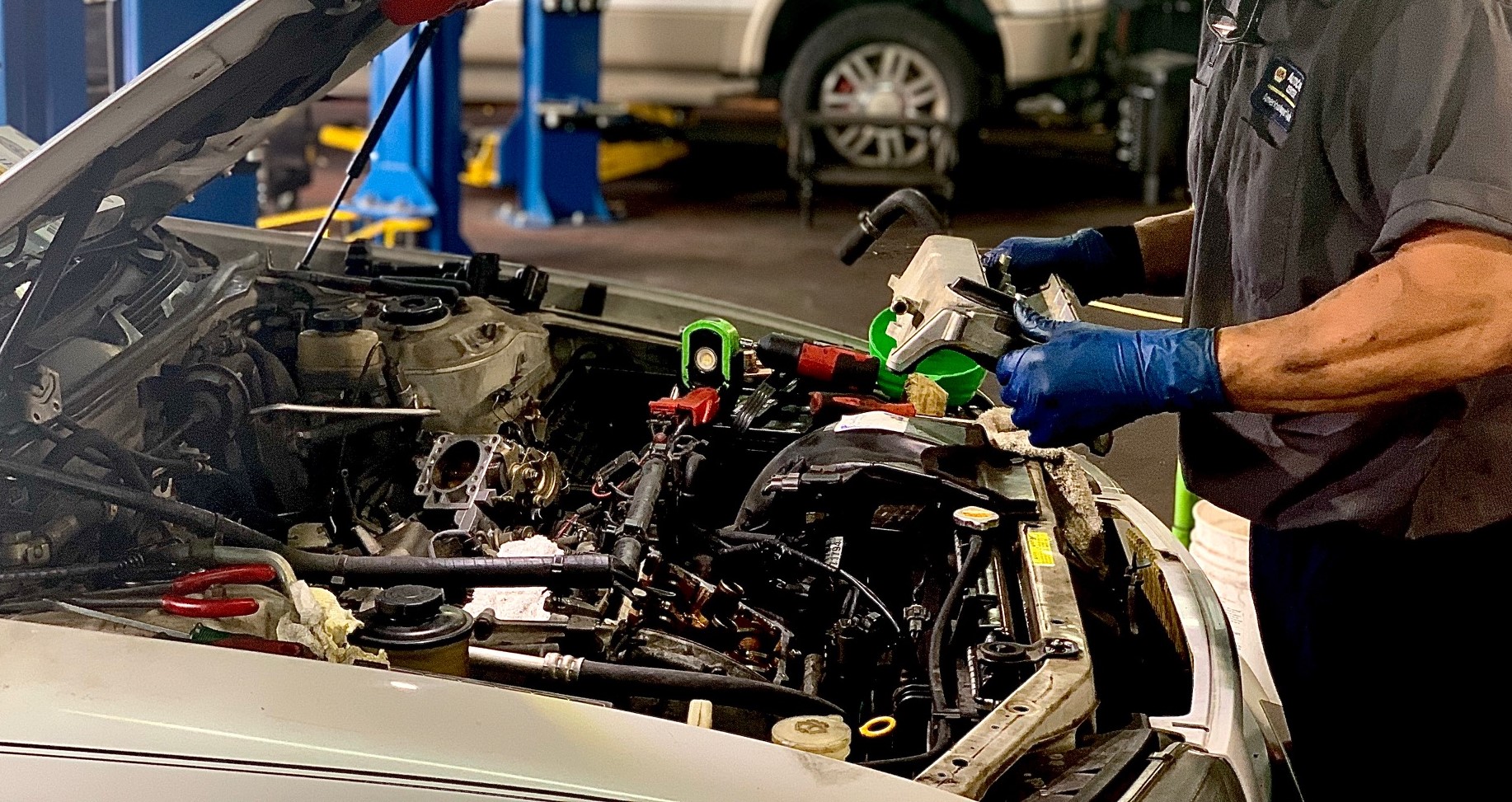
- Valve cover gasket. Parts and labor: 150 to 500 dollars. V6 and turbo engines can cost more.
- Oil filter or drain plug issue. 2 to 20 dollars for a washer or filter. Tighten to spec and clean.
- PCV valve or hose. 50 to 250 dollars. Some are buried under intakes.
- Cam or crank seals, timing cover reseal. 300 to 900 dollars. Timing belt engines may add parts.
- Turbo oil line reseal. 200 to 600 dollars. Replace crush washers, check line routing.
- Oil cooler or filter housing gasket. 150 to 450 dollars. Clean surfaces well; torque in sequence.
- Rear main seal. 800 to 1800 dollars. Transmission removal drives the cost.
- Head gasket external oil leak. 1200 to 3000 dollars. Confirm with dye before approving work.
- Spill burn-off only. 0 dollars. Clean with degreaser and allow a few heat cycles.
If your car smells like burning oil after a fix, a little leftover residue can smoke for one to three short trips. If it lasts longer, recheck for an active leak.
Source: americanimportrepair.com
Prevention tips and smart maintenance
- Check oil every few fill-ups. Catch drops early.
- Use the correct oil grade and spec. Follow the owner’s manual.
- Replace the drain plug washer at each change. Torque to spec.
- Wipe spills and rinse with a safe engine degreaser after service.
- Inspect the PCV system every 30,000 to 60,000 miles. Replace brittle hoses.
- Choose quality gaskets and seals. Cheap rubber hardens fast.
- Keep the engine bay clean. Leaks show sooner on a clean surface.
- After any repair, look for fresh wet spots over the next few drives.
- If your car smells like burning oil, do not ignore it. Small leaks grow.
Source: ricksautomotive.us
Related smells you might confuse with burning oil
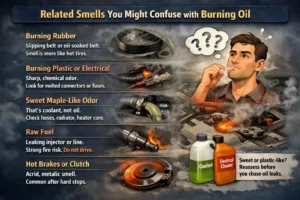
- Burning rubber. Usually a slipping belt or oil-soaked belt. Smell is more like hot tires.
- Burning plastic or electrical. Sharp, chemical odor. Look for melted connectors or fuses.
- Sweet maple-like odor. That is coolant, not oil. Check hoses, radiator, and heater core.
- Raw fuel. Leaking injector or line. Strong fire risk. Do not drive.
- Hot brakes or clutch. Acrid, metallic smell after hard stops or hill starts.
If your car smells like burning oil but the odor seems sweet or like plastic, reassess before you chase oil leaks.
Real-world stories from the shop
A sedan came in after an oil change. The car smells like burning oil, the owner said. The filter had a double gasket. Oil seeped at idle and hit the downpipe. One new filter, a wipedown, and two heat cycles later, the smell was gone.
Another case was a turbo SUV. The car smells like burning oil only after boost. The turbo return line O-ring was flat and weeping. We replaced the O-ring, cleaned the turbo housing, and advised a follow-up check. No more smell.
In winter, I saw a small hatchback where the car smells like burning oil and the idle hunted. The PCV valve was stuck. Pressure pushed oil past the valve cover gasket onto the manifold. A new PCV and gasket fixed both the smell and the idle.
Frequently Asked Questions of car smells like burning oil
Why does my car smell like burning oil after an oil change?
Likely a small spill on a hot part, a loose filter, or a double-stacked old gasket. Clean the area and check torque on the filter and drain plug.
Is it safe to drive if my car smells like burning oil but I see no leaks?
Short, careful trips may be okay if the oil level stays full. If the smell gets stronger or you see smoke, stop and inspect.
How long does spilled oil take to burn off?
A light film can burn off in one to three short drives. If the smell lingers longer, there is probably an active leak.
Why do I smell burning oil only with the heater on?
Air passes near the engine bay before entering the cabin. If oil is on the manifold or downpipe, the heater can carry that odor inside.
Can a bad head gasket make my car smell like burning oil?
Yes, but it is less common. External oil passage leaks can seep and cook on hot parts, while internal failures usually show as coolant issues.
My car smells like burning oil at idle but not while cruising. Why?
At idle, less airflow clears odors, and drips can hit hot parts and smoke. While moving, wind disperses the smell.
Will synthetic oil stop the burning oil smell?
Synthetic oil does not stop a leak by itself. It may resist burn-off a bit, but you must fix the source.
How do I find a tiny leak that only shows when hot?
Clean the area, add UV dye, and drive 10 to 15 minutes. Scan with a UV light to trace the fresh trail.
Conclusion
If your car smells like burning oil, treat it as a helpful alarm. Most cases are simple to confirm and fix when you know where to look. Catching a small seep today can save you from big repairs and downtime later.
Check your oil, follow the steps, and do a clean-and-dye test if needed. If you are unsure, book a trusted shop and ask for a pressure wash and UV diagnosis. Want more practical car care guides? Subscribe, share your questions, or drop your story in the comments.