Engine misfires come from faults in spark, fuel, air, or compression—and timing.
If your car stumbles, shakes, or loses power, you are not alone. Drivers often ask what causes engine misfire because it can show up at idle, on the highway, or under load. I’ve diagnosed hundreds of misfires in real bays with real tools. In this guide, I will show you what causes engine misfire, how to find it fast, and how to fix it right the first time.
Source: slashgear.com
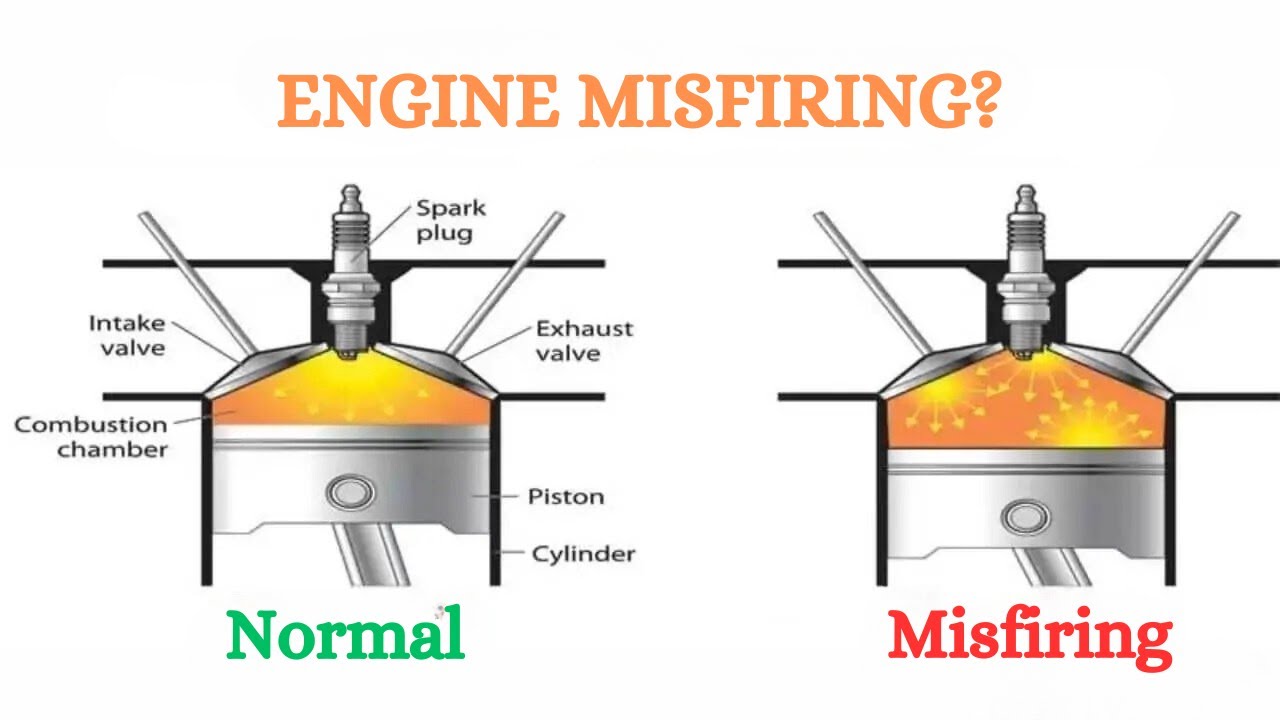
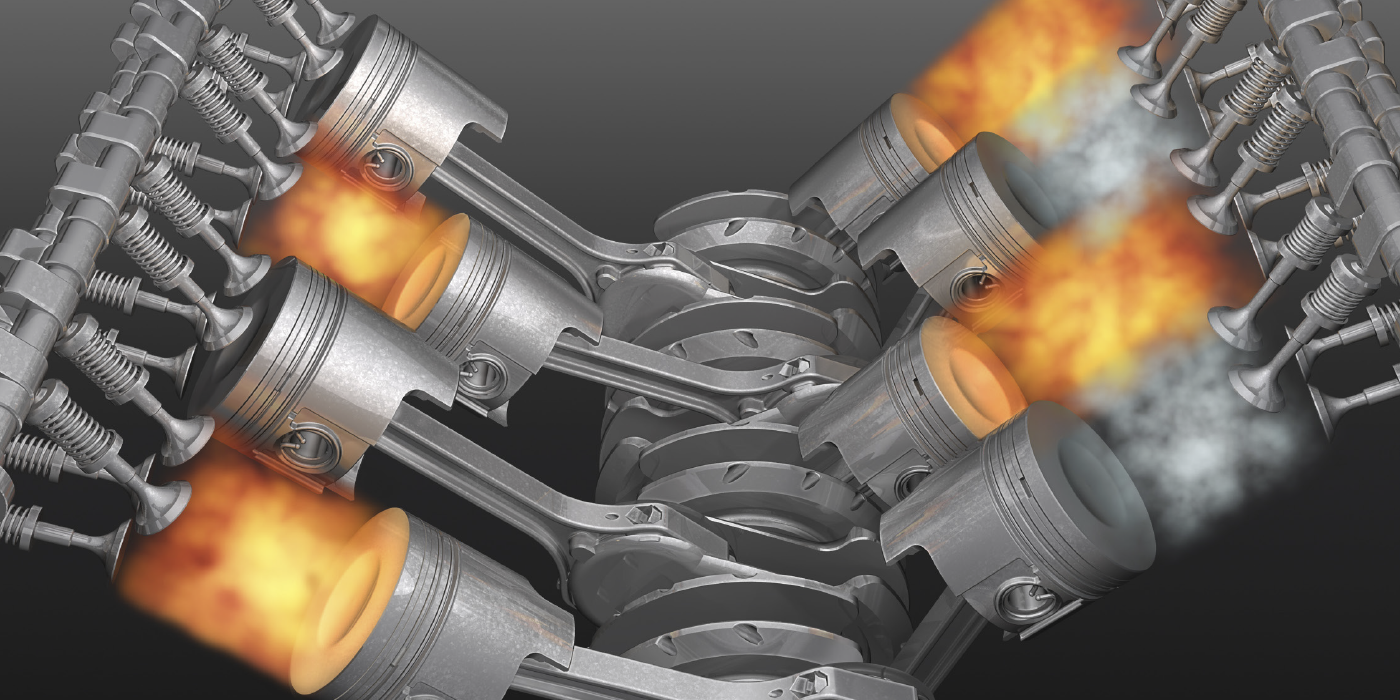
How a healthy engine fire works
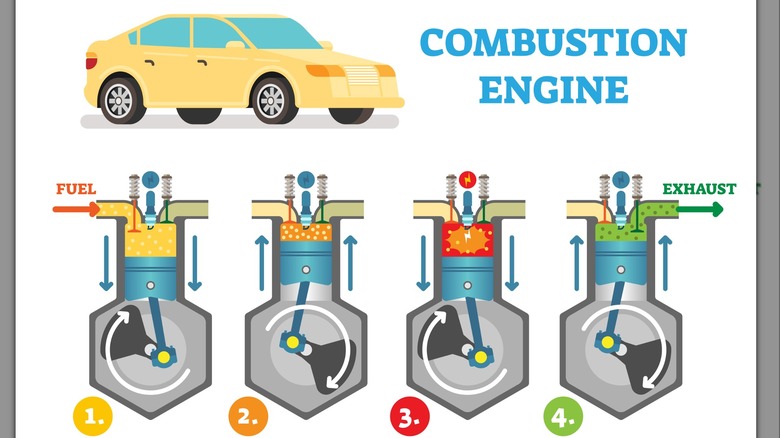
A gas engine is simple at heart. It needs the right air, the right fuel, the right spark, and the right squeeze. Those parts must meet at the right time.
Here is the cycle in plain words:
- Air and fuel mix in the cylinder.
- The piston compresses the mix.
- The spark plug lights it.
- The burn pushes the piston down to make power.
Modern cars add control. The ECU watches sensors and trims fuel and timing. If any part is off, the burn is weak or late. That is when a misfire starts.
What causes engine misfire: 12 common culprits
When people ask what causes engine misfire, I point to four core areas: spark, fuel, air, and compression. Timing and control tie them all together. A miss can be one fault or a stack of small faults. Here are the usual suspects I see in the shop.
Ignition problems
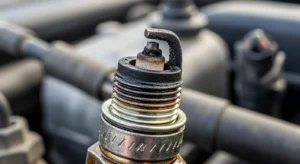
- Worn spark plugs. Big gaps, fouling, or cracks make weak sparks. Turbo and direct-injection engines eat plugs faster.
- Failing ignition coils. Heat and vibration break them down. A coil-on-plug unit can fail on one cylinder.
- Bad plug wires or boots. Carbon tracks or tears let the spark leak to ground.
Fuel delivery issues
- Clogged injectors. The spray turns uneven. One cylinder runs lean and stumbles.
- Weak fuel pump or clogged filter. Low pressure under load means miss on hills or merges.
- Bad fuel. Water or low octane knocks power and causes random misses.
Air, vacuum, and sensors
- Vacuum leaks. A cracked hose or intake gasket leans out the mix at idle.
- Dirty or failing MAF. The ECU guesses wrong on air, so fuel trim swings.
- Stuck EGR or faulty PCV. A stuck-open EGR dilutes the mix. A stuck PCV adds false air.
Compression and mechanical faults
- Burned valve or worn rings. Low compression makes a dead hole.
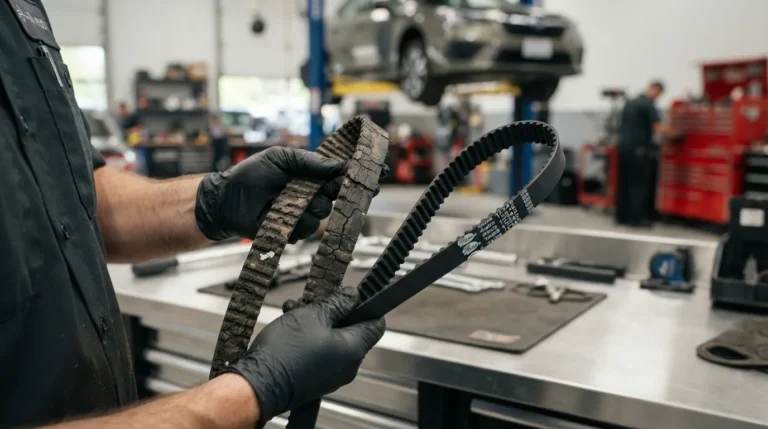
- Timing chain or belt stretch. Valve timing slips. The mix burns at the wrong time.
- Head gasket leak. Coolant in the cylinder kills the flame and can foul the plug.
Exhaust and emissions
- Clogged catalytic converter. Backpressure rises. The engine cannot breathe under load.
- Faulty O2 sensor upstream. The ECU trims wrong and can swing lean or rich.
Electrical and control
- Weak battery or charging system. Low voltage hurts coil output and injector control.
- ECU software bugs. Some cars need updates for cold-start or idle misses.
Real-world tip: In my bay, most single-cylinder misses are coil or plug. Most random misses at idle are vacuum leaks or MAF drift. What causes engine misfire on rainy days? Often wet coils or wires. What causes engine misfire after a car wash? Water in plug wells.
Why it matters: A misfire can melt the catalytic converter fast. Raw fuel hits the cat and overheats it. If the MIL flashes, park it and fix it now.

Source: superiorautoservice.net
Symptoms, codes, and how to diagnose
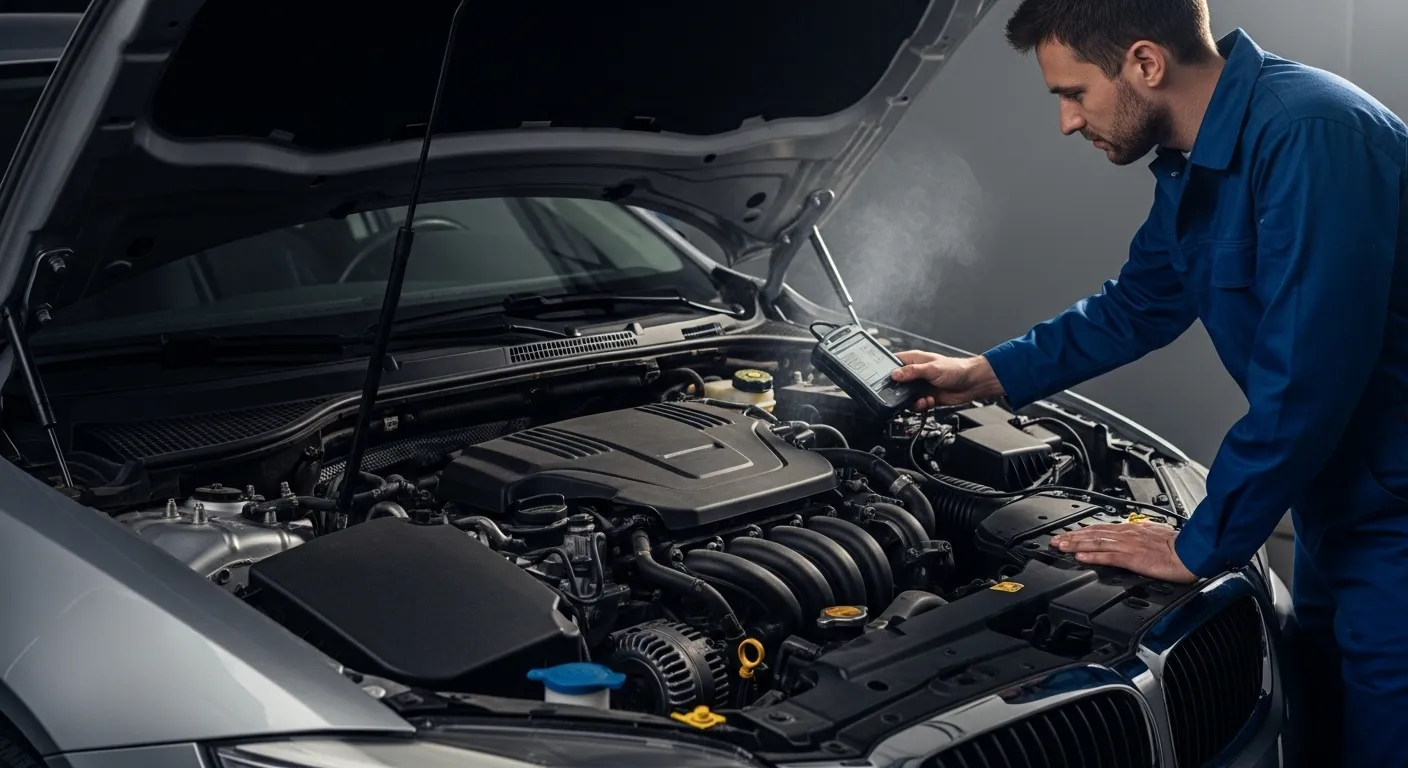
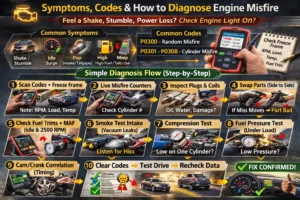
You may feel a shake, stumble, or a lack of power. The idle may surge. You may hear a pop from the intake or the tailpipe. Fuel use climbs. The check engine light may blink. The ECU logs codes like P0300 for random misfire or P0301–P0308 for a named cylinder.
Use this simple flow that I use in the field:
- Scan for codes and freeze frame. Note RPM, load, temps.
- Check live misfire counters per cylinder if your tool supports it.
- Inspect plugs, coils, and boots. Look for oil, water, or tracks.
- Swap parts side to side. If the miss moves, you found the part.
- Check fuel trims and MAF grams per second at idle and 2500 RPM.
- Smoke test the intake for vacuum leaks. Listen for hiss.
- Run compression or leak-down on the bad hole.
- Check fuel pressure under load with a gauge.
- Check cam and crank correlation if timing is suspect.
- Clear codes, test drive, and recheck data.
Quick PAA-style answers
Is it safe to drive with a misfire?
If the check engine light flashes, do not drive. You can damage the catalytic converter in minutes. If it is solid and mild, drive gently to a shop.
Can low fuel cause a misfire?
Yes. The pump can suck air in low tanks on hard turns or hills. This starves the rail and causes a stumble.
Will a bad O2 sensor cause a misfire?
An upstream O2 stuck lean or rich can skew fuel trims. That can tip a weak cylinder into a miss, most at idle or cruise.
What causes engine misfire often shows in data before parts. Look at trims, O2, and MAF. The numbers tell a story.
Fixes that work: from quick wins to deeper repairs
Start with the basics. Simple steps fix most cars fast. What causes engine misfire on many modern cars is a worn plug or a weak coil.
Fast, proven fixes
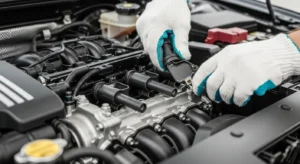
- Replace spark plugs with OEM spec and gap. Use anti-seize only if specified.
- Replace the bad ignition coil on the failed cylinder. On high-mile cars, consider the full set.
- Dry out plug wells. Replace leaky valve cover gaskets if oil is present.
- Clean or replace a dirty MAF. Use only MAF-safe cleaner.
- Fix vacuum leaks. Replace cracked hoses, PCV valves, and intake gaskets.
- Clean or service injectors. On stubborn cases, replace the one that is out of spec.
- Update ECU software if a TSB exists for cold-start or idle misfire.
- Restore fuel pressure. Replace weak pump or clogged filter.
Deeper repairs
- Replace timing belt or chain guides if timing is off.
- Repair a burned valve. This needs head work and a valve job.
- Replace a blown head gasket. Check for warped head and deck.
Shop story: A sedan came in with P0302. The coil looked fine. The plug gap was huge. I swapped in a new plug set and the misfire was gone. Two weeks later it was back. This time I found oil in the plug well. A new valve cover gasket was the real cure. Lesson: Fix the cause, not just the code.
What causes engine misfire can be more than one thing. Check the system as a whole. Verify your fix with a test drive and live data.
.jpeg)
Source: hbautoandac.com
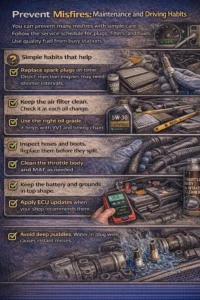
Prevent misfires: maintenance and driving habits
You can prevent many misfires with simple care. Follow the service schedule for plugs, filters, and fluids. Use quality fuel from busy stations.
Simple habits that help
- Replace spark plugs on time. Direct-injection engines may need shorter intervals.
- Keep the air filter clean. Check it at each oil change.
- Use the right oil grade. It helps with VVT and timing chain health.
- Inspect hoses and boots. Replace them before they split.
- Clean the throttle body and MAF as needed.
- Keep the battery and grounds in top shape.
- Apply ECU updates when your shop recommends them.
- Avoid deep puddles. Water in plug wells causes instant misses.
If you wonder what causes engine misfire after long storage, stale fuel is common. Add fresh fuel and a cleaner, then test.
Cost, severity, and when to stop driving
Costs range by cause. A set of plugs is low. A coil is mid. A valve job is high. A ruined cat is very high. That is why catching a misfire early saves money.
Typical ranges I see
- Spark plugs: low cost, short time.
- One ignition coil: low to mid cost.
- MAF or injectors: mid cost.
- Vacuum leak repair: low to mid cost.
- Timing or valve work: high cost.
- Catalytic converter after long misfire: very high cost.
If you ask what causes engine misfire to turn a light from solid to flashing, the answer is a raw-fuel event under load. Ease off and stop. Tow it if needed. Protect the cat.
Source: underhoodservice.com
Frequently Asked Questions of what causes engine misfire
What causes engine misfire at idle but not at speed?
Vacuum leaks and EGR or PCV faults stand out at idle. Weak sparks also show more at idle when the mix is leaner.
What causes engine misfire under load or uphill?
Low fuel pressure, clogged cats, and weak coils show up under load. The cylinder needs stronger spark and steady fuel when torque is high.
Can a dirty throttle body cause a misfire?
Yes. A sticky plate causes unstable airflow and low idle air. The mix can go lean and stumble.
Does bad gas cause a misfire?
It can. Water or wrong octane changes the burn. The ECU cannot fix that on the fly.
Will a bad injector always set a code?
Not always. The ECU may see a miss but not know why. A balance test or swap test can prove a weak injector.
Can a misfire damage my catalytic converter?
Yes. Unburned fuel burns in the cat and overheats it. Damage can happen fast if the light flashes.
Does a misfire mean I need a tune-up?
Often, yes. Plugs and coils fix many cases. But always test first, or you may miss a vacuum or sensor fault.
Conclusion
A smooth engine needs clean air, steady fuel, strong spark, and solid compression. When any link breaks, you feel it. Now you know what causes engine misfire, how to spot it, and which fixes work. Start with data, confirm the root cause, and repair with care. You will save time, money, and your catalytic converter.
Ready to keep your car running right? Use the checklists here, book a test with a good shop, and share your results. Want more guides like this? Subscribe and drop your questions in the comments.