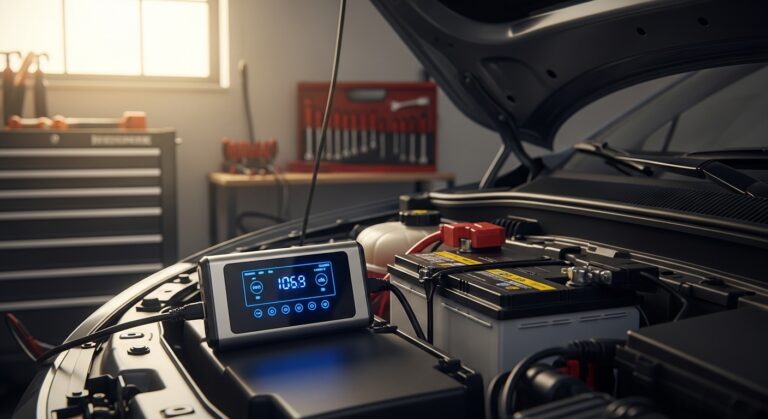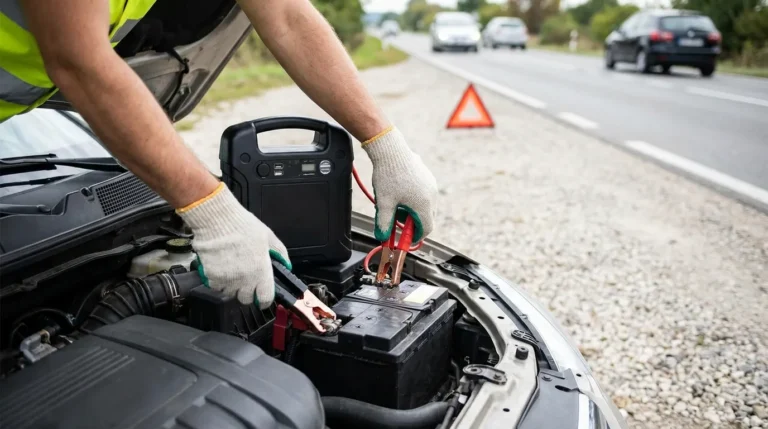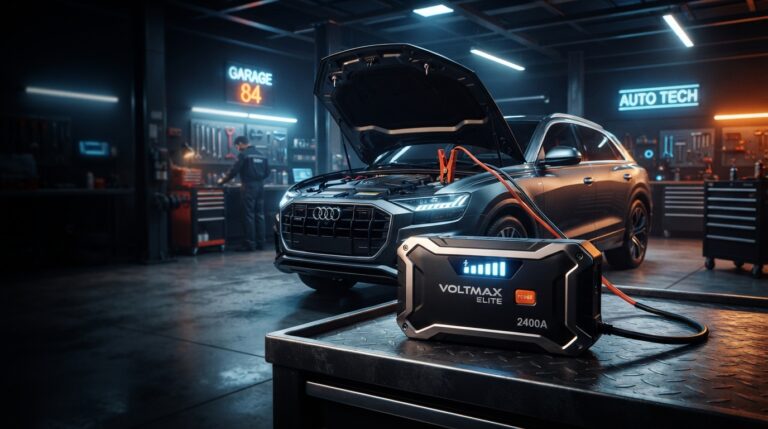
Lithium jump starters are lighter, faster, and safer; lead acid is cheaper and simpler for infrequent use.
I’ve tested both types across cars, trucks, and cold mornings. This guide on lithium vs lead acid jump starter compares chemistry, power, weight, cost, lifespan, and real-world use. I’ll share hands-on tips, mistakes I made, and a clear checklist so you can pick the best jump starter for your needs.
How vehicle jump starters work
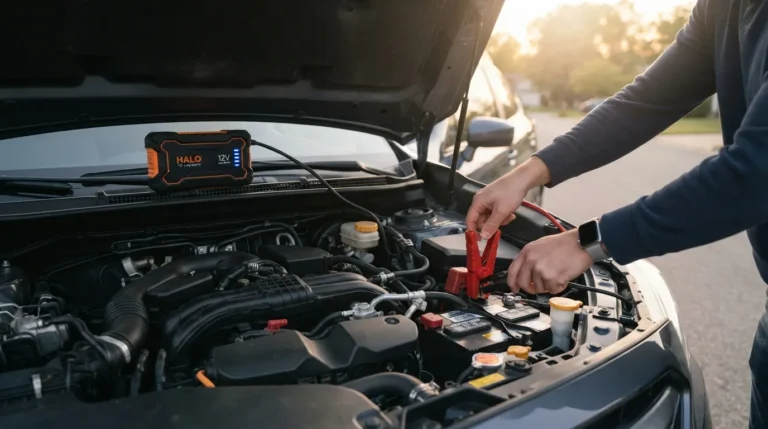
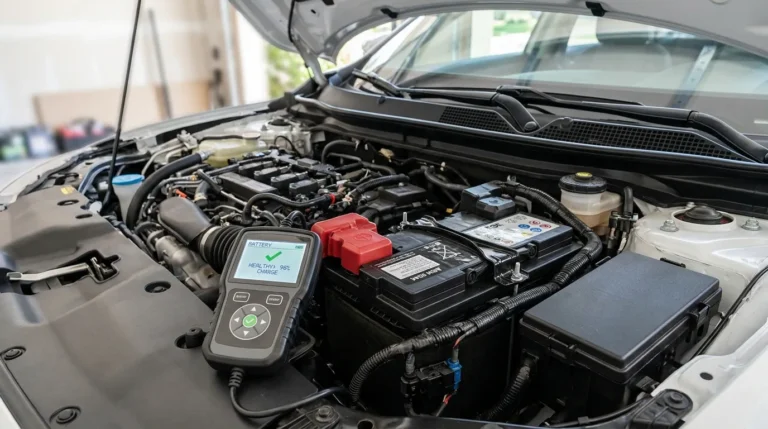
A jump starter supplies stored electrical energy to a vehicle battery to start an engine. It bypasses a discharged battery and delivers current to the starter motor. Basic parts include the battery pack, clamps, cables, internal safety circuits, and sometimes integrated USB ports or air compressors.
Key technical terms to know
- Cranking amps (CA): current available at 32°F for 30 seconds.
- Cold cranking amps (CCA): current available at 0°F for 30 seconds; important in cold climates.
- Peak amps: short burst current a pack can deliver, not the sustained start rating.
Understanding these terms helps when comparing lithium vs lead acid jump starter options. I learned early to look beyond peak amps and check CCA for winter starts.
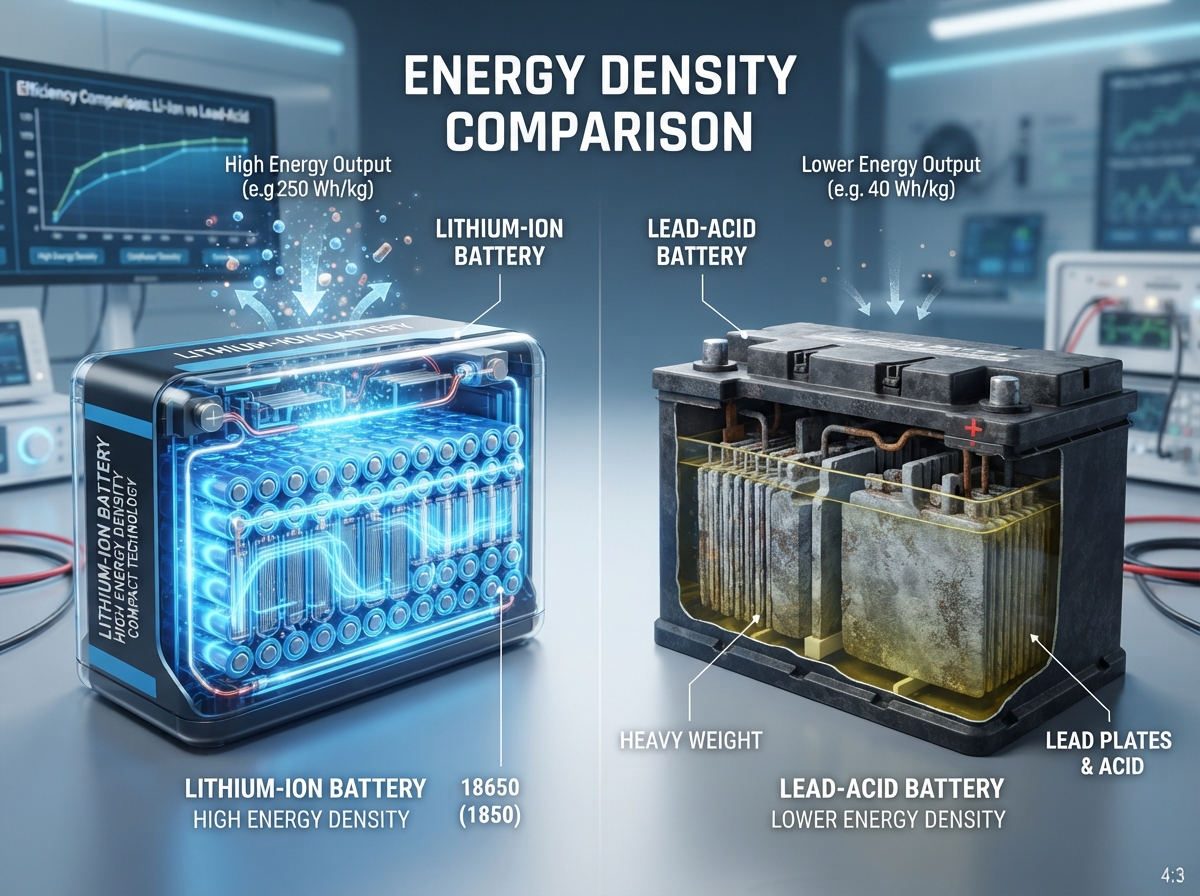
Lithium vs lead acid jump starter: key differences
This section breaks down the major contrasts between lithium and lead acid jump starters.
Chemistry and cell type
- Lithium: typically lithium-ion or LiFePO4. Higher energy density.
- Lead acid: sealed lead-acid (SLA) or absorbed glass mat (AGM). Lower energy density.
Weight and portability
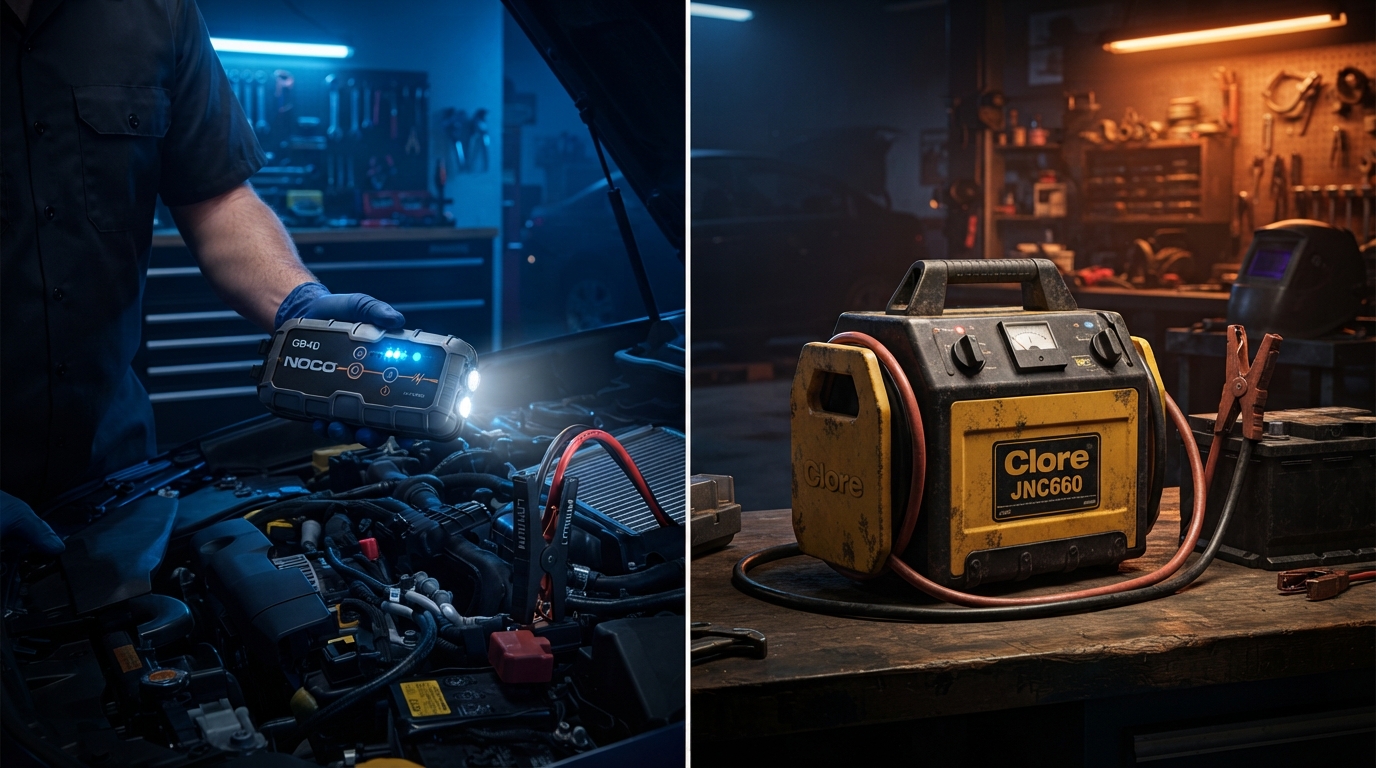
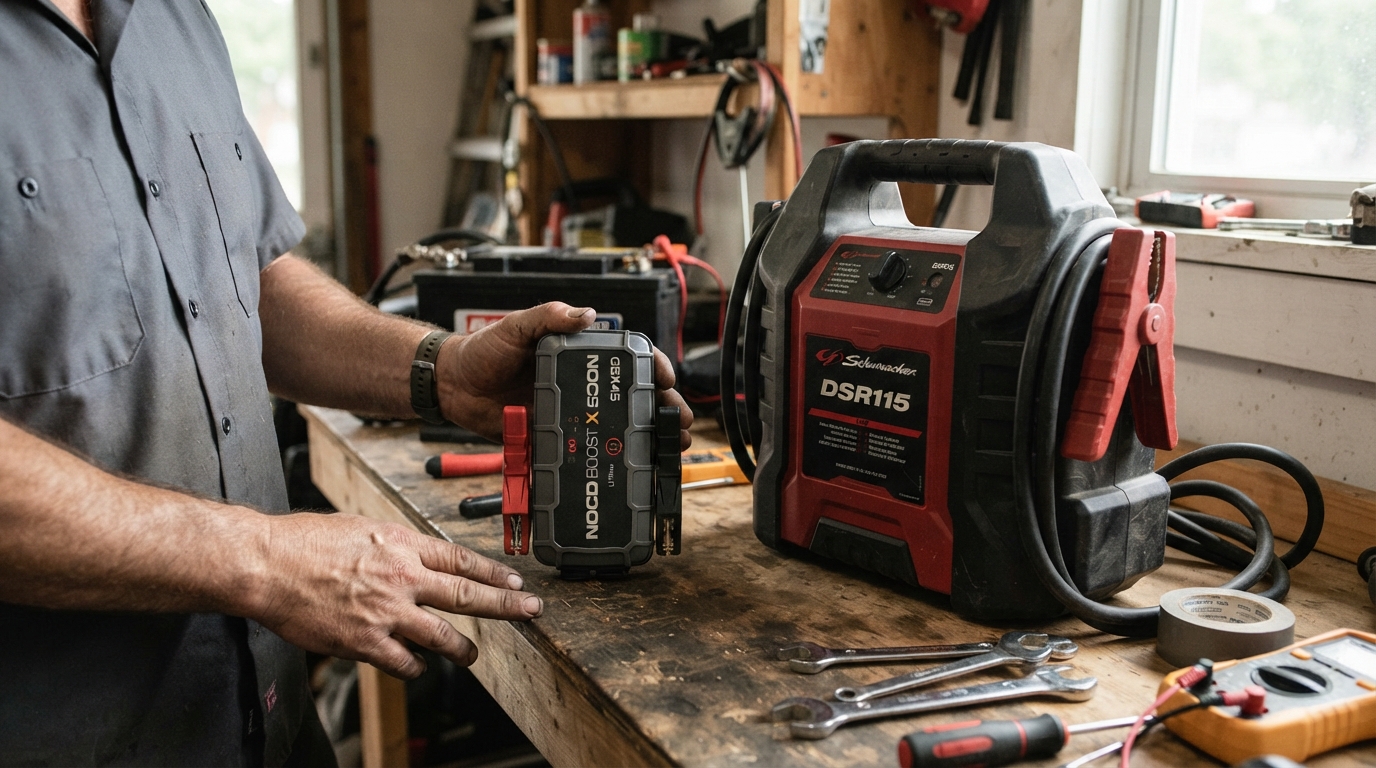
- Lithium packs are far lighter and more compact.
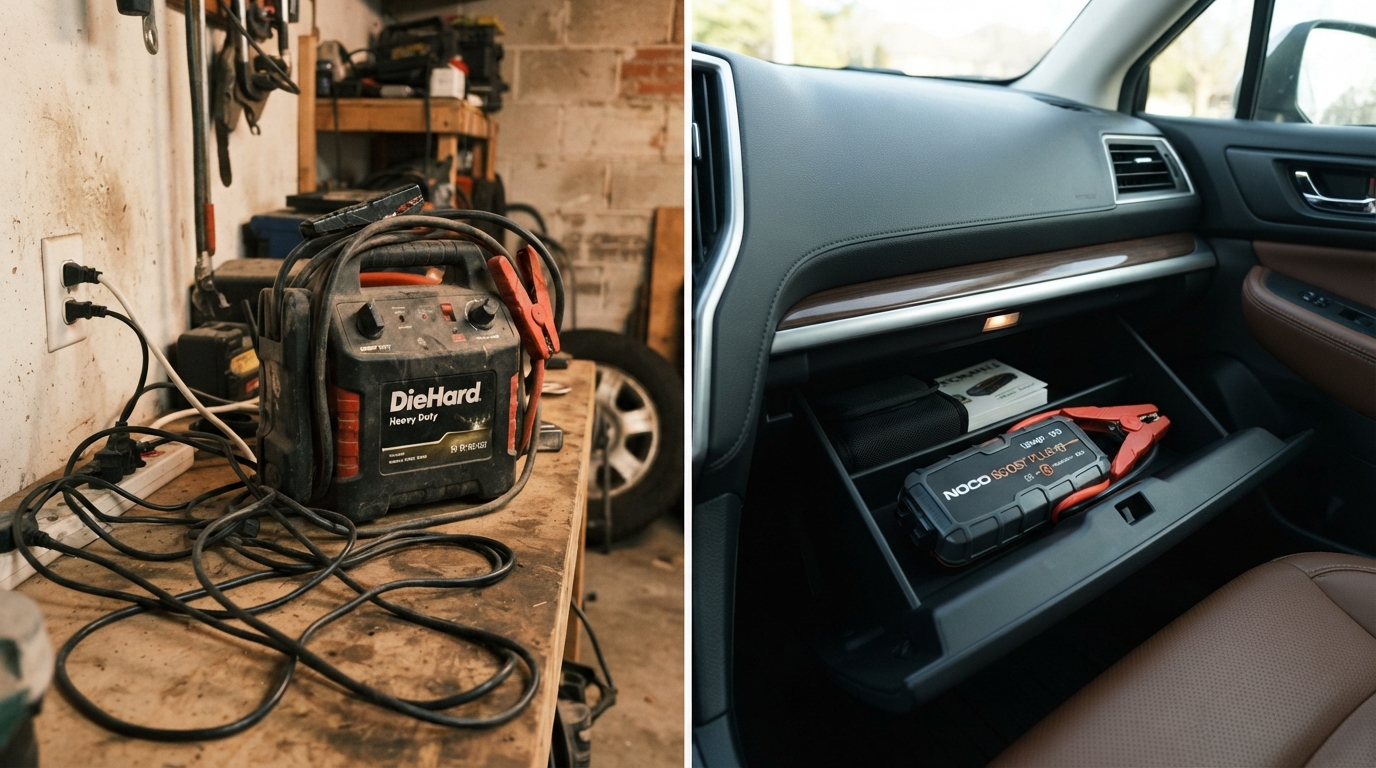
- Lead acid units are bulkier and heavier, often 3–10 times the lithium weight.
Starting power and performance
- Lithium provides high peak amps from a small package.
- Lead acid can provide solid current but needs larger size for equal power.
Shelf life and self-discharge
- Lithium holds charge well for months with minimal loss.
- Lead acid self-discharges faster and may need periodic charging.
Temperature behavior
- Lithium performance drops in extreme cold unless the pack has built-in thermal management.
- Lead acid loses effective capacity in cold too, but some models handle low temps without electronics.
Durability and cycle life
- Lithium has higher cycle life (hundreds to thousands of cycles depending on chemistry).
- Lead acid will wear faster and may sulfates if left discharged.
Safety and protection
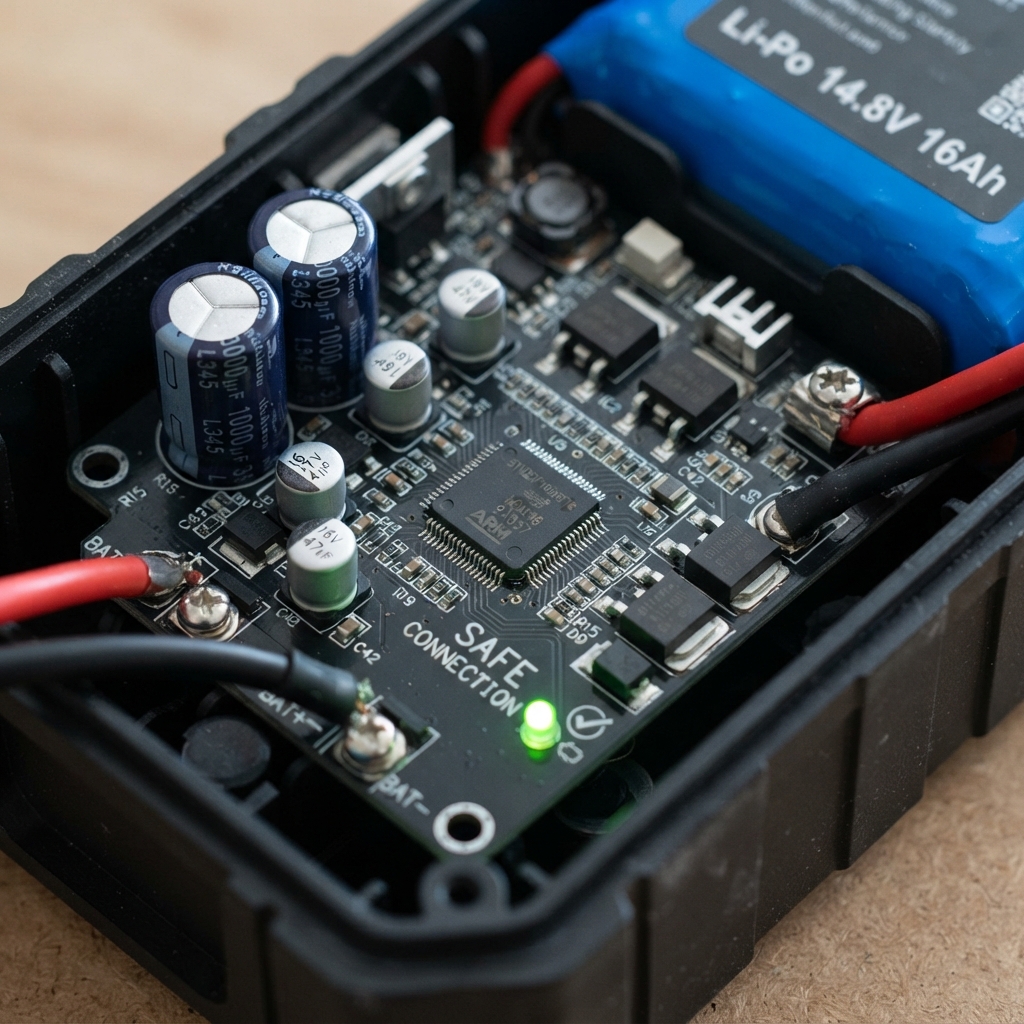
- Modern lithium jump starters include protection circuits for reverse polarity, short circuit, and overcurrent.
- Lead acid units are simpler but can leak or vent if damaged; they are less likely to have smart electronics.
Cost and value
- Lithium models cost more upfront but offer convenience, compactness, and longer service life.
- Lead acid models are cheaper initially but heavier and require more maintenance.
My experience: I carried a small lithium pack for three years and it started cars, a van, and a diesel once, while a heavy lead acid unit sat unused in the garage.
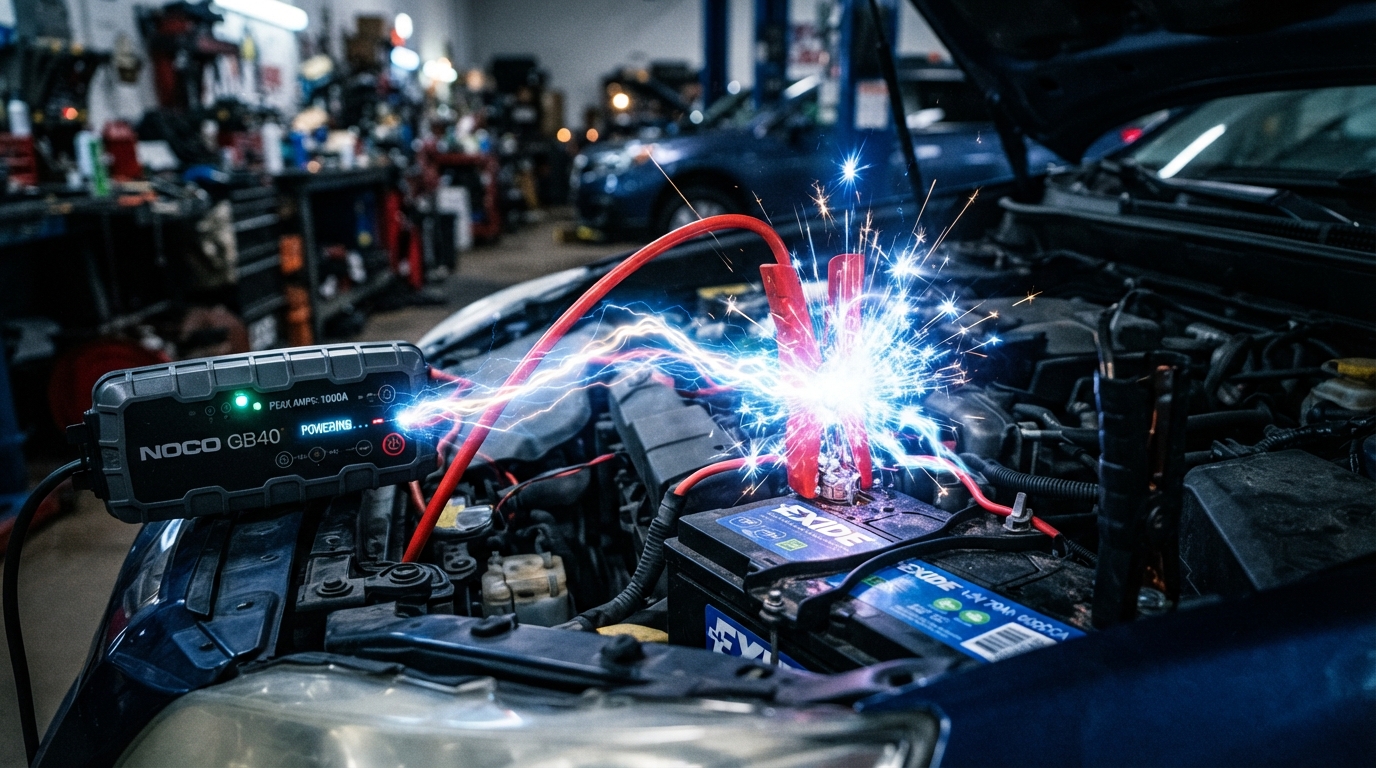
Performance: starting power, cold starts, and real use
Comparing real-world performance helps pick the right tool.
Starting power practicalities
- Look at CCA and rated starts at specific temperatures.
- A lithium unit with 1000 peak amps may outperform a 1000-amp lead acid if it has better discharge electronics.
Cold weather starting
- Lithium may struggle if the internal battery is below its safe operating temperature. Some units include a built-in heater or temperature sensor.
- Lead acid loses power in cold but often starts reliably if the battery is new and fully charged.
Rapid retries and multiple starts
- Lithium can usually handle multiple quick starts because of higher power density and fast internal recovery.
- Lead acid may need time between starts to recover voltage.
Example from my use
- I used a lithium jump starter to start a diesel truck twice in a row. The device gave two strong starts then retained charge for another month. A lead acid unit I used once needed a recharge after a single heavy start.
Lifespan, maintenance, and safety tips
How long units last and how to care for them.
Lifespan expectations
- Lithium: expect 3–8 years or 300–2000 cycles depending on chemistry and use.
- Lead acid: expect 2–5 years with moderate use and regular maintenance.
Maintenance needs
- Lithium: minimal. Keep charged above storage threshold and store in moderate temperature.
- Lead acid: periodic charging, avoid full discharge, and check for corrosion on clamps.
Safety practices
- Always match polarity before connecting clamps.
- Avoid sparks near the battery terminals.
- Store units in a dry place away from extreme heat.
- Check manufacturer guidance for jump-starting large diesel engines; some units may not be rated.
Personal safety lesson
- Once I accidentally connected clamps reversed. A modern lithium jumper’s protection shut everything down quickly and prevented damage. If you buy a model without protection, double-check every connection.
Price, value, and practical buying tips
Cost range and what to prioritize when shopping.
Price brackets
- Budget lead acid units: low cost, heavier, limited features.
- Midrange lithium: moderate cost, compact, many protections.
- High-end lithium: premium cost, higher peak/CCA, multi-function power banks.
What to prioritize
- Rated CCA or equivalent starting rating for your vehicle type.
- Safety features: reverse polarity protection, short-circuit protection, and automatic shutoff.
- Portability if you travel, tow, or have limited trunk space.
- Extra features: USB outputs, air compressors, built-in flashlights.
Practical buying tips
- Choose a lithium unit with at least 600–1000 peak amps for most cars; consider higher for trucks.
- If you rarely drive and store the unit in cold areas, pick a model with good low-temp performance.
- For budget buyers who only need occasional help and don’t mind weight, a lead acid starter provides value.
My purchase story
- I bought a midrange lithium pack after being stranded in winter. The convenience outweighed the higher price. The unit fit in a glove box and charged my phone once while waiting for a tow.
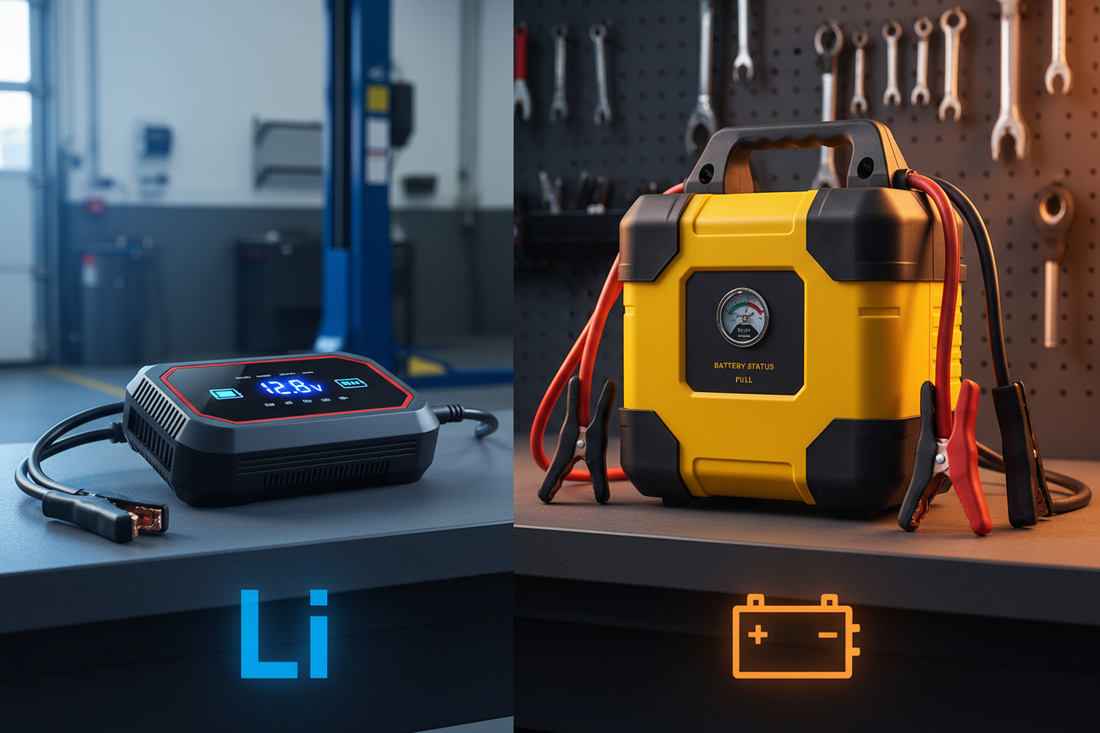
How to choose between lithium vs lead acid jump starter
A simple decision checklist to find the right model for you.
Ask these questions
- What vehicle will you start? Small car, SUV, diesel truck, or boat.
- How often will you use it? Weekly, monthly, or just for emergencies.
- Do you need portability? Will you carry it in a backpack or trunk?
- What climate do you live in? Cold winters require attention to low-temperature performance.
- What is your budget? Lower upfront cost or long-term convenience?
Decision rules
- If you need light weight and frequent portability, choose a lithium jump starter.
- If you want the lowest price and don’t mind heavy gear in the trunk, consider a lead acid unit.
- If you own a diesel or large engine, choose a unit rated for heavy cranking and follow manufacturer specs.
- If you travel in cold climates often, pick lithium with low-temp features or a high-capacity lead acid with proper charging.
Quick buying checklist (tick before purchase)
- Rated for your engine type and size.
- Includes safety protections.
- Acceptable weight and dimensions.
- Clear warranty and support.
- Positive user reviews and real test results.
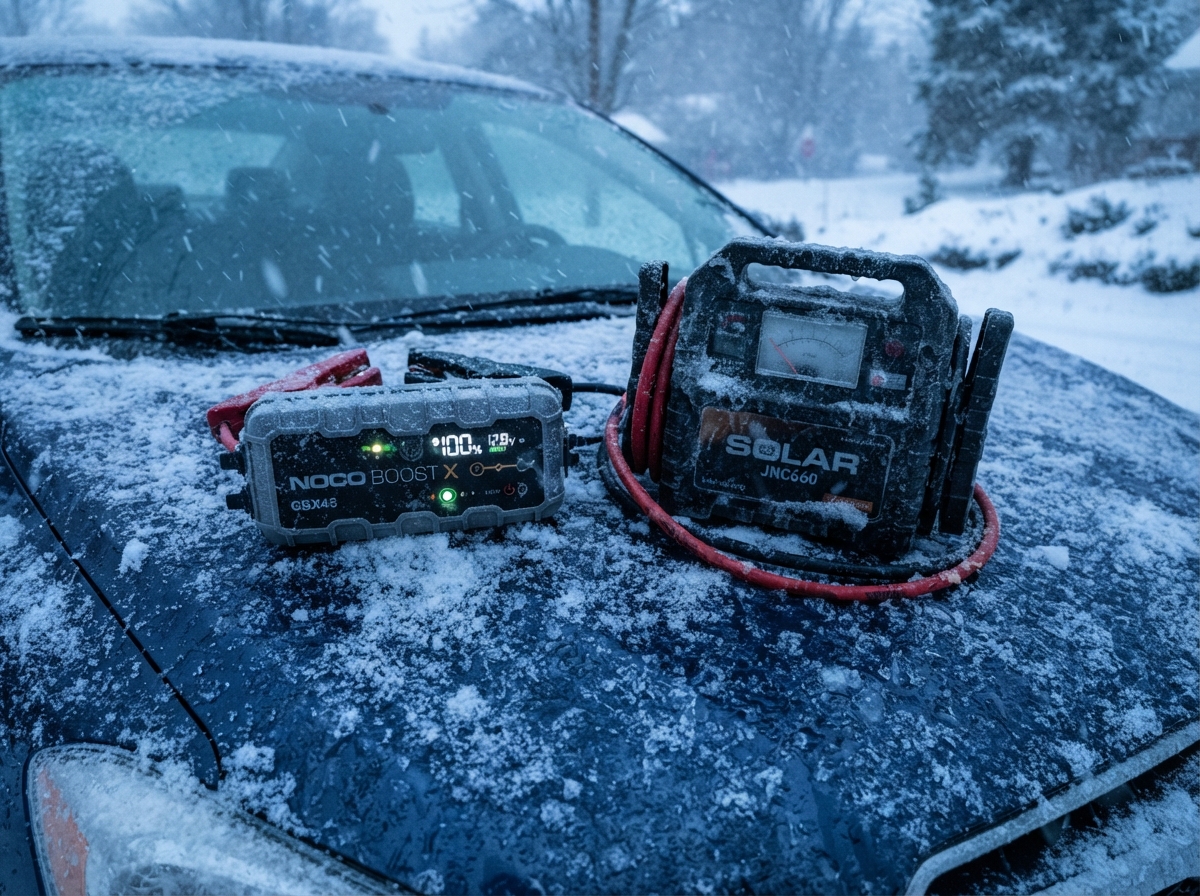
Frequently Asked Questions of lithium vs lead acid jump starter
What are the main advantages of a lithium jump starter?
Lithium jump starters are lighter, more compact, and recharge faster. They often include protection circuits and extra features like USB ports.
Are lead acid jump starters better for trucks?
Lead acid units can be good for heavy-duty use if sized correctly, but modern high-amp lithium models often outperform lead acid while being much lighter.
Can a lithium jump starter damage my car’s electronics?
Most quality lithium jump starters have protection against overcurrent and reverse polarity, so damage is unlikely when used correctly. Always follow the manufacturer’s instructions.
How long will a lithium jump starter hold a charge in storage?
A lithium unit can hold charge for several months with minimal loss, but periodic top-ups every few months are recommended for long-term storage.
Do lead acid jump starters require maintenance?
Yes. Lead acid units benefit from periodic charging, checking for corrosion, and storing in moderate temperatures to avoid sulfation.
Can I use a lithium jump starter on a diesel engine?
Some lithium models are rated for diesel engines, but check the CCA or manufacturer rating for large engines to ensure sufficient starting power.
Is it safe to leave a jump starter in a hot car?
Avoid leaving any jump starter in extreme heat. High temperatures can reduce battery life and increase risk. Store in a shaded, cool place.
straight for car maintenance industry experts
Conclusion
Choosing between lithium vs lead acid jump starter comes down to your priorities: portability, performance, and low maintenance favor lithium, while low upfront cost and rugged simplicity favor lead acid. Use the checklist above, match the CCA or rated starts to your vehicle, and choose a model with solid safety features. My practical tip: invest in a reliable lithium unit if you value convenience and travel often, or choose a budget lead acid if you only need occasional emergency starts.
Take action today: review your vehicle needs, pick a model from the checklist, and keep fresh batteries and a charged jump starter in your car. Share your experience below or ask for model recommendations if you want help choosing.