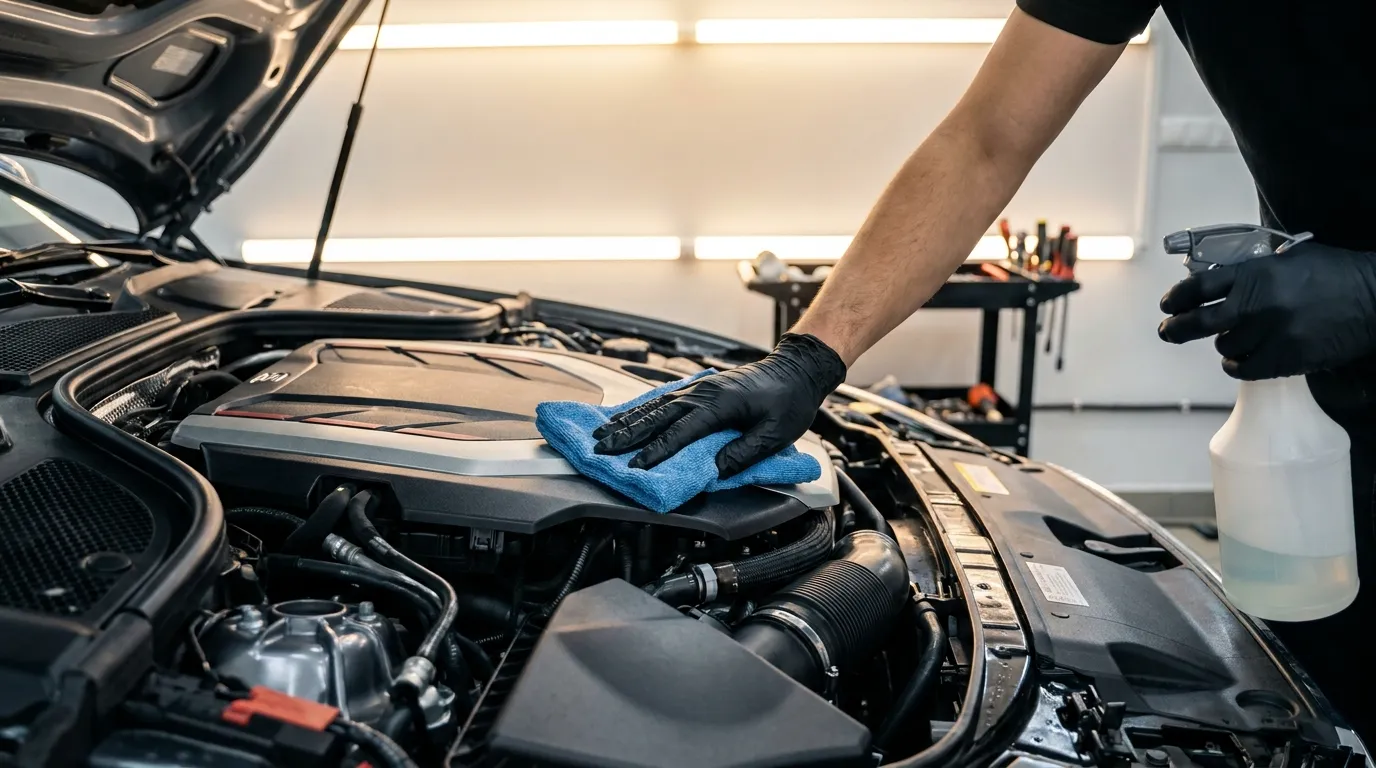
Use a degreaser, shield electrical parts, rinse gently, then dry and protect surfaces to clean engine bay.
I’ve cleaned dozens of cars for friends and for work, so I know what makes a clean engine bay both safe and effective. This guide on how to clean car engine bay walks you through tools, safety checks, and step-by-step methods. You’ll learn quick wins and long-term care. Read on and you’ll be ready to tackle a greasy engine with confidence and care.
Why clean your engine bay?
A clean engine bay helps you spot leaks, prevents corrosion, and improves resale value. Grease and dirt trap heat. That can speed wear on hoses and parts. Regular cleaning also makes routine checks faster and safer.
Experience note: I once found a small coolant leak only because the engine bay was clean. That leak would have stayed hidden under grime for months. A quick clean saved a costly repair later.
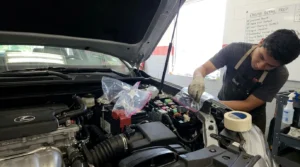
When to clean and safety checklist
Clean the engine bay every 6–12 months or when it looks dirty. Do extra cleaning after messy jobs, oil spills, or driving on salted roads. Always follow a safety checklist first.
Safety checklist:
- Park on a flat surface and set the parking brake.
- Allow the engine to cool completely.
- Disconnect the negative battery terminal if you’ll spray near electronics.
- Cover sensitive parts with plastic or bags.
- Keep a fire extinguisher nearby.
I avoid power washers on older cars with brittle wiring. That learned lesson came after a short circuit once. Treat electronics with care.
Tools and materials you need
Use simple gear you can find at an auto store or online. Quality tools make the job easier and safer.
Essentials:
- Engine degreaser (biodegradable if possible)
- Soft brushes and nylon bristles
- Microfiber towels
- Plastic bags and painter’s tape to cover sensors
- Garden hose with low-pressure nozzle or a spray bottle
- Air blower or compressed air (optional)
- Rubber or vinyl protectant for finish
- Gloves and safety glasses
I prefer a mild degreaser and a soft brush for most jobs. Strong caustic cleaners can strip coatings. Test any product on a small area first.
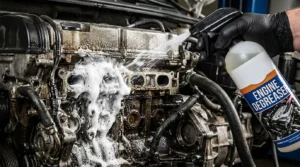
Step-by-step guide: How to clean car engine bay
This step-by-step method keeps parts safe and gives repeatable results. Follow each step in order.
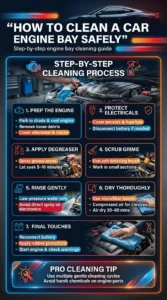
- Prep the area and engine
- Park in shade and cool down the engine.
- Remove loose debris by hand.
- Cover the alternator, exposed wiring, and air intake with plastic.
- Protect electricals
- Use plastic bags and tape on sensors, fuse box, and exposed connectors.
- If unsure, remove the battery or disconnect the negative terminal.
- Apply degreaser
- Spray degreaser on greasy areas and let it soak for 5–10 minutes.
- Avoid puddles near electronics. Use a spray bottle for small spots.
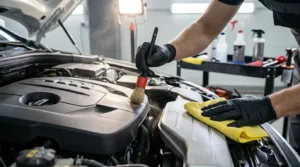
- Agitate grime
- Use a soft brush to scrub grease from surfaces.
- Work in small sections. Rinse the brush often.
- Rinse gently
- Use low-pressure water from a hose or a spray bottle.
- Keep the nozzle moving. Do not blast water at sensitive parts.
- Dry thoroughly
- Wipe with microfiber towels.
- Use compressed air or a leaf blower to push water from crevices.
- Let the engine sit uncovered for 30–60 minutes to air-dry.
- Final touches
- Reconnect the battery if disconnected.
- Apply rubber protectant lightly to hoses and plastic.
- Start the engine and check for warnings or odd sounds.
Tips from experience:
- I aim for gentle cleaning first. If stains remain, repeat degreaser and scrub.
- For heavy grease, use two cycles rather than aggressive chemicals.
Drying, finishing touches, and protection
Drying is where many people slip up. Water left in connectors can corrode parts.
Drying steps:
- Wipe big surfaces with microfiber cloths.
- Use compressed air to clear pockets and connectors.
- Start the engine to warm up and evaporate residual moisture.
Protection tips:
- Apply a silicone-free dressing to plastic and rubber to protect and shine.
- Avoid oily dressings near belts or pulleys.
- Inspect hoses and clamps while you clean; replace if cracked.
My rule: clean gently, dry thoroughly, and protect sparingly. It keeps things lasting longer.
Common mistakes and troubleshooting
Avoid these frequent errors that can damage parts or give poor results.
Common mistakes:
- Spraying high-pressure water directly at sensors and alternator.
- Using oven cleaners or harsh solvents that eat paint and rubber.
- Skipping drying steps, which can lead to corrosion.
- Over-applying rubber dressing near belts.
Troubleshooting:
- If the car shows electrical errors after cleaning, disconnect the battery and check connectors for water. Dry and reconnect.
- Minor oil stains may need engine-contact cleaner or spot treatment. For major leaks, fix the leak first.
PAA-style question 1: Will cleaning the engine bay void warranty?
- It usually does not if you use approved products and do not damage parts. Document your work and be cautious around sensors.
PAA-style question 2: How long does a clean engine bay last?
- With normal driving, a good clean lasts 6–12 months. Driving in mud or salt shortens that time.
Maintenance schedule and small habits
A little care keeps the engine bay tidy and safe. Build small habits.
Maintenance routine:
- Light wipe every month to remove surface dust.
- Full clean every 6–12 months or after salty roads.
- Inspect for leaks when you clean. Small drips are easier to fix early.
Small habits I use:
- Keep a microfiber cloth in the trunk for quick wipes.
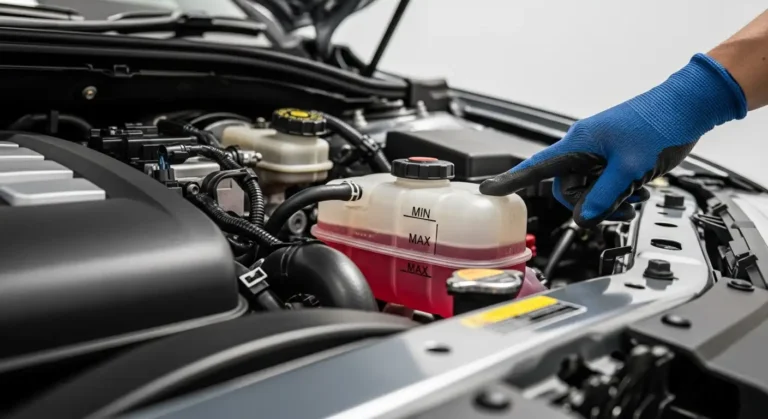
- Check fluid caps and clamps while cleaning.
- Note any new stains and track them over time.
These habits save time and money in the long run.
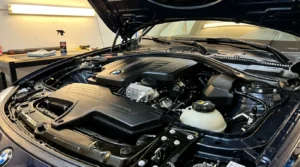
Frequently Asked Questions of how to clean car engine bay
Is it safe to use a pressure washer on the engine bay?
Use low pressure only. High-pressure washers can force water into electrical parts and cause damage.
Should I disconnect the battery before cleaning?
Disconnecting the negative terminal adds safety, especially if you’ll spray near wiring and sensors.
What degreaser works best for an engine bay?
Choose a biodegradable, automotive degreaser for general use. Test on a small area before full use.
Can I clean the engine bay while the engine is hot?
No. Cleaning a hot engine risks burns and can damage components. Always wait for the engine to cool.
How do I remove oil stains from the engine bay?
Use a dedicated engine degreaser and a soft brush. For older stains, repeat treatments or consider professional cleaning.
Conclusion
Cleaning the engine bay keeps your car healthier, safer, and easier to maintain. Use the step-by-step plan above to protect electrical parts and get a long-lasting result. Start with the right tools, work in stages, and dry well. Try a light clean today, and schedule a full clean every 6–12 months. If you found this useful, share your experience, ask a question below, or subscribe for more car care tips.