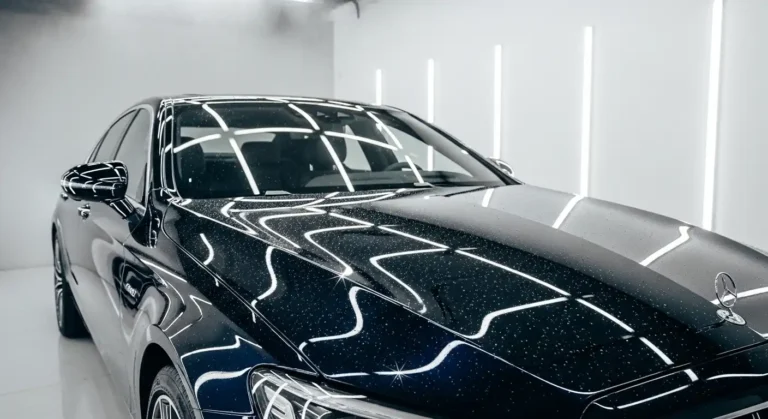
A car polish is a mildly abrasive product that evens paint and restores shine quickly.
I’ve worked with cars and detailing pros for years, so I know what works and why. This article explains exactly what is a car polish, how it differs from wax and sealant, when to use it, and how to get great results safely. Read on for clear steps, common mistakes, product types, and hands-on tips you can use today.
What is a car polish: clear definition and purpose
A car polish is a liquid, gel, or cream that gently removes very fine surface defects. It smooths microscopic high and low spots in paint. This improves how light reflects and restores gloss.
Polish is not the same as cleaning or protecting. It works on the paint surface to correct dullness, swirl marks, and light scratches. Professional detailers and hobbyists use polish to make paint look newer and more uniform.

Types of car polish and how they differ
There are several kinds of polish made for different tasks. Knowing the types helps you pick the right product for your car.
- Abrasive polishes: Use fine abrasives to remove tiny paint defects and swirl marks. They cut a thin layer of clear coat to smooth the surface.
- Finishing polishes: Very fine or no abrasives, aimed at boosting gloss after heavier correction. Use them last to refine shine.
- All-in-one polishes: Combine mild abrasives with protection. They save time but may not correct deep defects.
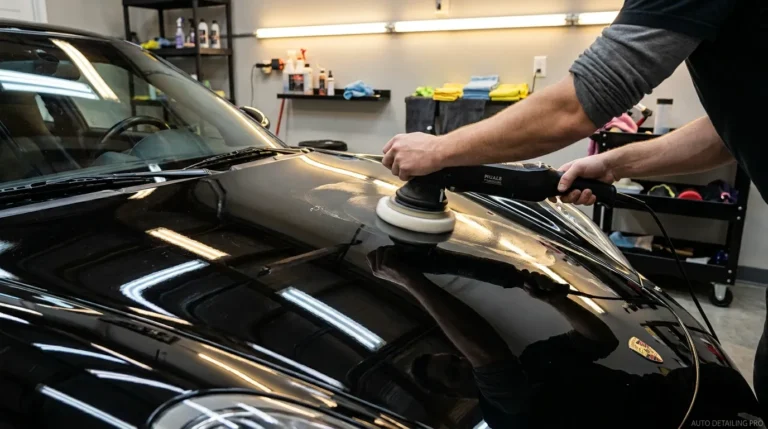
- Machine polishes: Formulated for rotary or dual-action polishers. They have viscosity and heat tolerance suited to machines.
- Spray polishes: Quick gloss enhancers for light touch-ups. They do not correct defects in depth.
How car polish works: the science in simple terms
Polish contains microscopic abrasive particles and lubricants. The abrasives skim off uneven peaks in clear coat. Lubricants prevent scratching while abrasives do their job.
Light reflection improves when peaks and valleys are reduced. The result is smoother paint and a deeper shine. Polishing can remove contaminants embedded in paint if they are shallow.
When to use polish versus wax and sealant
Polish, wax, and sealant all help a car’s appearance but have different roles.
- Polish: Use to correct paint defects and restore gloss. It prepares the surface.
- Wax: Use to add short-term shine and water beading. It protects but does not correct defects.
- Sealant: Use for longer-lasting protection and synthetic gloss. It locks in the finish after polishing.
A typical workflow is wash, decontaminate, polish, then apply sealant or wax.
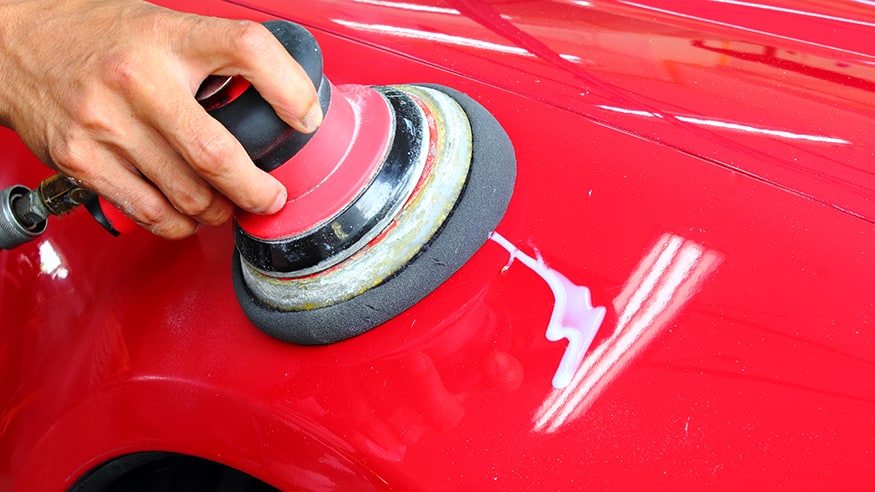
Source: silverson.com
How to apply car polish: step-by-step guide
Follow a clear process for safe, consistent results.
- Wash the car thoroughly to remove dirt and grit.
- Clay bar or decontaminate to remove bonded contaminants.
- Test spot on a small panel to match polish and pad.
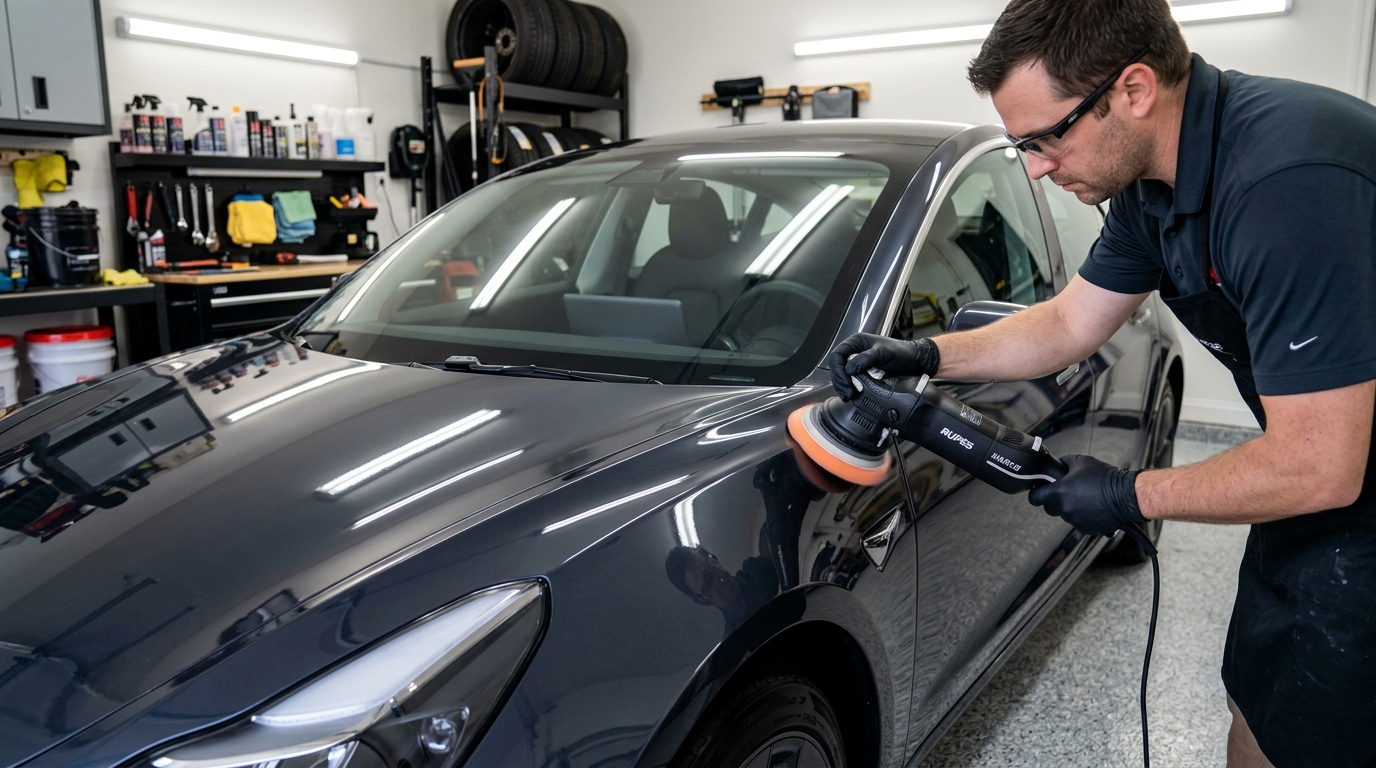
- If using a machine, start on low speed and use light pressure.
- Work one panel at a time in overlapping passes.
- Wipe residue with a clean microfiber towel and inspect.
- Apply a finishing polish if needed, then protect with sealant or wax.
Keep sessions short and check results often. Polishing takes care and patience.

Benefits and limitations of polish
Polishing can dramatically improve paint appearance. It removes swirling, light scratches, water spots, and oxidation. It makes color look deeper and more uniform.
Limitations include the risk of removing too much clear coat if used aggressively. Heavy defects and deep scratches cannot be fully removed with polish alone. Frequent aggressive polishing shortens clear coat life. Use polish only as needed and prioritize gentle methods.

Choosing the right polish for your car
Pick a product that matches the paint condition and your tools.
- New or lightly marred paint: Use a fine finishing polish or light abrasive.
- Heavily swirled or oxidized paint: Choose a more cutting polish used carefully.
- For machine users: Select a polish formulated for rotary or dual-action tools.
- For casual users: All-in-one polishes offer convenience but limited correction.
Read product instructions and test first. Match pad type to polish for best results.

Common mistakes and maintenance tips
Avoid these frequent errors to protect paint health.
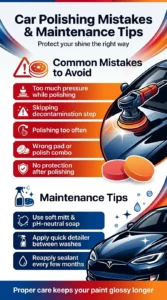
- Using too much pressure when polishing. Let the product and machine do the work.
- Skipping decontamination. Dirt and iron particles can grind the paint.
- Polishing too often. Limit aggressive correction to necessary instances.
- Using wrong pad or polish combo. This can cause hazing or burning.
- Not protecting after polishing. Skip protection and the shine fades quickly.
Maintenance tips:
- Wash with a soft mitt and pH-neutral soap.
- Use quick-detail spray between washes to boost gloss.
- Reapply sealant every few months to protect the polished finish.
Personal experience: practical lessons and tips from the field
I learned by doing. Early in my detailing work, I polished a car repeatedly and thinned the clear coat. That taught me to test, measure, and use conservative passes. A test spot saves paint.
One trick I use: after claying, I do a small test with two different polishes and pads. That helps me pick the least aggressive option that achieves the result. Another tip: work in cool shade to avoid product drying too fast.
I recommend keeping a polishing log. Note product, pad, speed, and results. Over time you’ll learn what works for each vehicle.
PAA-style quick questions (common search intent)
Will polish remove deep scratches?
Polish can remove or reduce shallow scratches and swirl marks. Deep scratches that cut through clear coat or paint usually need touch-up paint or professional repair.
Can I polish over wax or sealant?
You should remove wax or sealant before polishing. Polishing over protection reduces effectiveness and can smear residues, making correction harder.
How often should I polish my car?
Polish only when needed, typically once or twice a year for most cars. Heavy correction should be limited to protect clear coat thickness.
Frequently Asked Questions of what is a car polish
What is the main purpose of car polish?
The main purpose is to remove tiny paint defects and restore gloss. It evens the surface so light reflects more uniformly.
Is car polish the same as wax?
No. Polish corrects the paint surface. Wax adds protective shine but does not correct defects.
Can I polish my car by hand?
Yes. Hand polishing works for light defects and small areas. Machine polishing is faster and more effective for larger correction.
Will polish damage my paint?
Polish can remove a microscopic layer of clear coat if used aggressively. Used correctly, it improves appearance without harm.
Do I need special tools to polish?
You can polish by hand with good results for mild issues. A dual-action polisher helps with deeper correction and saves time.
How long does polish last on paint?
Polish itself is not a long-term protectant. The corrected look lasts until the surface gets contaminated or oxidized, so apply sealant or wax for lasting protection.
Conclusion
Polishing is a controlled way to restore paint shine and correct light defects. Understanding what is a car polish helps you choose the right product and method. Use polish sparingly, test first, and follow with protection to keep results longer. Try a small test spot, follow the step-by-step guide here, and you’ll see big improvement with low risk. If you found this helpful, subscribe for more detailing tips or leave a question below to start a conversation.