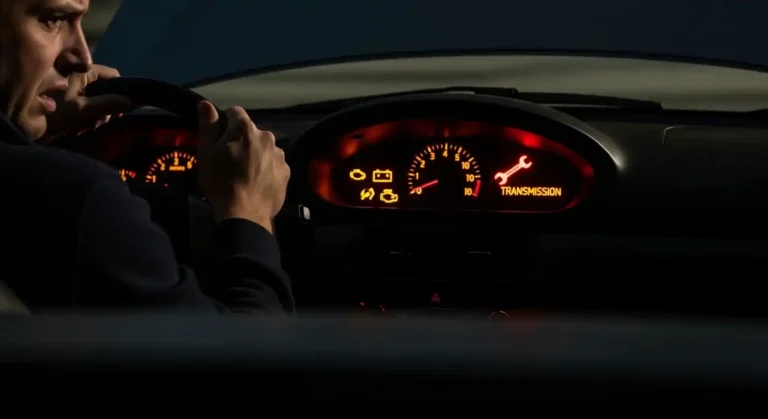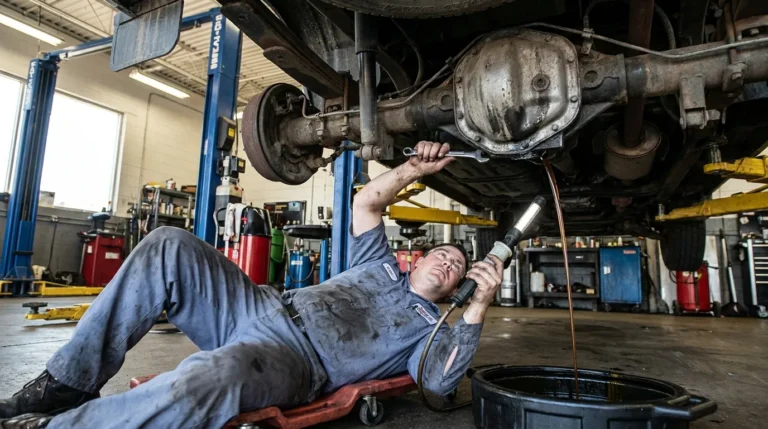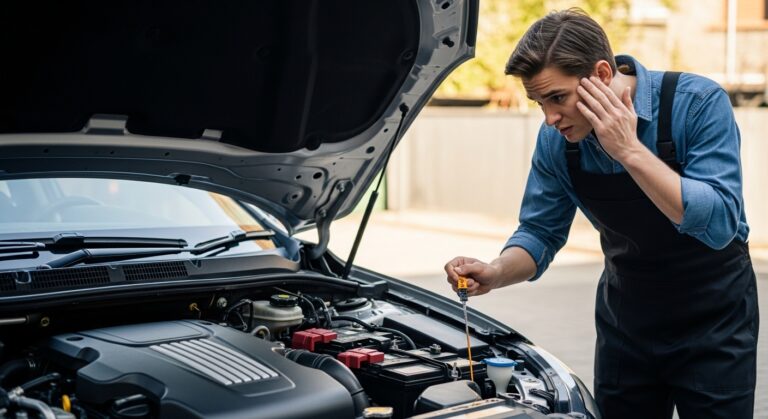
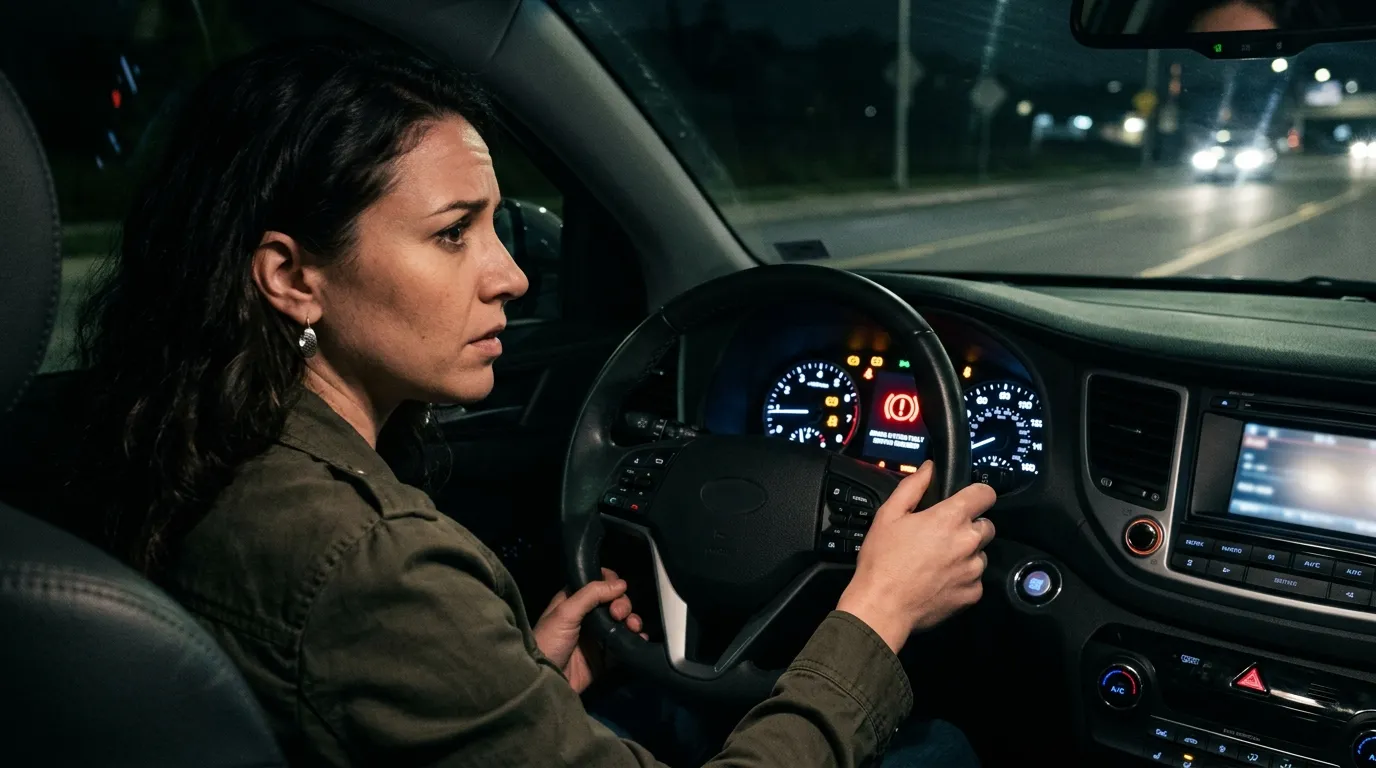
Soft brake pedal, brake warning light, longer stops, and leaks point to low brake fluid.
If you drive, you should know the signs of low brake fluid. I have spent years around brake jobs and safety checks. This guide breaks down what to watch for, why it happens, and what to do. Read on to learn the signs of low brake fluid and keep your car safe.
What brake fluid does and why level matters
Brake fluid turns your foot pressure into stopping power. You press the pedal. The master cylinder pushes fluid. Calipers or wheel cylinders clamp the brakes. If fluid is low, pressure drops. Stopping can suffer, even fail.
Brake fluid also fights heat. It has a high boiling point. It absorbs some moisture over time. That lowers the boiling point and can hurt brake feel. You still need the right level to make the system work.
Clear signs of low brake fluid
Knowing the signs of low brake fluid can save you from a scare. Look for these common clues.
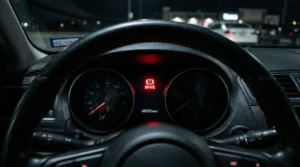
- Brake warning light stays on. Many cars use the same light for the parking brake and low level.
- ABS light appears. Low fluid can set an ABS fault and shut off ABS.
- Soft or spongy brake pedal. The pedal may sink more than normal.
- Longer stopping distance. You need more road to stop.
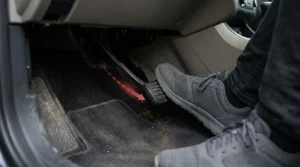
- Pedal sinks to the floor at a stop. That is a red flag. Do not drive.
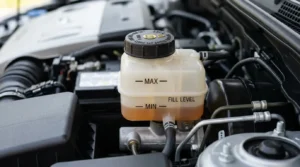
- Fluid below the MIN line in the reservoir. Check the tank on the master cylinder.
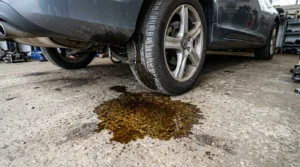
- Wet spots near a wheel or under the car. Brake fluid is clear to yellow and slick to the touch.
- Dark, dirty fluid in the reservoir. Old fluid does not always mean low, but it hurts brake feel.
These are the classic signs of low brake fluid I see most often. If you notice two or more, park the car and check the level.
Common causes of low brake fluid
The signs of low brake fluid often come from a few root issues.
- Worn brake pads. As pads wear, caliper pistons extend. Fluid level drops a bit.
- Leaks at calipers or wheel cylinders. Look for wet areas on the inside of wheels.
- Cracked rubber brake hoses or lines. Old rubber can split under pressure.
- Master cylinder seal failure. You may see dampness at the firewall or booster.
- ABS hydraulic unit leaks. Less common, but possible on older cars.
- Recent service not bled right. Air and low level can show up after a job.
- Loose reservoir cap or damaged float sensor. That can trigger the warning light.
A slow drop over months can be pad wear. A fast drop in days points to a leak. Treat leaks as urgent.
How to check brake fluid safely
You can confirm the signs of low brake fluid with a quick, safe check.
- Park on level ground. Let the engine cool.
- Open the hood. Find the brake fluid reservoir near the driver side firewall.
- Clean the cap area. Dirt must not fall in.
- Read the MIN and MAX lines. You can often see the level without opening.
- If you must open, do it fast and clean. Brake fluid absorbs moisture.
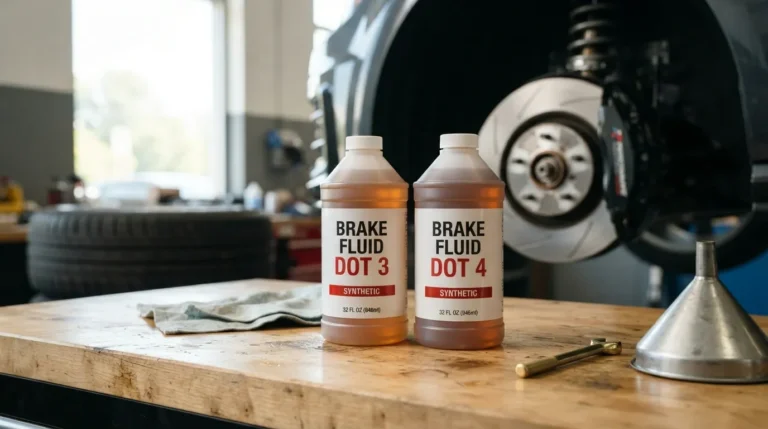
- Use only the fluid grade on the cap or in the owner’s manual. DOT 3, DOT 4, or DOT 5.1 are common.
- Never mix DOT 5 (silicone) with other types. It is not for most ABS cars.
- Do not overfill. Aim near MAX.
- If empty or very low, do not drive. Tow the car and inspect for leaks.
Brake fluid can damage paint. Wipe any spills at once with water. Seal the bottle tight when done.
What to do if you suspect low brake fluid on the road
You spot the signs of low brake fluid while driving. Stay calm.
- Test the pedal once in a safe area. If it feels soft or sinks, pull over.
- Watch the brake and ABS lights. If they stay on, do not continue.
- Check for leaks under the car. A wet wheel or puddle means a tow.
- Add fluid only if you are sure of the correct type. Add a small amount.
- Pump the pedal. If it firms up and holds, drive only to a shop nearby.
- If the pedal still sinks, call for roadside help.
Your safety comes first. A few minutes parked can prevent a crash.
Risks of driving with low brake fluid
Driving past the signs of low brake fluid can get costly and risky.
- Much longer stops. You may not stop in time.
- ABS and stability control can shut off. The car can skid more.
- Air can enter the system. That can cause a soft pedal and repeated faults.
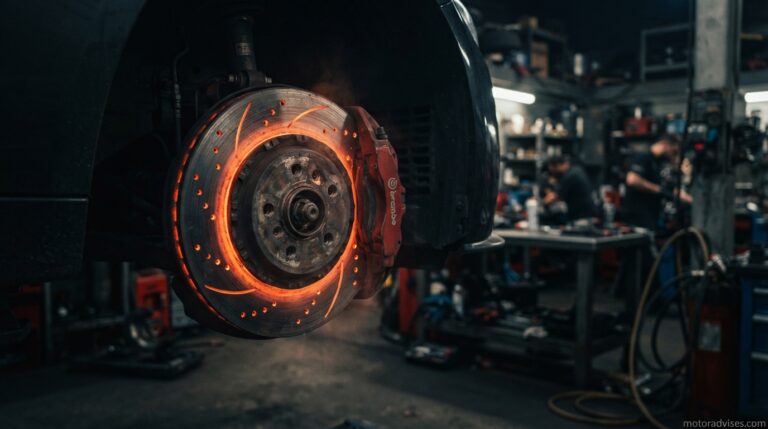
- Heat can build in the brakes. Parts can wear fast or fail.
- Repairs can grow. A cheap hose leak can turn into caliper and master cylinder damage.
The fix is often simple when caught early. Waiting makes it worse.
My hands-on lessons from the shop
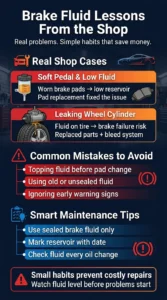
I once had a Civic roll in with the brake light on. The driver felt a soft pedal. The reservoir was low, and the front pads were thin. We replaced the pads and topped the fluid. The light went out, and the pedal felt great.
Another time, a Yukon had fluid on the inside of a rear tire. The wheel cylinder leaked. The pedal sank at long lights. We replaced the cylinder, shoes, and bled the system. The driver had missed early signs of low brake fluid for weeks.
Tips I give friends:
- Do not top off to MAX right before a pad change. The shop will push pistons back. Fluid can overflow.
- Use only sealed brake fluid. Once open, try to use it within a few months.
- Mark the reservoir with a sharpie date. Check it each oil change.
Small habits beat big bills.
Related problems that mimic low fluid
Some issues feel like signs of low brake fluid but are not.
- Hard brake pedal with poor assist. That is often a bad brake booster or vacuum leak.
- Brake pulsation at high speed. Warped rotors or uneven deposits, not fluid level.
- Grinding noise. Very worn pads or rotor damage, not fluid level.
- Pulling to one side. Sticking caliper or uneven pads.
- Brake fade after mountain driving. Fluid may have boiled, but level might be fine. A flush can help.
Check the reservoir first. Then match the symptom to the right fix.
Cost and when to see a pro
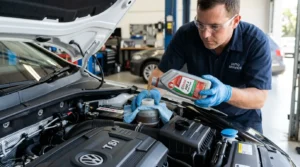
If you see signs of low brake fluid, a pro can save time and stress.
Typical costs vary by area:
- Brake fluid flush: budget-friendly for most cars.
- Rubber hose or line repair: moderate.
- Caliper or wheel cylinder replacement: moderate to higher.
- Master cylinder replacement: moderate to higher due to bleeding and setup.
Go to a shop at once if the pedal sinks, the reservoir is empty, or you see leaks. A proper pressure bleed and a leak check will restore safe stops.
Preventive maintenance tips and schedule
You can avoid most signs of low brake fluid with simple care.
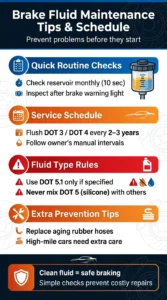
- Peek at the reservoir monthly. It takes 10 seconds.
- Check after any brake warning light. Do not delay.
- Flush DOT 3 or DOT 4 every two to three years, or as the manual says.
- Use DOT 5.1 only if listed. Do not mix DOT 5 silicone with other types.
- Replace old rubber hoses on high-mile cars. Age matters.
These steps keep the system dry, clean, and strong. Most drivers never think about it. Now you do.
Frequently Asked Questions of signs of low brake fluid
What are the first signs of low brake fluid?
A brake warning light and a soft pedal are early signs. Longer stops and fluid below MIN confirm it.
Can worn pads cause low brake fluid?
Yes. As pads wear, caliper pistons move out and draw more fluid. The level can fall toward MIN.
Is it safe to drive with the brake light on?
No. The light can mean low fluid or a system fault. Stop, check the level, and seek help if needed.
What fluid should I use to top off?
Use only the type on the cap or in the owner’s manual. DOT 3, DOT 4, or DOT 5.1 are common for modern cars.
Will adding fluid fix a soft pedal?
It may help if the level was just low. If the pedal still sinks, you likely have air or a leak and need service.
Why does the ABS light come on with low fluid?
Low level can starve the ABS pump or trigger the float sensor. The system may shut off to protect itself.
What does brake fluid look and smell like?
Fresh fluid is clear to light yellow and slick. It has a sharp, chemical smell and can damage paint.
Conclusion
The signs of low brake fluid are simple to spot and too important to ignore. Watch for a soft pedal, warning lights, longer stops, and leaks. Check the reservoir, use the right fluid, and fix leaks fast. Your car will stop better, and you will drive with more peace of mind.
Take five minutes today to check your level. If you found this helpful, share it with a friend, subscribe for more easy car care tips, or drop a question in the comments.