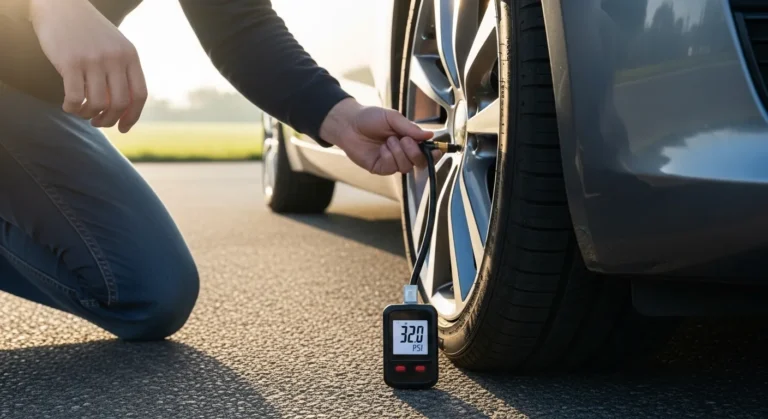
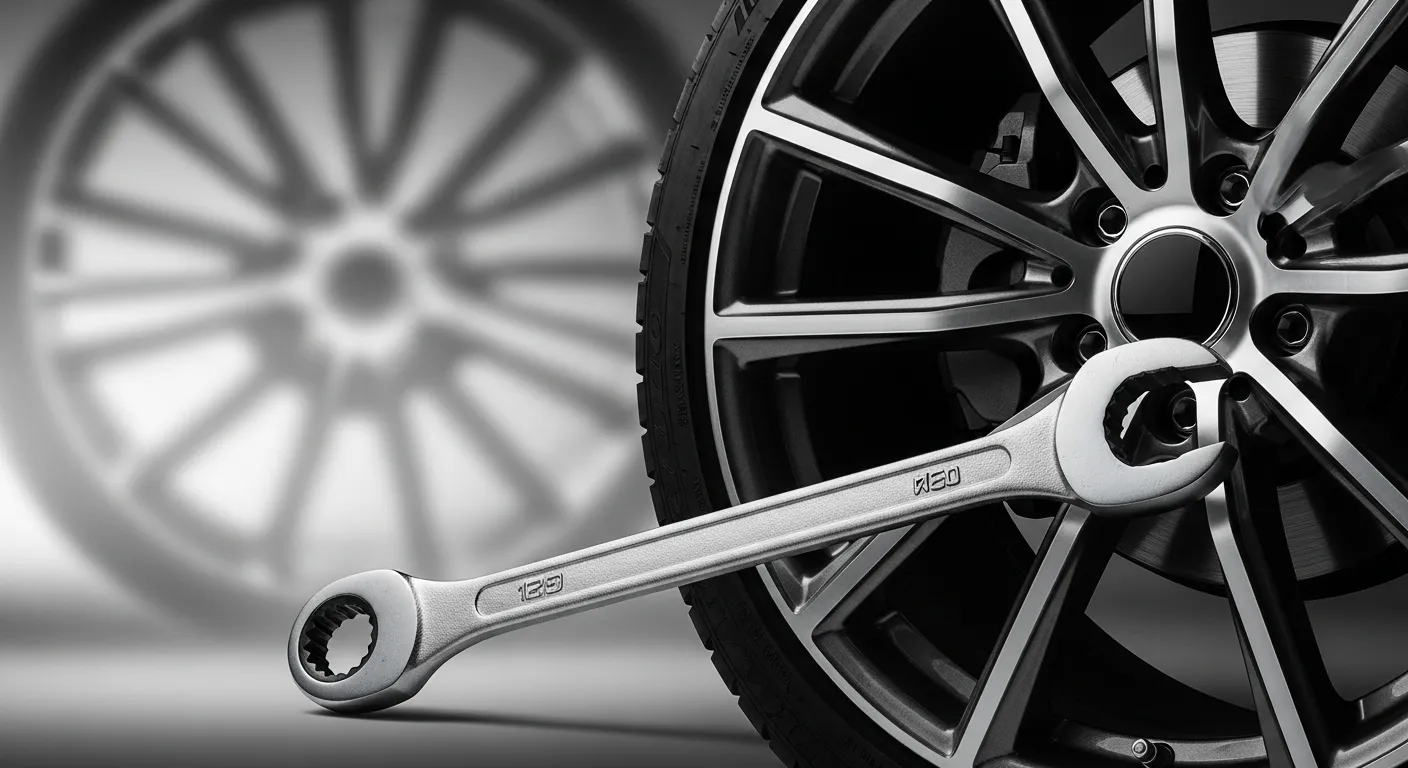
A lug wrench is a hand tool that loosens and tightens wheel lug nuts.
If you’ve ever wondered what is lug wrench and why it matters, you’re in the right place. I’ve changed tires on highways, in garages, and on gravel shoulders, and I know the tool that saves the day is the humble lug wrench. This guide explains what is lug wrench in plain terms, shows how it works, and helps you pick the right one with confidence. Read on to get real tips, avoid common mistakes, and feel ready for any roadside tire change.
What is a lug wrench?
A lug wrench is a simple hand tool designed to fit over lug nuts so you can remove or install a wheel. Think of it as a lever that gives you more grip and more torque. Most include one or more socket sizes that match common lug nut sizes. In shops, people often say tire iron, but a modern lug wrench is the more precise term.
If your search is what is lug wrench, here’s the short truth: it is your first line of defense when you get a flat. You will find it in many spare tire kits, next to the jack. It can be L-shaped, X-shaped, or telescoping for more reach.
Key parts you’ll notice:
- Socket end fits the lug nut snugly to prevent rounding the corners
- Handle gives leverage so you can break loose tight nuts
- Some models include multiple sockets or reversible ends for different sizes
Typical lug nut sizes:
- Metric: 17 mm, 19 mm, 21 mm
- SAE: 3/4 inch, 13/16 inch, 7/8 inch
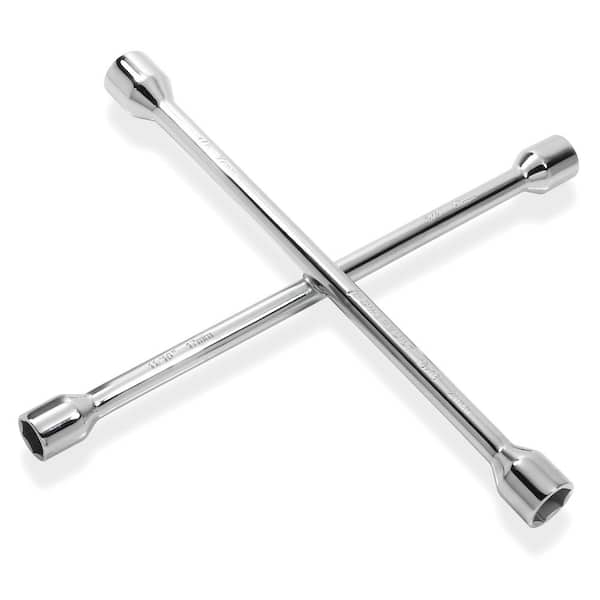
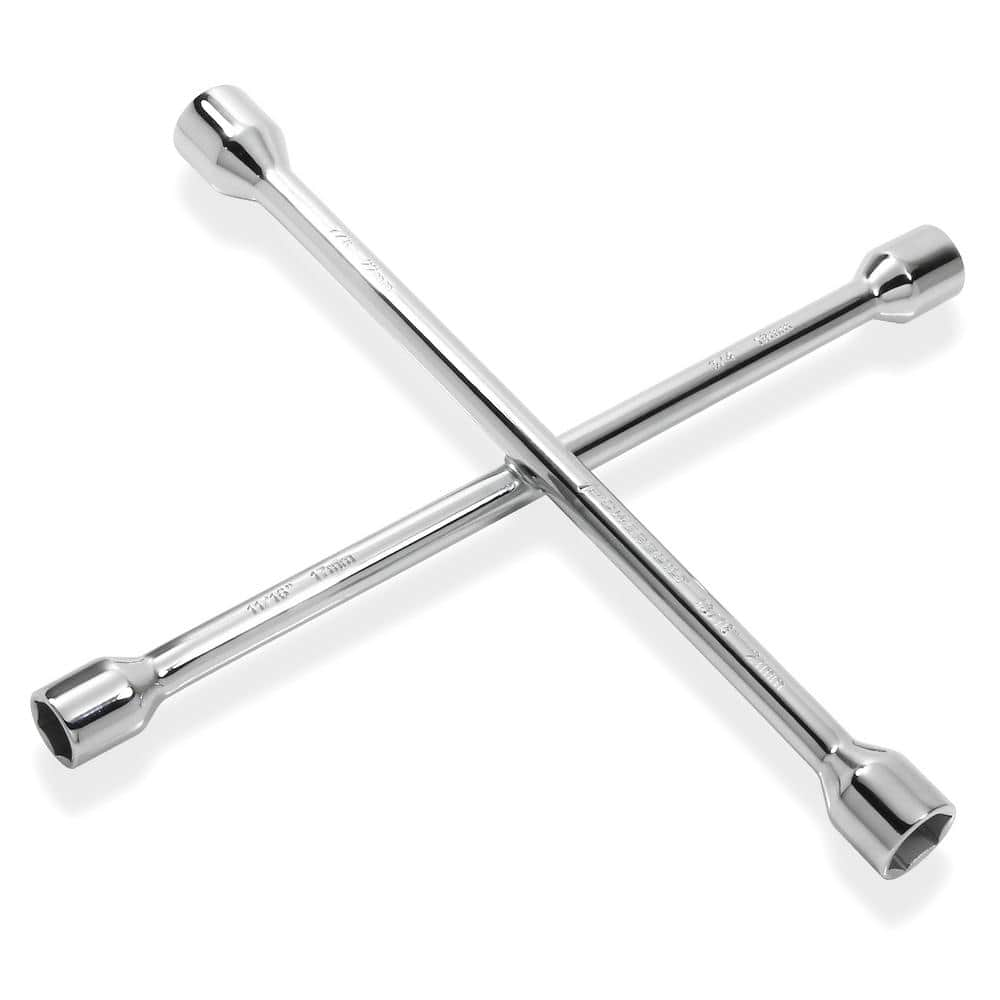
Source: homedepot.com
Types of lug wrenches
There are a few common forms. Each has trade-offs in leverage, size, and ease of use. If you are asking what is lug wrench best for your car, the answer depends on space, strength, and wheel design.
Popular types:
- L-shaped lug wrench: Compact, often included by the vehicle maker, easy to store
- Cross or X-shaped wrench: Four-way design with multiple socket sizes and great leverage
- Telescoping lug wrench: Extends for more torque, collapses for small storage
- Folding cross wrench: Cross-style leverage that folds flat in your trunk
- Specialty wheel wrenches: Thin-wall sockets for tight wheel wells or large sockets for trucks
Pros and cons at a glance:
- L-shaped is small and light, but offers less torque
- Cross-shaped gives excellent control and speed, but takes more space
- Telescoping is great for small cars, offers big leverage in a small package
If what is lug wrench for road trips is on your mind, a telescoping or cross wrench is often the safest bet.

How a lug wrench works
A lug wrench multiplies your force through leverage. The longer the handle, the more torque you can apply to turn stuck nuts. That is why a cross wrench or a telescoping wrench can feel like magic when the standard kit feels weak.
Most passenger vehicles call for 80 to 100 lb-ft of torque, while many light trucks need 100 to 140 lb-ft. A lug wrench helps you reach and manage these levels by hand. If your core question is what is lug wrench doing behind the scenes, it is simply using a longer arm to give you more turning force with less effort.
Pro tip from the road: stand close and press down smoothly, rather than bouncing or jumping. That keeps the socket seated and reduces the chance of rounding the nut.
Source: homedepot.com
How to use a lug wrench safely
Follow these steps to change a tire with calm and control. I’ve done this dozens of times, and a clear process makes all the difference.
- Park on level ground, set the parking brake, and switch on hazard lights
- Place wheel chocks or heavy objects behind the wheels that will stay on the ground
- Before lifting the car, crack each lug nut loose a quarter turn using the lug wrench
- Lift the car with the jack at the correct jack point from your owner’s manual
- Remove the lug nuts in a star pattern, then pull the wheel off
- Mount the spare, hand-thread lug nuts to avoid cross-threading
- Snug the nuts in a star pattern with the lug wrench while the car is still lifted
- Lower the car, then tighten to final snug again in a star pattern
- If possible, finish with a torque wrench to the exact spec
Common safety reminders:
- Keep the socket fully seated on the nut before you pull
- Pull the wrench handle toward you rather than pushing away if space allows
- Avoid using a cheater pipe, which can damage studs or the wrench
If you came here to learn what is lug wrench good for in emergencies, this is it: safe leverage and control that gets you back on the road.
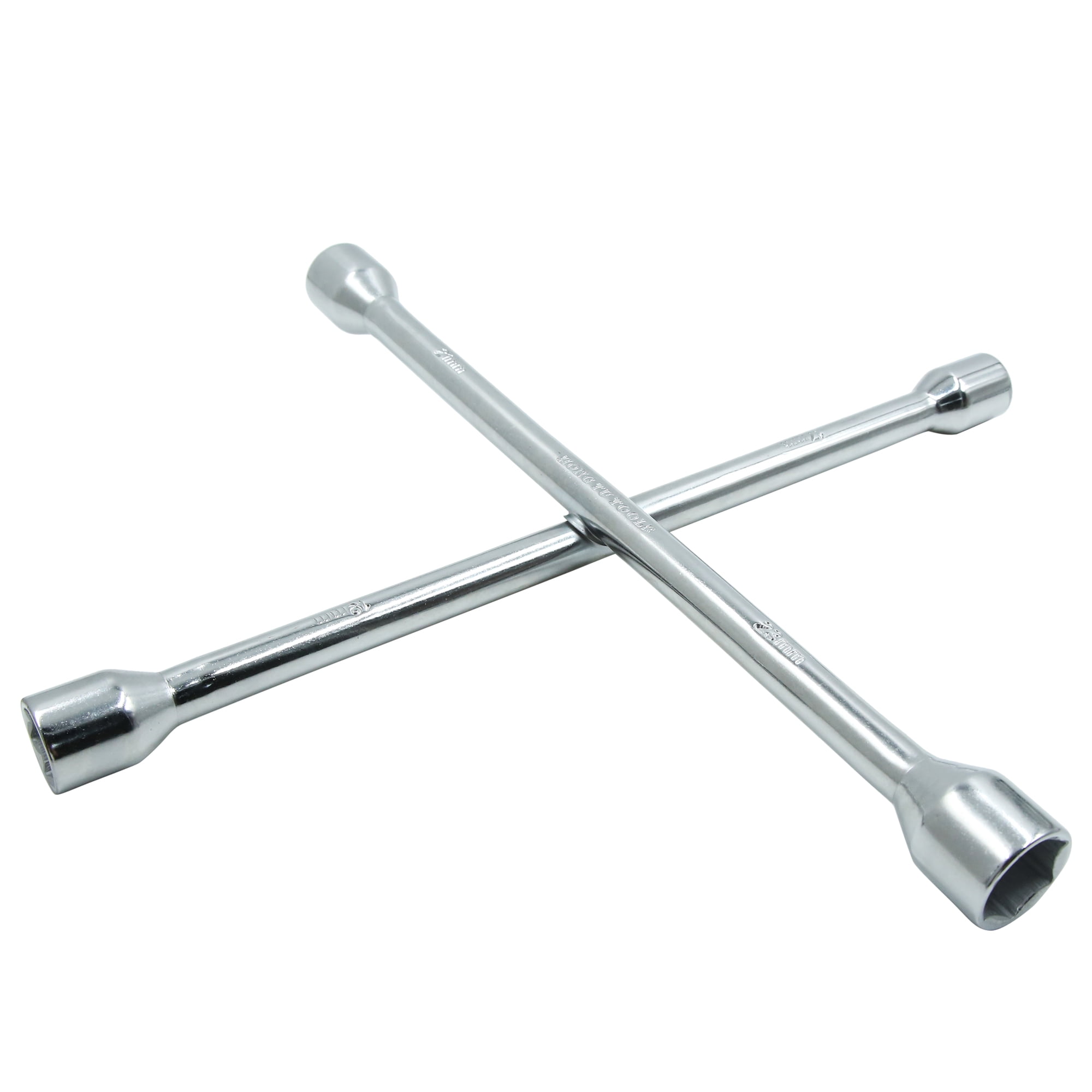
Source: walmart.com
Choosing the right lug wrench
Not all tools are equal. When you shop, look for real strength, proper fit, and comfort. The best lug wrench is the one you can count on in bad weather with cold hands.
What to look for:
- Size and fit: Make sure it matches your lug nuts, including aftermarket wheels
- Length: 14 to 20 inches gives better leverage; telescoping handles add reach
- Material: Heat-treated steel with corrosion protection lasts longer
- Socket design: Thin-wall sockets help with tight wheel openings
- Storage: A small case or wrap keeps it from rattling in the trunk
If you still ask what is lug wrench choice for beginners, start with a telescoping model that includes 17 mm, 19 mm, and 21 mm. It covers many cars and most small SUVs.
Real-world note: I keep a telescoping wrench in my trunk. It has never failed in rain or on ice. The extra length means I use calm, steady force instead of wrestling with a short handle.

Maintenance and storage
A lug wrench is low maintenance, but a little care goes far. This helps it work when you really need it.
Simple care tips:
- Wipe off dirt and road salt after use to prevent rust
- Lightly oil the sockets and moving joints on telescoping models
- Store it with your jack and spare so you can grab it fast
- Test fit on your lug nuts twice a year to confirm the size still works
If you keep asking what is lug wrench upkeep, the answer is simple: keep it dry, clean, and ready.

Source: alltiresupply.com
Common mistakes and how to fix them
Even good tools can struggle with stuck lug nuts. Here are issues I’ve seen and how to handle them without damage.
- Rounding a lug nut: Stop at once, switch to a six-point socket that fits tight, and apply slow, steady pressure
- Nut will not budge: Use penetrating oil and wait a few minutes; extend your handle if your wrench is designed for it
- Cross-threading: Always hand-start lug nuts before using the wrench; if threads feel gritty, stop and inspect
- Over-tightening: Finish with a torque wrench when possible; this protects your studs and brake rotors
If you wonder what is lug wrench limit, it is not a torque wrench. It starts the job; a torque wrench ends it with precision.
Related tools you should know
A lug wrench is the starter tool. Some jobs, or some stuck nuts, need more help. Here are related tools that pair well.
- Torque wrench: Sets the final torque to the factory spec for safety and even brake rotor clamping
- Breaker bar: A long, strong bar for extra leverage without the bulk of a cross wrench
- Impact wrench: Air or battery powered, great for rotation jobs; use with care to avoid over-torque
- Torque sticks: Color-coded extensions for impact guns that limit torque to safer ranges
If your goal is to master what is lug wrench in a full kit, add a torque wrench for final tightening. This small upgrade can save wheel studs and prevent warped rotors.
Quick questions you might be asking
Curious minds often search what is lug wrench to clear up related doubts. Here are fast answers that match real-world use.
Is a lug wrench the same as a tire iron?
They are often used as the same idea, but tire iron is an older term. Modern lug wrenches have socket ends for better fit and torque.
Can a lug wrench replace a torque wrench?
No. A lug wrench removes and installs nuts, but it does not measure torque. Use a torque wrench to finish to spec.
What size lug wrench do I need?
Match your lug nuts. Many cars use 17 mm, 19 mm, or 21 mm; many trucks use larger sizes such as 7/8 inch.
Personal experience and field tips
I learned to respect this simple tool on a windy night outside Amarillo. The factory L-shaped wrench slipped on a stubborn nut. I swapped to a telescoping lug wrench, kept the socket square, and eased it free with steady pressure. No drama. No busted knuckles.
Lessons that help:
- Keep the socket straight and push or pull in line with the nut
- Use a star pattern so the wheel seats flat and true
- Re-check lug nuts after 25 to 50 miles when you mount a spare
- If the nut feels wrong, stop and hand-thread again; damage is faster than repair
If your core question is what is lug wrench in practice, it is peace of mind. It keeps a flat tire from turning into a long night.
Frequently Asked Questions of what is lug wrench
What is lug wrench used for?
It loosens and tightens wheel lug nuts when changing or rotating tires. It gives you leverage to break stuck nuts and snug them down.
What is the difference between a lug wrench and a torque wrench?
A lug wrench is for turning nuts with leverage. A torque wrench measures and sets precise torque to match factory specs.
What is the best lug wrench for small cars?
A telescoping lug wrench with 17 mm, 19 mm, and 21 mm sockets works well. It offers strong leverage yet stores compactly.
What is lug wrench size I should keep in my trunk?
Choose a handle length around 16 to 20 inches for good leverage. Make sure the sockets match your vehicle’s lug nuts.
What is lug wrench safety tip most people miss?
Crack the lug nuts loose before lifting the car with the jack. This keeps the wheel from spinning and reduces risk.
Conclusion
A lug wrench is a simple tool that solves a hard problem fast. Now you know what is lug wrench, how it works, and how to pick one you can trust. Keep a quality wrench in your trunk, practice once in your driveway, and you will be ready for the road.
Put this guide to work today. Check your socket sizes, test your wrench, and add a torque wrench for final tightening. If this helped, share it with a friend, subscribe for more hands-on car tips, or leave a comment with your own roadside story.