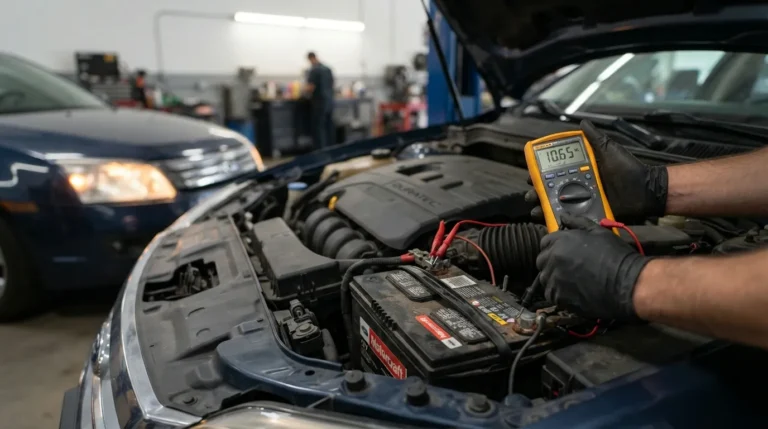
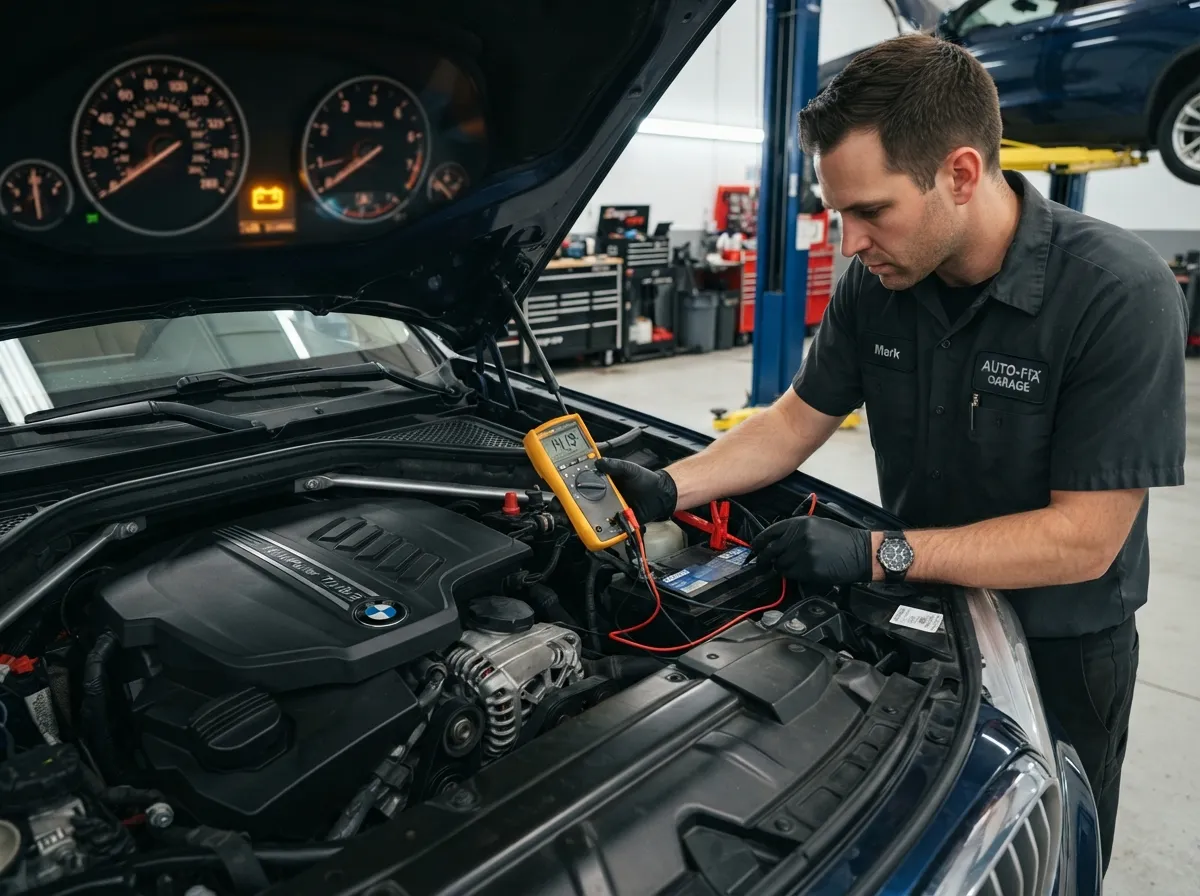
Dimming or flickering lights, battery warning, whining noises, dead battery, stalling, and burning smell.
If you are seeing car alternator failure symptoms, you need clear answers fast. I’ve diagnosed and fixed hundreds of charging issues, from simple belt slips to bad diodes that cooked batteries. In this guide, I break down every sign, why it happens, how to test it at home, and what to fix first. By the end, you will spot car alternator failure symptoms with confidence and avoid getting stranded. official AutoZone guide on how to test an alternator with a multimeter.
What your alternator actually does and why it fails
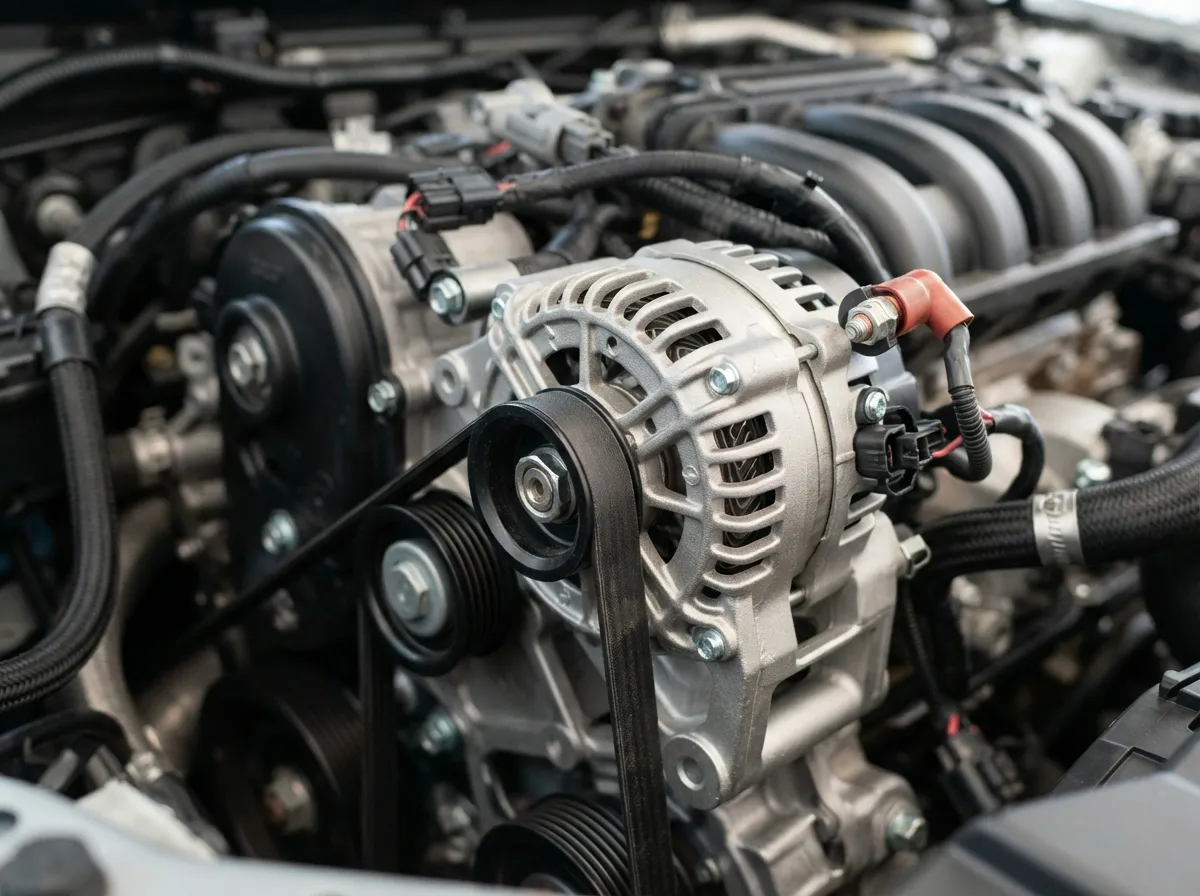
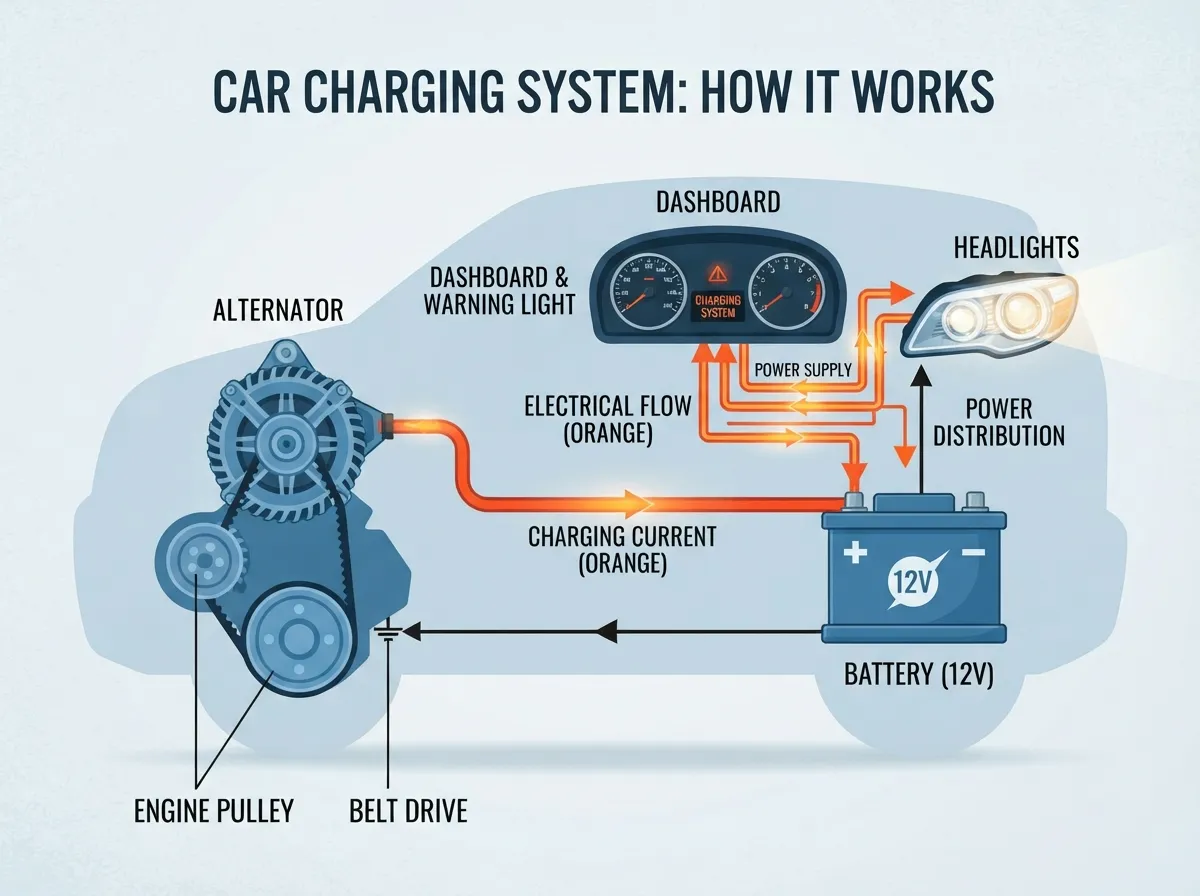
Your alternator keeps the car alive once the engine runs. It turns engine motion into power. It feeds the battery and every module. A healthy charging system holds about 13.8 to 14.8 volts at the battery with the engine on.
When parts wear, that flow drops. Heat breaks down diodes. Brushes and slip rings wear. Bearings dry out. Belts glaze and slip. A weak regulator lets voltage swing. Each fault shows up as car alternator failure symptoms that you can catch early.

The most common car alternator failure symptoms
Watch for these warning signs. Many show up together.
- Battery light on or flickering. The charge lamp comes on when system voltage drops. It may pulse with engine speed.
- Dim or pulsing headlights. Lights brighten with revs, then dim at idle. That is a classic low-output sign.
- Slow cranking after short trips. The battery never gets a full charge. It fades day by day.
- Electrical glitches. Screens reset, radios cut out, windows slow, and gauges dance. Low voltage makes modules act odd.
- Whining, chirping, or grinding noise. Pitch rises with RPM. That points to bearings or a slipping belt.
- Burning rubber or hot electronics smell. A slipping belt or a failing diode can overheat parts fast.
- Engine stalling at idle or in traffic. Fuel and spark need steady voltage. When it drops, the engine can die.
- Battery keeps dying overnight after recent jump starts. A bad alternator can drain a battery by leaking through bad diodes.
- Voltage swings on a meter. You see 12.2 to 15.5 volts bouncing. The regulator may be failing.
- Warning messages. Low battery, charging system fault, service electrical system. Many cars post alerts before a stall.
If you notice these car alternator failure symptoms, plan a test right away. The longer you wait, the higher the bill. AAA’s quick guide on bad alternator vs. bad battery.
Early vs late-stage signs: how to tell urgency
Not all car alternator failure symptoms mean an instant breakdown. Learn the stages.
- Early stage. Headlights pulse at idle. The battery lamp flickers on bumps. A faint whine shows up with the A/C on.
- Middle stage. Accessories slow. The car cranks weak after short stops. Voltage reads under 13.5 volts at idle with loads.
- Crisis stage. The engine stalls at lights. The cluster blacks out. The car needs a jump but dies soon after.
My rule of thumb: if voltage at idle with headlights and blower on is under 13.2 volts, treat it as urgent. At 12.8 volts or less with the engine running, park it and test now.

Electrical clues you can spot at home
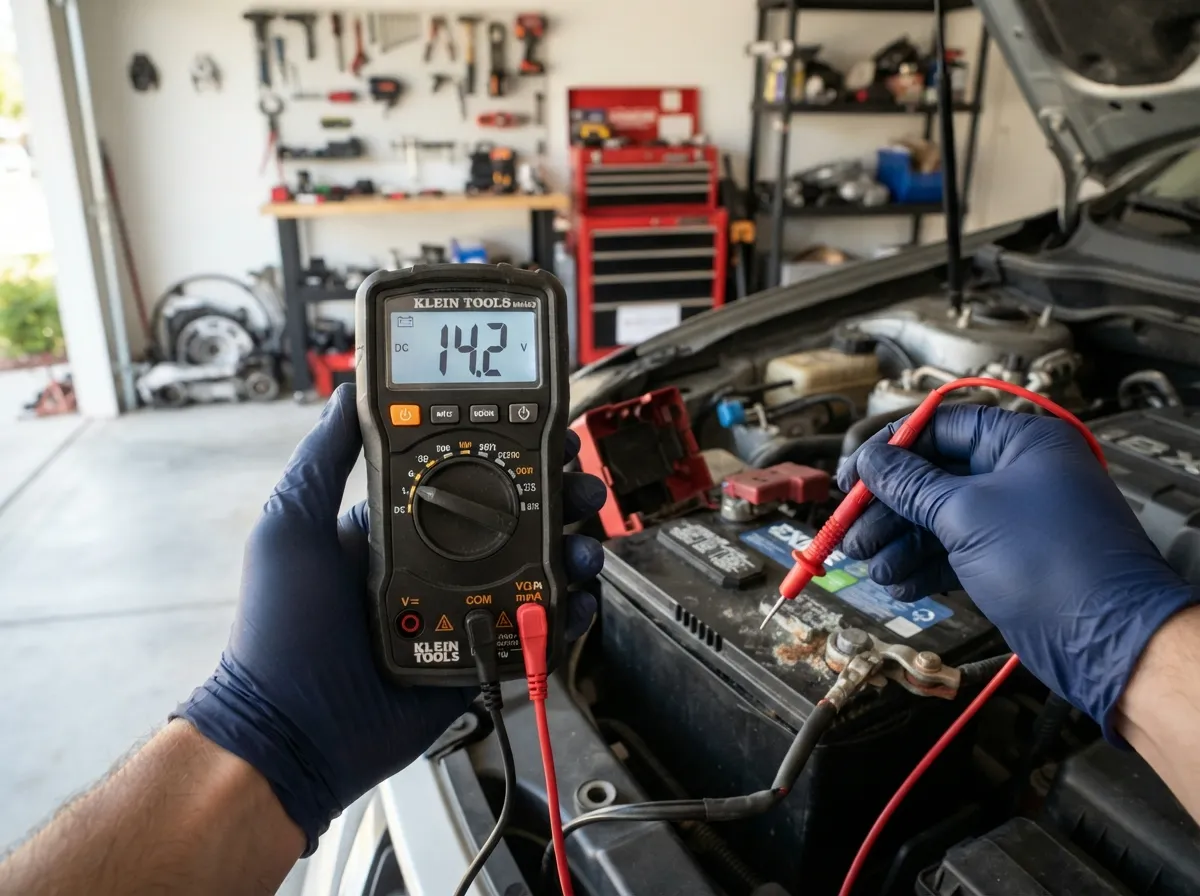
You can confirm car alternator failure symptoms with a simple check. A basic digital multimeter is enough.
Step-by-step test:
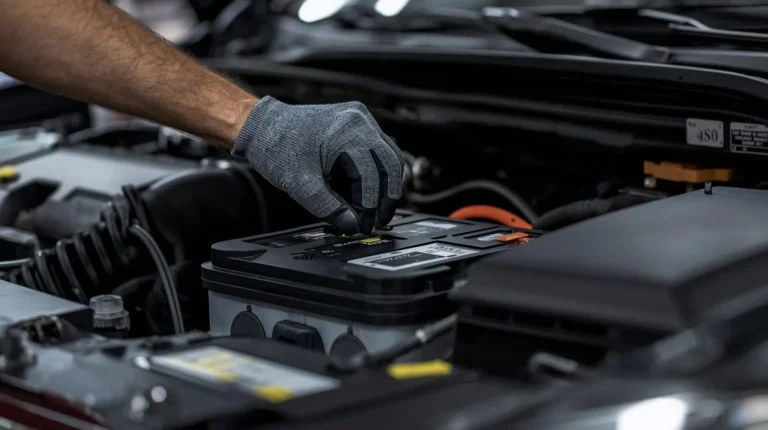
- Key off battery test. A rested battery should read 12.4 to 12.7 volts. Lower means it is discharged or weak.
- Start the engine. At idle with no loads, expect 13.8 to 14.7 volts.
- Turn on loads. Headlights, rear defrost, blower on high. Healthy systems hold 13.5 volts or more.
- Rev to 2,000 RPM. Voltage should stay steady within about 0.2 to 0.3 volts.
- Ripple test if your meter has AC mode. AC at the battery under 0.3 to 0.5 volts is normal. Higher ripple hints at bad diodes.
- Wiggle test. Lightly tap or wiggle the main alternator plug and battery cables. If voltage jumps, you found a loose or corroded spot.
Helpful OBD-II clues:
- Codes like P0562 (system voltage low) or P0620 (generator control circuit) support your findings.
- Some cars log BCM or ABS low-voltage codes too. Do not replace modules until the charging issue is fixed.
PAA-style quick answers:
What voltage should I see while driving?
Aim for about 13.8 to 14.8 volts. A steady reading matters more than one exact number.
Can a bad alternator trigger random warning lights?
Yes. Low voltage makes modules misread sensors. Traction, ABS, and airbag lights can show up.
Do phone chargers or dash cams cause failures?
Not by themselves. The issue is usually poor wiring or a weak alternator made worse by extra load.

Mechanical noises and smells that point to the alternator
Strange sounds help confirm car alternator failure symptoms.
- High-pitch whine that tracks RPM. Often a failing bearing or diode noise. It gets louder with electrical load.
- Chirp at idle. Common with a worn belt or a one-way decoupler pulley that is seized.
- Grinding. A dry bearing can fail fast and throw the belt.
- Burning rubber smell. The belt is slipping. Tensioner or pulley alignment may be off.
- Hot electronics smell. A shorted diode can overheat the alternator case.
Pro tip from the bay: use a mechanic’s stethoscope or a long screwdriver to the ear. Touch the alternator housing and the idler pulley. Loudest wins. Safety first. Keep hands and tools clear of the belt.
Why these symptoms happen inside the alternator
Each part creates a specific pattern of car alternator failure symptoms.
- Worn brushes or slip rings. Output drops at idle. Lights flicker. Voltage rises when you rev.
- Bad regulator. Voltage swings high or low. You may see 15.5 volts or more and smell a battery boiling.
- Shorted diode in the rectifier. Night glow in lights, radio whine, and battery drain with the engine off. Ripple voltage rises.
- Weak stator or rotor. Low output under load. The battery light stays on, and the car stalls at lights.
- Seized or noisy bearings. Whine or grind and a hot case. The belt can shred.
These patterns help you move from guesswork to a clear fix.
Common root causes behind car alternator failure symptoms
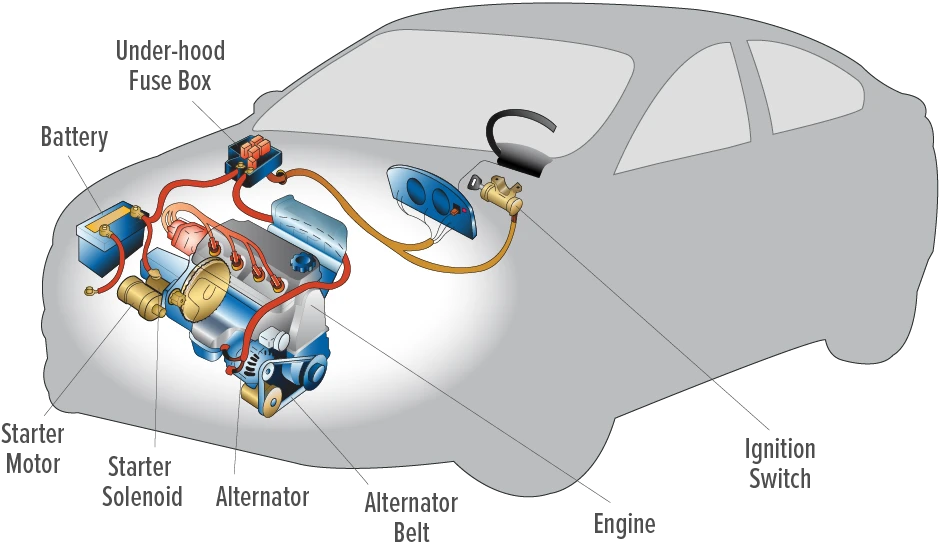
The alternator fails, but the cause can live outside it. Fix both or the problem returns.
- Old or glazed belt and weak tensioner. They slip under load and mimic alternator failure.
- Heat and oil leaks. Oil breaks belts and insulates windings. Heat kills diodes and bearings.
- Bad grounds and corroded cables. High resistance starves the system. Voltage looks low even with a good alternator.
- Weak or sulfated battery. A dying battery drags the alternator hard. It overheats and fails early.
- Jump-start spikes or reversed leads. A voltage surge can fry the regulator in an instant.
- Extra aftermarket load. Big audio, winches, or lights need the right gauge wire and fusing.
When I see repeated car alternator failure symptoms, I always check belt condition, tensioner travel, ground straps, and battery state of health. It saves comebacks.

Can you keep driving with these signs?
Short answer: it depends on voltage. If you see 13.5 volts or more while driving, you can likely reach a shop. If it is near battery voltage, you may have 10 to 30 minutes of run time at best.
If you must drive:
- Turn off heat seat, stereo amp, and extra lights.
- Leave headlights on only if needed for safety.
- Do not shut the engine off until you are at a safe stop.
If voltage drops under 12 volts with the engine on, park in a safe spot. That is not a gamble worth taking.

Repair costs, parts quality, and DIY vs pro tips
Costs vary by car and access.
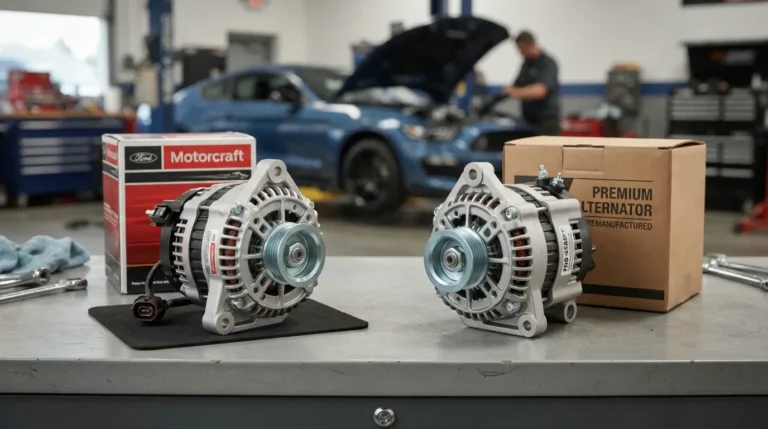
- Parts. Reman alternators run about 180 to 450 dollars. New OE units can run 350 to 900 dollars or more. Belts and tensioners add 40 to 250 dollars.
- Labor. Most jobs take 0.7 to 3.0 hours. Some are fast. Some require removing an axle or the intake.
- Hidden items. Decoupler pulleys, brackets, or connectors can add cost.
DIY advice from experience:
- Bench test the alternator before install if the parts store offers it.
- Replace the belt and inspect the tensioner while you are there.
- Clean battery posts and main grounds. Voltage drop under 0.2 volts per side is the target under load.
- Choose quality reman with new bearings, brushes, and diodes. Cheap units fail early.
If your car shows car alternator failure symptoms more than once in a year, look for root causes like heat soak, oil leaks, and high-draw accessories.
Prevention checklist to avoid car alternator failure symptoms
A few habits stop most charging system headaches.
- Inspect the belt every oil change. Look for cracking, glazing, and rubber dust.
- Check tensioner alignment and travel. A bouncing tensioner means slip.
- Test battery twice a year. Verify open-circuit voltage and load test or conductance test.
- Clean and tighten grounds and main power cables. Bright metal to metal is best.
- Keep the engine bay clean and dry. Fix oil and coolant leaks fast.
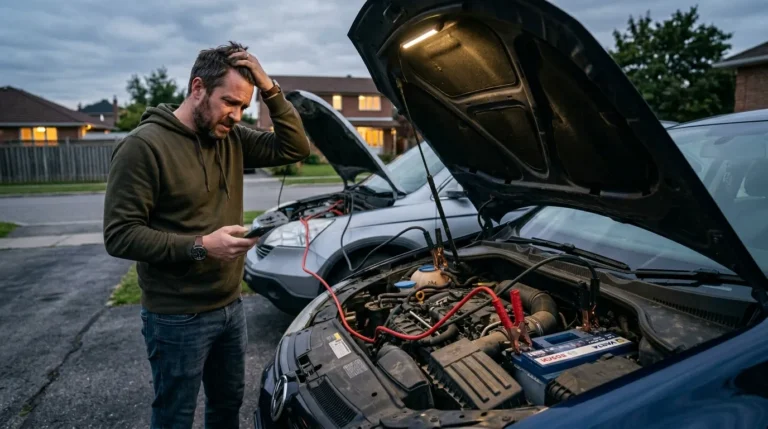
- Use a quality jump pack with surge protection. Do not reverse the leads.
- Match alternator size to load. Big audio needs a high-output unit and a proper “big 3” wiring upgrade.
Do these steps and you will rarely see car alternator failure symptoms again.
Real-world stories and my lessons learned
A ride-share driver came in with dim headlights and a faint whine. Classic car alternator failure symptoms. Voltage was 12.9 at idle with the A/C on. A fresh alternator and belt fixed it. The driver said tips went up the same night because the car felt new again.
An F-150 chirped at idle after rain. The belt looked fine. The one-way alternator pulley had seized. Swapped the pulley, chirp gone, voltage stable. That saved a good alternator from blame.
A BMW owner had random warning lights and stalls. Everyone blamed the alternator. Testing showed an intelligent battery sensor fault and a sulfated battery. We replaced the sensor and battery. The alternator lived on. The lesson: confirm the cause before you spend big.
These cases show why testing beats guessing. Car alternator failure symptoms can look the same, but fixes differ.
Frequently Asked Questions of car alternator failure symptoms
What is the difference between a bad battery and a bad alternator?
A bad battery struggles to hold a charge even with a good alternator. A bad alternator cannot keep voltage up while the engine runs, so the car runs off the battery and dies.
Can a failing alternator ruin a new battery?
Yes. Overcharging cooks a battery. Undercharging sulfates plates. Both shorten battery life fast.
How long can I drive with car alternator failure symptoms?
If voltage holds near 13.5 volts, you may reach a shop. Near 12 volts, you have a short window before the car stalls.
Will a squealing belt always mean the alternator is bad?
No. It may be a loose belt or weak tensioner. Fixing belt slip can restore proper charge.
Are jump starts safe when I see these symptoms?
Use a surge-protected jump pack and correct polarity. Plan a test right after, since a weak alternator may have caused the dead battery.
Conclusion
Spotting car alternator failure symptoms early saves time, money, and stress. Look for dim lights, warning lamps, noises, voltage swings, and hot smells. Confirm with a quick meter check, then fix both the alternator and the cause.
Take action today. Test your voltage, inspect the belt, and clean your grounds. If you found this helpful, share it with a friend, subscribe for more simple car care guides, or leave a comment with your own story.