Uneven tire pressure, misalignment, brake drag, or worn suspension usually cause a car to pull.
If your steering wheel keeps tugging left or right, don’t ignore it. In my garage, I diagnose this every week. This guide breaks down car pulling to one side causes, tests you can do at home, pro tips from the bay, and the safest repair path. Read on to understand car pulling to one side causes in plain language, with clear steps and real examples.
What “pulling to one side” really means
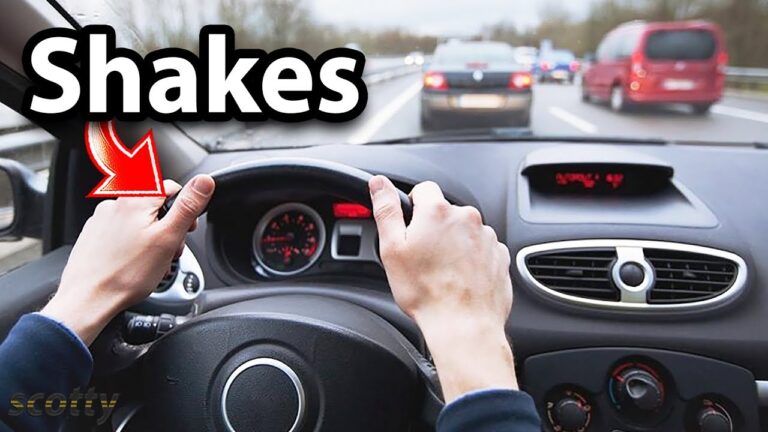
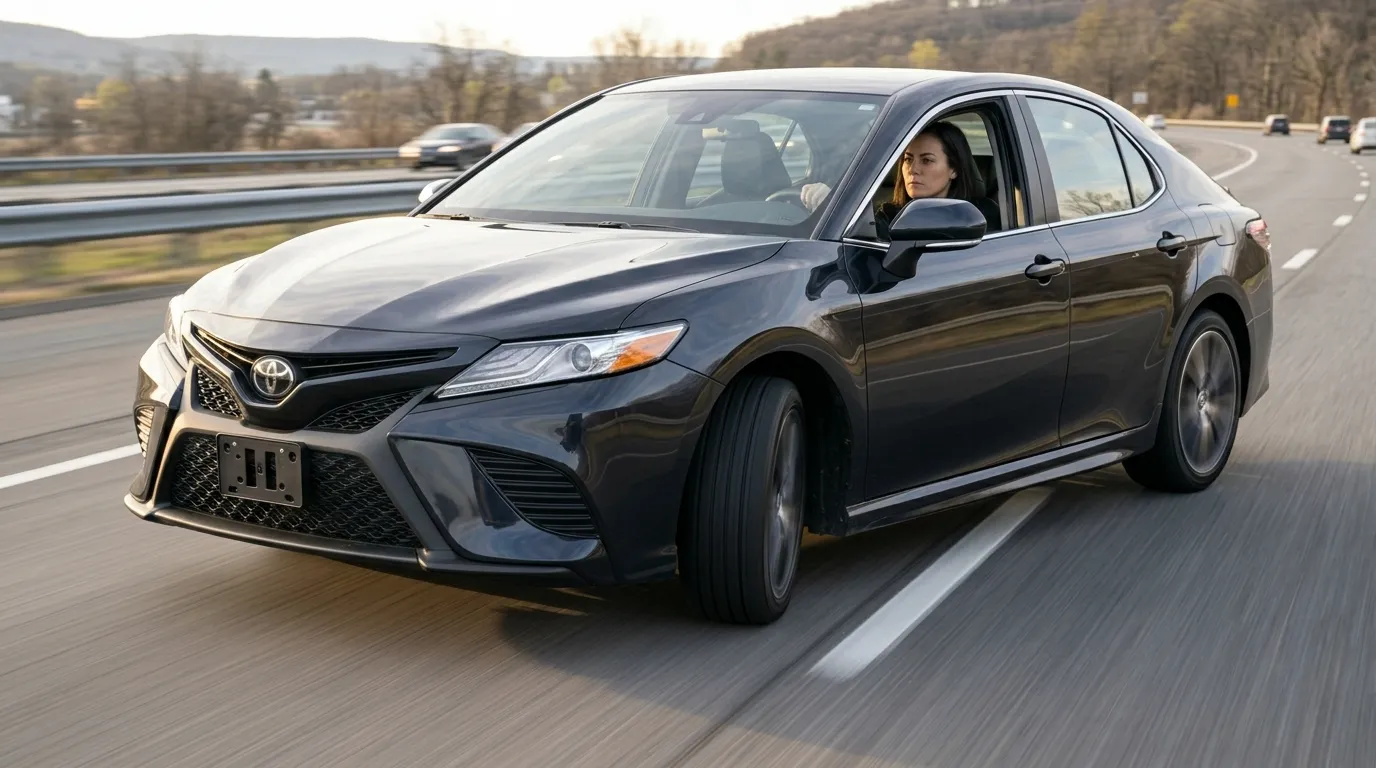
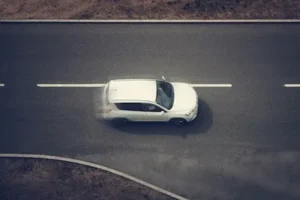
Pulling means the car drifts left or right on a straight, flat road with a light grip on the wheel. It may feel mild, like a nudge, or strong, like the car wants to leave its lane. You might also see the steering wheel off-center.
Road crown and wind can make a slight drift feel worse. Test on a safe, flat road with little crown. If the car still pulls in calm air, there is a fault to find.
Top car pulling to one side causes
Most car pulling to one side causes fall into four groups: tires, alignment, brakes, and suspension or steering. Knowing the car pulling to one side causes helps you fix the right part first and avoid guesswork.
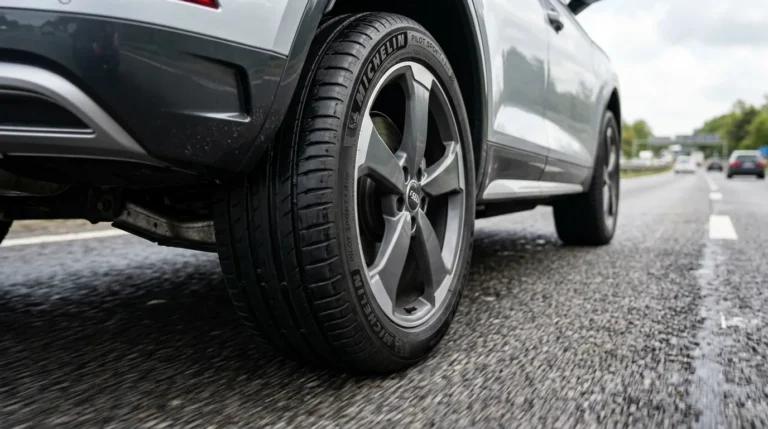
- Tire pressure mismatch. A soft tire has more drag and a smaller rolling radius, so the car drifts to that side. This is one of the most common car pulling to one side causes.
- Uneven tire wear, conicity, or radial pull. A tire with belt shift or conicity acts like a cone and steers the car. Swap front tires left to right; if the pull changes sides, the tire is likely at fault. Another frequent car pulling to one side causes is radial pull from internal tire defects.
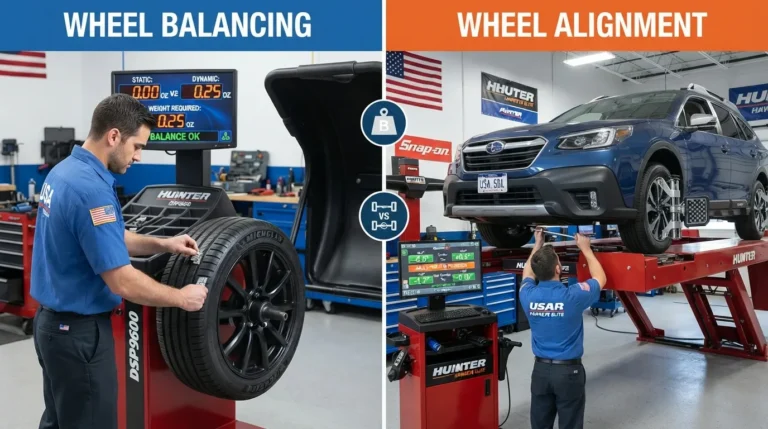
- Wheel alignment out of spec. Too much cross camber, cross caster, or toe can cause a steady pull. Small errors add up. Of all car pulling to one side causes, alignment issues are a top driver after pothole hits or curb strikes.
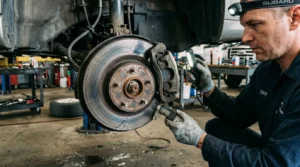
- Sticking brake caliper or frozen slide pins. A dragging brake heats up, smells, and pulls the car to the stuck side. After a drive, the hot wheel can be felt or seen with an infrared thermometer. This brake fault ranks high among car pulling to one side causes.
- Worn or bent suspension parts. Loose or bent control arms, bushings, ball joints, or struts change geometry under load. The car may wander and pull more when you brake. These parts round out key car pulling to one side causes.
- Steering linkage wear or misadjustment. Worn tie rod ends or a shifted steering rack can cause drift and poor return to center.
- Wheel bearing drag. A failing bearing can add rolling resistance on one side and cause a mild pull, plus a growl that changes with speed.
- Bent wheel or rim damage. A bent wheel changes scrub radius and balance. You may feel a shake and a slow pull.
- Mismatched tires. Different brands, sizes, tread depths, or rotations on one axle can cause cross-traction and a pull.
- Torque steer on front-wheel drive. Hard throttle can tug the wheel due to unequal axle lengths or worn mounts. It should not persist at steady speed.
- Power steering valve or rack bias. Internal bias in the rack or pump can apply more assist to one side. This is rare but real on older systems.
- Load imbalance. Heavy cargo on one side or a collapsed spring shifts weight and camber.
- Subframe shift after a hit. Even small crashes can move the cradle and change alignment.
Real-world example from my bay: A crossover came in pulling right after a highway exit. The right-front wheel was 60°F hotter than the left. The caliper slide was seized with rust. New slides, clean and lube, and fresh pads fixed the pull at once.
At-home checks you can do in 10 minutes
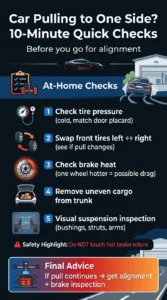
Try these quick tests before you book a visit. They can rule out simple car pulling to one side causes.
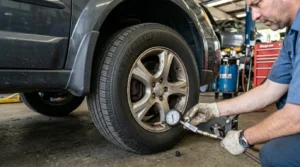
- Set tire pressures. Check cold. Match the door placard. Correct a low tire and road test.
- Swap front tires left to right. If the pull follows the tire, suspect conicity or wear. Rotate or replace.
- Brake heat feel test. After a short drive without heavy braking, carefully hover your hand near each front wheel. If one is much hotter, the brake may be dragging. Do not touch the rotor.
- Trunk and load check. Remove uneven cargo. Check that the car sits level.
- Visual suspension scan. Look for torn bushings, leaking struts, bent arms, or a shifted subframe.
If the pull remains, schedule an alignment and brake check.
How a shop finds the cause
Pros follow a flow that saves time and money. This isolates hidden car pulling to one side causes.
- Baseline road test. Confirm the pull on a flat route. Note braking and throttle effects.
- Tire and wheel check. Measure pressures, tread depth, and wear patterns. Spin wheels and check runout. Perform a tire cross-swap to see if the pull changes sides.
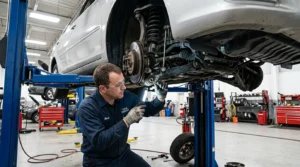
- Brake inspection. Check pad wear, slide pins, piston movement, and rotor runout. Infrared temp readings after a drive show drag fast.
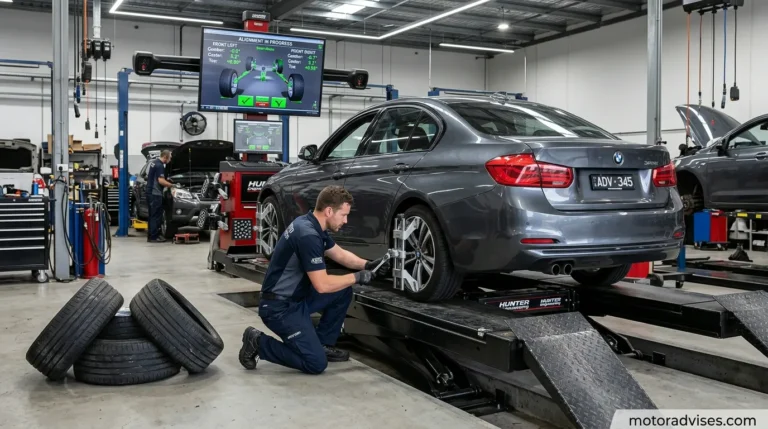
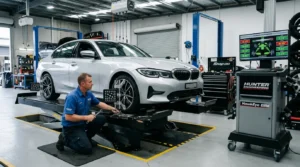
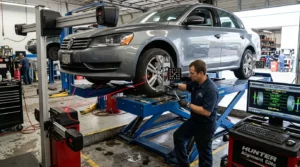
- Alignment on a calibrated rack. Read camber, caster, toe, SAI, and thrust angle. Compare to OEM specs. Many light pulls are due to cross camber or caster.
- Suspension and steering play test. Use pry bars and a shaker plate to spot loose joints and bushings.
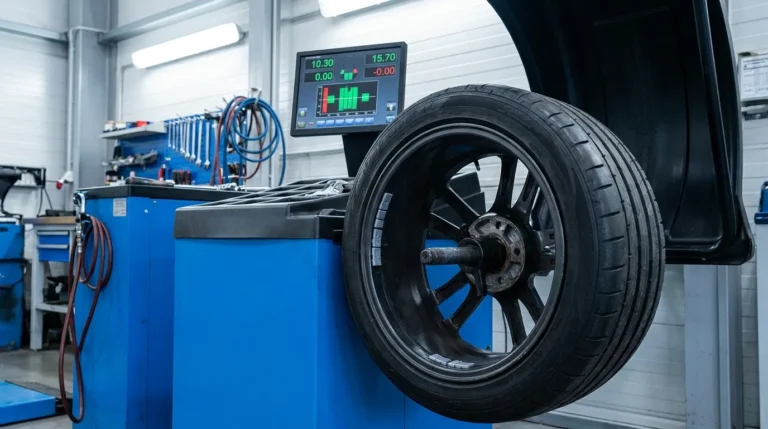
- Advanced tests if needed. Road-force balancing reveals radial force variation. Steering rack pressure tests check for internal bias.
In my shop, I set tire pressures first, then do the tire swap test. That quick pair often points to tire conicity or a brake drag before we even roll onto the rack.
Source: brakemax.com
What to fix first for safety
Some faults can wait a week. Others cannot. Treat brake drag and tire issues as urgent car pulling to one side causes.
- Fix now
- Sticking caliper or hot rotor
- Severely low tire or damaged tire
- Bent wheel with vibration
- Loose ball joint or tie rod
- Fix soon
- Mild alignment cross camber or toe drift
- Minor bushing wear
- Slight tire conicity you can rotate away
If the steering fight is strong, avoid highway speeds and get it towed. Safety first.
Typical costs and time
Actual prices vary by vehicle and region. These ranges reflect common shop rates and parts quality.
- Tire pressure and rotation: 0.5–1 hour, low cost
- Tire replacement (pair): Moderate cost, 1 hour with balance
- Brake service for a sticking caliper: New caliper or hardware, pads, rotor resurface or replace; moderate to high cost, 1.5–3 hours
- Four-wheel alignment: Moderate cost, 1–1.5 hours
- Control arm or bushing: Moderate to high cost, 1–3 hours each side
- Wheel bearing: Moderate to high cost, 1.5–3 hours
- Steering rack: High cost, 4–6 hours plus alignment
Tip from experience: Spend on diagnosis before parts. Paying for one good hour of testing often saves you from buying the wrong part twice.
Prevention and maintenance tips
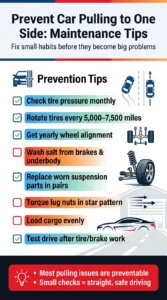
Prevention cuts most car pulling to one side causes. Small habits go a long way.
- Check tire pressures monthly and before trips.
- Rotate tires every 5,000–7,500 miles. Keep brands and tread depths matched on each axle.
- Get an alignment yearly, or after pothole hits, curb strikes, or suspension work.
- Wash winter salt off brakes and the underbody to prevent seized slides.
- Replace worn bushings and struts in pairs.
- Torque lug nuts in a star pattern with a torque wrench.
- Load cargo evenly. Avoid overloading one side.
- Test drive after any tire or brake work. Catch issues early.
Quick answers to common searches
- Why does my car pull only when braking?
- Most times it is a sticking caliper, seized slide, or uneven pad material. Check brake temps and pad wear; fix that side or both fronts.
- Can tires alone cause a pull?
- Yes. Tires with conicity or radial force variation can steer the car. Rotating or replacing the tire often cures it.
- Is wheel alignment always the fix?
- No. Alignment helps if specs are off. But if a tire or brake is the root cause, an alignment alone will not stop the pull.
Pros isolate hidden car pulling to one side causes with these same quick checks and targeted tests.
Frequently Asked Questions of car pulling to one side causes
How do I tell if the pull is from tires or brakes?
Swap the front tires left to right. If the pull changes sides, suspect the tires; if not, check for a hot brake.
Can road crown make a good car feel like it pulls?
Yes. Many roads slope to drain water, which can nudge the car right. Test on a flat, empty lot to confirm a real fault.
Should I replace both front calipers if one sticks?
It is often wise. Age and corrosion affect both sides. Replacing in pairs keeps braking even.
Will an alignment fix a pull from a bent wheel?
No. A bent wheel needs repair or replacement first. Alignments set angles but cannot straighten a damaged rim.
How long can I drive with a mild pull?
Do not delay. Mild pulls often get worse and wear tires fast. Fix the cause soon to avoid bigger bills.
Conclusion
A car that pulls is telling you something. Start with simple checks, like tire pressure and a left-right tire swap. If it still pulls, get a proper brake and alignment inspection. The fix is often fast once you find the root cause. Take action today, drive safer, and save your tires and wallet. Have questions or a tricky case? Drop a comment and I’ll help you troubleshoot.