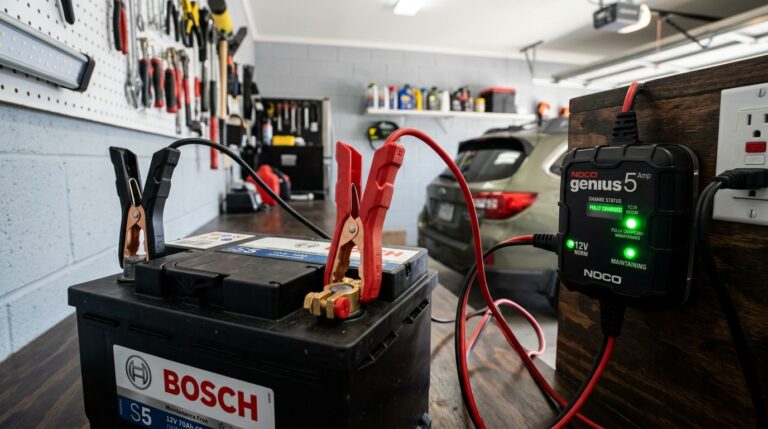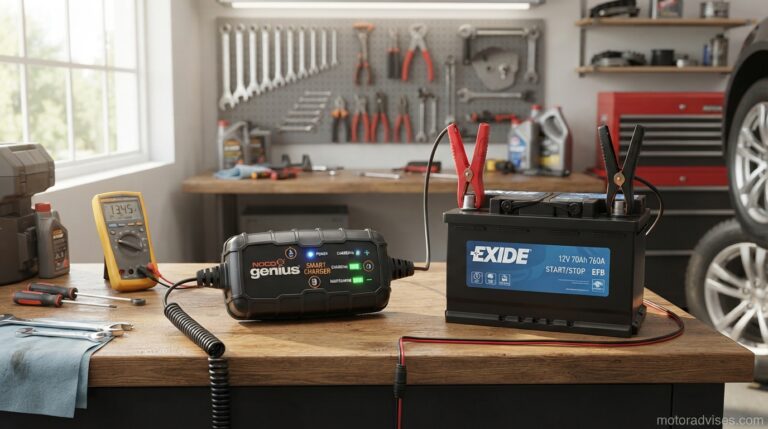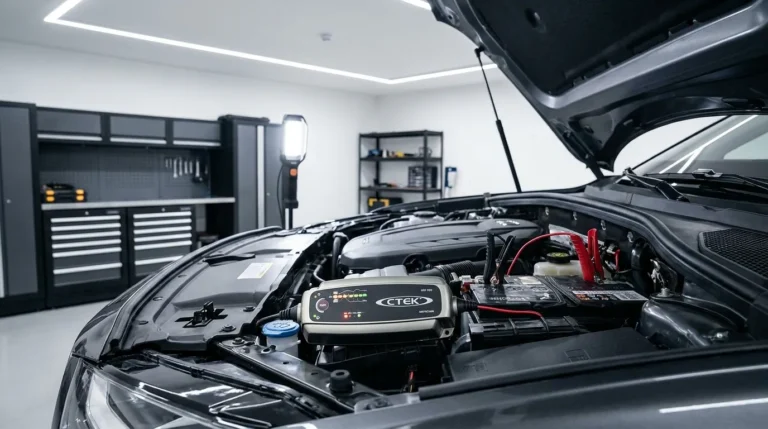
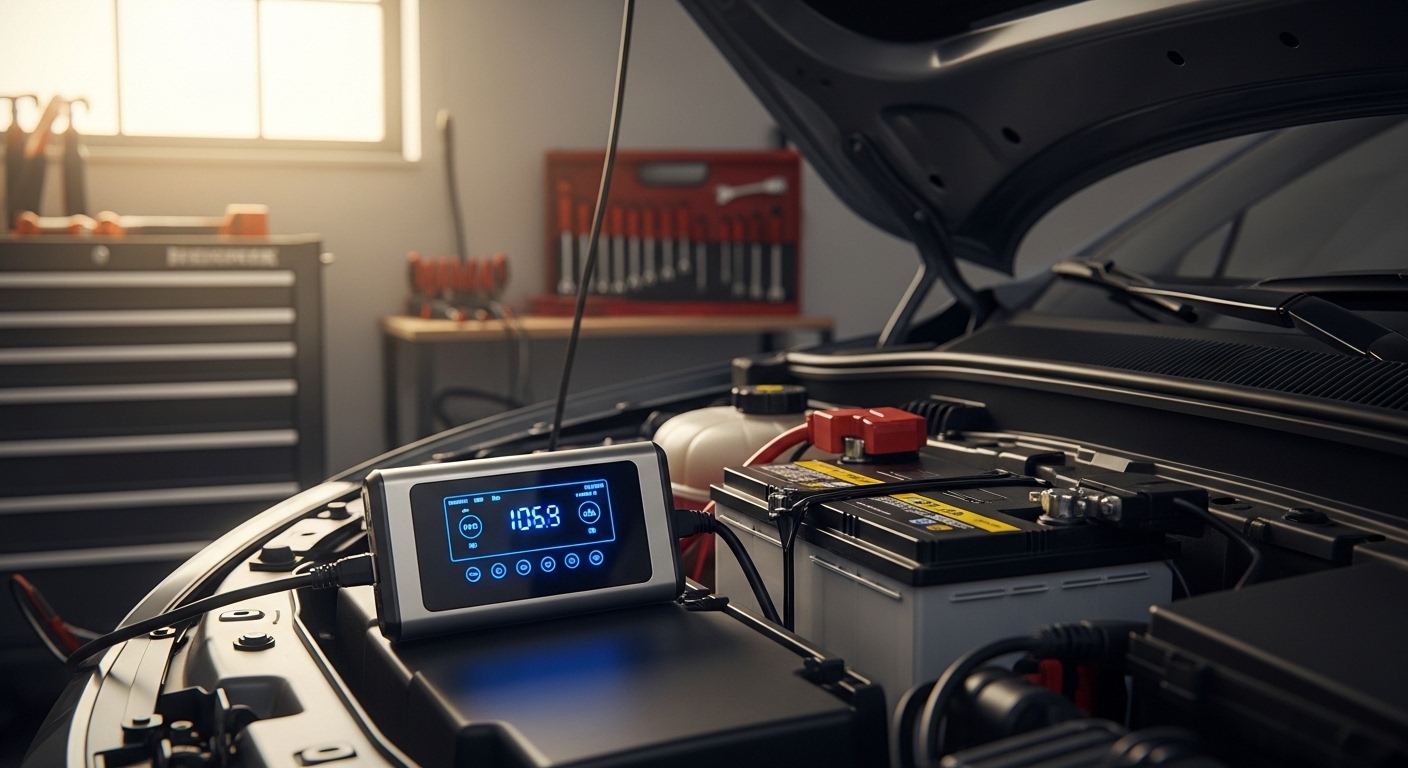
A car battery charger is a device that restores battery power using controlled DC current.
If you want your car to start every time, you need to know what a car battery charger is and how it works. I’ve spent years testing, fixing, and saving batteries in real garages and cold driveways. In this guide, I’ll break down what a car battery charger does, the types you can buy, how to use one safely, and how to pick the best model for your needs. By the end, you’ll be able to choose and use a car battery charger with confidence.
What is a car battery charger?
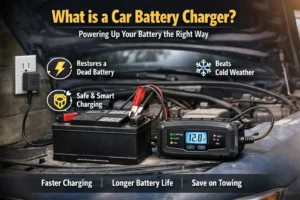
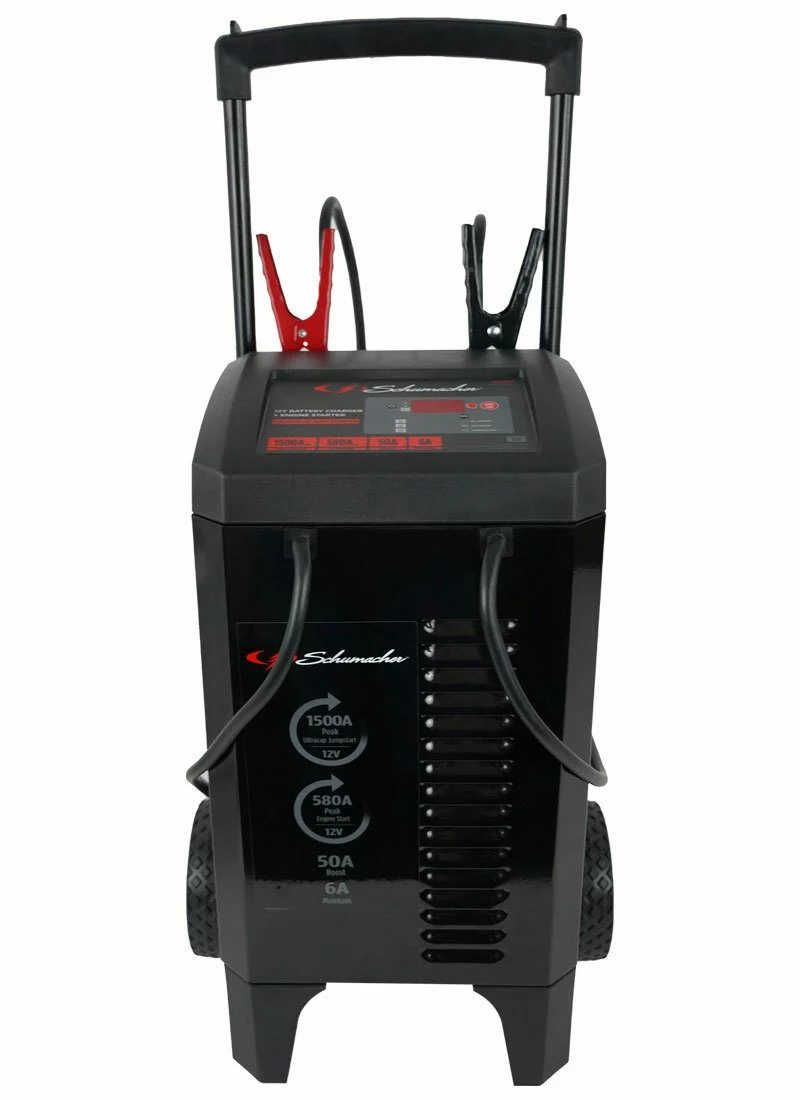
A car battery charger is a power device that changes wall AC power into DC power to recharge a 12-volt car battery. Most models use a smart microprocessor that controls current and voltage for a safe, fast, and full charge. It protects the battery, helps it last longer, and gets your car back on the road.
What a car battery charger does:
- Restores charge to a weak or dead battery
- Maintains a stored battery so it does not go flat
- Uses safe charge stages to prevent damage
- Works with common chemistries like flooded, AGM, and some lithium (LiFePO4)
Why it matters:
- A car battery loses charge over time, even when parked
- Short trips and heavy loads strain the battery
- Cold weather reduces cranking power
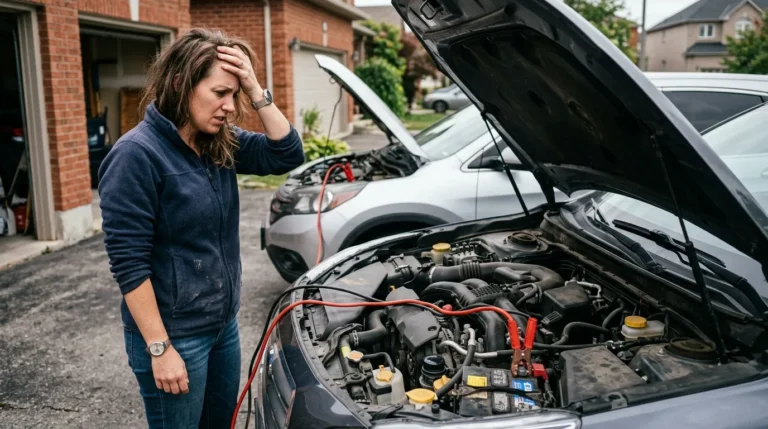
- A car battery charger helps you avoid jump starts and tow bills
Source: schumacherelectric.com
How a car battery charger works
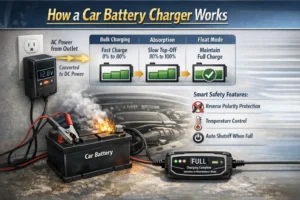
A modern car battery charger follows simple steps to protect and refill the battery.
Basic process:
- It converts AC power from your outlet into DC power.
- It checks battery voltage and chemistry.
- It charges in stages: bulk, absorption, and float.
- It stops or switches to maintenance when full.
Charge stages in plain words:
- Bulk stage: High current to fill the battery fast up to about 80%.
- Absorption stage: Lower current to top off the last 20% without heat or stress.
- Float stage: Very low current to keep the battery full for long periods.
Smart safety:
- Reverse polarity protection so sparks do not fly if you mix up clamps
- Temperature control to avoid heat damage
- Automatic shutoff when full
Types of car battery chargers
Different jobs call for different tools. Here are the main types.
- Trickle charger: Feeds a very low current all the time. Cheap but can overcharge if left on too long.
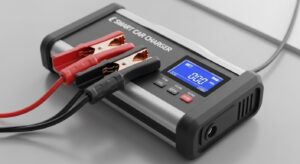
- Smart charger: Uses a microprocessor to match current and voltage to the battery. Safe and set-and-forget.
- Battery maintainer: Keeps a stored battery at 100% without overcharge. Great for seasonal cars.
- Multi-chemistry charger: Works with flooded, AGM, gel, and sometimes LiFePO4 batteries. Check the label.
- Manual shop charger: High current and simple controls. Best for pros who can watch it.
- Solar charger or maintainer: Uses the sun. Good for storage spots with no outlet.
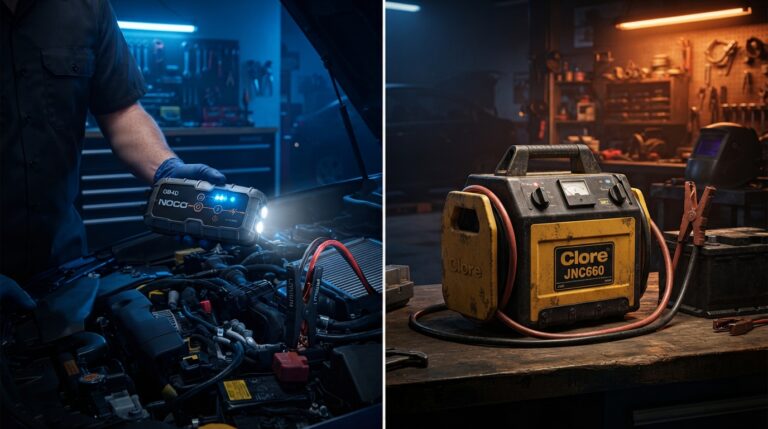
- Jump starter with charger function: Can start the car and then recharge the battery slowly.
Note on chemistry:
- Lead-acid includes flooded, AGM, and gel. They like multi-stage charge profiles.
- Lithium iron phosphate (LiFePO4) needs a charger with a lithium mode. Do not use a random lead-acid only charger.
Key features and specs to compare
When you buy a car battery charger, check these specs and features.
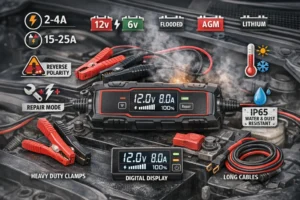
- Amperage output: 2–4A for maintaining, 6–10A for daily use, 15–25A for fast charge
- Voltage support: 12V is standard; some also support 6V or 24V
- Chemistry modes: Flooded, AGM, gel, and LiFePO4 options
- Safety features: Reverse polarity, spark proof, over-temp, over-voltage, short-circuit
- Temperature sensing: Adjusts charge in heat and cold for better results
- Repair or desulfation mode: Can help a weak lead-acid battery recover
- IP rating: Water and dust resistance for outdoor use
- Clamp quality and cable length: Better grip and reach mean safer hookups
- Display and data: Shows voltage, current, and charge level so you can track progress
How to choose the right car battery charger
Match the car battery charger to your battery and your use case.
Simple steps:
- Confirm battery type. Flooded, AGM, gel, or LiFePO4.
- Check battery size. Look for amp-hours (Ah) or reserve capacity on the label.
- Choose amperage. A common rule for lead-acid is 10% to 20% of Ah. A 60 Ah battery pairs well with a 6–10A charger.
- Pick features you need. Maintainer mode for storage, lithium mode if you have LiFePO4, repair mode for older batteries.
- Think about climate. Get temperature compensation if you live in very hot or very cold areas.
- Plan for future use. If you have two cars or an SUV, a 10A smart car battery charger is a good all-round pick.
Real example:
- Daily driver with 60 Ah AGM battery: A 10A smart car battery charger with AGM mode
- Classic car in storage: A 2–4A maintainer with float mode and temperature sensing
- RV or truck with two batteries: A 15–25A smart car battery charger with multi-bank support
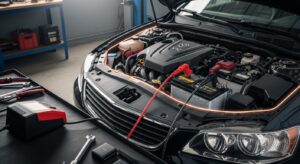
Safe setup and charging procedure
Follow these steps every time. Slow is smooth, and smooth is safe.
- Park in a well-ventilated area. Turn off the car and all accessories.
- Check fluid level if the battery is serviceable. Wear eye and hand protection.
- Connect the positive clamp to the positive post.
- Connect the negative clamp to a clean chassis ground away from the battery.
- Set the mode for your battery type and size.
- Plug in the car battery charger and start the cycle.
- Let it run until it shows full or float mode.
- Unplug the charger. Remove the negative clamp first, then the positive.
Common mistakes to avoid:
- Mixing up clamps. Red to positive, black to chassis ground.
- Charging a frozen battery. Warm it first.
- Using the wrong mode. Do not use lithium mode on lead-acid or vice versa.
- Rushing the process. A safe charge can take hours.
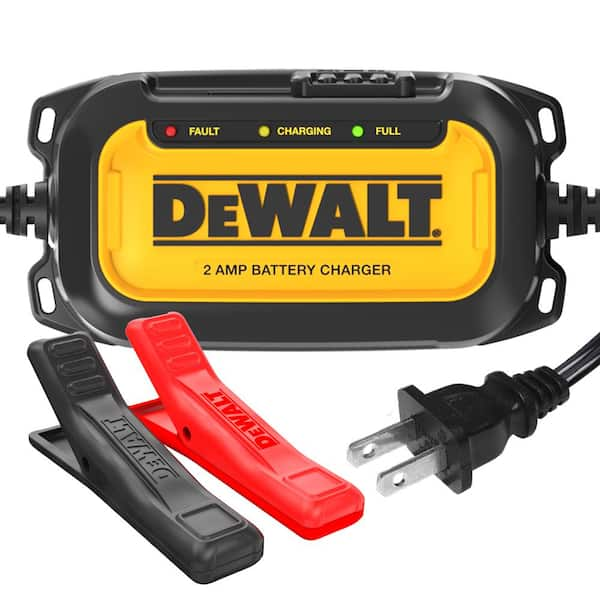
Source: homedepot.com
Real-world tips, mistakes, and lessons learned
From my years in the shop and countless driveway saves, these tips help the most.
What worked well:
- A smart 10A car battery charger is the best one-tool setup for most drivers.
- A maintainer on a stored car prevents sulfation and saves the battery.
- Temperature sensing makes winter charges faster and safer.
Mistakes I made so you do not have to:
- I once left a dumb trickle charger on all weekend. The battery got hot and gassed. Never again. Use a smart charger with float.
- I tried a repair mode on a badly sulfated battery that was already bulging. It was unsafe. Replace any swollen or smelly battery.
Quick wins:
- Clip the negative to a chassis ground to reduce sparks.
- Log your resting voltage. Above 12.6V is full. Around 12.2V is low. Below 12.0V needs a charge now.

Troubleshooting and when to replace the battery
A car battery charger can fix a weak battery, but not a dead cell.
Signs the battery is done:
- It will not hold above 12.4V after a full charge and rest
- The car cranks slow even with a fresh charge
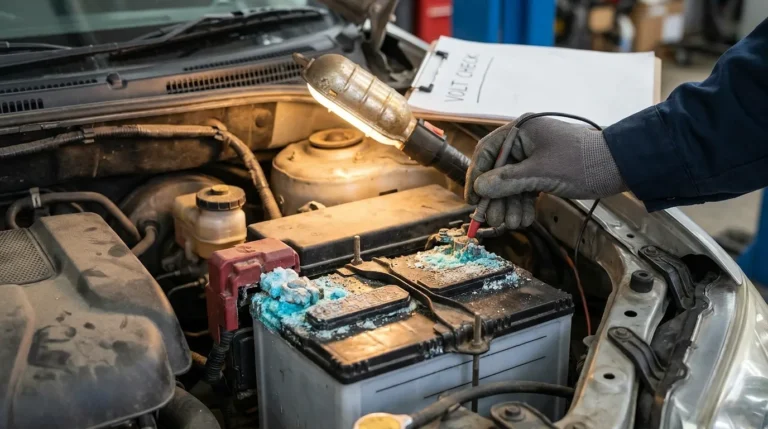
- The case is swollen, it smells like rotten eggs, or it leaks
- It fails a load or CCA test at an auto shop
Try this before you give up:
- Run a full charge and then a repair or desulfation cycle on a lead-acid battery
- Clean the posts and clamps and try again
- Test the alternator. A bad alternator can drain a good battery
If it still fails, replace the battery and then keep a car battery charger on hand for better care.
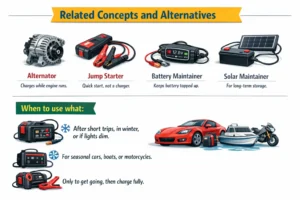
Related concepts and alternatives
It helps to know what a car battery charger is not.
- Alternator: Charges while the engine runs. It is not made to recover a deeply discharged battery.
- Jump starter: Helps you start the car now. It does not refill the battery like a car battery charger.
- Battery tender or maintainer: Holds a full charge over time. Great for storage.
- Solar maintainer: Ideal for long-term parking without power access.
When to use what:
- Use a car battery charger after short trips, during winter, or if lights dim.
- Use a maintainer for seasonal cars, boats, or motorcycles.
- Use a jump starter only to get going, then charge the battery fully.
People also ask
Can I charge a car battery without disconnecting it?
Yes, most smart chargers allow on-vehicle charging. Turn everything off, connect clamps correctly, and use chassis ground for the negative.
How long does it take to charge a car battery?
It depends on charger amps and battery size. A 10A car battery charger may take 4–10 hours for a moderate recharge.
Will a car battery charger start my car?
A charger is for charging, not cranking. For instant starts, use a jump starter, then charge the battery to full.

Frequently Asked Questions of what is car battery charger
What is a car battery charger used for?
It restores power to a drained battery and keeps stored batteries full. It can prevent sulfation and extend battery life.
Can a car battery charger overcharge a battery?
A smart car battery charger will not overcharge because it switches to float or shuts off. Old trickle chargers can overcharge if left on too long.
What size car battery charger do I need?
Match 10% to 20% of your battery’s Ah rating for general use. For a 70 Ah battery, a 7–10A charger is a solid choice.
Is it safe to leave a car battery charger on overnight?
Yes, if it is a smart charger with auto shutoff or float mode. Make sure clamps are secure and the area is ventilated.
Can I use a car battery charger on AGM or lithium batteries?
Yes, if the charger supports that chemistry. Select the proper AGM or LiFePO4 mode as labeled.
Do I need a car battery charger if I drive daily?
It still helps if you take short trips or have lots of accessories. A monthly top-up keeps the battery healthy.
What voltage should I see after charging?
A full lead-acid battery rests around 12.6–12.8V. During charge, you may see 14.2–14.7V depending on the mode.
Conclusion
A car battery charger is a simple tool that prevents no-start mornings and costly breakdowns. It converts wall power into safe, staged DC power and brings your battery back to full health. Pick the right type, follow safe steps, and you will add years to your battery’s life.
If you own a car, add a smart car battery charger to your toolkit this week. Choose the right amperage, learn your battery type, and run a full charge before the next cold snap. Want more tips? Subscribe, leave a comment with your setup, or ask a question and I’ll help you pick the perfect charger.