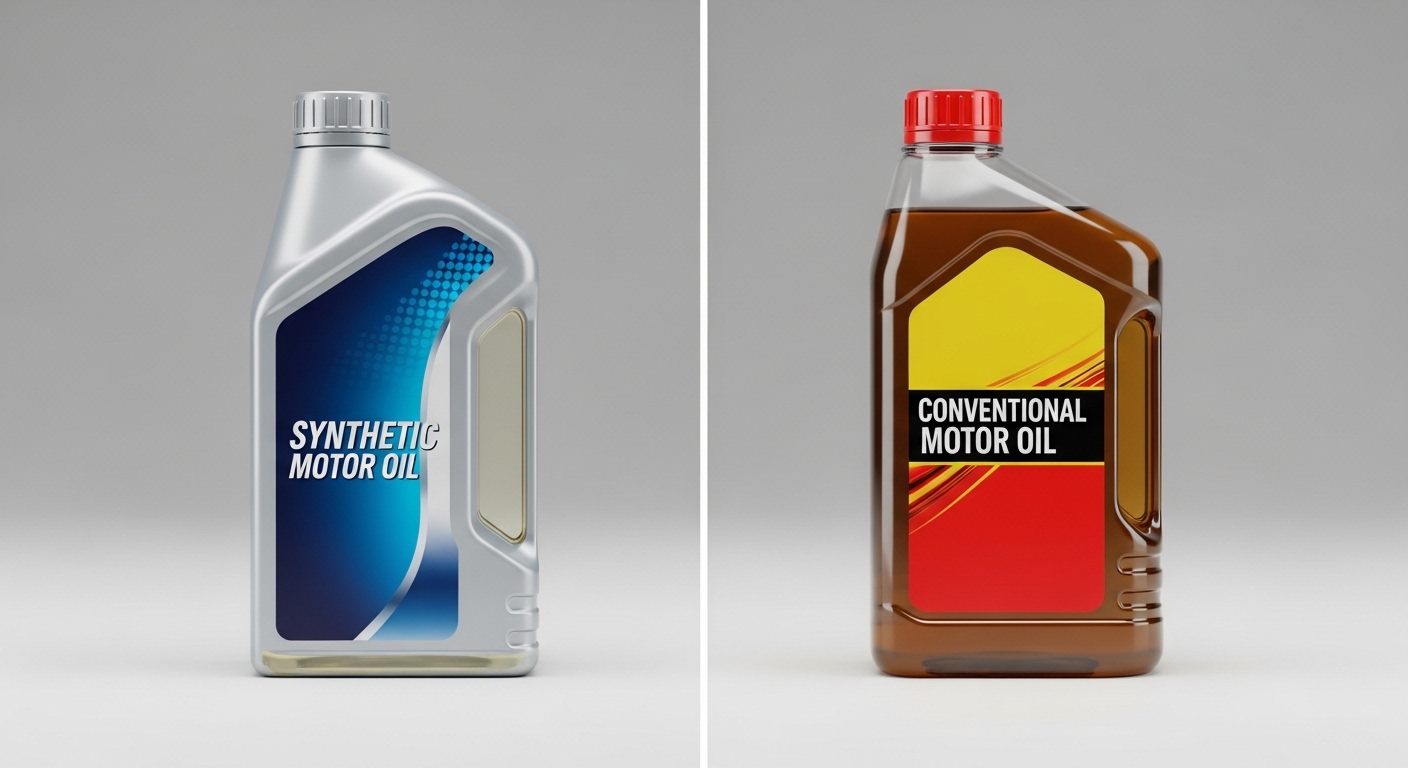
Synthetic oil resists heat and wear better; conventional oil is cheaper but breaks down faster.
If you want a clear, simple guide to the synthetic vs conventional oil difference, you’re in the right place. I’ve helped drivers choose oils for years, from old sedans to new turbo SUVs. In this deep dive, I’ll cut through marketing and show you how the synthetic vs conventional oil difference affects engine life, fuel economy, cold starts, and your wallet.
Understanding the synthetic vs conventional oil difference
At the core, both oils start as base stock with additives. Conventional oil comes from refined crude. The molecules vary in size and shape. Synthetic oil is built or highly refined to have uniform molecules. That shape and purity help it stay stable under heat and flow better in the cold.
Additives matter as much as base oil. Detergents keep engines clean. Anti-wear agents protect metal. Antioxidants slow oil aging. With synthetic oil, these additives work in a more stable base, so the package lasts longer. That is the heart of the synthetic vs conventional oil difference.
Standards guide quality. Look for API SP, ILSAC GF-6, or Dexos approvals on the label. These show the oil passed tests for wear, sludge, and fuel economy. The right spec is more important than brand. Still, the synthetic vs conventional oil difference shows up fast when engines run hot, idle long, or face winter cold.

Source: co.uk
How Each Oil Is Made and Rated
Conventional oil is refined, then treated to remove wax and impurities. It is often called Group II or Group I base stock. Synthetic oil can be made by chemical synthesis, like PAO (Group IV), or super-refined Group III. The result is cleaner, more uniform molecules with fewer weak points.
Viscosity grades like 0W-20 or 5W-30 tell you how oil flows in cold and hot states. The W is winter. A 0W flows better at cold starts than a 5W. Both can be synthetic or conventional, but synthetics often hold grade longer over the oil change interval. This is a key piece of the synthetic vs conventional oil difference.
Approvals matter. API SP targets modern issues like LSPI in small turbo engines. ILSAC GF-6 aims at chain wear and fuel economy. Many new cars need specific labels, like Dexos1 Gen 3. Choose the approval your manual calls for first. Then pick synthetic or conventional based on your use.

Performance Comparison: Real-World Differences That Matter
Here is how the synthetic vs conventional oil difference plays out where you can feel it.
- Heat resistance: Synthetic resists oxidation and thickening at high heat. This helps in summer, towing, track days, or traffic.
- Cold starts: Synthetic flows faster at start-up. It coats parts sooner and reduces start-up wear.
- Sludge control: Synthetic keeps engines cleaner. It holds soot and varnish in suspension longer.
- Volatility and burn-off: Synthetic has lower evaporation loss, which can cut oil consumption.
- Fuel economy: Less internal drag can mean slight gains. Gains are small but real.
- Turbo and DI engines: Synthetic handles turbo heat and helps reduce LSPI risk with the right spec.
- Longevity: Many synthetics keep protection longer, which supports longer drain intervals when allowed by the maker.
If your use is easy, like short trips in mild weather, a quality conventional oil that meets your spec can be fine. If your use is hard, synthetic gives more margin. That is why the synthetic vs conventional oil difference feels bigger in tough conditions.

Cost, Intervals, and Total Ownership Math
Up front, synthetic costs more per quart. But cost per mile can favor synthetic. Many makers allow longer intervals with synthetic, or your oil life monitor may stretch more miles. That can offset the price gap.
Here is a simple example. Say conventional is 5 dollars per quart and synthetic is 9 dollars. A 5-quart change is 25 dollars vs 45 dollars for oil only. If conventional runs 5,000 miles and synthetic runs 8,000 miles under the same oil life monitor, then cost per 1,000 miles is 5 dollars vs 5.6 dollars before labor. Add less engine wear and cleaner parts, and synthetic can win over time. The synthetic vs conventional oil difference often shows up in fewer issues later, like fewer stuck rings or chain stretch.
Always follow your manual. Severe duty can cut any interval. If you want data, used oil analysis can show how your oil holds up. It can confirm if you can extend safely. This adds a data layer to the synthetic vs conventional oil difference.
When to Choose Synthetic, Conventional, or a Blend
Use this quick guide to decide.
- Choose synthetic if you have a turbo, direct injection, towing, long idles, stop-and-go, or very hot or cold weather.
- Choose conventional if your manual allows it, your driving is easy, and you change oil on time.
- Consider synthetic blend for a budget step-up. It blends some of the heat and sludge benefits with a lower price.
- Always match the spec first. The right API, ILSAC, ACEA, or OEM label beats brand loyalty.
- If your car is new and calls for 0W-20 synthetic, do not downgrade. That spec is set for clear reasons.
This is the practical side of the synthetic vs conventional oil difference. It is not hype. It is matching risk to protection.

Environmental Impact and Sustainability
The synthetic vs conventional oil difference also touches the planet. Synthetics can last longer under approved intervals. That can mean fewer changes and less waste oil over the life of a car. Lower volatility can also cut oil vapor emissions.
Both oils can and should be recycled. Bring used oil to a parts store or recycler. Filters should be drained and recycled too. Fewer changes, proper disposal, and better fuel economy all lower your footprint. Small steps add up over years.

Switching Safely and Common Myths
Many drivers ask if they can switch. Yes, you can switch between synthetic and conventional if the oil meets the same spec and grade. You do not need an engine flush in most cases. A normal change is enough.
Here are quick truths that clear up the synthetic vs conventional oil difference.
- Mixing is safe in a pinch. But it can dilute the benefits of synthetic.
- Leaks after switching are rare. Synthetic may clean deposits. That can reveal a weak old seal that was already leaking.
- High-mileage engines can run synthetic. A high-mileage synthetic with seal conditioners is a smart pick.
- Follow the oil life monitor. Reset it after every change. It tracks more than miles, like temps and trips.
- Use a quality filter. A good filter pairs with synthetic to catch fine debris and hold more dirt.

Personal Experience and Lessons Learned
In my shop days, we had two fleet vans with the same routes. One ran conventional 5W-30 at 5,000-mile changes. The other ran full synthetic 5W-30 with the same spec and 7,500-mile changes. After 120,000 miles, the synthetic van showed cleaner valve covers and steadier compression. Oil use was lower too. That is the synthetic vs conventional oil difference you can see.
On my own turbo hatchback, synthetic solved hot-idle tick in summer. It also cut oil smell on hard climbs. On an older Camry with 180,000 miles, we moved to high-mileage synthetic. The engine ran smoother and used less oil after two cycles. Lessons learned: match the spec, do not fear the switch, and let data guide your intervals.
Frequently Asked Questions of synthetic vs conventional oil difference
Is synthetic oil always better than conventional?
Synthetic protects better under heat and cold, and it keeps engines cleaner. But if your car and use are easy, quality conventional that meets your spec can still work well.
Can I switch from conventional to synthetic without a flush?
Yes. A normal oil and filter change is enough. If your engine is very dirty, use the correct interval and let gentle cleaning happen over time.
Does synthetic oil cause leaks in high-mileage engines?
Synthetic does not cause leaks. It can clean deposits that once masked a weak seal, which reveals a leak that was already there.
How often should I change synthetic oil?
Follow your manual or the oil life monitor. Many modern cars can go 7,500 to 10,000 miles with approved synthetic, but severe duty may shorten that.
Is synthetic blend a good compromise?
Yes. A blend adds some heat and sludge benefits at a lower cost. It is a smart step-up when full synthetic is out of budget.
What viscosity should I use with synthetic or conventional?
Use the grade on your oil cap or in the manual, like 0W-20 or 5W-30. Do not change viscosity to fix issues unless advised by a trusted tech.
Does synthetic improve fuel economy?
The gain is small but real, thanks to lower friction and better stability. The right viscosity and spec matter more than the brand.
Conclusion
The big picture is simple. Synthetic gives you stronger protection in heat and cold, cleaner internals, and steadier performance over time. Conventional can serve fine in light duty if you follow the manual and change on time. The smart move is to match your driving with the right spec and let the synthetic vs conventional oil difference work for you.
Take action today. Check your manual, confirm the right spec, and pick the oil that fits your real world. If you found this helpful, subscribe, share it with a friend, or drop a question in the comments.