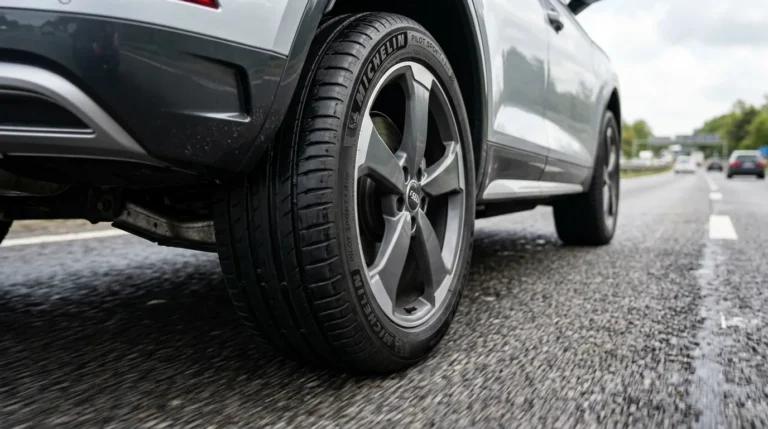
Common signs include uneven tire wear, pulling to one side, and a vibrating steering wheel.
I have spent years inspecting cars and advising drivers on wheel alignment problems symptoms. This article explains the signs, causes, diagnosis, fixes, costs, and prevention in a clear, friendly way. Read on to learn what to watch for, how to confirm alignment issues, and what to do next so you can drive safer and save money.
What are wheel alignment problems and why they matter
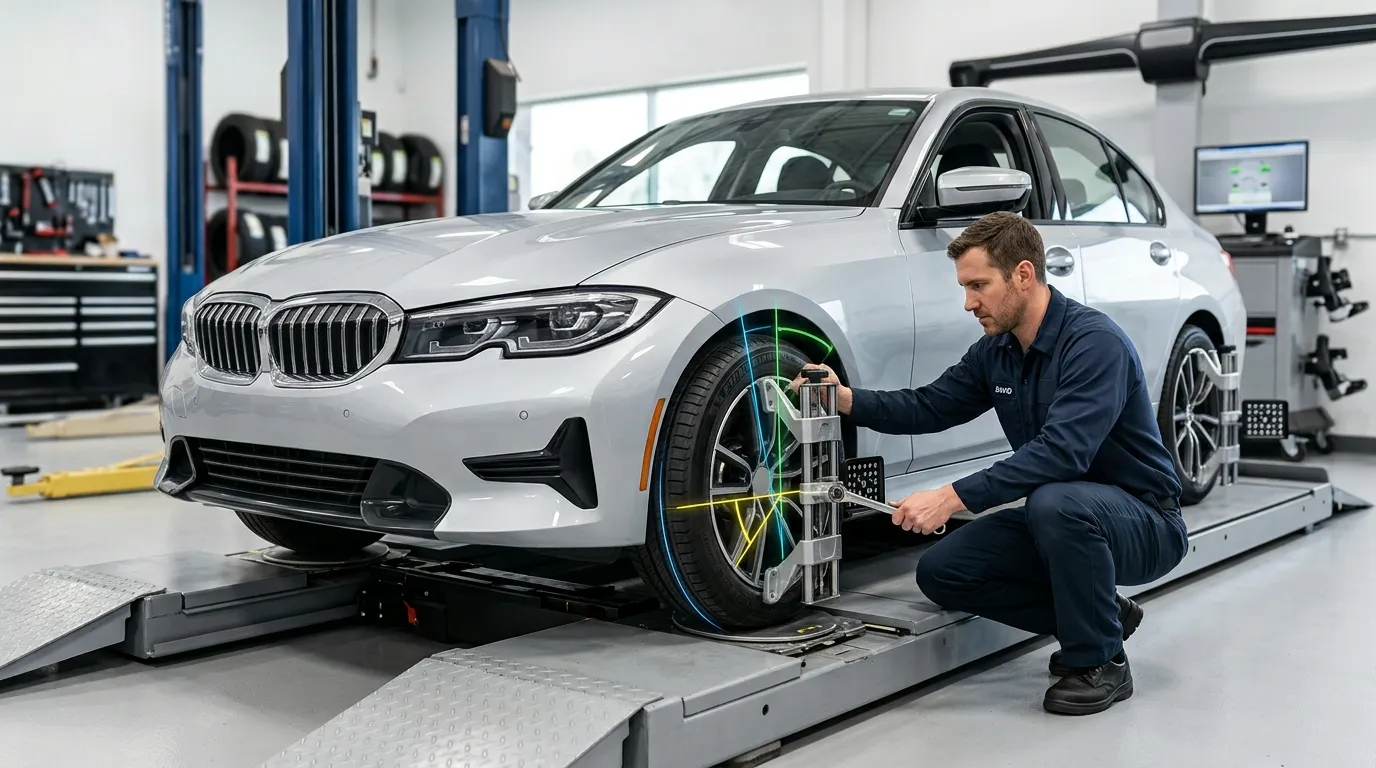
Wheel alignment problems occur when a vehicle’s wheels are not set to the manufacturer’s specified angles. These angles control how tires meet the road. Misalignment affects handling, tire life, fuel economy, and safety.
Wheel alignment problems symptoms help you spot trouble early. Knowing the symptoms helps you avoid costly tire replacements and unsafe driving. I will explain each symptom and show how it ties to alignment angles like camber, toe, and caster.
Common wheel alignment problems symptoms
Below are the most common wheel alignment problems symptoms you will see or feel. Each point explains why it happens and what to check.
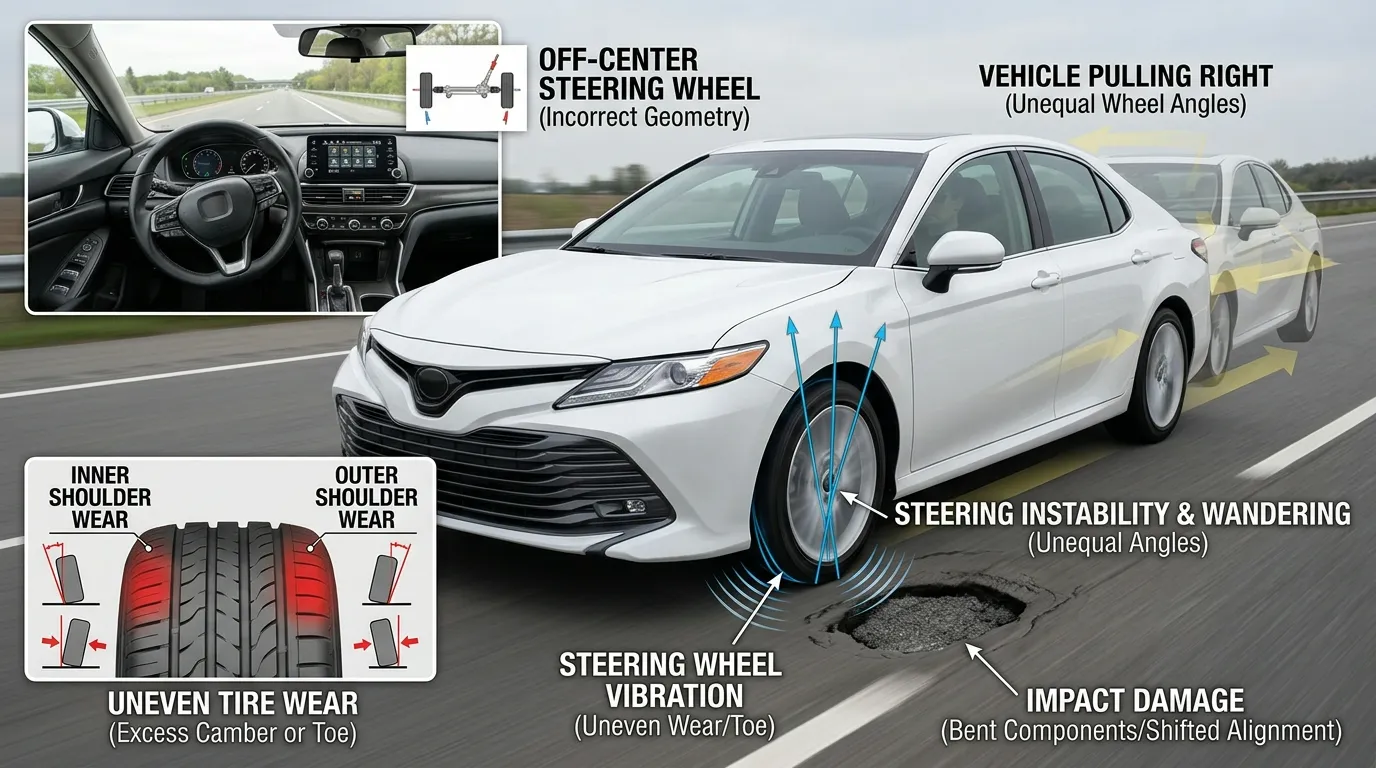
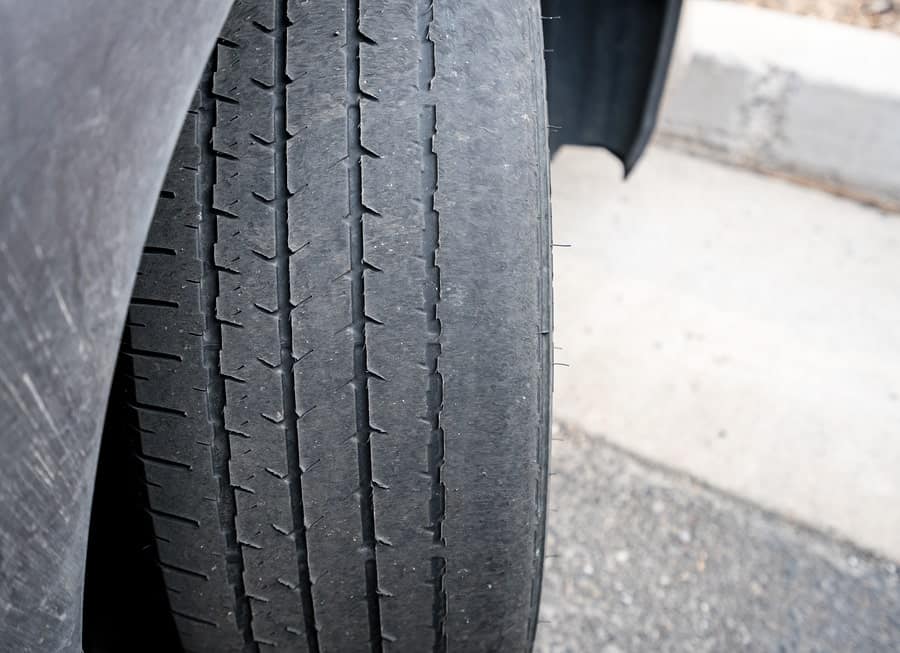
- Uneven tire wear on one edge or across the tread
Excess wear on one side of the tire often means improper camber or toe. If you see inner or outer edge wear, alignment is likely the cause. - Pulling to the left or right while driving on a flat road
The car drifts toward one side even with the wheel straight. This is a classic wheel alignment problems symptom tied to unequal wheel angles. - Steering wheel off-center when driving straight
The steering wheel is not centered when the car goes straight. That shows alignment has shifted and the steering geometry is off. - Steering wheel vibration or wobble at speed
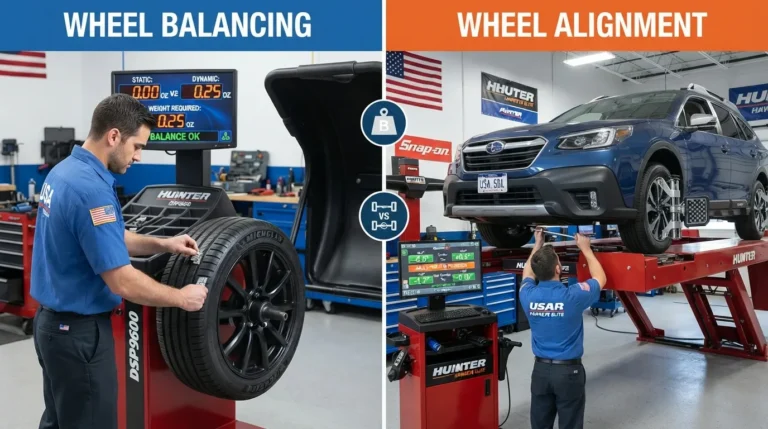
Vibrations can come from uneven tire wear or toe misalignment. If balancing is OK, alignment is a common cause. - Crooked steering after hitting a pothole
A hard impact can bend control arms or shift alignment. Noticeable steering change after an impact signals an alignment check. - Squealing tires during turns
Excess toe or incorrect camber can make tires squeal, especially on corners. - Poor handling or instability at high speed
Loose or wandering feel is linked to bad alignment and reduced contact patch control.
These wheel alignment problems symptoms often appear together. If you notice one, inspect the others and get a professional check. I have seen drivers ignore a small pull and later need two tires replaced because wear accelerated.
Causes of wheel alignment problems
Understanding why alignment goes wrong helps prevent repeat issues. Common causes include road hazards, worn parts, and incorrect repairs.
- Hitting potholes, curbs, or debris
Sudden impacts shift suspension parts or bend components. - Worn suspension parts
Ball joints, tie rods, and control arm bushings wear out. Wear changes geometry and leads to alignment drift. - Incorrect tire fitment or uneven tire pressure
Mismatched tire sizes or pressures can affect handling and mimic alignment symptoms. - After suspension work or collision repairs
If parts are not installed or torqued correctly, alignment angles change. - Normal wear and seasonal changes
Over time, bushings compress and small shifts add up. Temperature changes can also change tire pressure and feel.
Wheel alignment problems symptoms often start small. Regular checks catch these causes early. I recommend checking alignment after any major impact and during routine service.
How to diagnose wheel alignment problems
Diagnosis starts with observation, simple at-home checks, and then a professional alignment inspection.
Simple checks you can do
- Inspect tires for uneven wear patterns.
- Drive on a flat road and see if the car pulls.
- Note where the steering wheel rests when driving straight.
- Check tire pressures and match front tire sizes.
Professional diagnosis steps
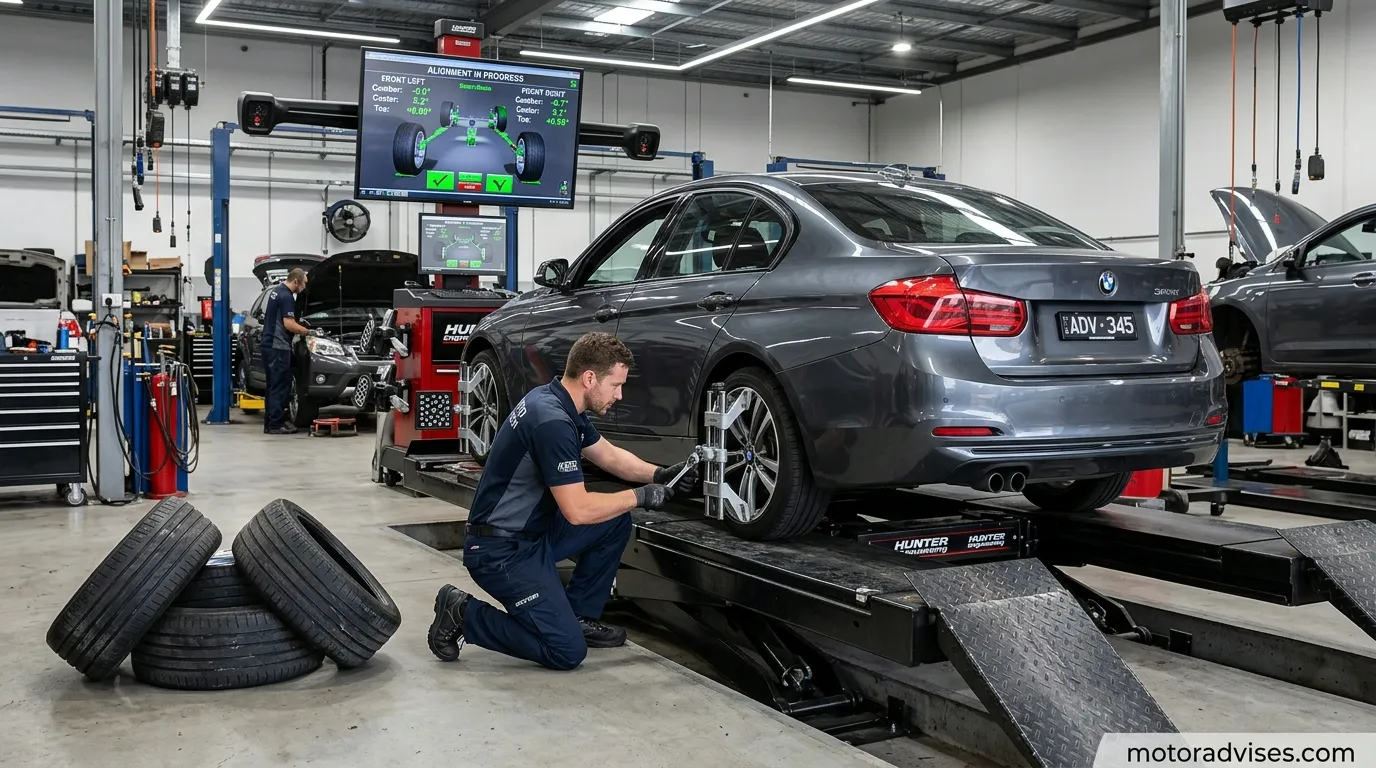
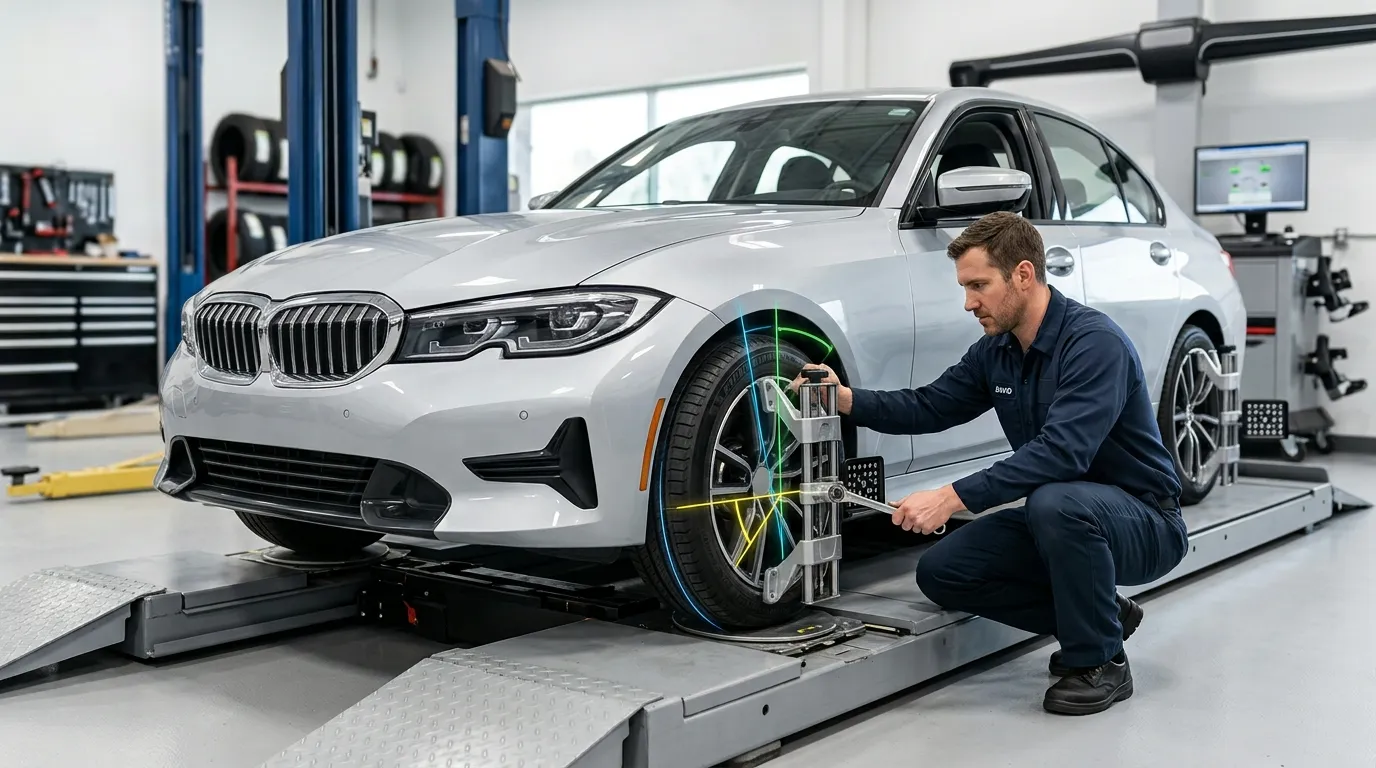
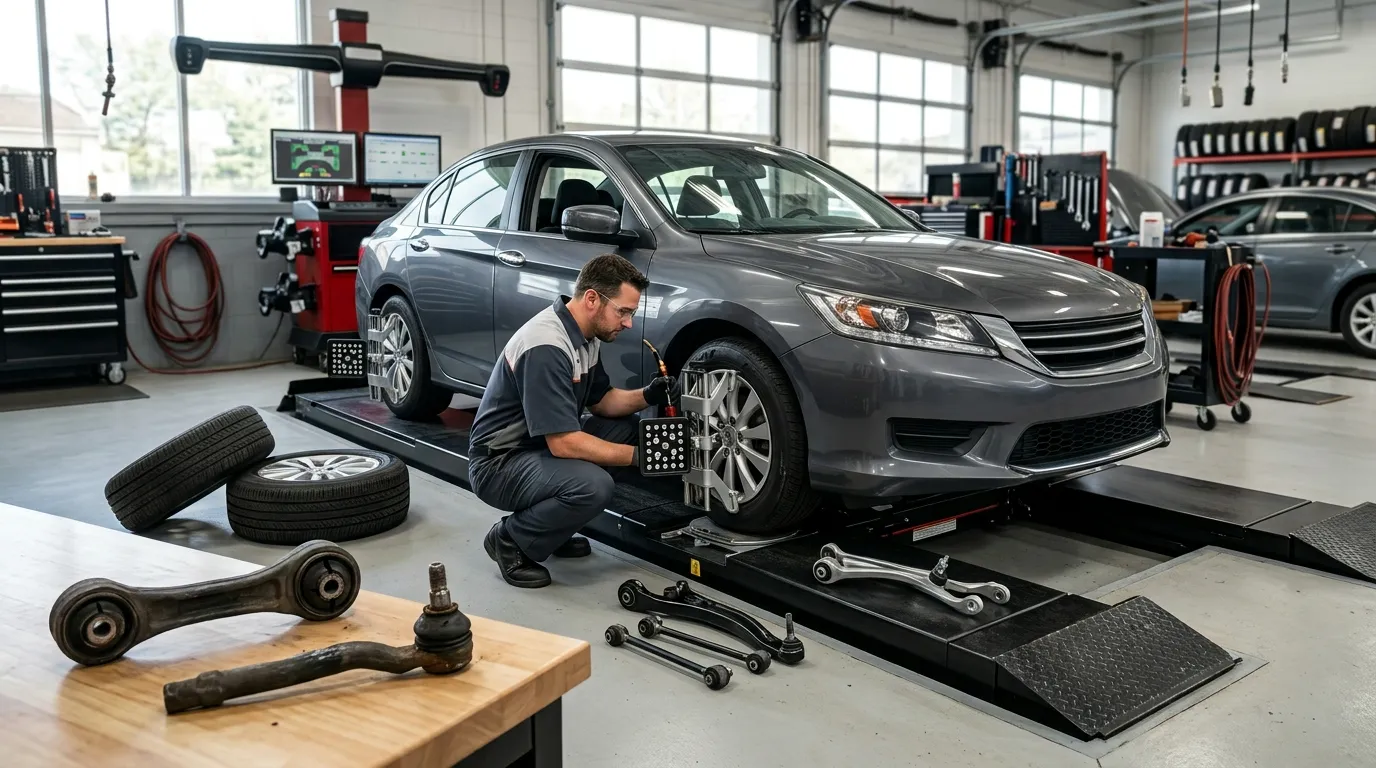
- Computerized alignment machine measures camber, toe, and caster.
- Road test to confirm symptoms at speed and during turns.
- Inspect suspension for bent or worn parts before setting angles.
PAA-style question: How long does an alignment take?
An alignment typically takes 30 to 90 minutes depending on damage and adjustments needed.
PAA-style question: Can I drive with bad alignment?
You can drive short distances, but it increases tire wear and can be unsafe at high speed. Fix alignment soon.
If you suspect wheel alignment problems symptoms, start with the simple checks and then visit a shop with a modern alignment rack. I once diagnosed a persistent pull as a bent lower control arm after a curb strike; the shop fixed the arm and realigned the car, and the symptoms vanished.
Fixing wheel alignment problems: options and costs
Fixes range from a simple adjustment to replacing worn parts. Price varies by the vehicle, shop, and parts needed.
Common fixes
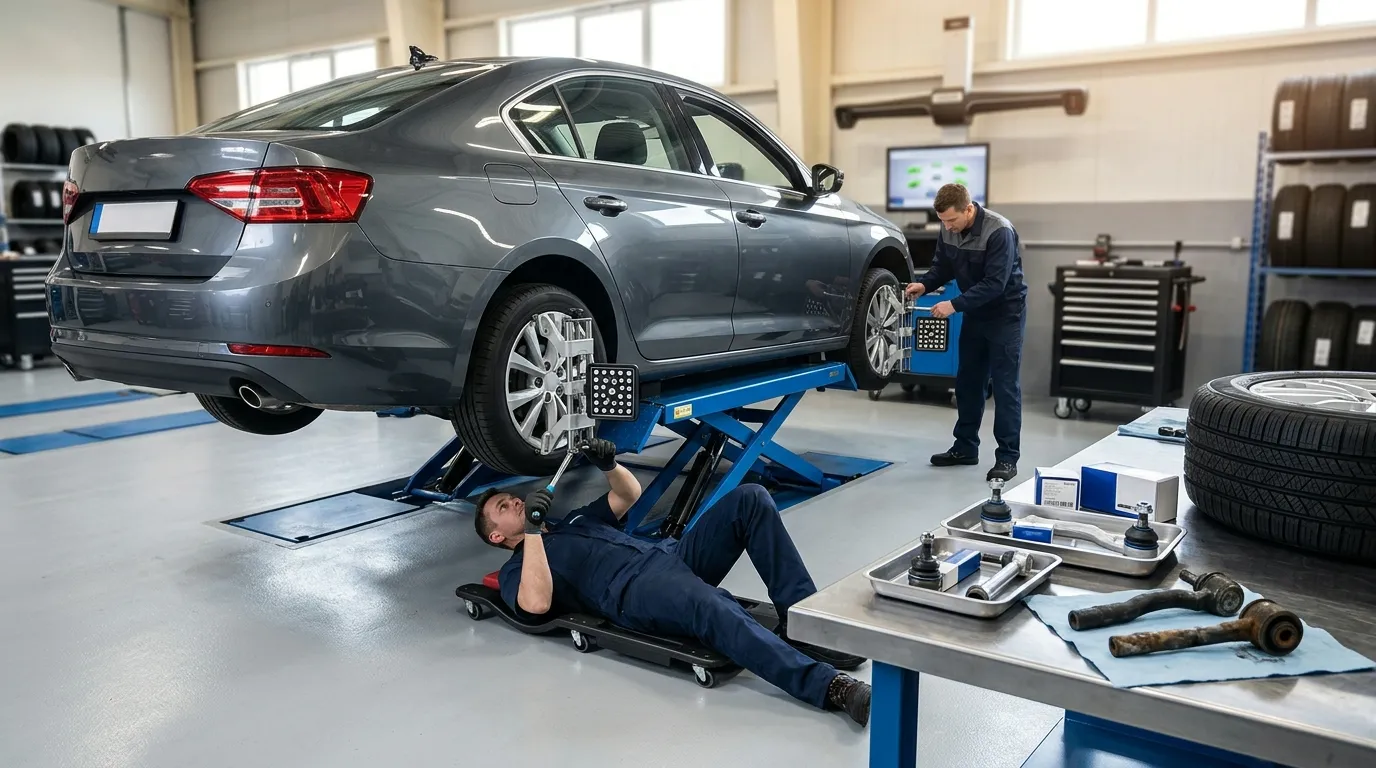
- Standard alignment adjustment
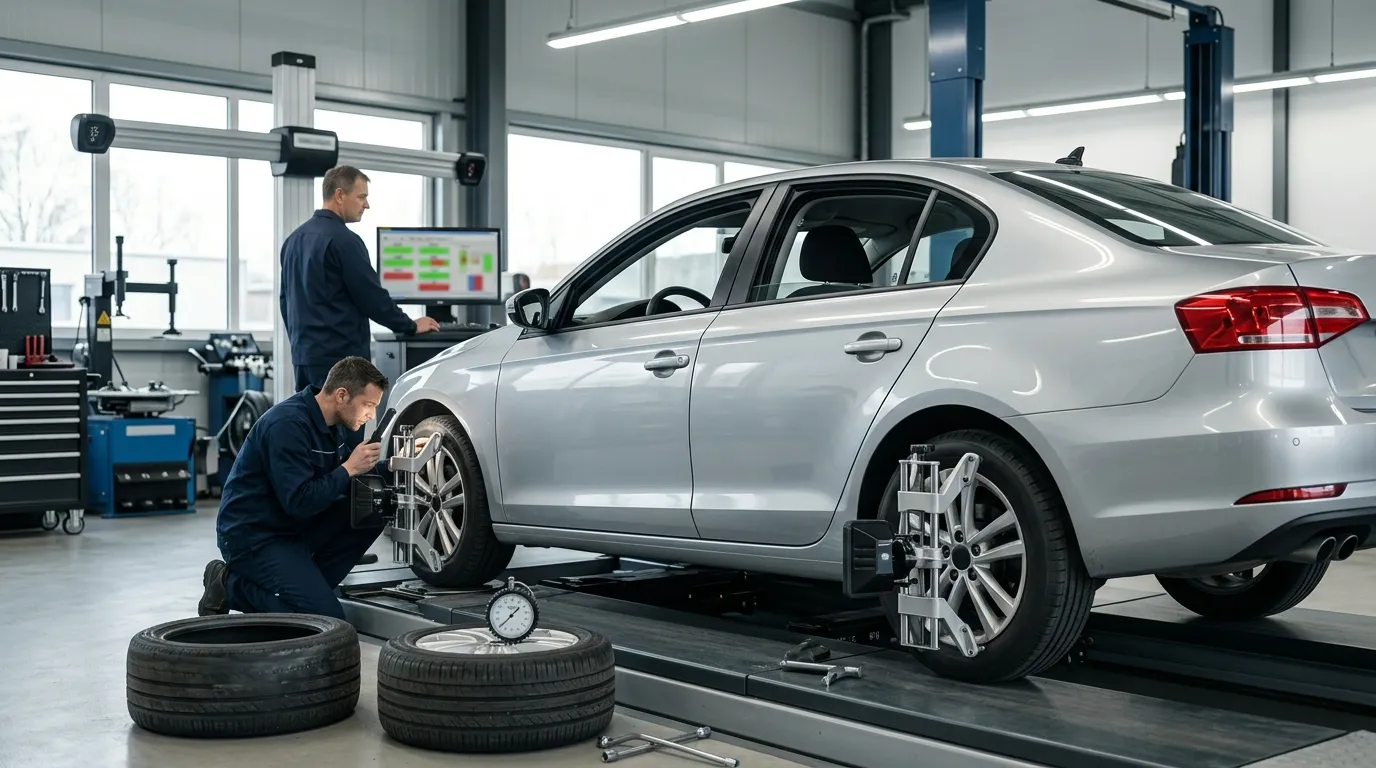
Realign camber, toe, and caster to factory specs. - Replace worn tie rods or ball joints
These parts are replaced when out of spec before alignment. - Repair bent control arms or steering knuckles
Severe impacts may need part replacement or straightening. - Correct tire issues
Mount matched tires and set proper pressure.
Cost range (estimates)
- Basic alignment: $50–$150
- Alignment with minor parts: $150–$300
- Alignment after suspension repairs: $300–$800 or more
Limitations and expectations
- Alignment can’t fix badly worn tires. Replace tires with damage.
- If frame damage exists from a crash, alignment alone may not help.
- Always road-test after repairs to confirm wheel alignment problems symptoms are resolved.
I remember advising a friend to replace two tires before alignment. After the new tires and proper alignment, handling returned and tire life improved.
Maintenance and prevention tips
Preventing wheel alignment problems is cheaper than fixing them. Small habits add up to longer tire life and safer driving.
- Inspect tires monthly for uneven wear.
- Check tire pressure regularly and keep it at spec.
- Avoid potholes and curbs when possible.
- Get an alignment check after hitting a curb or pothole hard.
- Replace worn suspension parts promptly.
- Rotate tires every 5,000 to 7,000 miles to even wear.
Seasonal tip: In winter, road salt and potholes increase risk. Check alignment after harsh winter driving. These habits reduce the chance you will see wheel alignment problems symptoms in the first place.
Personal experience: lessons from the road
I have aligned hundreds of cars over the years. One lesson stands out: small symptoms rarely stay small. A slight pull left ignored for months can leave you with two ruined tires and a bigger repair bill.
Practical tips I share with clients
- Take quick action when you notice pulling or odd wear.
- Keep records of alignments and suspension repairs. They help shops diagnose recurring issues.
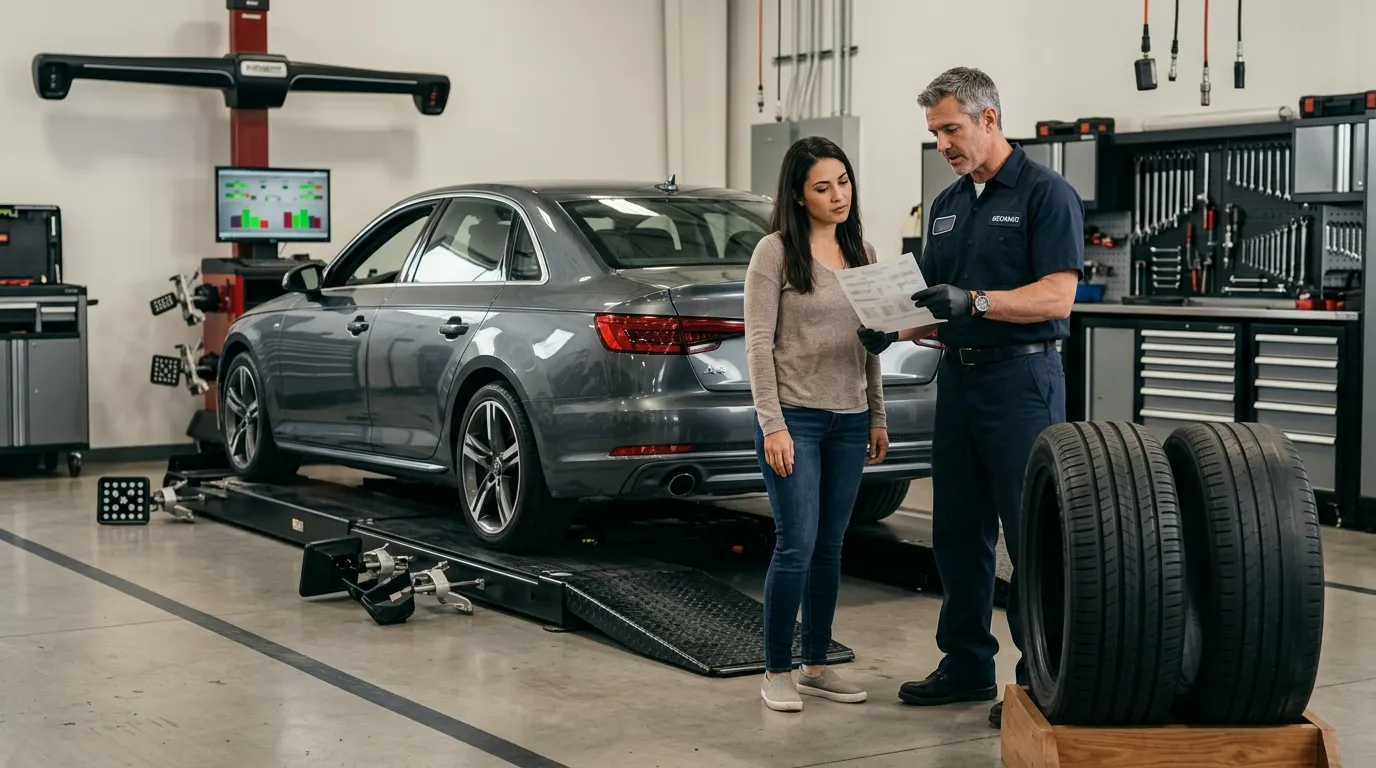
- Ask for a printout of alignment readings. It shows what was out of spec and what was fixed.
A friendly reminder: trust but verify. If a shop claims your car is fine but you still feel symptoms, get a second opinion. My goal is to help you avoid repeat visits and unsafe driving.
Frequently Asked Questions of wheel alignment problems symptoms
What does uneven tire wear look like?
Uneven wear shows more rubber on one side or center than the rest of the tread. It often appears as inner or outer edge wear or one tire wearing faster than the others.
How often should I get an alignment check?
Get an alignment check every 12,000 miles or once a year, and anytime you hit a pothole or curb hard. Also check after suspension work or new tires.
Can bad alignment cause steering wheel vibration?
Yes. Bad alignment, especially excessive toe, can create vibration that feels through the steering wheel, often at highway speeds.
Will new tires fix alignment issues?
New tires improve grip and wear, but they won’t fix misaligned angles. You still need an alignment to correct steering and handling.
How long do alignments last?
An alignment can last many miles if suspension parts are healthy and you avoid impacts. Normal wear and hitting road hazards will eventually require rechecking.
Conclusion
Spotting wheel alignment problems symptoms early saves money and keeps driving safe. Watch for uneven tire wear, pulling, off-center steering, and vibrations. Do simple checks yourself, then get a professional computerized alignment when needed. Keep tires and suspension in good shape to prevent future issues.
Take action today: inspect your tires, note any strange behavior, and schedule an alignment if you spot symptoms. Leave a comment with your experience or subscribe for more practical car care tips.