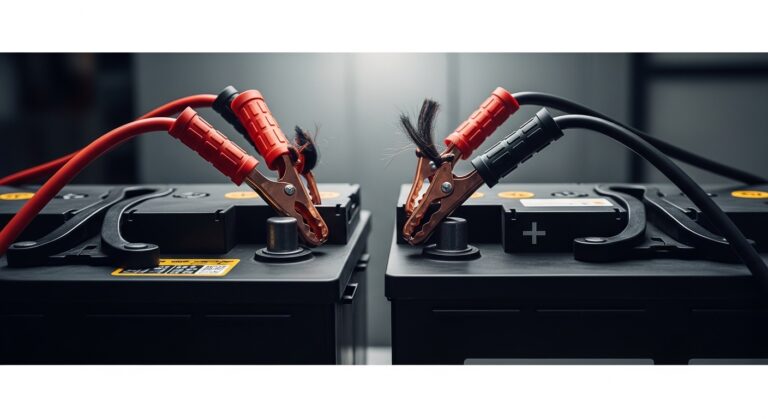
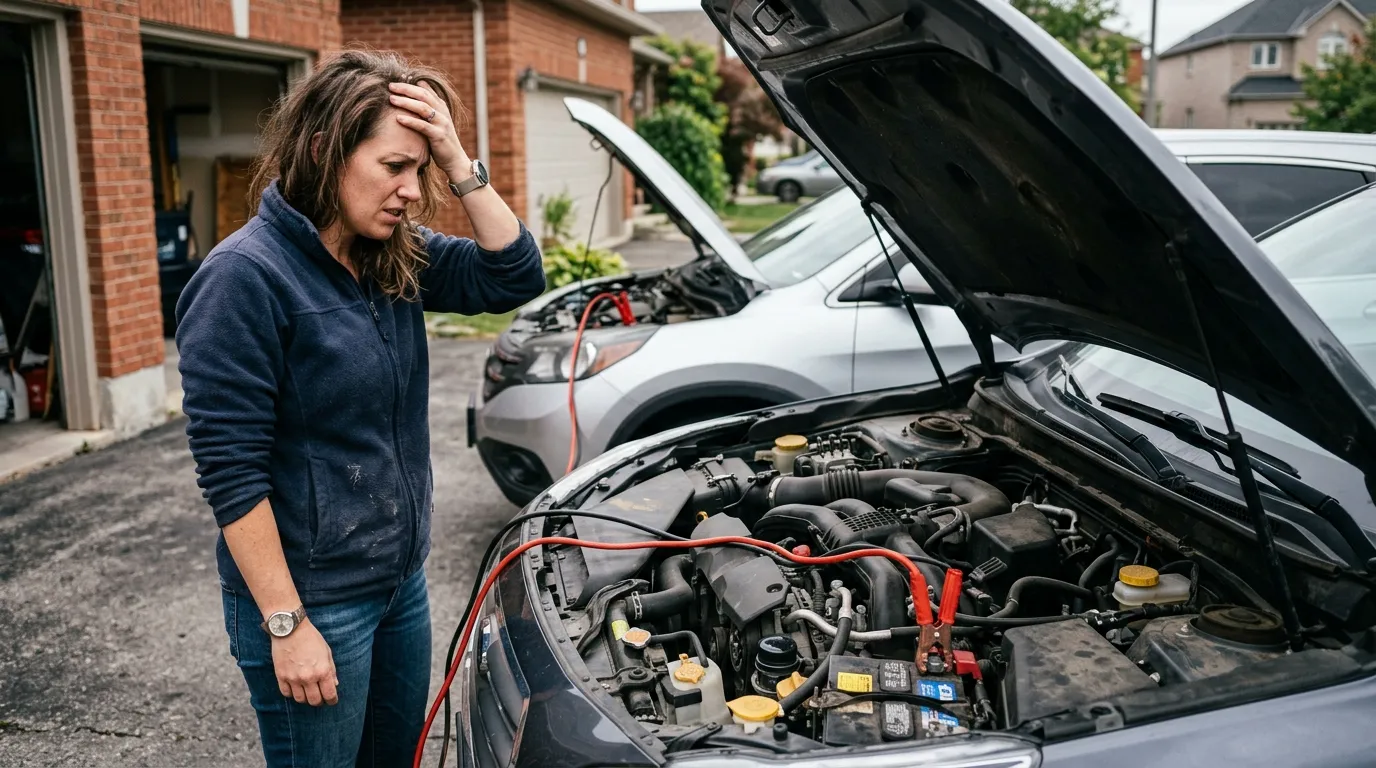
Most dead batteries come from age, parasitic drain, charging faults, and poor connections.
If your car battery keeps dying, you’re not alone—and you can fix it fast. I’ve spent years troubleshooting no-start headaches, and this guide breaks down car battery keeps dying causes in plain English. You’ll learn what’s failing, why it fails, and step-by-step checks you can do today to stop repeat dead battery drama.
How a car battery works and what “healthy” looks like
Before we chase car battery keeps dying causes, it helps to know the basics. A car battery stores energy as chemical potential and delivers high current to start the engine. After the start, the alternator takes over and keeps the system at a steady charge. The battery then acts as a buffer for spikes and loads.
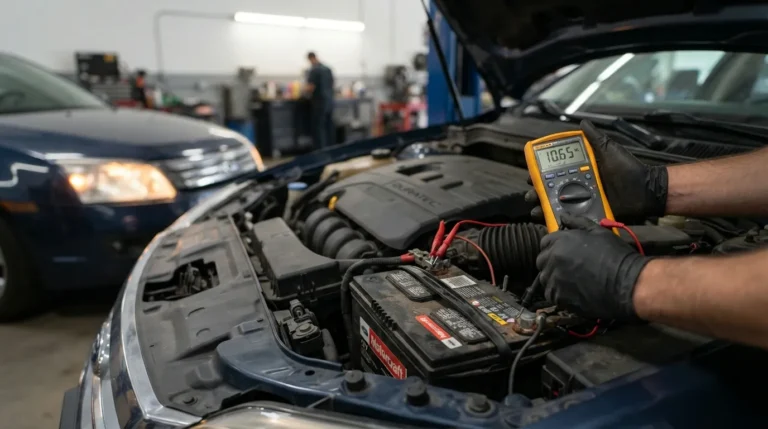
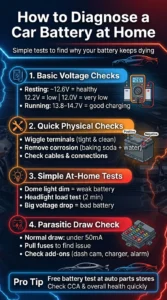
Healthy numbers are simple. A rested battery reads about 12.6 V. While running, system voltage should hold between 13.8 and 14.7 V. Normal parasitic draw with the car off is usually under 50 mA once all modules go to sleep. Anything higher can drain a good battery overnight.
Lead-acid batteries hate two things: deep discharge and heat. Deep discharge causes sulfation on the plates, which cuts capacity. Heat speeds up chemical wear. Cold slows the reaction, so even a good battery can feel weak in winter.
The most common car battery keeps dying causes
When people ask about car battery keeps dying causes, I look for patterns. The same issues show up again and again, from simple corrosion to charging faults. Here are the most likely triggers.
- Old or weak battery. Most batteries last 3–5 years. Age, heat, and repeated deep discharge take them out early.
- Parasitic draw from modules or add-ons. Dash cams, trackers, alarms, or stuck relays can pull power when the car is off.
- Alternator or voltage regulator failure. If output is low or a diode fails, the battery discharges while you drive or even drains when parked.
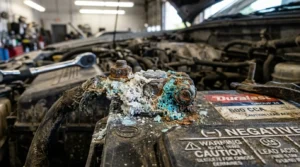
- Loose, dirty, or corroded terminals. High resistance at the posts mimics a weak battery and blocks charge flow.
- Short-trip driving. Many short hops never recharge the start draw, so the battery runs a daily deficit.
- Glove box, trunk, or visor lights stuck on. Tiny bulbs can wipe out a battery over a night or two.
- Failing starter drawing excess current. A dragging starter forces the battery to work harder than normal.
- Bad grounds or damaged cables. Frayed, green, or stiff cables cause voltage drop and poor charging.
- Extreme heat or cold. Heat ages plates; cold slashes cranking amps and exposes hidden weakness.
- Wrong battery type or size. Low CCA or the wrong group size leads to poor performance and early failure.
- Sitting for long periods. Storage without a maintainer leads to sulfation and loss of capacity.
- Accessory sockets left on. In some cars, those sockets stay live and feed chargers or gear all night.
- Serpentine belt or tensioner issues. A slipping belt cuts alternator output even if the alternator is fine.
These car battery keeps dying causes show up as slow cranks, dim lights, random resets, or the dreaded click with no start. Track the pattern: overnight drain points to a draw; random stalls suggest charging faults; weak cranks after short trips point to usage patterns.
How to diagnose it at home
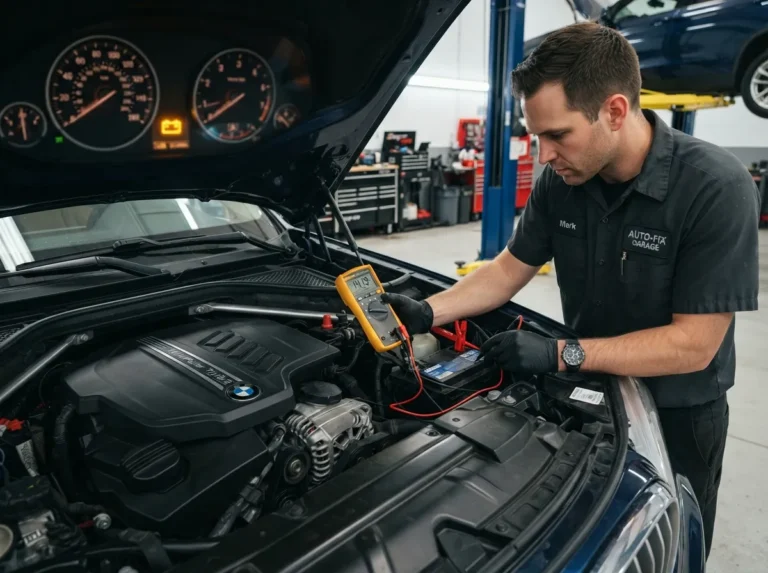
To sort car battery keeps dying causes fast, you only need basic tools. A $20 digital multimeter and a simple plan go a long way. Work with the car in park, engine off, and safety first.
- Check resting voltage. After the car sits an hour, a healthy battery should read near 12.6 V. Under 12.2 V is low; under 12.0 V is very low.
- Check charging voltage. Start the car and read across the posts. You want 13.8–14.7 V with lights and HVAC on. If it’s lower, suspect the alternator, belt, or wiring.
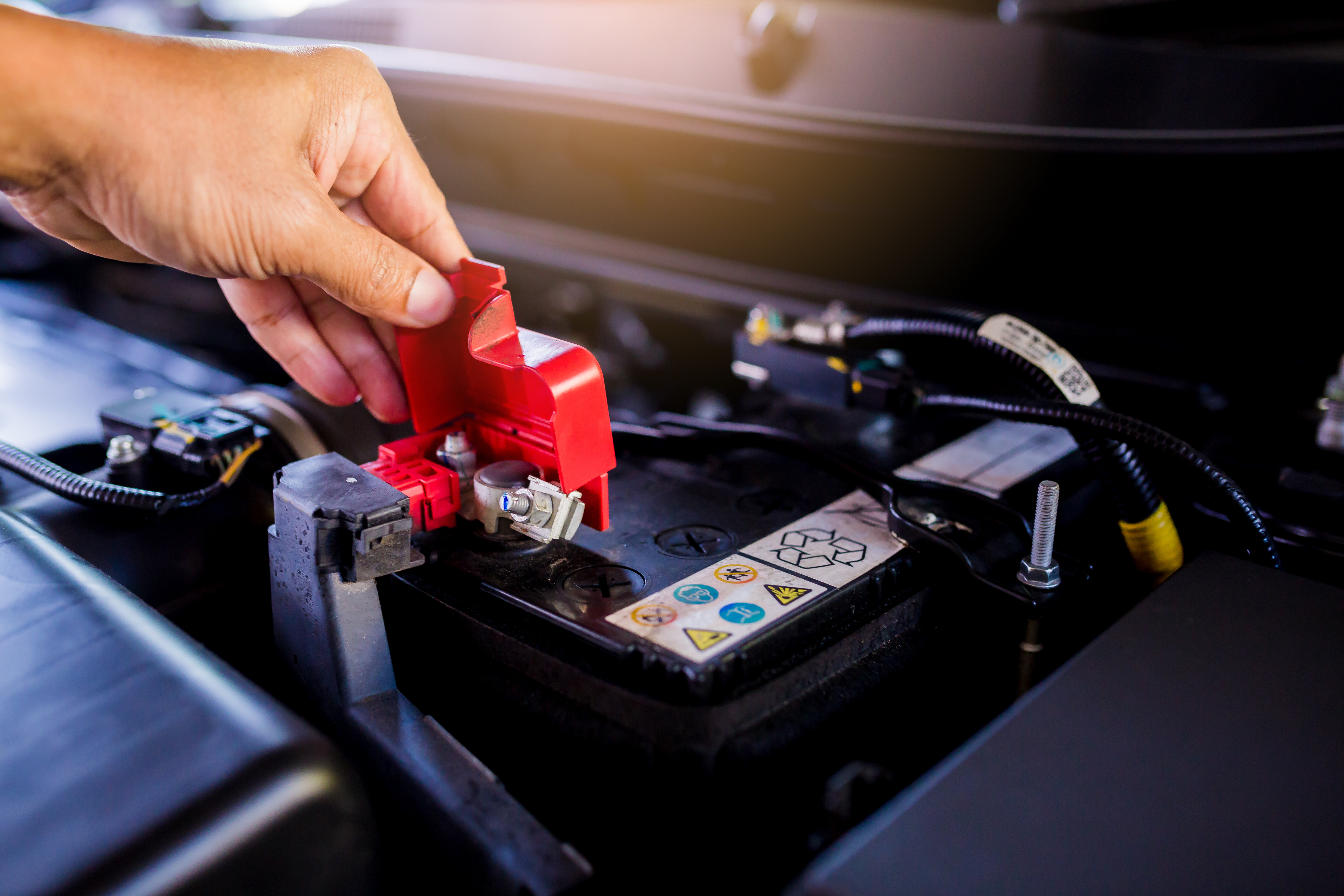
- Wiggle test. Grab each terminal and tug. Clean corrosion with baking soda and water, rinse, dry, and tighten snug.
- Dome light test. Turn on the dome light and start the engine. If the light dims hard or flickers, the battery may be weak or a connection is bad.
- Quick load check. With the engine off, turn the headlights on for two minutes, then measure. A big voltage drop hints at a weak battery.
- Parasitic draw check. Set your meter to amps, connect in series at the negative cable, and let the car sleep for 20–40 minutes. Under 50 mA is normal on most cars.
- Pull fuses method. If the draw is high, pull fuses one at a time until the current drops. The circuit you pull is the problem area.
- Inspect add-ons. Unplug dash cams, OBD dongles, chargers, and aftermarket alarms. Many are the draw.
A battery tester at a parts store can also run a conductance test and CCA check. It’s quick, and most places do it free.
Fixes and prevention tips that work
Here is how I fix car battery keeps dying causes in the field. Keep it simple, then go deeper if needed. Small wins add up to a car that starts every time.
- Replace an aged battery. If it’s near 5 years or fails a load test, swap it. Match group size and CCA.
- Clean and protect connections. Use a wire brush on posts and lugs. Add dielectric grease on clamps and grounds.
- Repair charging issues. Replace a weak alternator or bad regulator. Check the belt and tensioner for slip.
- Kill the parasitic draw. Reroute add-on power to an ignition-switched source. Update firmware on head units. Fix relays and stuck switches.
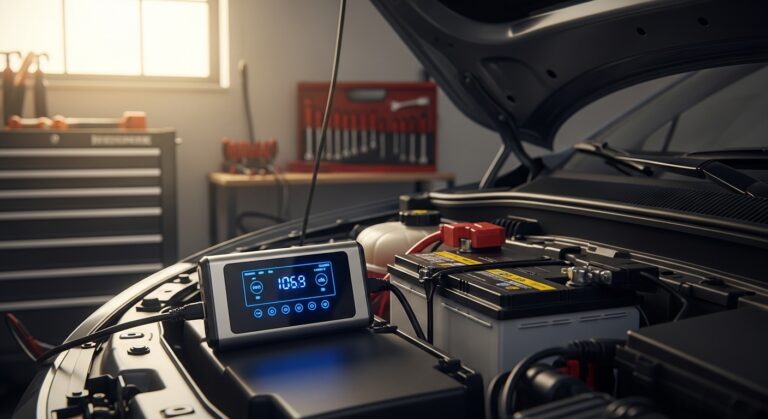
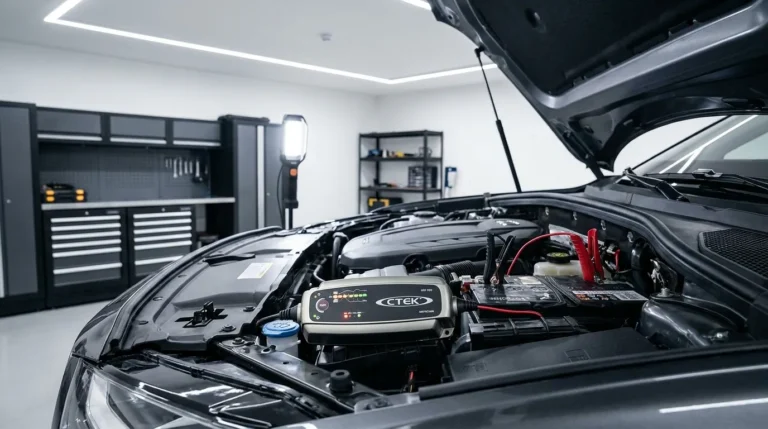
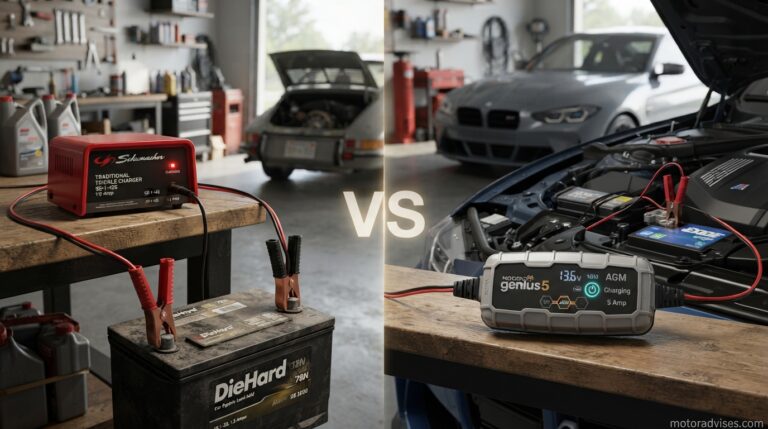
- Change driving habits. Mix in a longer highway run each week, or use a smart maintainer if you do short trips.
- Store it right. On seasonal cars, use a maintainer and disconnect add-ons. Charge to full before parking.
- Check grounds and cables. Replace corroded or heat-damaged cables. Add a clean body-to-engine ground strap if needed.
- Choose the right battery. Some cars want AGM. Follow the owner’s manual, and register the battery where required.
Pro tip: Write down resting voltage after a full charge. Recheck in 24 hours with the car off. A big drop without use often points to a draw.
Source: wiscoautomotive.com
Real-world examples from the garage
These cases highlight car battery keeps dying causes I see often. The fixes were quick once we nailed the root issue.
- The stealth dash cam. A rideshare driver had a hardwired cam on constant power. Draw was 220 mA key-off. We moved it to an ignition fuse, and the overnight drain was gone.
- The almost-good alternator. A sedan showed 13.5 V at idle but dropped to 12.9 V with AC and lights. A weak diode cut output under load. New alternator fixed random stalls and dead mornings.
- The glove box villain. An SUV’s glove box light switch stuck. A tiny bulb, big drain. New switch, problem solved.
- The short-trip spiral. A parent ran school loops only. Battery never recovered. One weekly 30-minute highway drive plus a maintainer ended the cycle.
Lessons learned: Measure first, don’t guess. Small circuits cause big headaches. Keep the fix simple.
Seasonal and driving pattern factors
Winter can make car battery keeps dying causes worse. Cold thickens oil and slows the battery reaction, so cranking takes more power. A weak battery that starts fine in fall often dies on the first cold snap.
Heat is a silent killer. Summer bakes the plates and speeds grid corrosion. Months later, that damage shows up as winter no-starts. Short trips and heavy accessory use stack the odds. A weekly longer drive, or a maintainer plug-in, tilts them back in your favor.
If the car sits, expect sulfation. A smart maintainer with temperature sense keeps it healthy without overcharge.
When to see a pro and what it may cost
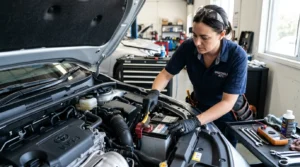
A shop will confirm car battery keeps dying causes with better tools. They can run a full charging ripple test, a current clamp parasitic check, and a starter draw test. That saves time when the fault is deep in a module or harness.
Typical costs vary by region. A new battery runs from budget to premium depending on CCA and type. Alternators range wider with parts and labor. A parasitic draw diagnostic might be billed by the hour, and complex module issues can take time. Ask for test results and numbers, not just parts.
Frequently Asked Questions of car battery keeps dying causes
What are the main car battery keeps dying causes?
Age, parasitic draw, charging system faults, and bad connections top the list. Short trips and extreme temperatures also push a weak battery over the edge.
How do I test for car battery keeps dying causes at home?
Use a multimeter to check resting voltage, charging voltage, and key-off current draw. Pull fuses to isolate the circuit that is draining power.
Can a new battery still die from car battery keeps dying causes?
Yes. A new battery will die if a draw or bad alternator remains. Always fix the root cause before or right after replacement.
Will a bad alternator cause car battery keeps dying causes while driving?
It can. Low output or a failed diode drains the battery as you drive and may cause stalls or warning lights.
Are dash cams and OBD trackers common car battery keeps dying causes?
They can be if wired to constant power. Move them to an ignition-switched source or set parking modes with timers.
Do short trips really cause car battery keeps dying causes?
Yes. Frequent short starts without a longer recharge drive leave the battery undercharged. Over time, that leads to sulfation and poor capacity.
What voltage should I see to rule out charging-related car battery keeps dying causes?
Aim for 13.8–14.7 V with the engine running and lights on. Below that, check the alternator, belt, and grounds.
Conclusion
Now you know the real car battery keeps dying causes and how to stop them. Start with simple checks, measure key numbers, and fix the small stuff first. One smart change—like cleaning terminals or moving a cam to switched power—often ends the no-start cycle.
Take action today. Run the quick tests, make a plan, and keep a small maintainer in your toolkit. If you found this helpful, share it, subscribe for more hands-on tips, or drop a comment with your results.