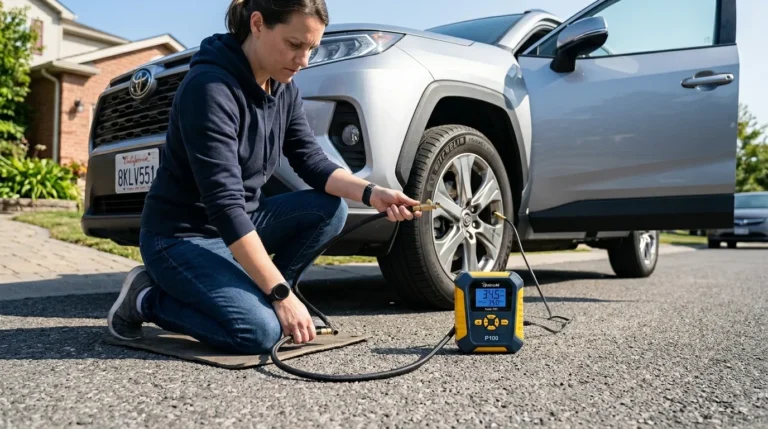
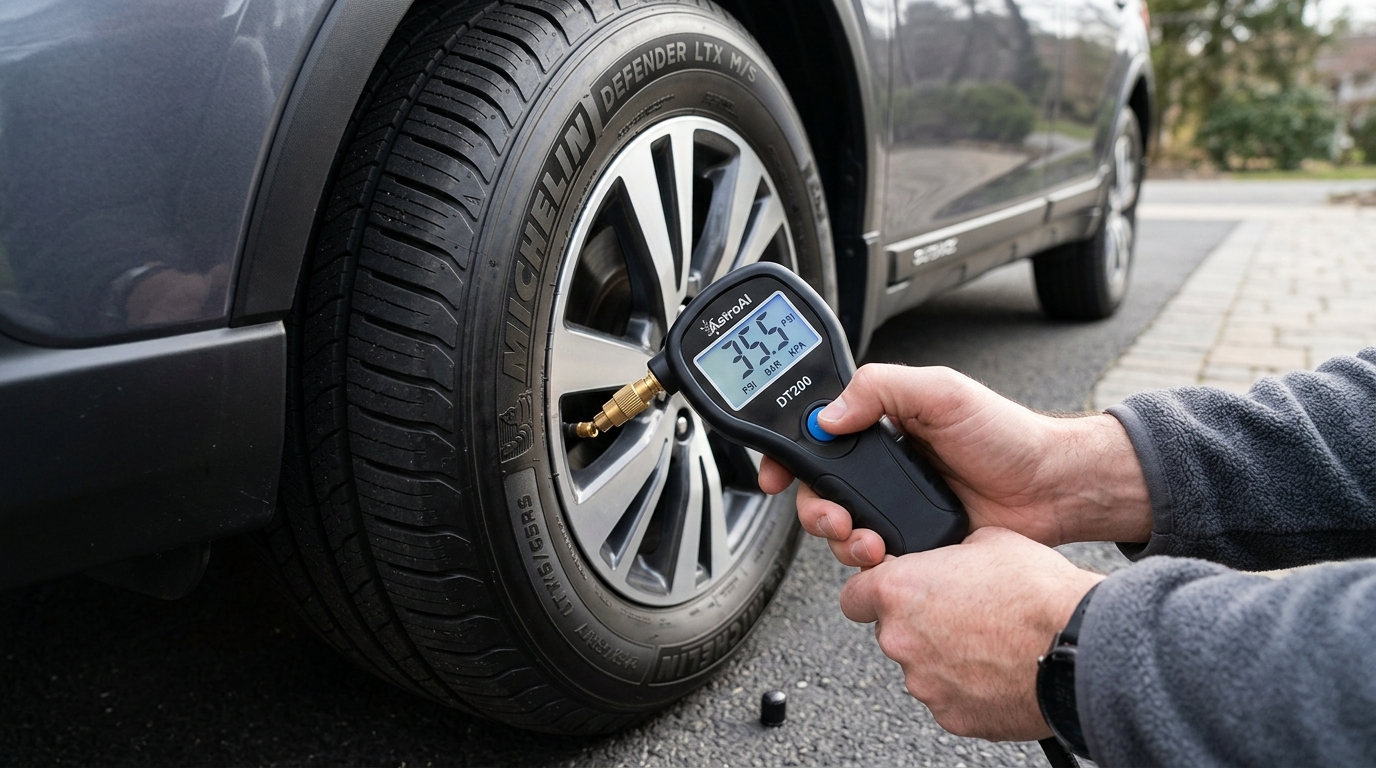
Use a quality gauge on cold tires, then inflate to the door-sticker PSI.
If you want to know how to check tire pressure the right way, you’re in the perfect spot. I’ve taught new drivers, fixed road-trip flats in the rain, and tested tools that make this job simple. I’ll show you how to check tire pressure step by step, explain why it matters, and share the small tips that save tires, fuel, and time.
Why tire pressure matters
Right pressure keeps your car stable, stops safely, and wears tires evenly. Low pressure builds heat, hurts fuel economy, and can damage the tire from the inside. High pressure reduces grip and makes the ride harsh.
Tests from automakers and safety groups show that underinflated tires can increase stopping distance and shorten tire life. The good news: a two-minute check and a few psi of air can prevent most issues.
Tools you need to check tire pressure
You do not need fancy gear. A simple setup works best.
- Tire pressure gauge Use a digital, dial, or stick gauge. Digital is easy to read, dial is very durable, and stick is cheap and compact.
- Air source A small home inflator, a bike pump for emergencies, or a gas station compressor.
- Valve caps Keep dirt and moisture out. Replace missing caps.
- Tire inflator with built-in gauge Handy but still confirm with a trusted handheld gauge.
- Flashlight Helpful at night or in tight spaces.
- Soapy water Optional for finding slow leaks after a repair.
- Notebook or phone notes Track readings by wheel: LF, RF, LR, RR, and spare.
Pro tip from the road: I keep a small digital gauge and a 12V inflator in my trunk. It has saved a trip more than once.
For anyone learning how to check tire pressure, these basics are all you need.
Step-by-step: how to check tire pressure
Follow this routine. It’s fast, clean, and works on any car or SUV.
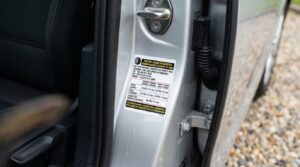
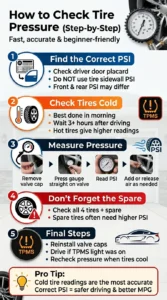
- Find the correct PSI Open the driver’s door and read the tire and loading placard. Use these numbers, not the tire’s sidewall. Some cars list different front and rear PSI.
- Check tires cold Do this first thing in the morning, or after the car sits for at least three hours. Short drives heat tires and raise readings.
- Remove the valve cap Keep it in a pocket so it does not roll away.
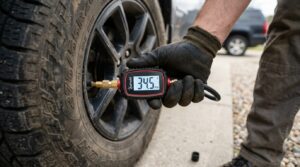
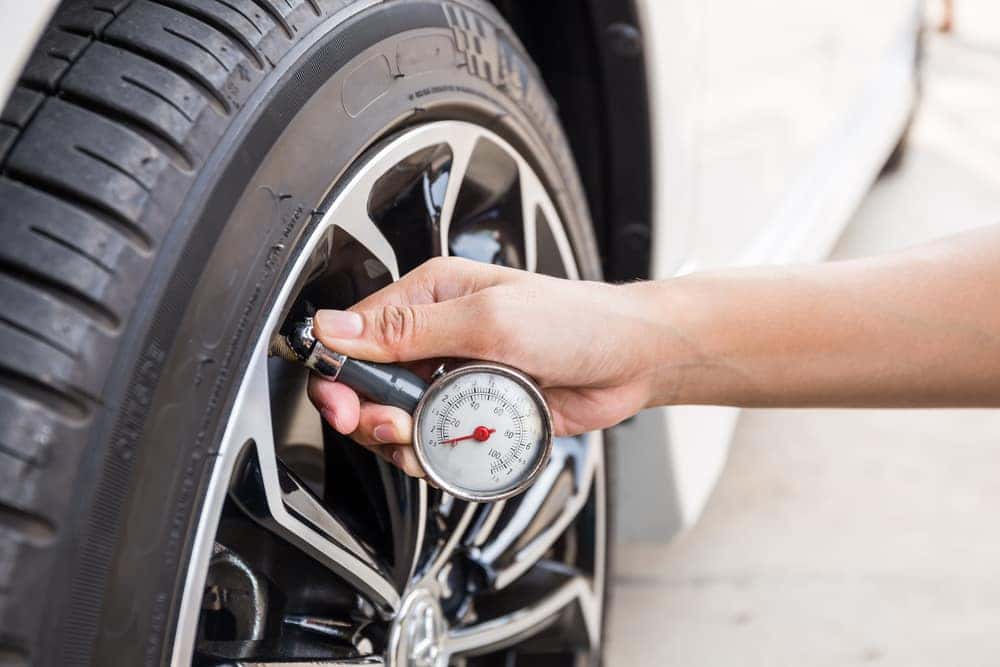
- Press the gauge straight onto the valve You should hear a quick hiss, then a stable reading. Read the PSI.
- Compare to the placard Add air if low. Release air if high by pressing the gauge’s bleed button or the valve core gently.
- Repeat on all four tires and the spare Spares often need much higher PSI than the main tires.
- Re-cap each valve Snug, not over-tight.
- Drive a few miles if your TPMS light was on Some systems clear after a short drive. If not, consult your manual for reset steps.
- Recheck if you filled hot tires Later, when cold, confirm you hit the target.
This is how to check tire pressure in a way that is accurate and repeatable.
Reading PSI like a pro: door placard, sidewall, and temperature
Use the door placard number. The sidewall shows a maximum, not your target. If the placard says 35 psi front and 33 psi rear, follow that. If you changed wheel size or tire type, ask a tire pro for an updated target.
Expect pressure to change with weather. A common rule: about 1 psi for every 10°F. If yesterday was 70°F and today is 30°F, your tires may read 4–5 psi lower. That does not mean a leak. Just add air to reach the placard again.
Knowing how to check tire pressure includes reading the right number and adjusting for temps. Do not chase the reading during a long drive when tires are hot.
Source: eliteacura.com
When and how often to check tire pressure
- Check monthly Make it the first weekend habit.
- Check before long trips Load and sustained speed make pressure matter more.
- Check after big temperature swings A cold snap can drop several psi overnight.
- Check after hitting a pothole or curb Damage can cause a slow leak.
- Check new tires and seasonal changes Fresh installs and winter-to-summer swaps can drift a bit.
Make how to check tire pressure a quick routine. It pays off with better handling and longer tire life.
TPMS explained and what it can and can’t do
Your car’s Tire Pressure Monitoring System helps, but it is not a gauge. There are two types. Indirect TPMS uses ABS wheel speeds to infer pressure. Direct TPMS uses sensors in the wheel that read PSI.
TPMS often warns only when a tire is about 25 percent low. That is already too low for best safety and wear. So, keep a gauge. TPMS supports how to check tire pressure, but it does not replace it.
Sensor batteries last years but can fail. If the TPMS light stays on after a correct fill, a sensor may need service.
Common mistakes and how to avoid them
- Trusting gas station gauges Many are abused and off by several psi. Bring your own.
- Checking hot tires Readings run high. Confirm cold.
- Using the sidewall max as target It is not your car’s spec.
- Forgetting the spare Donut spares often need 50–60 psi.
- Skipping the valve caps They keep dirt and moisture out.
- Mixing units 35 psi is not 35 kPa. Know what your gauge reads.
- Ignoring slow leaks A 1–2 psi loss per week needs a repair.
- Overfilling to “save fuel” Grip and braking suffer. Hit the placard, not higher.
A top mistake in how to check tire pressure is reading hot tires and thinking they are “overfilled.” Always measure cold.
Troubleshooting: what your readings are telling you
- One tire much lower Likely a nail, screw, or a bad valve core. Use soapy water on the tread and valve to spot bubbles.
- Both tires on one side low Could be a curb hit or bead leak. Get a shop to inspect the rim and bead.
- All four low after a cold night Normal. Add air to the placard.
- One tire higher than target Someone overfilled it. Bleed down to spec.
If you followed how to check tire pressure and one tire keeps dropping, get a proper puncture repair from the inside. Sealants are a temporary fix and can foul sensors.
Quick answers people also ask
Before the full FAQ, here are fast hits to common searches.
Should I check tire pressure at night or morning?
Morning wins. Tires are “cold” after sitting, which gives a true baseline. At night after driving, readings will be higher from heat.
Can I use a bike pump for car tires?
Yes, in a pinch. It takes more strokes and time, but it works. Confirm with a gauge for accuracy.
How to check tire pressure without a gauge?
You can use TPMS as a rough guide, but it is not exact. For anyone serious about how to check tire pressure, a $10 digital gauge is the best answer.
Real-world tips from the road
On a winter trip through Colorado, my car pulled right. I stopped, used my pocket gauge, and found the right-front was 7 psi low from a sharp temperature drop. I topped it to the placard and the pull vanished. That quick check saved a long day of white-knuckle driving.
More field-tested tips:
- Keep a small inflator and gauge in the trunk Do not rely on finding a clean air pump.
- Log your readings If a tire trends down across weeks, plan a repair visit.
- Rotate and balance on schedule Uneven wear can hide pressure issues.
- Clean the valve stem before measuring Dirt can cause leaks during the check.
I show new drivers how to check tire pressure during their first fill-up. It builds a habit that sticks for life.
Frequently Asked Questions of how to check tire pressure
What is the best time of day to check tire pressure?
First thing in the morning or after the car sits for at least three hours. Cold readings match the door placard and give the most accurate target.
What PSI should my tires be?
Use the driver’s door placard or the owner’s manual. Do not use the sidewall max; that is not the recommended operating pressure.
How often should I check tire pressure?
Check once a month, before long trips, and after big temperature swings. Make how to check tire pressure part of your regular car care.
Is 5 psi low a big deal?
Yes. It can raise tire temperature, reduce grip, and speed up wear. Add air to reach the placard value.
Can I rely only on TPMS?
No. TPMS is a safety net with a high trigger point. You still need a gauge to learn how to check tire pressure with accuracy.
Do I need different PSI when towing or carrying a heavy load?
Some vehicles list higher rear PSI for loads on the placard or in the manual. Follow those guidelines when hauling and return to normal after.
What about nitrogen-filled tires?
You still use the same PSI targets. Nitrogen reduces pressure drift a bit, but you must still check monthly.
Conclusion
Right tire pressure is a small habit with big payoffs. Use a good gauge on cold tires, follow the door placard, and make how to check tire pressure a once-a-month routine. You will feel the car steer better, stop shorter, and your tires will last longer.
Take five minutes today to check all four tires and the spare. If this guide helped, share it with a friend, subscribe for more simple car care tips, or drop a question in the comments.