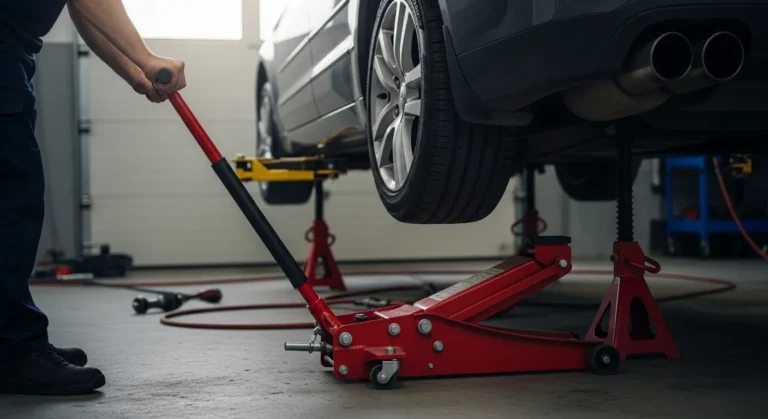
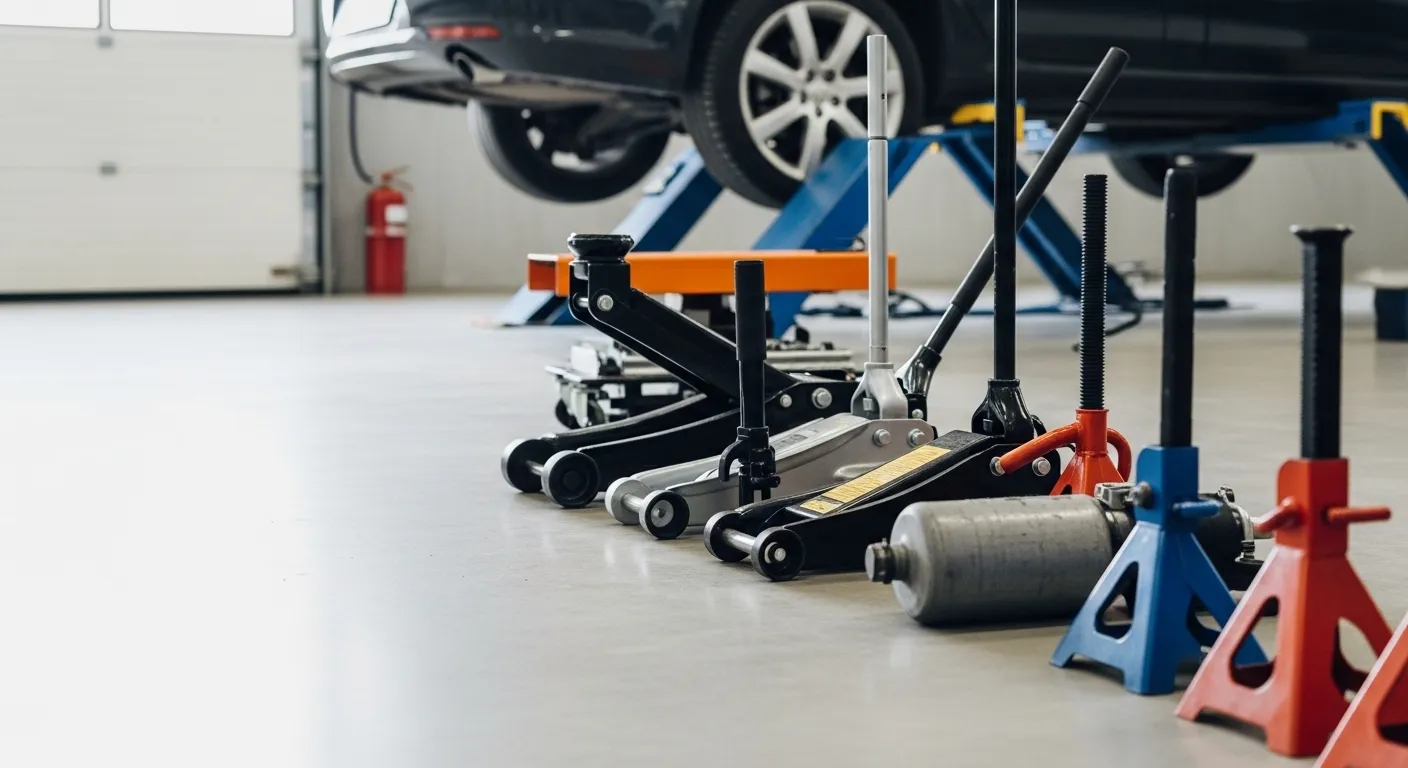
Common types of car jacks include scissor, bottle, floor, hi-lift, and pneumatic.
If you want the right tool for safe, quick lifts, you need to know the types of car jacks and when to use each. I’ve used nearly every style in shops, on tracks, and on the side of the road. In this guide, I’ll unpack how each jack works, where it shines, and what to avoid, so you can choose with confidence and stay safe.
What is a car jack and how does it work?
A car jack is a lifting device that raises part of a vehicle off the ground. It lets you change a tire, inspect brakes, or service underbody parts. Most jacks are either mechanical or hydraulic. Mechanical jacks use a screw or ratchet. Hydraulic jacks use fluid pressure for a smooth, strong lift.
Capacity matters. Check your vehicle’s gross weight and split it by axle or corner. Most jobs lift only one corner, but the jack must still exceed that share with a margin. Many brands follow ASME PASE safety rules for rating, labels, and testing, which adds trust.
Ground clearance also guides your choice. Low cars need a low-profile jack. Tall trucks can use a bottle jack. Knowing these basics helps you compare the types of car jacks with clear eyes.
Quick answers to common questions
What size jack do I need?
Choose at least a 2-ton jack for small cars and 3-ton or more for SUVs and trucks. Pick higher if you carry gear or tow.
Can I go under a car with only a jack?
No. Use jack stands on firm ground and chock wheels. A jack alone is not a support device.
Hydraulic vs mechanical: which is better?
Hydraulic jacks lift faster and with less effort. Mechanical jacks are compact and fine for emergencies.
Source: homedepot.com
Types of car jacks
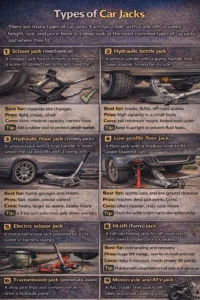
There are many types of car jacks. Each has a role, with trade-offs in speed, height, size, and price. Here is a deep look at the most common types of car jacks and where they fit.
Scissor jack (mechanical)
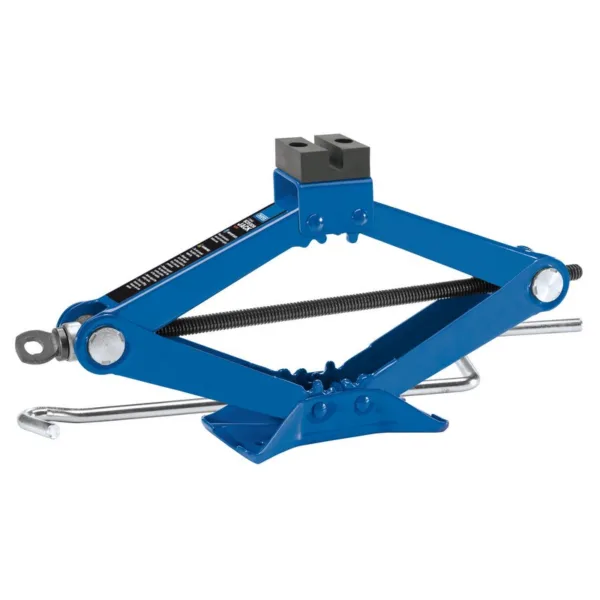
A compact jack found in many trunks. It uses a screw to spread two arms and raise the saddle.
- Best for: roadside tire changes
- Pros: light, cheap, small
- Cons: slow, modest capacity, narrow base
- Tip: add a rubber pad to protect pinch welds
Hydraulic bottle jack
A vertical cylinder with a pump handle that raises a piston. Strong for its size.
- Best for: trucks, SUVs, off-road spares
- Pros: high capacity in a small body
- Cons: tall minimum height, limited reach under low cars
- Tip: keep it upright to prevent fluid leaks
Hydraulic floor jack (trolley jack)
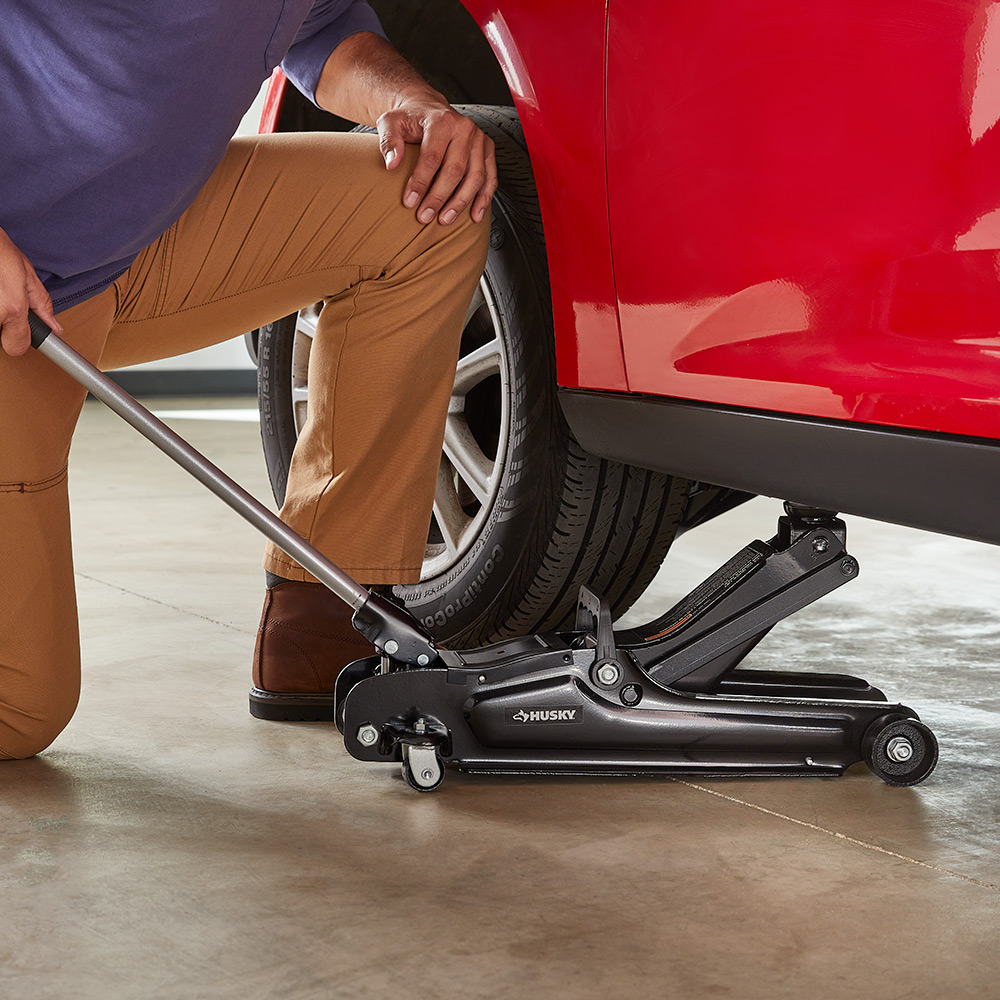
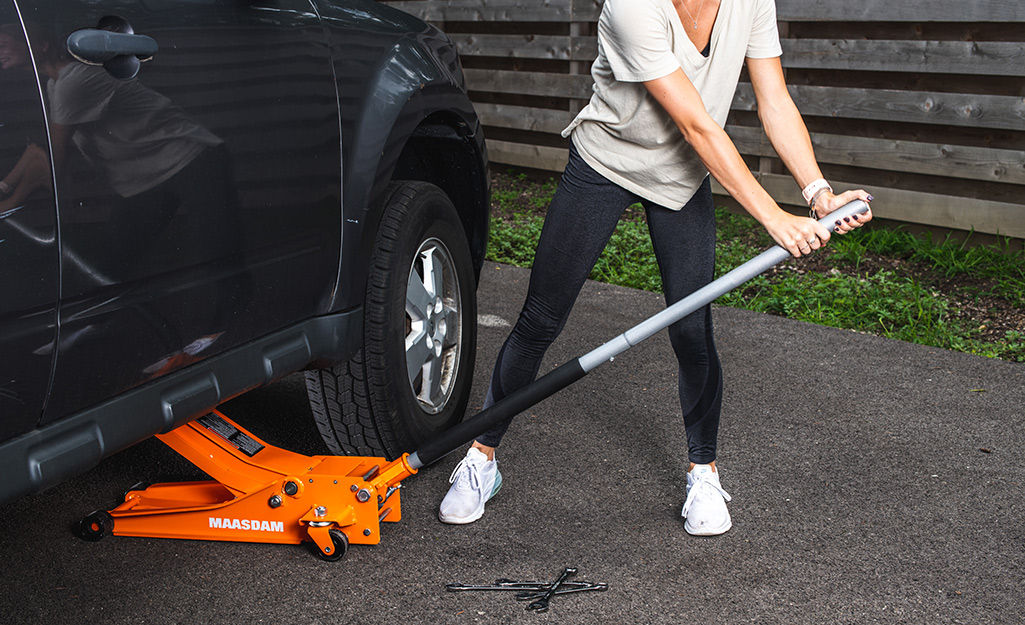
A wheeled jack with a long handle. It slides under the car and lifts with a swing arm.
- Best for: home garages and shops
- Pros: fast, stable, precise control
- Cons: heavy, larger to store, costs more
- Tip: a 3-ton unit suits most daily drivers and light trucks
Low-profile floor jack
A floor jack with a shallow nose to fit under lowered cars.
- Best for: sports cars and low ground clearance
* Pros: reaches deep jack points - Cons: often heavier, may cost more
- Tip: check the saddle height map to clear splitters and lips
Electric scissor jack
A motorized scissor jack powered by a 12V outlet or battery clamps.
- Best for: quick roadside use when you cannot crank by hand
- Pros: simple to use, less effort
- Cons: slower than floor jacks, needs power, still a scissor base
- Tip: keep a fused cable and test it before trips
Hi-lift (farm) jack
A tall ratcheting jack for off-road rigs with steel bumpers or rock sliders.
- Best for: overlanding and recovery
- Pros: huge lift range, works in mud and ruts
- Cons: risky if misused, needs proper lift points, heavy
- Tip: practice with a load before trail days and use a base plate
Air/hydraulic jack (pneumatic assist)
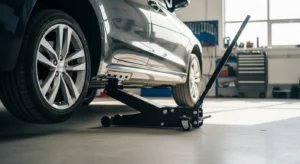
A shop jack that uses compressed air to drive a hydraulic pump.
- Best for: frequent lifting in a garage
- Pros: fast lifts, less strain
- Cons: needs an air source, higher price
- Tip: great for tire rotations and brake work cycles
Exhaust air bag jack
A heavy-duty bag inflates from exhaust or a compressor to raise a vehicle.
- Best for: soft sand, snow, and mud
- Pros: wide base, stable on soft ground
- Cons: poor control, bulky, not for precise service
- Tip: keep away from hot exhaust tips and sharp debris
Transmission jack (specialty)
A wide-saddle hydraulic jack made to support transmissions or transfer cases.
- Best for: drivetrain removal and install
- Pros: tilt and cradle control
- Cons: not for lifting the car itself
- Tip: pair with a floor jack and stands for full jobs
Motorcycle and ATV jack
A flat, cradle-style jack to lift bikes and small powersports.
- Best for: bikes, scooters, ATVs
- Pros: broad contact, steady support
- Cons: not for cars
- Tip: use tie-downs for stability
These are the core types of car jacks you will see. When people ask about the best types of car jacks, I match them to the job, the vehicle height, and storage needs. Knowing the types of car jacks by their lift range and base size makes the choice simple and safe.

Source: engineeringchoice.org
How to choose the right car jack
Start with your vehicle, not the tool. Match the jack to weight, height, and how you work.
- Vehicle weight and rating: pick a jack rated above your need with a safety margin.
- Ground clearance: low cars need low-profile; tall trucks can use bottle jacks.
- Jack points: check the manual for frame rails and pinch welds. Use adapters if needed.
- Speed and control: floor jacks are fast; scissor jacks are slow; air assist is faster still.
- Portability: scissor and bottle jacks fit in a trunk; floor jacks suit a garage.
- Budget and build: steel is tough and heavy; aluminum is lighter and often costs more.
- Floor surface: small wheels snag on rough floors; big casters roll better.
If you only buy one, a 3-ton low-profile floor jack covers many cars and crossovers. Add jack stands for support. Keep a compact scissor or bottle jack in the car for trips.
Safety essentials and common mistakes
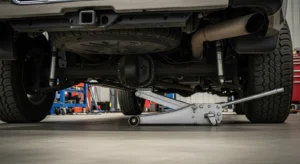
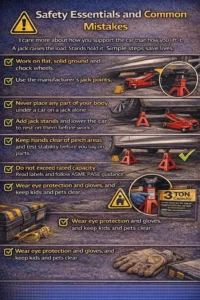
I care more about how you support the car than how you lift it. A jack raises the load. Stands hold it. Simple steps save lives.
- Work on flat, solid ground and chock wheels.
- Use the manufacturer’s jack points.
- Never place any part of your body under a car on a jack alone.
- Add jack stands and lower the car to rest on them before work.
- Keep hands clear of pinch areas and test stability before you tug on parts.
- Do not exceed rated capacity. Read labels and follow ASME PASE guidance.
- Wear eye protection and gloves, and keep kids and pets clear.
Common mistakes I see: lifting on thin pinch welds without a pad, jacking on a soft shoulder that sinks, and rushing lug nuts after raising the wheel. Crack lugs slightly before lifting, then finish removal in the air.
Real-world tips from the garage and road
I learned these lessons the hard way and so you do not have to.
- Roadside scissor vs bottle: my compact bottle jack saved me on a lifted SUV where the scissor could not reach. The wider base on a board made it safe on gravel.
- Track day floor jack: a long-reach low-profile jack slid under a splitter and hit the front crossmember in one pump. It shaved minutes off each session check.
- Hi-lift in the desert: it worked only after we added a base plate and used rock sliders. Without solid points, it felt like balancing on a broomstick.
- Electric scissor for winter: numb hands love a powered lift. I still carry a manual backup and a battery jump pack.
Bring this mindset when you compare types of car jacks. Match the jack to your real use, not a wishlist. Practice at home so you are calm when it matters.
Source: homedepot.com
Care, maintenance, and storage
A well-kept jack lifts smoother and lasts longer.
- Inspect before use for leaks, bent arms, or loose wheels.
- For hydraulics, top up jack oil, bleed air if the saddle feels spongy, and store upright.
- Clean the saddle and keep a rubber pad handy to protect jack points.
- Lubricate pivot points and the scissor screw threads.
- Store off damp floors to prevent rust. Cover in dusty shops.
- Calibrate your habits: slow, steady pumps lower risk.
Quality brands follow test standards for load and overload. Still, tools age. Retire cracked or leaking jacks. Your safety is worth more than the price of a new one.
Source: redboxtools.com
Frequently Asked Questions of types of car jacks
What are the main types of car jacks?
The main types of car jacks are scissor, bottle, floor, low-profile, hi-lift, and pneumatic styles. Each type suits different vehicles and tasks.
Which jack is best for a small car?
A 2-ton low-profile floor jack is ideal for home use. Keep the factory scissor jack in the trunk for emergencies.
Are bottle jacks safe for SUVs and trucks?
Yes, bottle jacks work well for tall vehicles due to their lift height and capacity. Use a wide base on soft ground and add jack stands.
How many jack stands do I need?
Two stands cover one axle, while four stands support the whole car. Never crawl under a car supported by a jack alone.
Can I use a hi-lift jack on any car?
No. Hi-lift jacks need solid bumpers or sliders. They are not safe on thin pinch welds or plastic covers.
Do I need a rubber pad or adapter?
A pad protects pinch welds and spreads the load. Many floor jacks accept pinch weld or frame adapters.
How often should I service a hydraulic jack?
Check for leaks and test monthly if you use it often. Top up fluid and bleed air as needed for smooth lifts.
Conclusion
Now you know the strengths and limits of the main types of car jacks, and how to pick the right one for your car, your space, and your style of work. Choose a jack that fits your ground clearance, weight needs, and speed, then pair it with solid stands and smart habits.
Set yourself up for safe, smooth jobs. Pick a jack today, practice at home, and build a small lift kit for the road. If you found this guide helpful, share it with a friend, subscribe for more hands-on tips, or drop your questions in the comments.