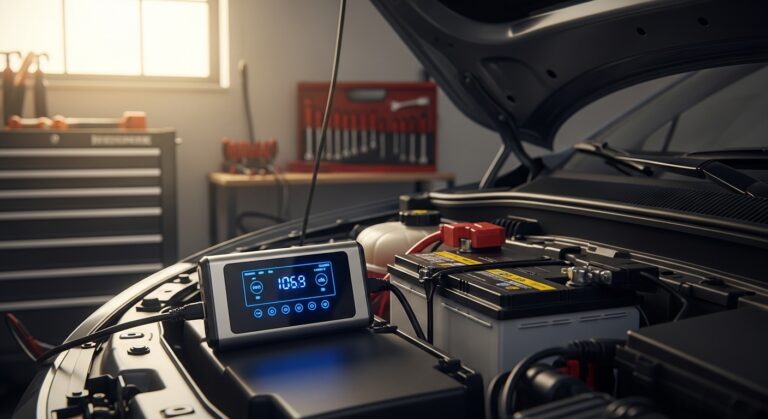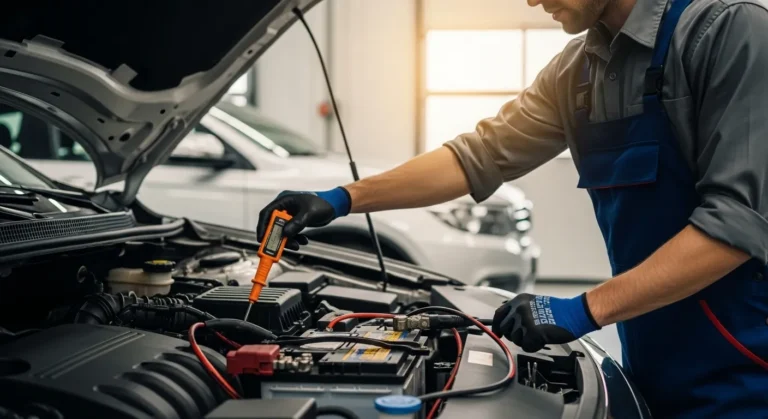
Slow crank, dim lights, clicking on start, battery light on, corrosion, swelling.
If you have ever turned the key and heard a weak groan, you know the stress. I have tested thousands of batteries in shops and on the roadside. In this guide, I break down the clear signs of bad car battery, how to test it at home, and when to replace it. You will learn what those flickering lights and random stalls really mean, so you can act fast and avoid a tow.

What your car battery does and how it fails
Your battery stores energy to start the engine and power electronics when the engine is off. A healthy 12-volt battery rests near 12.6 volts and can deliver high current for a short time. Heat, cold, age, and vibration wear it down. The internal plates sulfate, capacity drops, and the car starts to struggle.
Most batteries last 3 to 5 years in normal use. Hot climates speed up aging. Short trips starve the battery, since the alternator has little time to recharge it. Add corrosion or loose cables, and even a good battery can act bad.
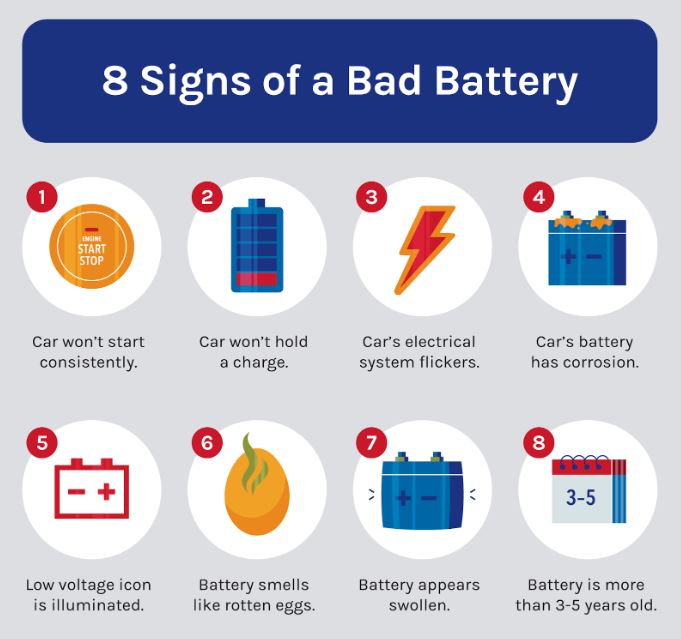
Source: aaa.com
The clearest signs of bad car battery
Here are the most common signs of bad car battery that I see in the field.
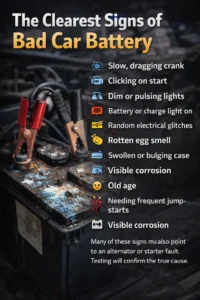
- Slow, dragging crank The engine turns over slowly or sounds labored.
- Clicking on start You hear rapid clicks from the starter but no crank.
- Dim or pulsing lights Headlights or interior lights fade at idle and brighten with revs.
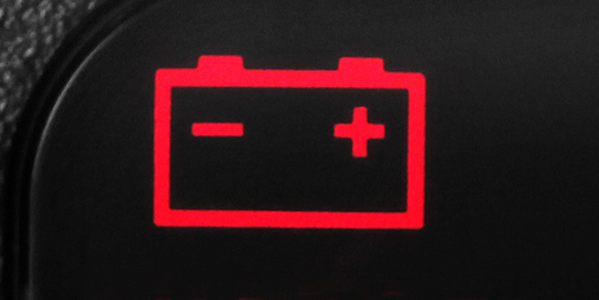
- Battery or charge light on The dash icon stays on or flickers during driving.
- Random electrical glitches Screens reset, radio forgets presets, or windows move slowly.
- Rotten egg smell A sulfur smell hints at overcharge or internal damage.
- Swollen or bulging case Heat or overcharge can swell the battery case.
- Visible corrosion Blue-white crust around terminals raises resistance.
- Old age Past 3 to 5 years, failure risk jumps even if the car still starts.
- Needing frequent jump-starts A repeat need to jump is one of the sure signs of bad car battery.
Keep in mind that many signs of bad car battery can also point to an alternator or starter fault. Testing will confirm the true cause.
Quick at-home tests before you buy a new battery
You can confirm signs of bad car battery with simple checks. These steps save guesswork and money.
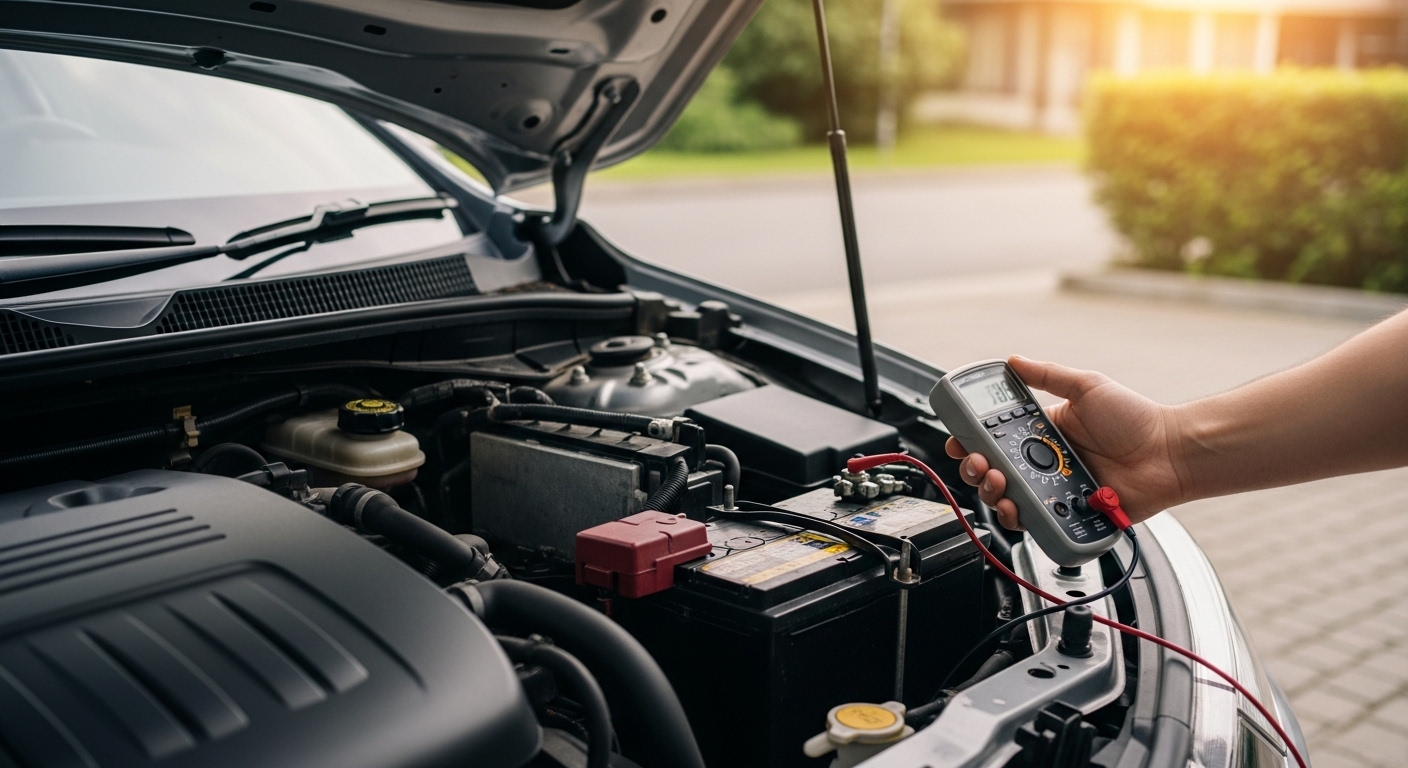
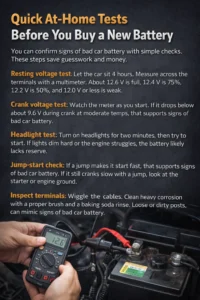
- Resting voltage test Let the car sit 4 hours. Measure across the terminals with a multimeter. About 12.6 V is full, 12.4 V is 75%, 12.2 V is 50%, and 12.0 V or less is weak.
- Crank voltage test Watch the meter as you start. If it drops below about 9.6 V during crank at moderate temps, that supports signs of bad car battery.
- Headlight test Turn on headlights for two minutes, then try to start. If lights dim hard or the engine struggles, the battery likely lacks reserve.
- Jump-start check If a jump makes it start fast, that supports signs of bad car battery. If it still cranks slow with a jump, look at the starter or engine ground.
- Inspect terminals Wiggle the cables. Clean heavy corrosion with a proper brush and a baking soda rinse. Loose or dirty posts can mimic signs of bad car battery.
- Check the date code Most batteries have a sticker with month and year. If it is past 4 years, your signs of bad car battery are more likely real.
I carry a small multimeter and a 12 V test light in my glove box. These tools turn guesswork into a simple yes or no.
Is it the battery, alternator, or starter?
Not every no-start means a bad battery. Here is how I sort it out fast.
- Likely battery Slow crank, dim lights with engine off, starts fine after a jump, and dash resets are classic signs of bad car battery.
- Likely alternator Car starts, then dies while driving, or battery light turns on at speed. Voltage while running is below about 13.5 V or above 15 V.
- Likely starter One solid click or grinding with a strong battery. Jumping does not help, lights stay bright during start.
If you have a code reader, look for low-voltage or charging system codes. They often confirm what your ears already told you.
Source: pepboys.com
Why batteries fail early and how to prevent it
Understanding the causes helps you avoid future signs of bad car battery.
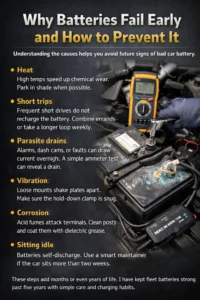
- Heat High temps speed up chemical wear. Park in shade when possible.
- Short trips Frequent short drives do not recharge the battery. Combine errands or take a longer loop weekly.
- Parasite drains Alarms, dash cams, or faults can draw current overnight. A simple ammeter test can reveal a drain.
- Vibration Loose mounts shake plates apart. Make sure the hold-down clamp is snug.
- Corrosion Acid fumes attack terminals. Clean posts and coat them with dielectric grease.
- Sitting idle Batteries self-discharge. Use a smart maintainer if the car sits more than two weeks.
These steps add months or even years of life. I have kept fleet batteries strong past five years with simple care and charging habits.
What to do when your car will not start
Stay calm and run a short checklist. You can move from panic to plan in minutes.
- Check lights and dash Are they dim or dead? That aligns with signs of bad car battery.
- Inspect the posts Are the clamps loose or crusted? Tighten and clean them.
- Try a different key position Turn the key to off, wait ten seconds, then try again.
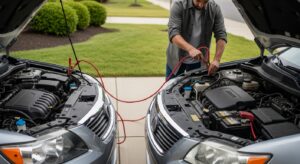
- Jump-start safely Connect positive to positive, negative to a metal ground on the dead car. Start the donor, then your car. Remove cables in reverse order.
- Drive to recharge Let it run 20 to 30 minutes. If it struggles to restart soon after, your signs of bad car battery are confirmed.
Wear eye protection when working near batteries. A quick check beats a spark in the face.

Source: motorist.sg
Tools and habits I recommend from the shop floor
Experience matters when reading signs of bad car battery. Here is what I use and teach clients.
- Compact multimeter A pocket meter tells you more than a guess ever will.
- Smart maintainer Keeps seldom-used cars at 100% without overcharging.
- Memory saver Helpful on newer cars, but use with care. Some models prefer a clean reset.
- Terminal brush and dielectric grease Clean metal and a thin coat of grease stop repeat corrosion.
- Periodic load test Ask a shop for a mid-year check, especially before winter trips.
I once chased a random stall on a delivery van for days. The real cause was a loose ground hidden under the battery tray. Tightening that strap ended every symptom that looked like signs of bad car battery.

Replacement basics, costs, and warranties
When tests confirm the signs of bad car battery, replacement is simple if you plan it.
- Pick the right group size Match the battery group number to your car tray and cables.
- Choose the right type Flooded is common. AGM or EFB suits start-stop systems and high accessory loads.
- Mind the ratings CCA matters in cold climates. Match or exceed the original spec.
- Learn the warranty Read the fine print. Many are prorated, not full replacement.
- Register the battery Some cars need battery registration with a scan tool after install.
Recycle the old unit. Most stores take it and give a core credit. A clean install with tight clamps and protected terminals avoids repeat signs of bad car battery.
Frequently Asked Questions of signs of bad car battery
How long should a car battery last?
Most batteries last 3 to 5 years, depending on climate and use. Hot regions and short trips shorten life.
What voltage is a bad battery?
Below about 12.2 V at rest shows low charge or wear. Under 9.6 V while cranking is a strong fail sign.
Can a bad battery cause my check engine light?
Yes, low voltage can trigger many fault codes. Fix the battery first, then clear and retest.
Why do my lights flicker at idle?
Low voltage at idle points to weak charge or a failing battery. It can also be an alternator issue.
Will a jump-start damage my car?
Done right, no. Follow the correct cable order and use a good ground point.
How do cold mornings affect starting?
Cold slows chemistry and thickens oil, revealing signs of bad car battery. A battery with high CCA helps.
Is corrosion a sure sign of failure?
Not always, but it raises resistance and mimics battery failure. Clean and protect the posts, then retest.
Should I replace the alternator with the battery?
Only if tests show it is weak. Many alternators outlast more than one battery.
Conclusion
You now know the real signs of bad car battery and how to confirm them. Watch for slow cranks, dim lights, strange smells, and a swollen case. Test with a meter, clean the posts, and decide with data.
Take ten minutes today to check voltage and inspect the terminals. A small habit now saves you from a tow later. If this helped, share it with a friend, subscribe for more car care tips, or leave a question and I will help you sort it out.