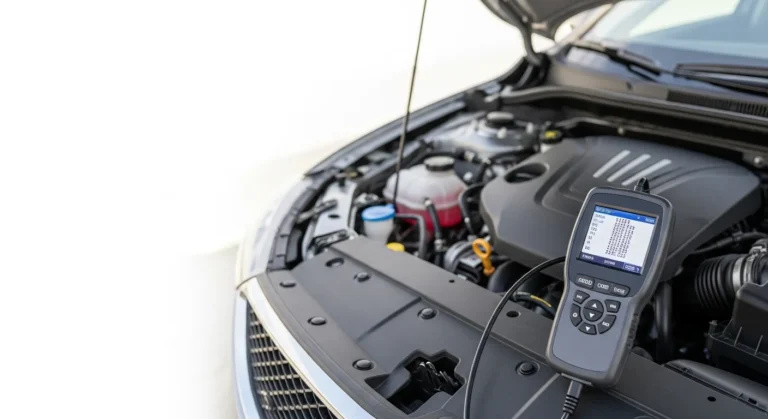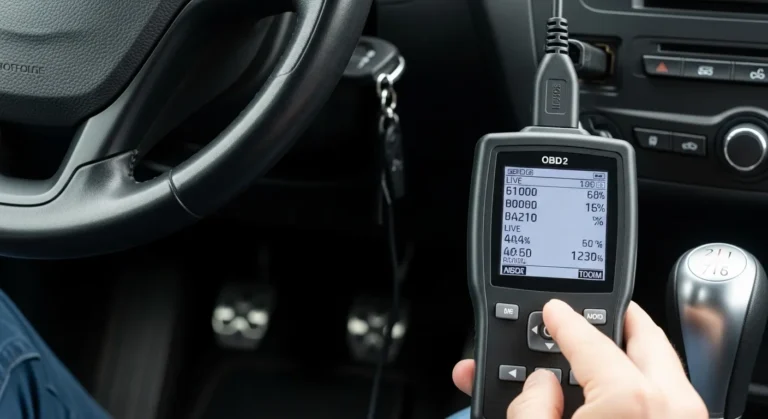

Set meter to DC volts for battery, AC for ripple, ohms and continuity for wiring.
If you have ever wondered how to use a multimeter in a car, this guide will show you, step by step. I’ve spent years diagnosing battery drains, dim lights, and no-starts in busy shops and home garages. I’ll explain how to use a multimeter in a car with clear steps, real examples, and simple checks you can do today. You’ll learn the tools, the safety, and the exact tests that solve real problems fast.
What a multimeter does in your car
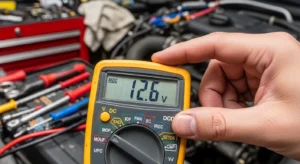
A digital multimeter (DMM) measures voltage, resistance, continuity, and current. In a car, you use DC volts to test the battery, charging, and drops in power. You use ohms and continuity to check fuses and wiring. You use amps to chase parasitic draws.
There are two common types. Auto-range meters choose the range for you. Manual-range meters make you set it. Either works. For most 12‑volt cars, choose DC volts for most tests. AC volts is only for ripple checks from the alternator. Learning how to use a multimeter in a car starts with these settings.
Safety first in the engine bay
Work with care. Batteries can spark. Belts can grab clothes. Hot parts can burn.
Follow these tips:
- Wear eye protection and snug clothes.
- Keep rings and metal tools away from the battery.
- Secure test leads so they do not touch moving parts.
- Start with the black lead on a good ground (battery negative or clean metal).
- Never measure resistance or continuity on a live circuit.
- Avoid airbag wiring and bright yellow harnesses unless you follow factory steps.
When in doubt, stop and look up the factory service info. That habit has saved me from bad mistakes more times than I can count.

Choose and set up your multimeter
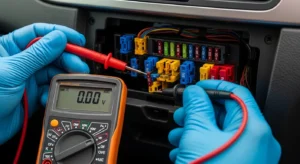
Good meters have fused current ports, clear labels, and strong leads. Plug the black lead into COM. Plug the red lead into VΩ for voltage and resistance. Move the red lead to the 10A fuse port only when measuring current.
Do a quick check. Touch the probes together in continuity mode. You should hear a beep. In ohms, you should see near zero. In DC volts on a fresh 9V battery, you should see about nine volts. If not, replace the meter battery or leads. This prep makes how to use a multimeter in a car simple and safe.
Step-by-step tests you’ll use most
Learning how to use a multimeter in a car gets easy when you master these core tests. I use them every week on daily drivers and project cars.
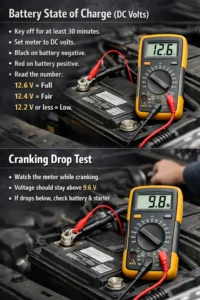
Battery state of charge (DC volts)
- Key off for at least 30 minutes so the surface charge fades.
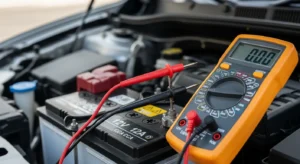
- Set the meter to DC volts. Place black on battery negative. Red on battery positive.
- Read the number. About 12.6 V is full. 12.4 V is fair. 12.2 V or less is low. Charge the battery if it is low before more tests.
Cranking drop test:
- Watch the meter while someone cranks for two to three seconds.
- Voltage should stay above about 9.6 V in warm weather. If it drops far below that, test the battery and starter.
Pro tip: I once chased a “bad alternator” on a truck. The battery read 11.9 V at rest. A charge and retest solved it. Always start with the battery.
Alternator output and AC ripple
- Start the engine. Set DC volts. You should see about 13.8 to 14.7 V at idle, with lights and blower off. Smart charging may vary, but it should rise with load.
- Turn on headlights, rear defrost, and blower. Voltage should hold near spec.
AC ripple:
- Switch to AC volts. On most cars, ripple should be under 50 to 100 mV AC. Over 300 mV often points to a bad diode in the alternator. Some basic meters read high on ripple, so treat this as a guide and confirm with a load test.
Check fuses and continuity
- With the key on, set the meter to DC volts. Probe both test points on top of each fuse.
- Power on both sides means the fuse is good. Power on one side only means the fuse is blown.
- With power off, you can also pull the fuse and test continuity across it.
This section covers the core of how to use a multimeter in a car for fast answers.

Source: haynes.com
Voltage drop testing like a pro
A circuit can have power, yet the part is dim or slow. That is often a bad connection. Voltage drop testing finds that loss while the part is on.
Positive side drop:
- Set DC volts. Black on battery positive. Red on the part’s power feed.
- Turn the part on. Read the drop. Under 0.2 to 0.5 V is good. More means high resistance in that path.
Ground side drop:
- Set DC volts. Black on battery negative. Red on the part’s ground point.
- Turn the part on. Read the drop. Under 0.1 to 0.2 V is good. More means a weak ground.
Example: A headlight looked yellow on one side. Ground drop was 0.6 V with lights on. I cleaned the ground bolt and drop fell to 0.02 V. The light went bright. Knowing how to use a multimeter in a car like this beats guessing every time.

Source: emanualonline.com
Track a parasitic battery drain overnight
If a healthy battery dies after parking, look for a key-off draw. This is where learning how to use a multimeter in a car can save days.
Inline current test:
- Charge the battery first. Save radio codes if needed.
- Key off. Close doors and let modules sleep for 20 to 45 minutes.
- Set the meter to 10A. Move the red lead to the 10A port.
- Disconnect the battery negative cable. Put the meter in series between the post and cable.
- Wait for the draw to settle. Under 50 mA is normal on many cars. Some newer cars rest at 20 to 70 mA. Check your service data.
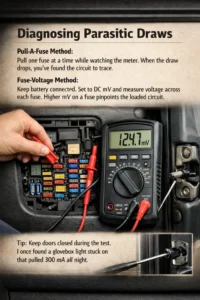
If draw is high:
- Pull one fuse at a time while watching the meter. When the draw drops, you found the circuit. Trace that branch to the bad part or light.
Fuse-voltage method (safer for modules):
- Keep battery connected. Set DC mV. Measure voltage across each fuse.
- A chart can convert millivolts to current for that fuse type. The fuse with a higher drop points to the loaded circuit.
Tip: Avoid opening doors during this test. Use the latch trick to keep the door switch “closed.” I once found a glove-box light stuck on that pulled 300 mA all night.
Test common sensors and actuators
You can do many safe checks with a DMM. Some signals need a scope, but basics still help when learning how to use a multimeter in a car.
Throttle Position Sensor (TPS):
- Back-probe the signal wire with the key on, engine off.
- You should see about 0.5 V at closed throttle and near 4.5 V at wide open.
- Sweep the pedal slow. The voltage should rise smooth with no skips.
Engine Coolant Temp (ECT) or Intake Air Temp (IAT) sensor:
- These are thermistors. With key off, unplug them.
- Measure resistance across the sensor. Cold values are high. Hot values are low. Compare to a chart for your car.
Oxygen sensor (upstream):
- Warm the engine. In DC volts, back-probe the signal.
- You should see the voltage swing between about 0.1 and 0.9 V. A slow or stuck signal can point to issues, but use a scan tool to confirm.
Injectors and coils (resistance checks):
- Key off. Unplug the part.
- Measure coil or injector resistance. Compare to the spec. Saturated injectors often read around 12 to 16 Ω. Peak-and-hold types are lower. Coil primary can be around 0.3 to 1 Ω. Always check the book first.
Note: Never ohm-test a live circuit. If unsure, stop. This is how to use a multimeter in a car without risking a module.

Quick answers: people also ask
Can a multimeter test an alternator?
Yes. Check DC volts at the battery with the engine running. You want about 13.8 to 14.7 V under light load, plus low AC ripple.
How do I test a car fuse with a multimeter?
With the key on, probe both fuse tabs in DC volts. Power on both sides means the fuse is good. Power on one side only means it is blown.
What is a normal parasitic draw?
Many cars rest under 50 mA. Some modern cars are normal at 20 to 70 mA after all modules sleep.
Using these quick tips is part of how to use a multimeter in a car like a pro.
Common mistakes and how to avoid them
- Leaving the red lead in the amps port for voltage tests. This blows the meter fuse fast. Always move the lead back to VΩ after current tests.
- Measuring resistance on a live circuit. You can damage parts or the meter. Disconnect power first.
- Using a bad ground for tests. Clean a spot or clip to battery negative for trusted readings.
- Skipping the load during a drop test. Test with the part on. No load means no drop.
- Not letting modules sleep for drain tests. Wait the full 20 to 45 minutes for stable results.
These fixes make how to use a multimeter in a car faster and safer every time.
Real-world troubleshooting stories
Radio whine and dim lights:
- Symptom: Whine with RPM and dim at idle.
- Test: 14.1 V DC at idle, but AC ripple was 420 mV.
- Fix: New alternator. Ripple dropped to 30 mV. Lights and sound cleared.
Dead battery in the morning:
- Symptom: Fresh battery dies overnight.
- Test: 280 mA key-off draw after sleep. Pulling fuses found the glove box circuit.
- Fix: Misaligned latch kept the light on. Adjusted latch. Draw fell to 20 mA.
Cranks slow when hot:
- Symptom: Slow crank after a highway run.
- Test: Voltage drop of 0.35 V on the ground strap during crank. Spec is under 0.2 V.
- Fix: Cleaned and tightened engine-to-chassis ground. Crank speed returned.
Each case shows how to use a multimeter in a car to prove the fault, not guess it.

Frequently Asked Questions of how to use a multimeter in a car
What range should I use to test a car battery?
Use DC volts on the 20 V range if your meter is manual. You should see about 12.6 V on a full battery.
Can I test amps without disconnecting the battery?
Yes, by using the fuse-voltage method and a chart. Inline current testing needs you to break the circuit, so be careful and use the 10A fused port.
How do I find a bad ground with a multimeter?
Do a voltage drop test with the part on. Place black on battery negative and red on the ground point; more than 0.2 V drop means a bad ground.
Is AC ripple testing on a DMM reliable?
It is a good screen, but meters vary. Use it with DC output checks and a load test to confirm alternator health.
How often should I calibrate my multimeter?
For home use, check it against known values a few times a year. In a shop, annual calibration is common for best accuracy.
Can I check an oxygen sensor with a DMM?
Yes, in a basic way. Look for a voltage that swings between about 0.1 and 0.9 V at idle when hot.
What does continuity beep mean in a car circuit?
It means there is a low-resistance path between the probes. It does not confirm the circuit can carry load; use voltage drop to be sure.
Conclusion
You now know how to use a multimeter in a car to test batteries, charging, wiring, and sensors. You can measure state of charge, spot bad grounds, and hunt parasitic draws with calm and clear steps. Use DC volts for power, ohms for parts, and amps for drains. Load the circuit, read the drop, and let the data lead you.
Pick one test from this guide and try it today. A five-minute battery and charging check can prevent a roadside call later. If you want more tips on how to use a multimeter in a car, subscribe, ask a question below, or share your own win from the driveway.