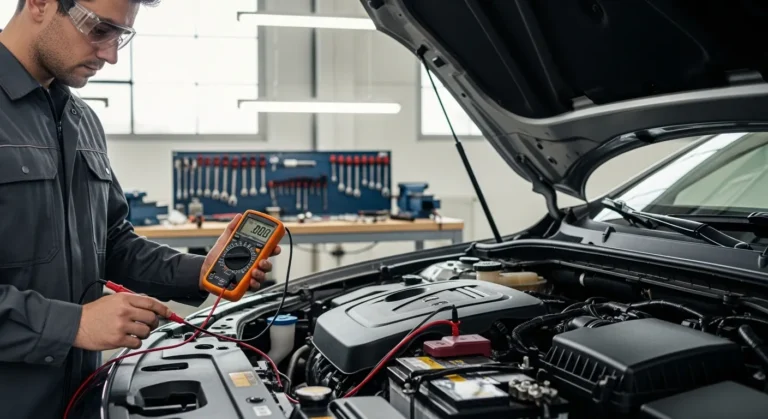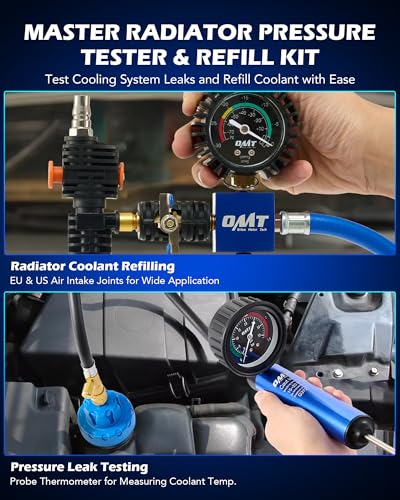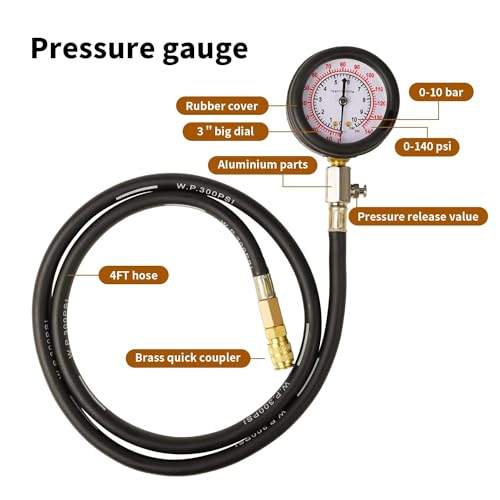

A compression test tells you a cylinder is weak; a leak-down test tells you why. It fills the cylinder with compressed air at top dead center and measures how much leaks out, then you listen and look to find where it’s escaping: past the rings, the intake or exhaust valves, or the head gasket.
This guide explains how to run the test and read the results, and compares four leak-down testers using the details their makers list. Two listings in the earlier version of this guide were the same kit in different colors, so we kept one.
What you’ll learn
- Leak-down test vs compression test
- How to read the percentage
- Where the air escapes, and what it means
- Which of four testers suits you
Quick answer
For a professional-quality kit, the OTC 5609 Cylinder Leakage Tester has large dual gauges, a regulated manifold and a storage case. The US-made Lang Tools CLT-2 is another well-known two-gauge tester. On a budget, the Prokomon and Marvelity dual-gauge kits include several spark plug adapters. All need an air compressor that can supply about 100 psi.
Work safely
With air in the cylinder, the engine can turn suddenly if the piston isn’t exactly at top dead center. Keep hands clear of the fan, belts and pulleys, remove the wrench from the crank bolt, and disable the ignition.
In this article
How to choose a cylinder leak-down tester
How the test works
Remove the spark plugs, bring the cylinder to top dead center on its compression stroke, connect the tester and set the regulator to 100 psi (or as the instructions say). The second gauge shows how much pressure the cylinder holds; the difference is the leakage.
Reading the result
Lower leakage is better. As a rough guide, many technicians treat under 10% as good and over 20–30% as a sign of a problem, but compare cylinders with each other and follow the tester’s instructions.
Finding where it leaks
Air hissing from the oil filler or dipstick tube means worn rings; from the throttle body or intake means an intake valve; from the tailpipe means an exhaust valve; bubbles in the coolant mean a head gasket or cracked head.
Gauges and regulator
Two clear gauges and a good regulator make readings consistent. A regulator you can lock at 100 psi saves time between cylinders.
Adapters and hose
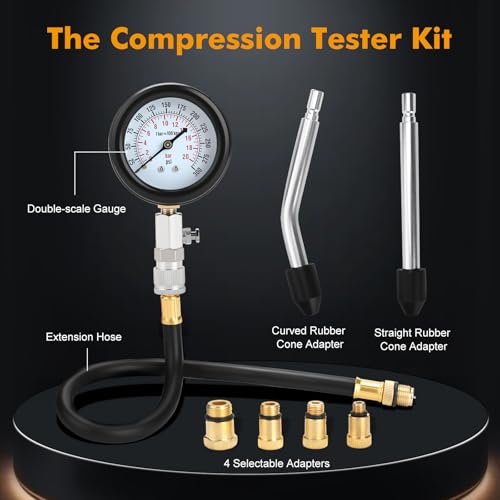
Check that the kit includes the spark plug thread sizes you need (commonly M12 and M14) and a hose long enough to reach recessed plugs.
Quick comparison
| Model | Type | Best for | Key features (from the maker’s listing) | Amazon |
|---|---|---|---|---|
| OTC 5609 Cylinder Leakage Tester Kit | Pro kit | Frequent use | Dual 2-1/2 in gauges, 0–100 psi and 0–700 kPa, with chrome bezels and protective boots; pressure-regulated aluminum manifold with quick couplers; 24 in 14 mm flex hose plus adapters; needs 100 psi shop air; storage case with instructions | Amazon |
| Lang Tools CLT-2 Cylinder Leakage Tester | Pro tester | A simple, durable tester | Measures how well a cylinder holds compressed air using 100 psi shop air; two gauges; supplements a compression tester; country of origin: United States | Amazon |
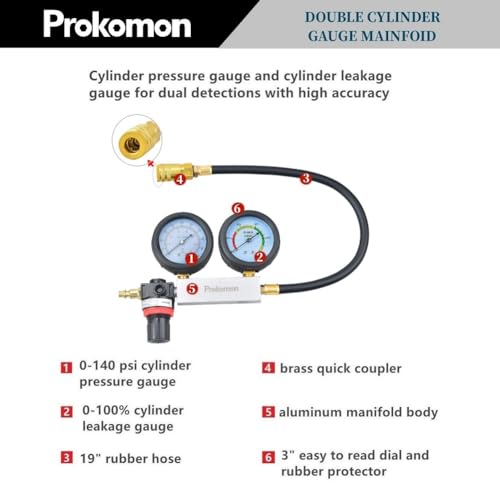
| Prokomon Engine Cylinder Leak-Down Tester Kit | Budget kit | DIY diagnosis | Dual-gauge manifold with 18 in hose and AR2000 regulator; metal adapters plus straight and angled push-on connectors for plug wells; extension rod; air compressor not included | Amazon |
| Marvelity Cylinder Leak-Down Tester Kit | Budget kit | Cars and motorcycles | Dual gauges; 4 spark plug adapters (M10×1, M12×1.25, M14×1.25, M18×1.5); short and long hoses; pressure regulator; calibrate to 100 psi; gasoline engines only, not diesel | Amazon |
The four leak-down testers compared
How we chose: we compared these testers using the details each maker lists on Amazon (checked in November 2026): gauges, regulator, adapters, hose and what’s needed to use them. We have not tested these tools ourselves.
1. OTC 5609 Cylinder Leakage Tester Kit

OTC’s kit is aimed at diagnosing bad rings, worn valves and leaking head gaskets. Two large 2-1/2 inch gauges with protective boots read 0–100 psi and 0–700 kPa.
It has a pressure-regulated aluminum manifold with quick couplers and a 24-inch 14 mm flex hose, plus other adapters, all in a storage case with instructions under the lid. It needs 100 psi shop air.
Why it’s a good pick
- Large, protected gauges
- Complete, ready-to-use kit
- Well-known tool brand
Keep in mind
- Higher price
- Check adapters for your plug size
2. Lang Tools CLT-2 Cylinder Leakage Tester

Lang Tools’ CLT-2 is a two-gauge tester that uses 100 psi shop air to measure how well each cylinder holds pressure. Lang describes it as a supplement to a compression tester.
The listing gives the United States as its country of origin.
Why it’s a good pick
- Well-known tool brand
- Simple two-gauge design
- Made in the USA
Keep in mind
- The listing gives few details on adapters
- Needs an air compressor
3. Prokomon Engine Cylinder Leak-Down Tester Kit

Prokomon’s kit has a dual-gauge manifold that shows supply pressure and cylinder pressure at the same time, with an AR2000 regulator and an 18-inch hose.
Besides threaded adapters, it includes straight and angled push-on connectors that don’t need to be threaded into deep spark plug wells, and an extension rod. You’ll need your own air compressor.
Why it’s a good pick
- Low price
- Push-on connectors for deep wells
- Dual gauges
Keep in mind
- Air compressor needed
- Budget build quality
4. Marvelity Cylinder Leak-Down Tester Kit

This dual-gauge kit includes four spark plug adapters (M10, M12, M14 and M18) and short and long hoses, so it covers most gasoline cars and motorcycles.
Marvelity is clear that it’s for gasoline engines only, not diesels, heavy trucks or marine engines, and that the regulator should be set to 100 psi before testing.
Why it’s a good pick
- Four plug sizes
- Two hose lengths
- Clear instructions
Keep in mind
- Not for diesel engines
- Air compressor needed
Verdict
The OTC 5609 is the best choice for regular use, and the Lang Tools CLT-2 is a solid US-made alternative. For occasional DIY diagnosis, the Prokomon kit (with push-on connectors for deep plug wells) or the Marvelity kit (with four plug sizes) are good value.
Pair it with a compression test (see the purpose of a compression test) and, if you suspect the head gasket, a combustion leak tester.
Frequently asked questions
Sources
- Manufacturer product listings on Amazon (kit contents and specifications), checked November 2026
- Leak-down tester (Wikipedia)