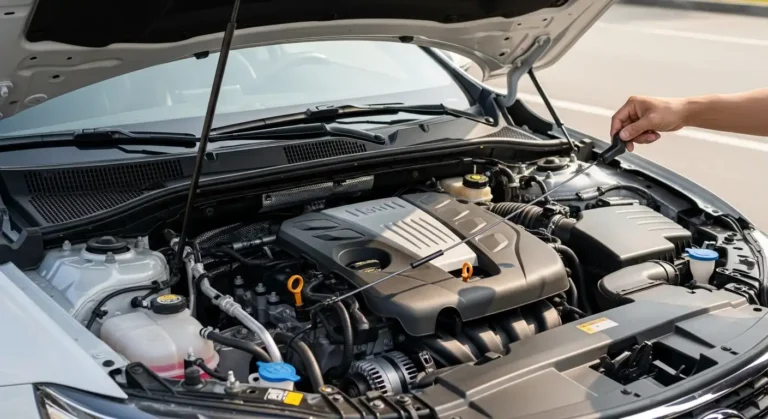
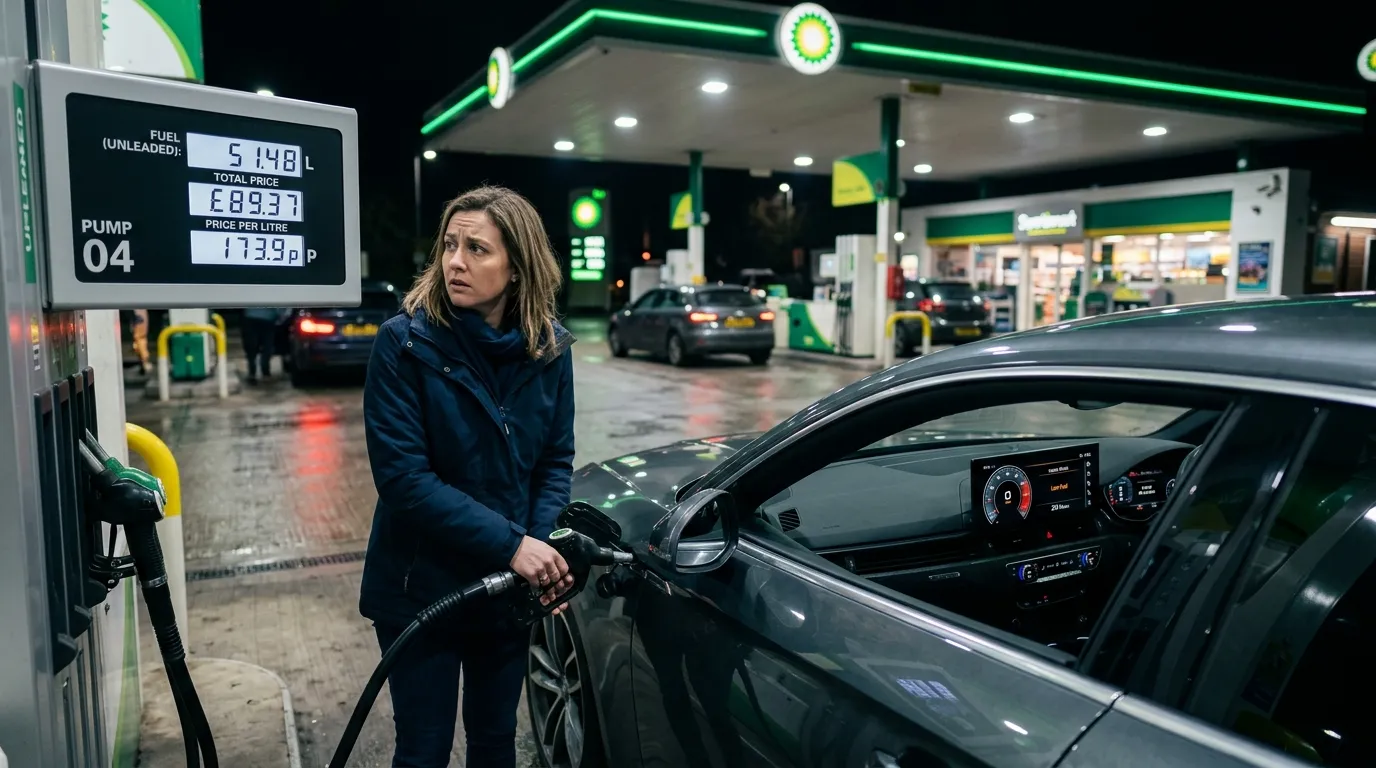
Dirty filters, bad sensors, low tire pressure, and harsh driving waste fuel.
If your gas mileage dropped, you are not alone. I’ve spent years diagnosing poor fuel economy causes in shops and driveways. This guide shows what hurts MPG most, how to test it at home, and which fixes pay off fast. By the end, you will know the top poor fuel economy causes and how to stop them before they drain your wallet.
What fuel economy means and why it drops
Fuel economy is how far your car goes on a set amount of fuel. Most people track it as miles per gallon (MPG). When MPG drops, you burn more fuel to do the same trip.
There is no single reason for a drop. Poor fuel economy causes stack up. A little extra weight, a soft tire, and a weak sensor can cut MPG fast. The fix is often a set of small steps, not one big repair.
A quick note on the math. Your right foot and the car’s “brain” both matter. The engine control unit adjusts fuel based on air flow, temperature, and load. If any input is off, fuel use rises. EPA testing shows speed, cold weather, and short trips can swing MPG by double digits.
Top poor fuel economy causes at a glance
Here are the most common poor fuel economy causes I see in real cars. These hit both city and highway driving.
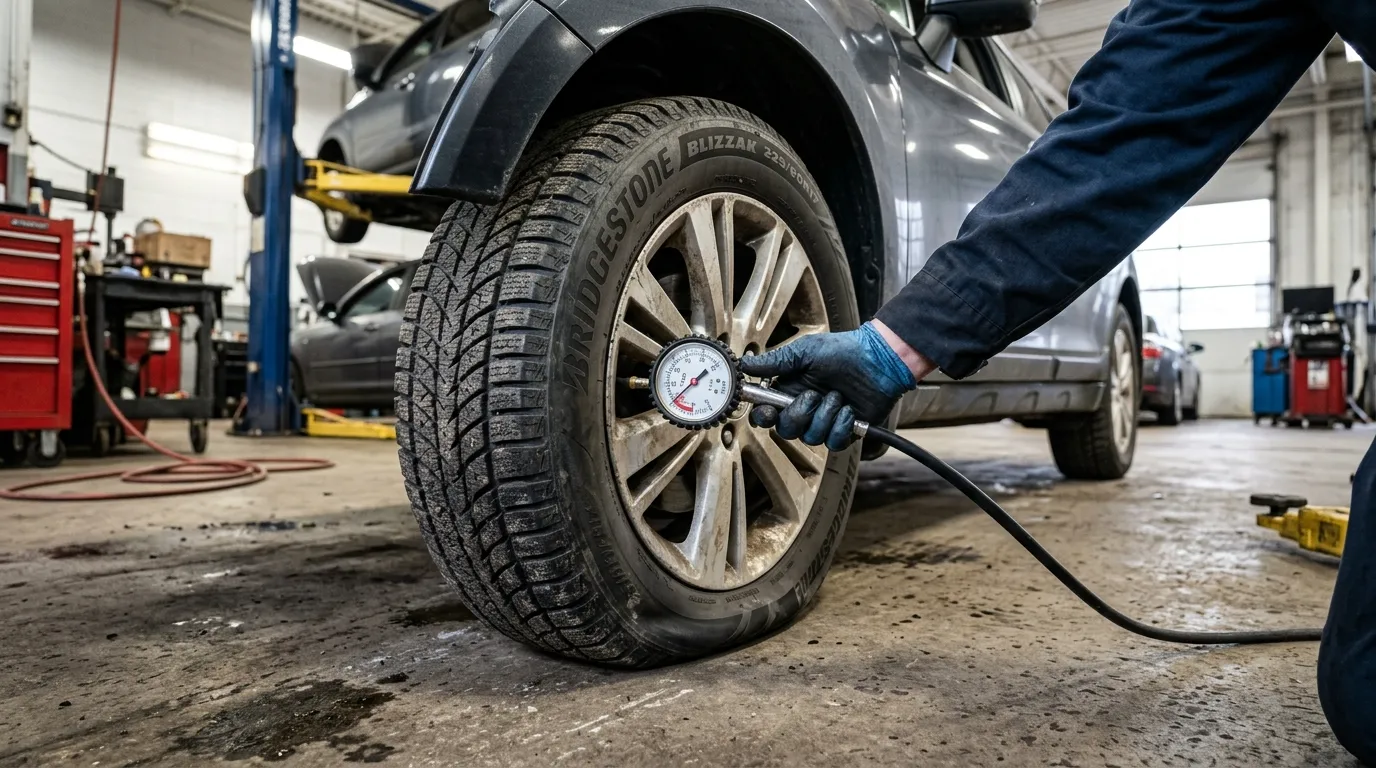
- Low tire pressure or wrong tire size. Even a few PSI low can drop MPG by 2–3%.
- Aggressive driving and speeding. Hard starts and stops burn fuel fast.
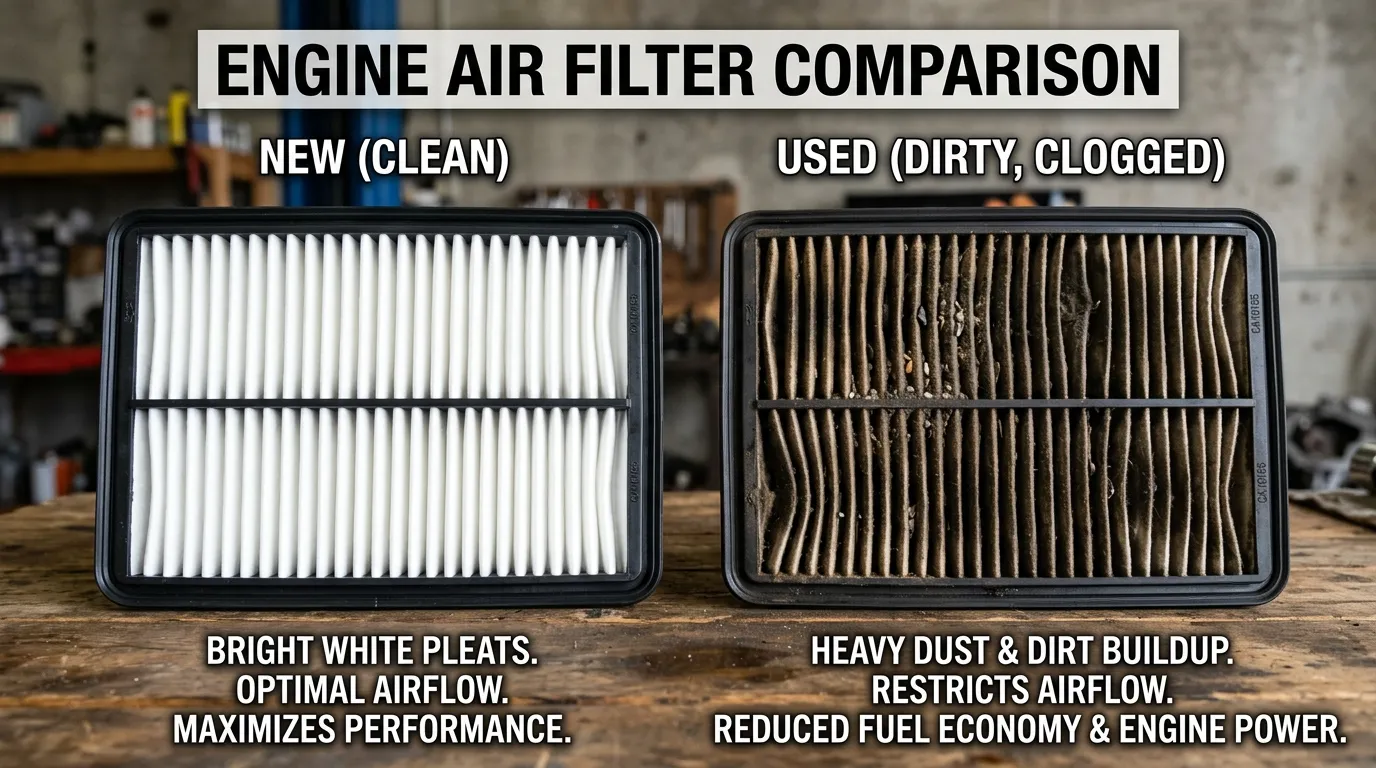
- Clogged air filter on older engines. On most modern cars, a very dirty filter still hurts power and may push you to press the gas more.
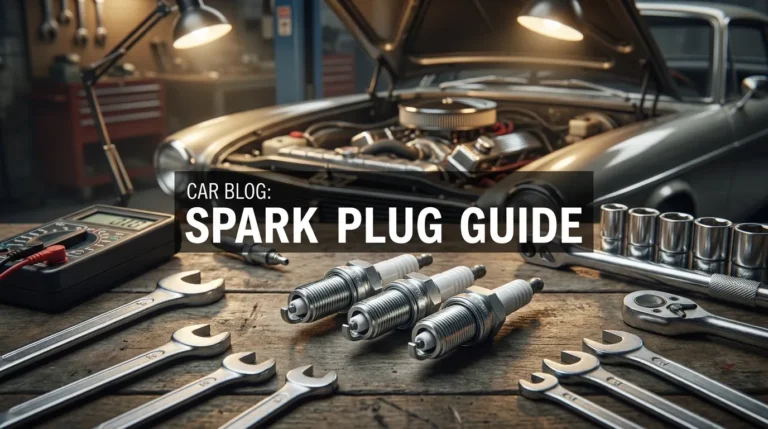
- Worn spark plugs or weak ignition coils. Misfires waste fuel and can hurt the catalytic converter.
- Dragging brakes or stuck calipers. Heat and smell may show up after a drive.
- Faulty oxygen sensor or lazy mass airflow sensor. The mix runs rich, and MPG falls.
- Old or wrong oil viscosity. Thick oil raises friction and load.
- Roof racks, open windows at speed, or added body parts. Drag rises a lot over 50 mph.
- Extra weight in the trunk or roof box. Every 100 pounds cuts range and response.
- Short trips in cold weather. Engines stay in warm-up mode and run rich.
- Bad wheel alignment or worn wheel bearings. Rolling resistance climbs.
- Fuel quality shifts and high ethanol blends. E10 has less energy than pure gas; E85 has much less.
Experience tip: My own compact car lost 4 MPG after I added a boxy roof rack. Removing it brought the numbers right back. Aero wins at highway speed.
Quick answers you might be thinking about:
- Is highway MPG worse with windows down? Yes, at speed. Use A/C on the highway, windows down in low-speed city driving.
- Can premium gas improve MPG? Only if your engine needs higher octane. If not, you are just paying more.
- Does cruise control save fuel? On flat roads, yes. In hills, a light foot can do better.
Driving habits that cause poor fuel economy
Your foot is the first fuel control. Many poor fuel economy causes are simple habits.
- Fast starts and late braking. Gentle moves save fuel and brakes.
- High speed on the highway. Aerodynamic drag jumps as speed rises. EPA data shows 75 mph can use 15–20% more fuel than 65 mph.
- Long warm-ups. Modern engines prefer to move off after 30 seconds. Idling is 0 MPG.
- Tailgating and constant lane changes. This adds brake and throttle spikes.
- Using sport mode all the time. It holds lower gears and raises RPM.
Try this one-week reset:
- Accelerate at half throttle.
- Shift early or back off to drop RPM.
- Cap highway speed at 65–70 mph.
- Use eco mode if your car has it.
- Anticipate lights and coast when safe.
I once coached a rideshare driver who saw an 18% gain in one week. No parts. Just habit change.
Maintenance-related poor fuel economy causes
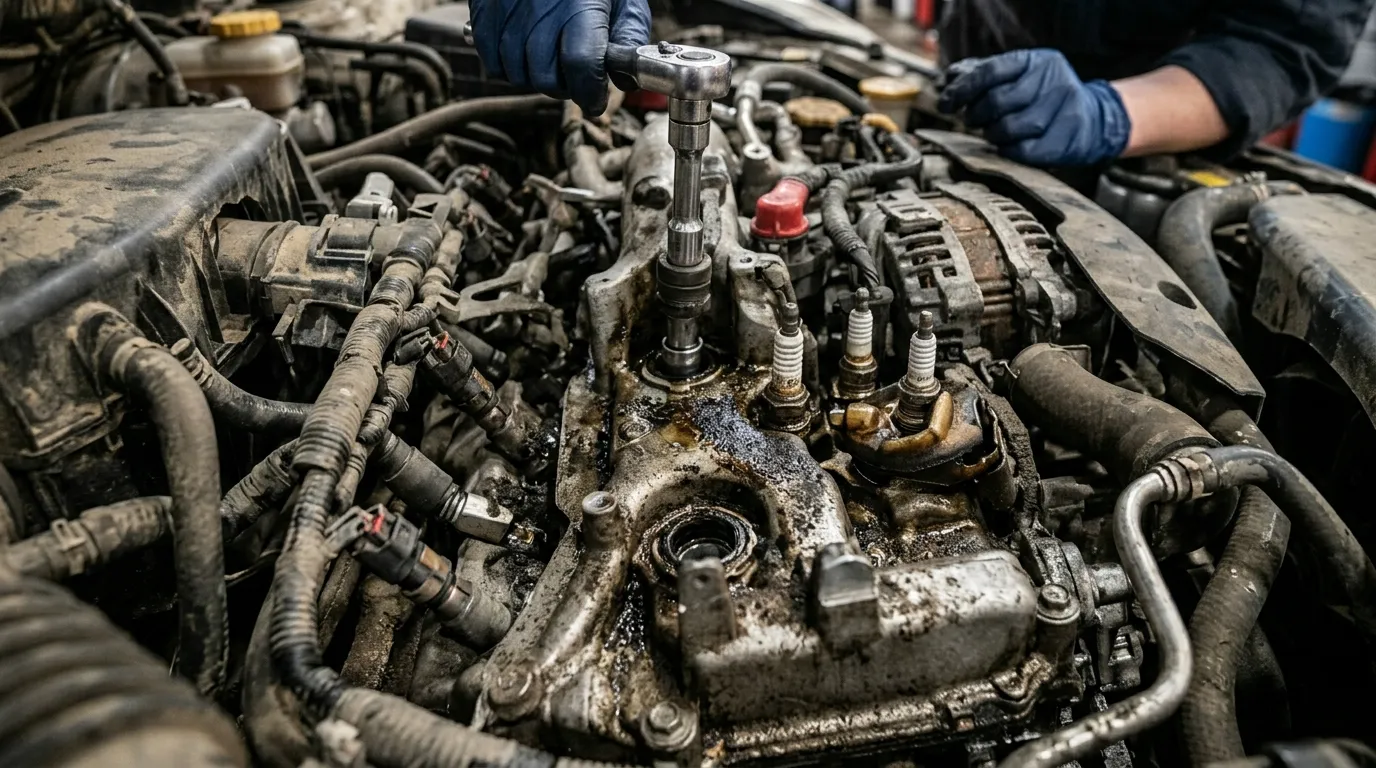
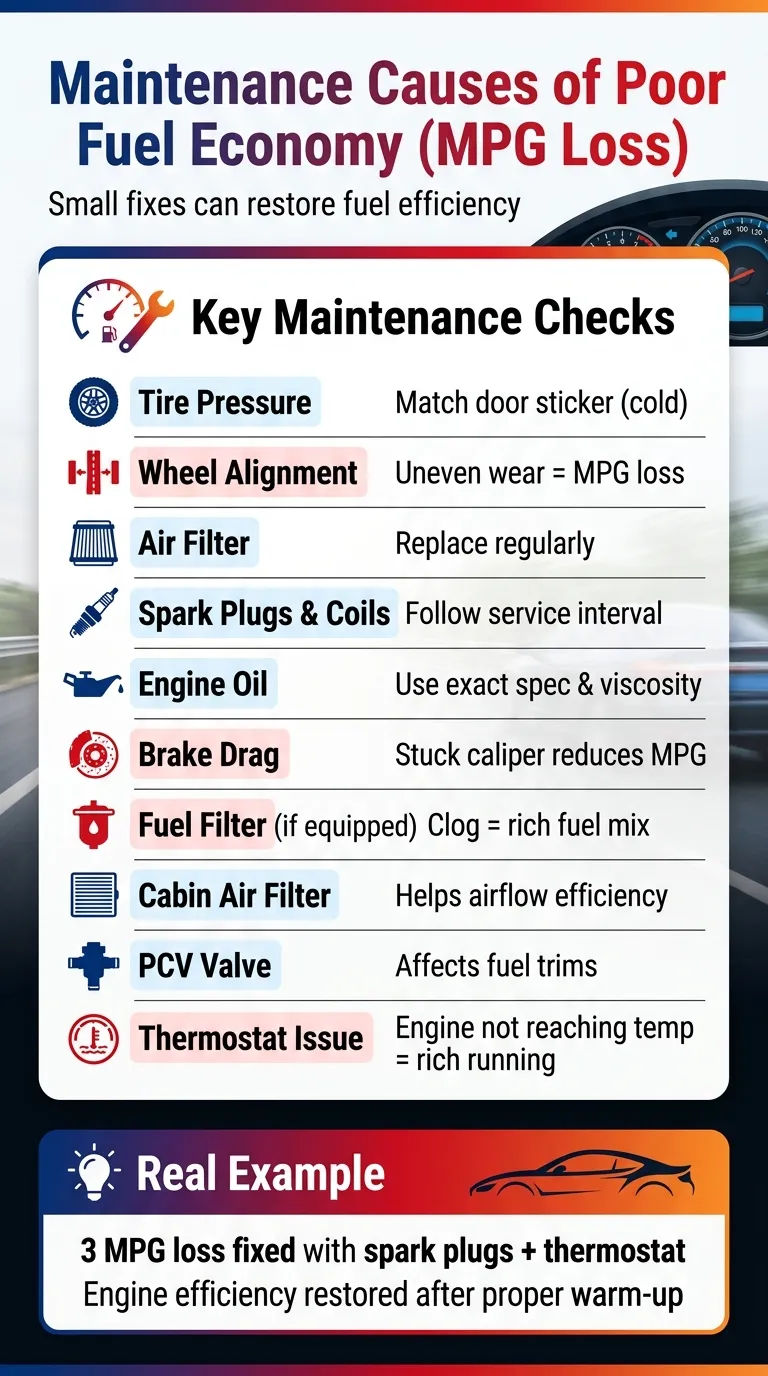
Small service items can solve big MPG loss. These are the highest-value checks.
- Tire pressure. Set it to the door sticker when cold. Check monthly and before trips.
- Alignment. Uneven wear means drag. A standard alignment can pay back in a few tanks.
- Air filter. Replace on schedule. It is cheap and fast.
- Spark plugs and coils. Follow the service interval. Iridium plugs can last, but age still matters.
- Engine oil. Use the exact spec and weight. A jump from 0W-20 to 10W-30 can cost MPG in modern engines.
- Brake drag. Spin each wheel off the ground, or feel for heat after a short drive. A stuck caliper can slash MPG.
- Fuel filter (on cars that still have one). A clog forces a rich mix at load.
- Cabin air filter. If blocked, you may run the fan high, which adds small load. Also helps HVAC health.
- PCV valve. A stuck valve can skew fuel trims and idle.
- Thermostat stuck open. If the engine never gets warm, the mix stays rich.
Common example: A customer’s crossover lost 3 MPG. The fix was new plugs and a thermostat. The engine never hit full temp, so it ran rich. After the repair, trims normalized and MPG returned.
Mechanical and sensor culprits behind poor fuel economy
When simple service does not fix it, look deeper. These poor fuel economy causes hide in data.
- Oxygen sensors (upstream). A slow sensor can read lean and force the ECU to add fuel.
- Mass airflow sensor. Dirt skews readings. A gentle clean with MAF-safe spray can help.
- Coolant temperature sensor. If it reads cold, the car “thinks” it needs more fuel.
- Vacuum leaks. Unmetered air makes the ECU enrich to compensate.
- Exhaust leaks before the O2 sensor. They confuse readings, which can richen the mix.
- Fuel pressure regulator or pump. High pressure can over-fuel; low pressure can trigger trims.
- Clogged or leaking injectors. Poor spray means poor burn and higher use.
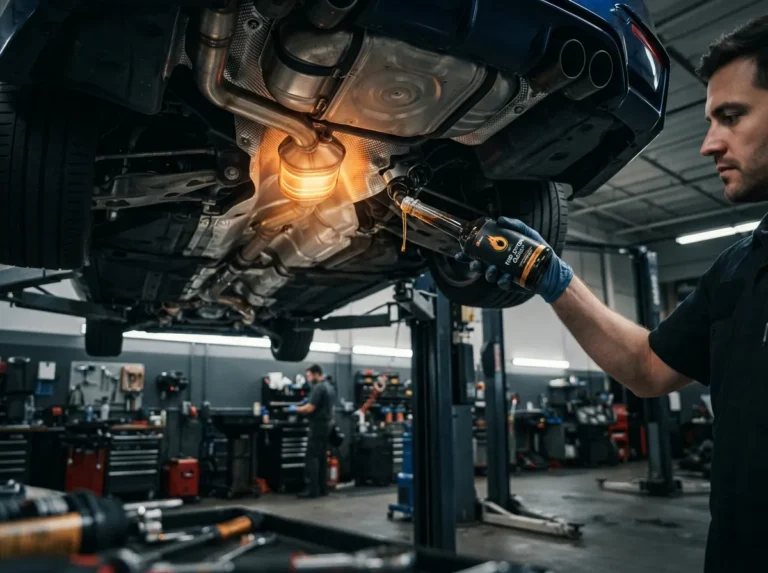
- Catalytic converter restriction. Backpressure forces higher throttle for the same power.
- Transmission issues. Torque converter slip or late shifts raise RPM.
- Wheel bearings. Rough bearings increase rolling loss even if noise is light.
Data note: On a scan tool, look at long-term fuel trim. A steady +8% to +15% often means the system adds fuel to keep up. That points to air leaks, MAF issues, or fuel delivery errors.

Environment, fuel, and load factors that lower MPG
Not every drop is a fault. Some poor fuel economy causes come from the world around you.
- Winter blend fuel. It has less energy. Expect a drop in cold months.
- Ethanol content. E10 holds less energy than pure gas. E85 can slash MPG by 20–30% in non-flex uses.
- Cold weather and short trips. Engines take longer to warm. Oil is thick. Tires are stiffer.
- A/C use. At low speed, A/C can cost several MPG. At highway speed, it matters less than open windows.
- Altitude. Thin air reduces power; turbo engines often handle this better.
- Roof racks, boxes, and bikes. Aerodynamic drag rises fast.
- Cargo weight. Clear the trunk. Remove winter sandbags when spring hits.
- Traffic and long idles. Every minute at zero speed is zero MPG.
I keep a small tire pump, a gauge, and a trunk scale. A five-minute check before a road trip often saves me one fuel stop.
Source: autotrainingcentre.com
How to diagnose poor fuel economy causes at home
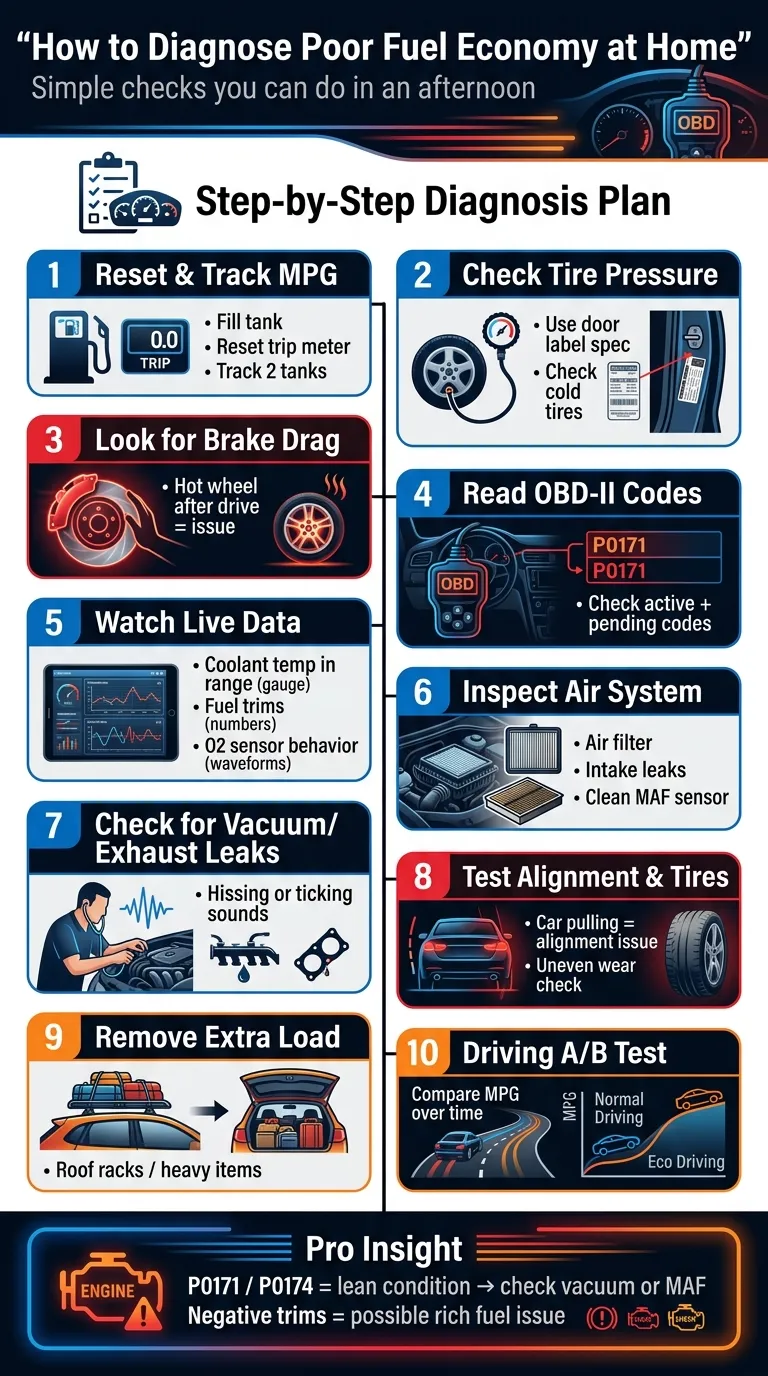
You can narrow the list in an afternoon. Here is a simple plan.
- Reset and track. Fill the tank, reset the trip meter, and log MPG for two tanks.
- Check tires. Set pressure to the door label when cold. Inspect for odd wear.
- Look for drag. After a 10-minute drive, feel near each wheel. One wheel much hotter hints at brake drag.
- Read codes. Use a basic OBD-II scanner. Fix any active or pending fault.
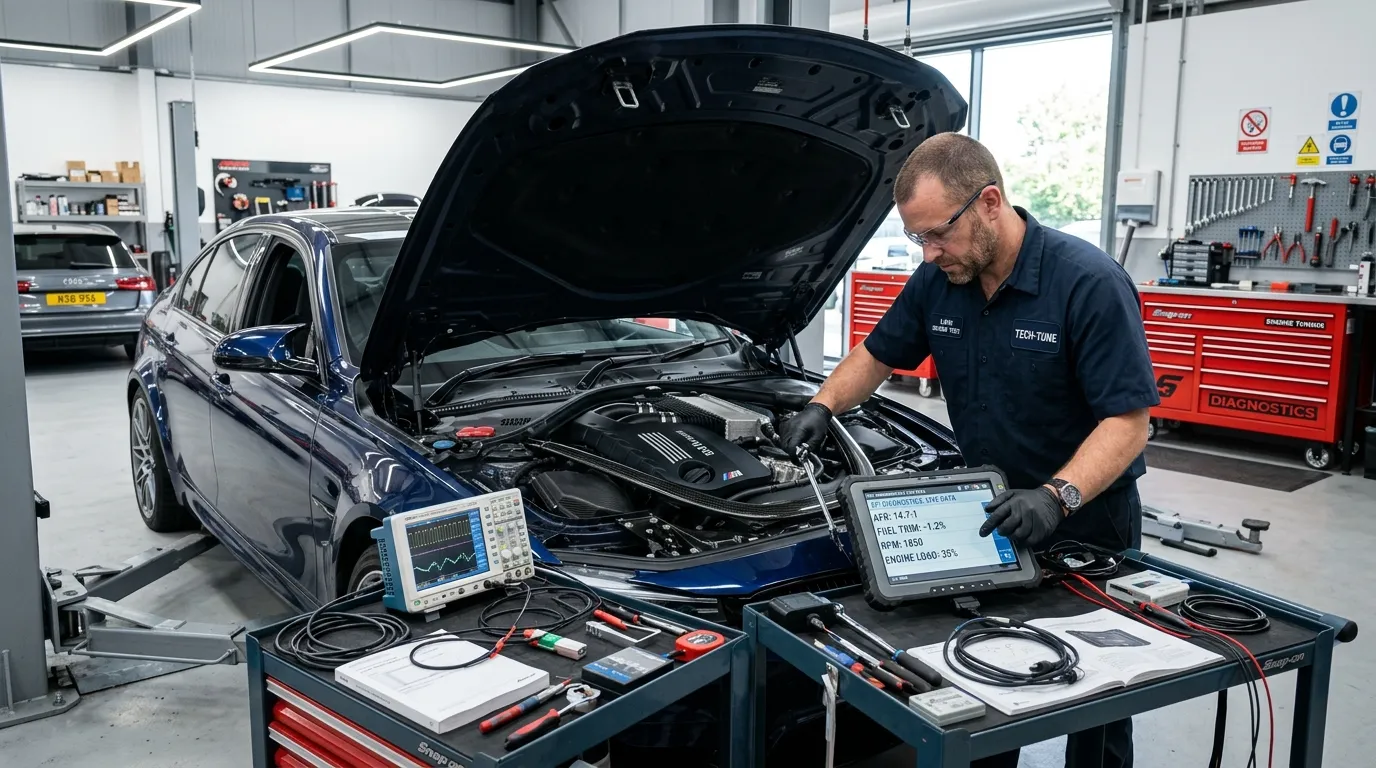
- Watch live data. Look at coolant temp (aim for the spec range), fuel trims, and O2 waves. Big positive trims mean the system is adding fuel.
- Inspect the air path. Check the air filter and intake ducts. Clean the MAF with the right spray.
- Listen for leaks. Hiss at idle can be vacuum. Ticking near the manifold can be exhaust.
- Test alignment. On a straight, smooth road, see if the car pulls. Uneven tire wear also points to a need for alignment.
- Weigh the load. Remove roof gear and heavy items. Do a fresh MPG check.
- Try a driving A/B test. One week gentle, one week normal. Compare numbers.
If you see P0171 or P0174 (system too lean), look for vacuum leaks or MAF issues. If trims are negative, the mix may be rich due to a sensor or fuel pressure fault.
Fixes that pay for themselves
Some repairs have a fast payback. These target top poor fuel economy causes.
- Tire pressure and alignment. Low cost. Often 2–4% MPG gain right away.
- Spark plugs on schedule. Big gains if the old ones were worn.
- Thermostat and coolant sensor. Helps closed-loop control and proper mix.
- MAF cleaning or replacement. Restores correct air readings.
- O2 sensor replacement when lazy. New sensors sharpen fuel control.
- Remove drag and weight. Roof racks off when not in use. Clean the trunk.
Simple math example:
- If you drive 12,000 miles a year at 28 MPG, you use 428 gallons.
- A 6% gain to 29.7 MPG saves about 26 gallons.
- At 3.80 dollars per gallon, that is about 99 dollars a year. Many basic fixes cost less than that.
I have seen one stuck rear caliper cost a customer 8 MPG. The new caliper paid for itself in weeks.
Preventing poor fuel economy causes
A small routine beats a big repair. Use this simple list.
- Check tire pressure monthly and before trips.
- Replace the air filter, spark plugs, and engine oil on schedule.
- Scan for codes at each oil change, even if the light is off.
- Keep the roof clear when you do not need it.
- Warm up for 30 seconds, then drive gently to heat up faster.
- Use the right fuel grade for your engine.
- Plan errands to bundle short trips into one longer run.
- Track MPG in a notes app. Sudden drops point to new issues.
Light EEAT tip: Government and industry tests support these steps. They show speed, temperature, and load have large effects on fuel use. Your results will match if you apply them.
Frequently Asked Questions of poor fuel economy causes
Why did my MPG drop suddenly after a tire change?
New tires can have higher rolling resistance, and incorrect pressure hurts more. Also check alignment after new tires to avoid drag.
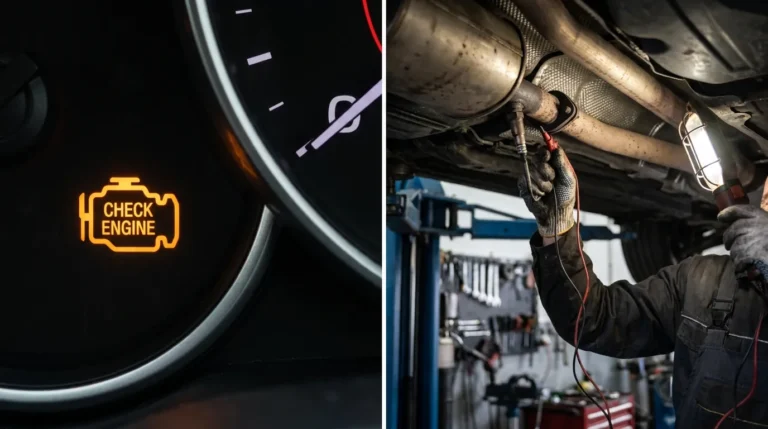
Can a check engine light cause poor MPG even if the car drives fine?
Yes. Many codes make the engine run rich to protect itself. A small sensor fault can cost more fuel before you feel a drive issue.
Does premium gas improve MPG in cars that do not require it?
Usually no. If your engine is tuned for regular, higher octane does not add energy and will not help MPG.
How much does cold weather reduce MPG?
It varies, but 10–20% is common for short trips. Cold oil, cold tires, winter fuel, and longer warm-up all play a part.
Can a dirty air filter still hurt MPG on modern cars?
Less than on old cars, but it can reduce power and response. Drivers often press the pedal more, which uses more fuel.
Do roof racks really make a big difference?
Yes, at highway speeds they can cut MPG by several points. Remove racks and boxes when not in use.
Will a clogged catalytic converter reduce fuel economy?
Yes. It raises backpressure, so you need more throttle for the same power. You may also notice loss of top-end power.
Conclusion
Poor fuel economy causes are often simple and stacked. Tires, sensors, habits, and small drags add up fast. With a gauge, a scan tool, and a short checklist, you can find most issues at home and save real money.
Start with the easy wins today. Set tire pressure, drive smoother, and scan for codes. Tackle one fix each week, track your MPG, and watch the gains build. If you found this helpful, subscribe for more hands-on car tips or leave a comment with your MPG story.