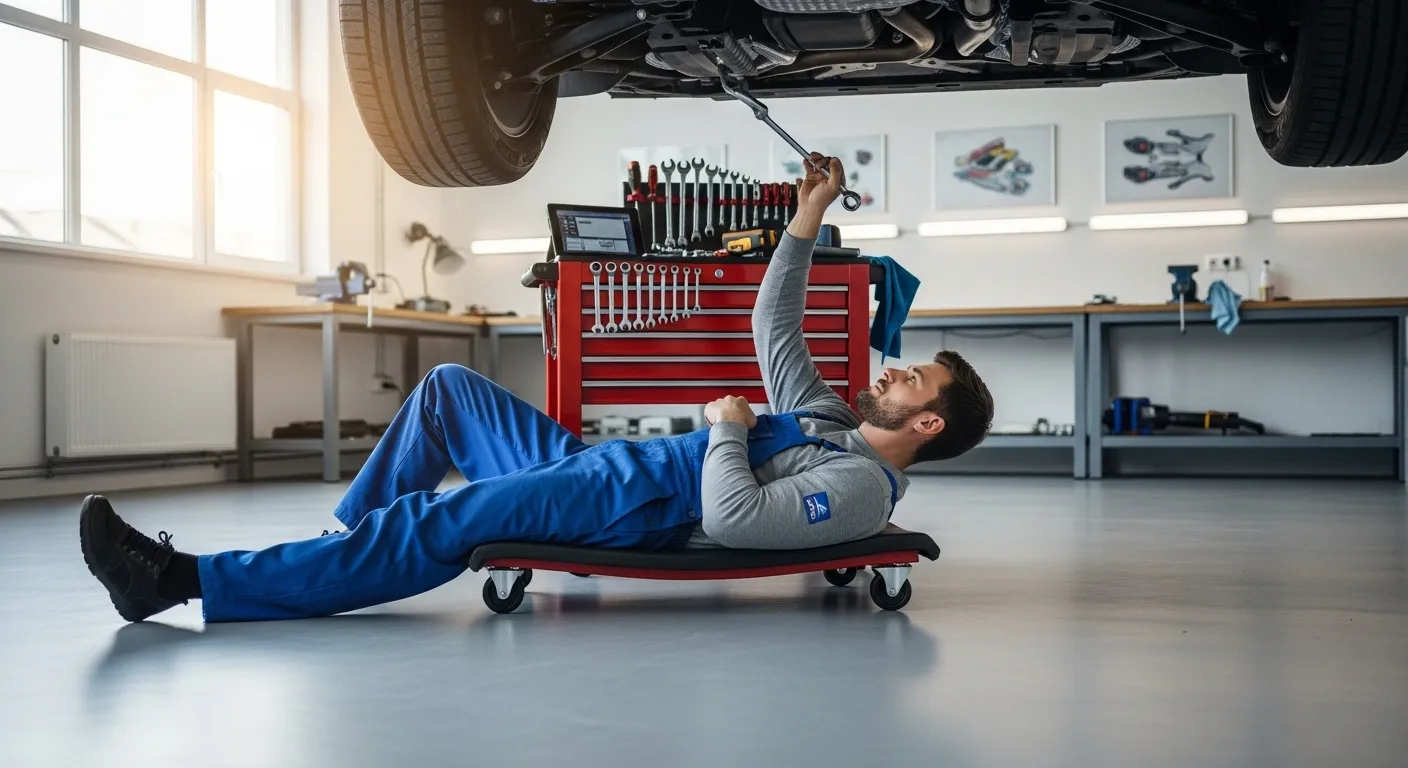
A car creeper is a low-profile rolling platform that helps you work under vehicles safely.
I have spent years fixing cars in home garages and professional shops. I know what a car creeper is, why it matters, and how the right creeper saves time, strain, and risk. This guide explains what a car creeper is, the types you will see, how to pick one, safety tips, care advice, and real-world lessons from my own toolbox. Read on to choose and use the best creeper for your needs.
What is a car creeper? Definition and main use
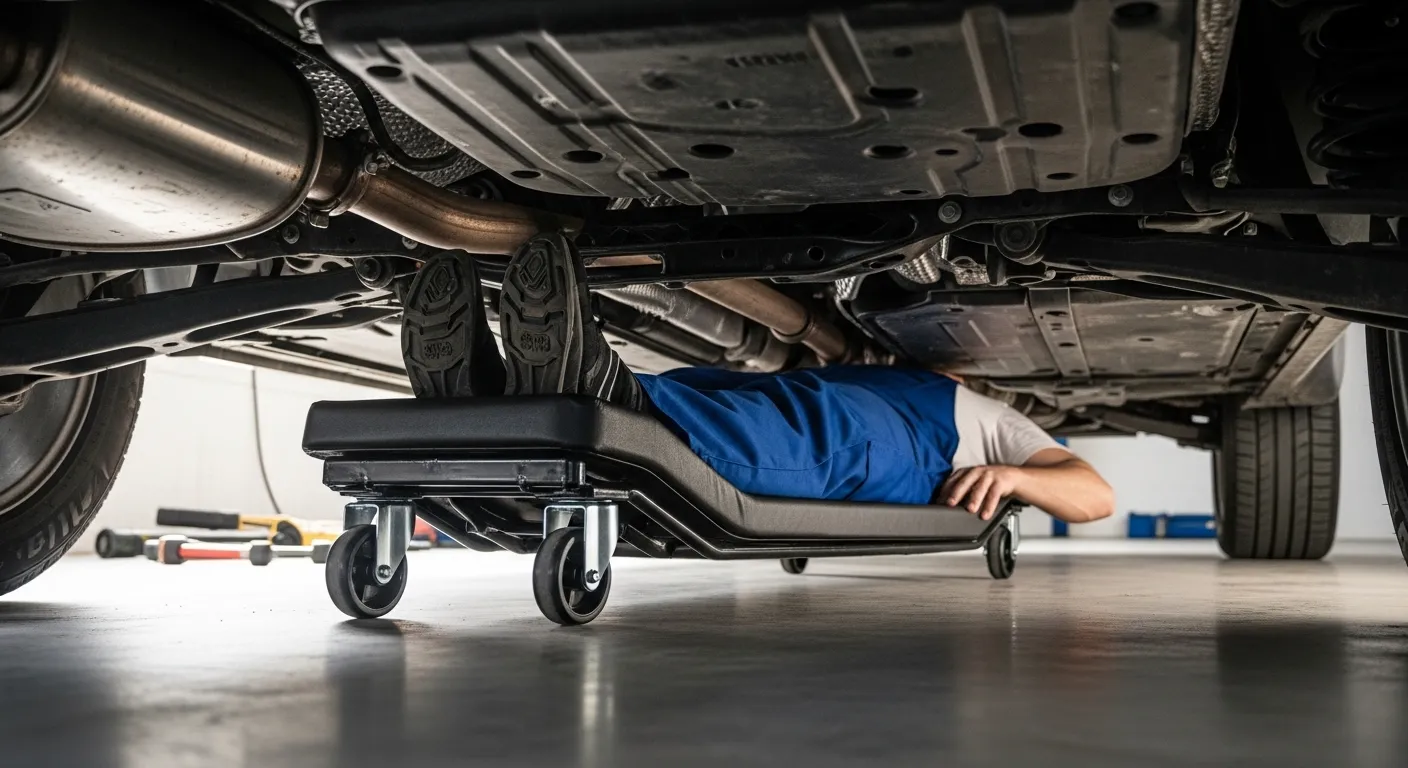
A car creeper is a tool that lets a person slide under a vehicle while lying flat on a padded, wheeled platform. It raises no more than a few inches off the ground so you can reach the vehicle underside without contorting your body.
People use a car creeper for oil changes, inspections, brake work, and any undercar work where mobility and comfort matter. The device keeps hands free and provides a steady surface to push or pull while you move along the vehicle. Proper use reduces back strain and speeds up common tasks.

Types of car creepers
There are several common styles of car creepers to match different work needs and spaces.
- Low-profile rolling creepers. These sit very close to the ground for low-clearance vehicles and slip easily under lowered cars.
- Padded creepers with headrests. These add comfort for long jobs and often include a flip headrest for neck support.
- Folding creepers. These fold for easy storage and can double as a seat or kneeler.
- Creeper seats and stools. These are upright seats on casters used for wheel work and detailing.
- Convertible creepers. These change from a flat creeper to a seat or stool, offering two tools in one.
- Magnetic or tool-tray creepers. These include trays or magnetic panels to hold sockets and small parts while you work.
Each type fits a different use. Pick one that matches your garage space, the vehicles you work on, and how long you plan to be under the car.
Key parts and common features
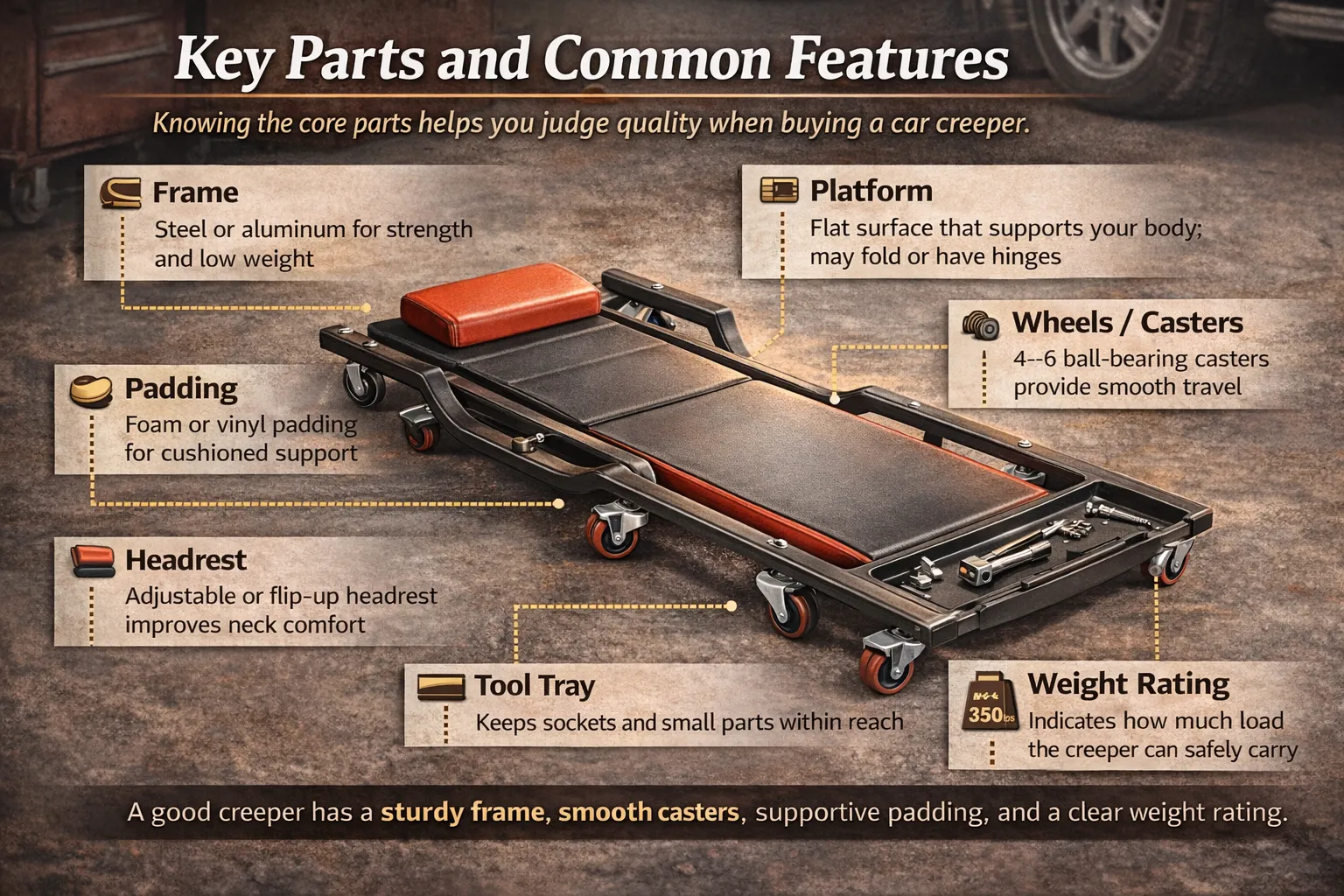
Knowing the core parts helps you judge quality when buying a car creeper.
- Frame. Usually steel or aluminum for strength and low weight.
- Platform. The flat surface that supports your body; may fold or have hinges.
- Wheels / casters. Four to six casters provide mobility; look for ball-bearing casters for smooth travel.
- Padding. Foam or vinyl padding cushions your back and shoulders.
- Headrest. Adjustable or flip-up headrest improves neck comfort.
- Tool tray. Keeps sockets and small parts within reach.
- Weight rating. Indicates how much load the creeper can safely carry.
A good creeper has a sturdy frame, smooth casters, supportive padding, and a clear weight rating.
Benefits of using a car creeper
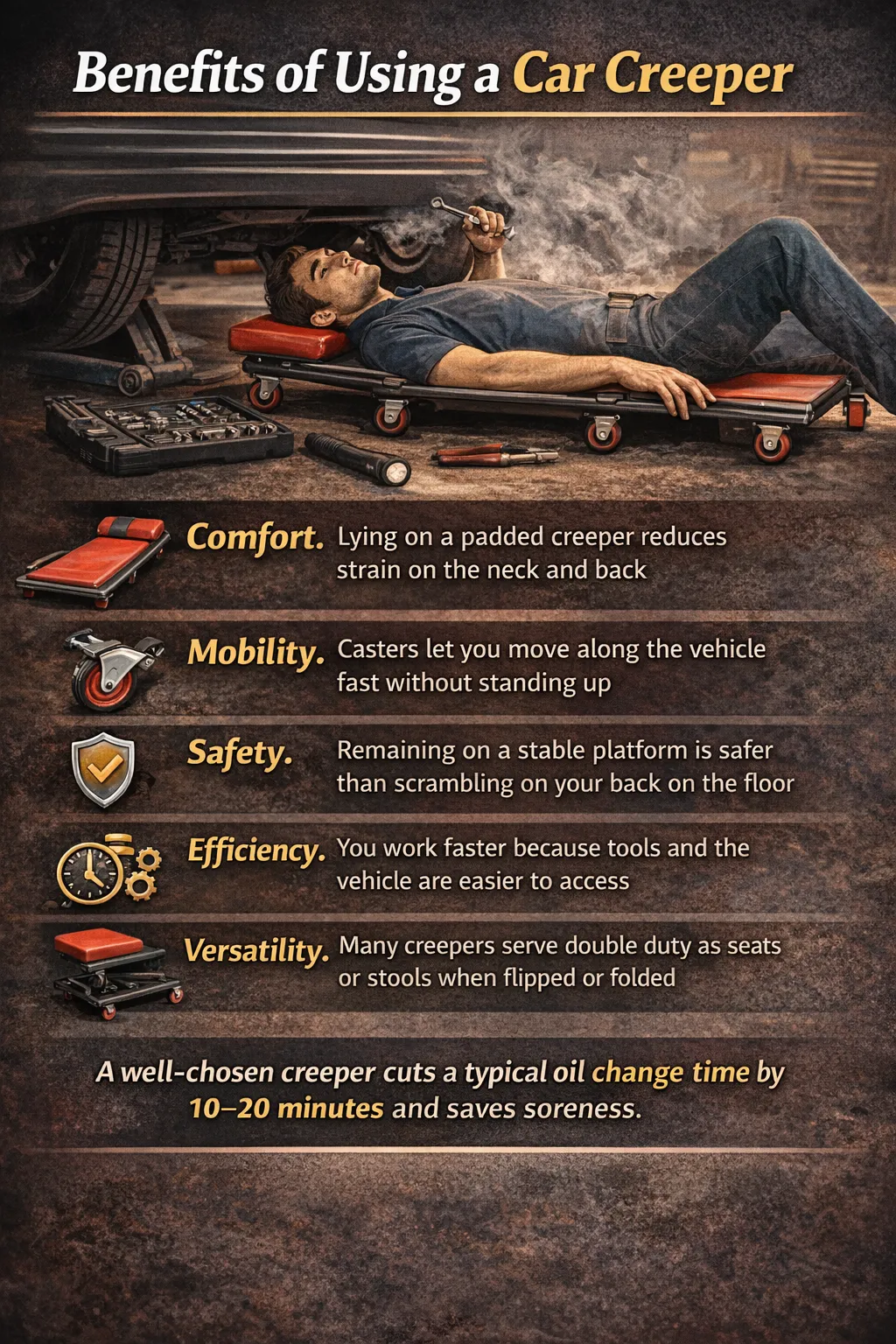
A car creeper offers clear benefits for both hobbyists and pros.
- Comfort. Lying on a padded creeper reduces strain on the neck and back.
- Mobility. Casters let you move along the vehicle fast without standing up.
- Safety. Remaining on a stable platform is safer than scrambling on your back on the floor.
- Efficiency. You work faster because tools and the vehicle are easier to access.
- Versatility. Many creepers serve double duty as seats or stools when flipped or folded.
From my experience, a well-chosen creeper cuts a typical oil change time by 10–20 minutes and saves soreness.
Limitations and when not to use a car creeper
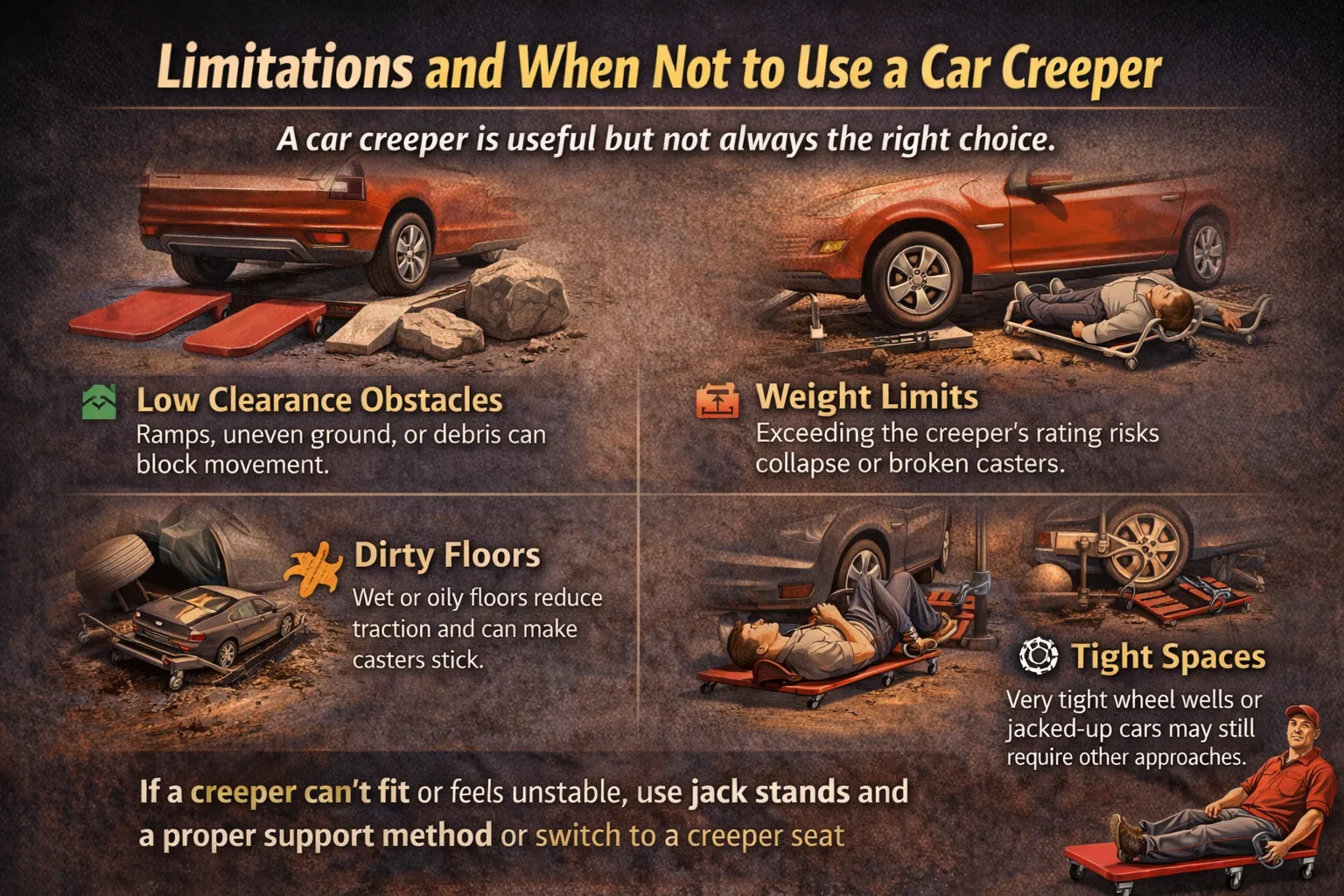
A car creeper is useful but not always the right choice.
- Low clearance obstacles. Some ramps, uneven ground, or large debris can block movement.
- Weight limits. Exceeding the creeper’s rating risks collapse or broken casters.
- Dirty floors. Wet or oily floors reduce traction and can make casters stick.
- Tight spaces. Very tight wheel wells or jacked-up cars may still require other approaches.
If a creeper can’t fit or feels unstable, use jack stands and a proper support method or switch to a creeper seat.
How to choose the right car creeper
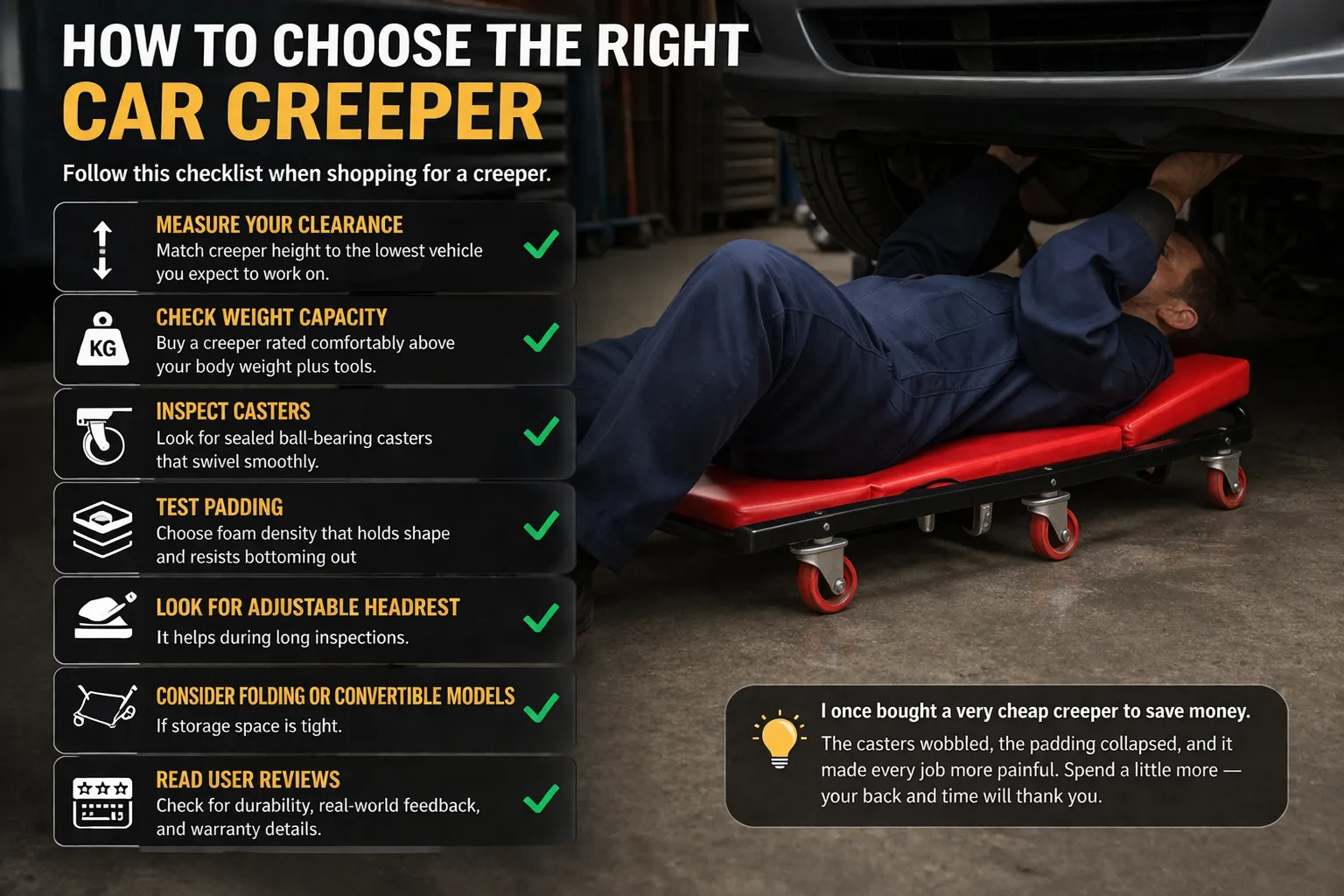
Follow this checklist when shopping for a creeper.
- Measure your clearance. Match creeper height to the lowest vehicle you expect to work on.
- Check weight capacity. Buy a creeper rated comfortably above your body weight plus tools.
- Inspect casters. Look for sealed ball-bearing casters that swivel smoothly.
- Test padding. Choose foam density that holds shape and resists bottoming out.
- Look for adjustable headrest. It helps during long inspections.
- Consider folding or convertible models if storage is tight.
- Read user reviews for durability and warranty details.
I once bought a very cheap creeper to save money. The wheels failed in six months and I lost time and safety. Spend a bit more for quality casters and frame.
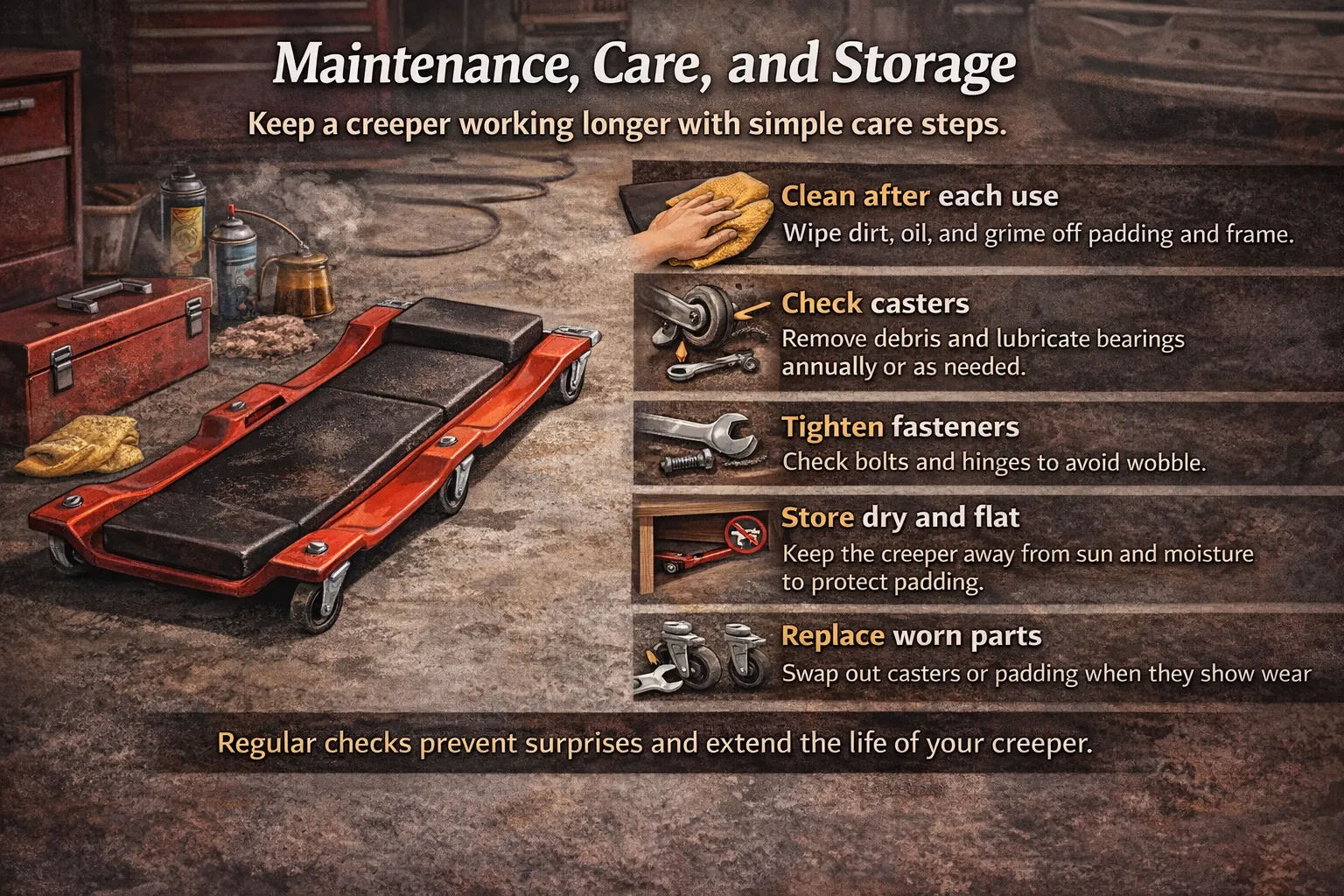
Maintenance, care, and storage
Keep a creeper working longer with simple care steps.
- Clean after each use. Wipe dirt, oil, and grime off padding and frame.
- Check casters. Remove debris and lubricate bearings annually or as needed.
- Tighten fasteners. Check bolts and hinges to avoid wobble.
- Store dry and flat. Keep the creeper away from sun and moisture to protect padding.
- Replace worn parts. Swap out casters or padding when they show wear.
Regular checks prevent surprises and extend the life of your creeper.
Safety tips and proper use
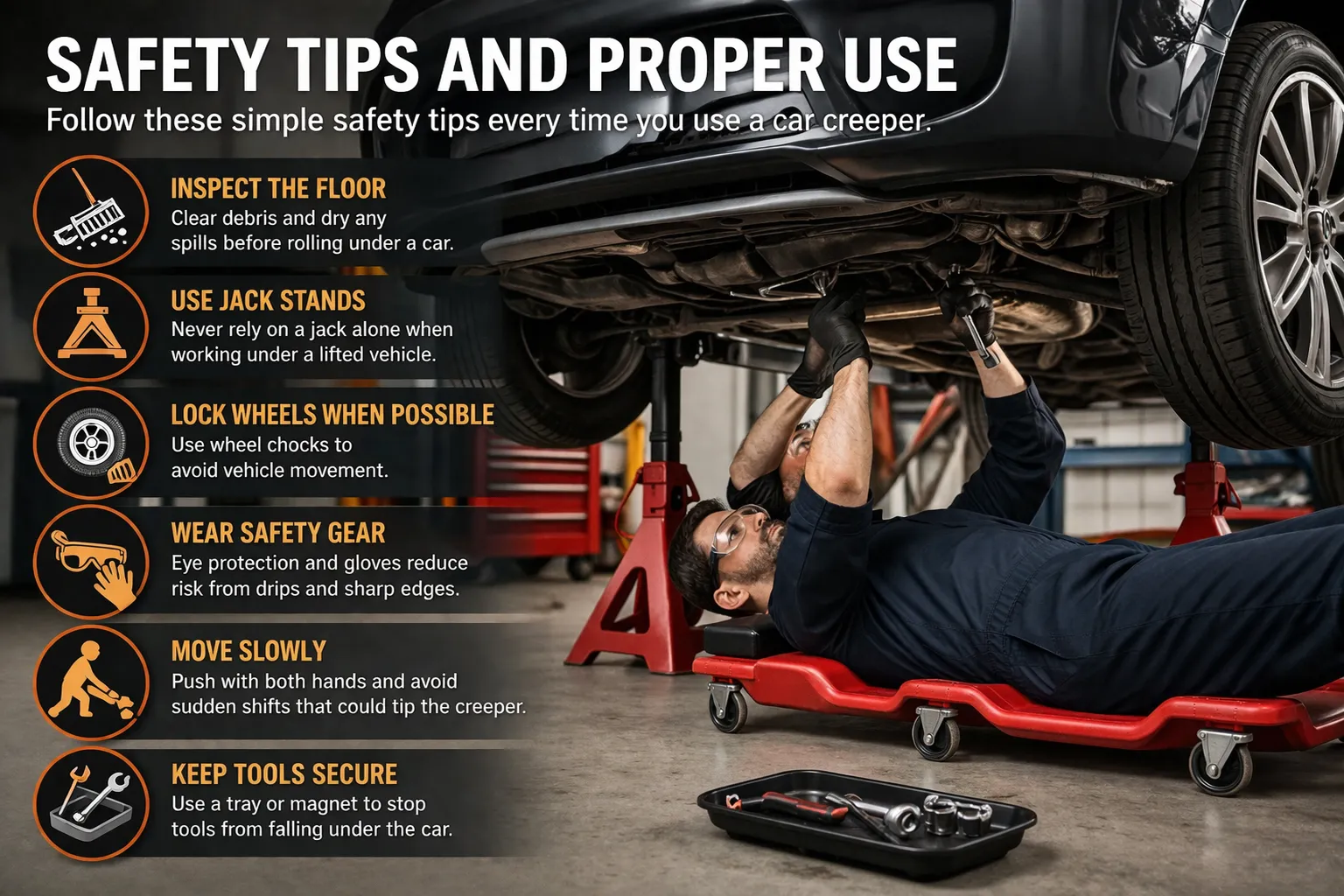
Follow these simple safety tips every time you use a car creeper.
- Inspect the floor. Clear debris and dry any spills before rolling under a car.
- Use jack stands. Never rely on a jack alone when working under a lifted vehicle.
- Lock wheels when possible. Some shops use wheel chocks to avoid movement.
- Wear safety gear. Eye protection and gloves reduce risk from drips and sharp edges.
- Move slowly. Push with both hands and avoid sudden shifts that could tip the creeper.
- Keep tools secure. Use a tray or magnet to stop tools from falling under the car.
These habits keep you safe and make your work predictable and steady.
Personal experience and lessons learned
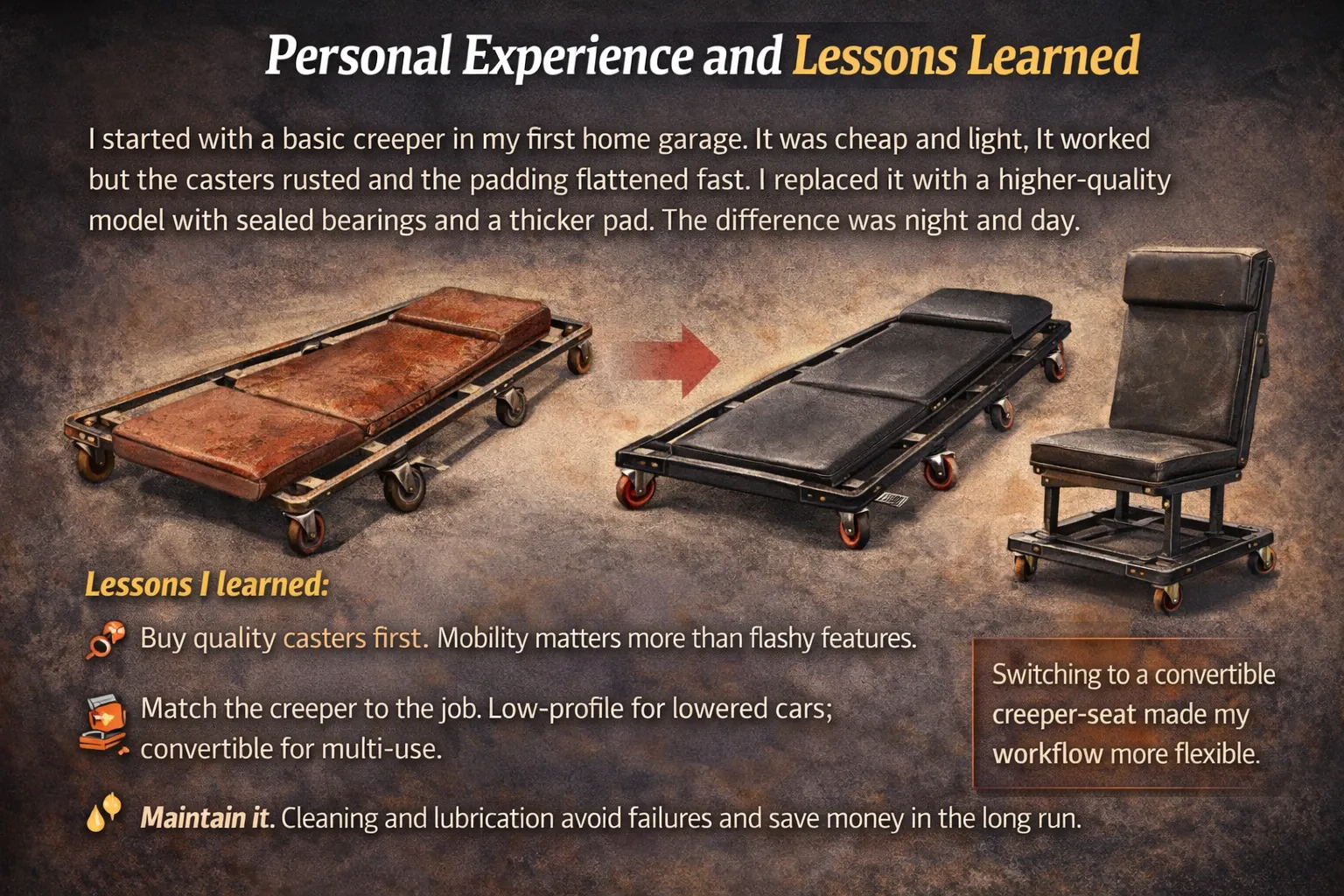
I started with a basic creeper in my first home garage. It was cheap and light. It worked, but the casters rusted and the padding flattened fast. I replaced it with a higher-quality model with sealed bearings and a thicker pad. The difference was night and day.
Lessons I learned:
- Buy quality casters first. Mobility matters more than flashy features.
- Match the creeper to the job. Low-profile for lowered cars; convertible for multi-use.
- Maintain it. Cleaning and lubrication avoid failures and save money in the long run.
When I switched to a convertible creeper-seat, my workflow became more flexible. I now recommend spending a bit more to avoid downtime and soreness.
Common quick questions (PAA-style)
What is a car creeper used for?
A car creeper is used to slide under vehicles for maintenance like oil changes, inspections, and repairs. It provides mobility and comfort while working flat on your back.
How high off the ground is a car creeper?
Most car creepers sit a few inches above the floor, typically 2 to 6 inches, depending on design and caster size.
Can a car creeper support heavy people?
Yes, but check the weight rating. Choose a creeper with a rating well above your body weight plus tools and parts.
Frequently Asked Questions of what is a car creeper
What is a car creeper and why do I need one?
A car creeper is a low, wheeled platform that lets you slide under a vehicle easily. You need one to reduce back strain and to move quickly while working under the car.
Can I use a folding creeper as a seat?
Yes, many folding creepers convert into a seat or kneeler for tasks like brake work or wheel cleaning. Verify the manufacturer’s instructions before switching modes.
How much should I spend on a good car creeper?
Expect to spend between $50 and $200 for a solid creeper. Higher cost often buys better casters, sturdier frames, and longer-lasting padding.
Are creepers safe on concrete floors?
Yes, creepers are designed for smooth floors like concrete, but keep the floor clean and free of oil to prevent slipping or caster damage.
How do I replace a broken caster on my creeper?
Most casters can be removed with basic tools. Buy replacement casters that match the stem size and weight rating of the originals.
Is a car creeper necessary for professional mechanics?
While not strictly necessary, a car creeper is a standard shop tool that speeds jobs and reduces fatigue, so most professionals use one.
Conclusion
A car creeper is a simple tool that delivers big benefits: comfort, speed, and safety when you work under a vehicle. Knowing what is a car creeper, the types available, and how to choose and maintain one helps you pick the right model and avoid common mistakes. Start by matching creeper height and weight rating to your vehicles, and invest in quality casters and padding.
Try a quality creeper on your next oil change and notice the difference in time and strain. If you found this guide useful, leave a comment with your creeper stories, subscribe for more garage tips, or explore local options to test models in person.