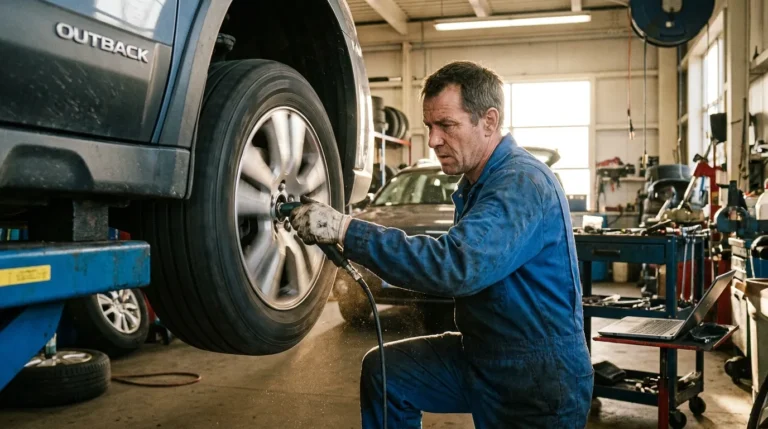

A shaking steering wheel usually means tire, wheel, brake, or suspension problems.
If you feel steering wheel shaking while driving, do not ignore it. I’ve diagnosed countless shimmies in the shop and on the road. In this guide, I’ll explain the real causes, how to test them, and the fixes that last. We will walk through clear steps, prices, and pro tips so you can stop steering wheel shaking while driving with confidence.
What steering wheel shaking while driving feels like and why it matters
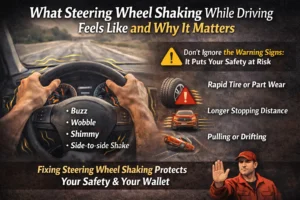
Steering wheel shaking while driving can feel like a buzz, a wobble, or a side-to-side shimmy. It may show up only at certain speeds or when you brake. It can be mild, or it can rattle your hands.
This shake is a warning sign. Tires, wheels, brakes, and suspension must run true. If they do not, parts wear fast. Your stopping distance can grow. Your car can also pull or drift. Fixing steering wheel shaking while driving protects your safety and your wallet.
Pinpointing the cause by speed and situation
Matching the shake to speed and action saves time. Use these patterns to narrow the cause of steering wheel shaking while driving.
Low speeds under 25 mph
- Flat-spotted tires after sitting can cause a thump that fades as tires warm.
- Severely bent wheels or separated tire belts can shake even at low speeds.
- Loose lug nuts can cause immediate wobble. This is unsafe. Stop and check now.
Highway speeds 50–75 mph
- Wheel imbalance is the top cause at these speeds.
- Out-of-round tires or wheel runout grow worse with speed.
- Alignment issues may not cause a pure shake, but they can add a steering twitch.
During braking, any speed
- Rotor thickness variation or pad deposits cause a brake pulsation.
- Sticking calipers or rusty hubs can create a shake that follows brake use.
- Warped is a common term, but the real issue is uneven rotor surfaces.
Steering wheel shaking while driving that changes with speed or braking is a key clue. Log when it happens to guide your next step.
Tire and wheel issues that cause a steering shake
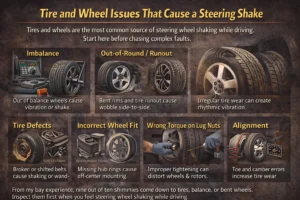
Tires and wheels are the most common source of steering wheel shaking while driving. Start here before chasing complex faults.
- Imbalance. Weights fall off or were never right. A road force balance can fix stubborn cases that a basic spin balance misses.
- Out-of-round or runout. Bent rims, defective tires, or wheel damage from potholes cause side-to-side shimmy.
- Cupping and feathering. Irregular tire wear from bad shocks or poor alignment creates a rhythmic vibration.
- Tire defects. Broken or shifted belts make the wheel wander or shake at all speeds.
- Incorrect wheel fit. Missing hub-centric rings on aftermarket wheels can cause off-center mounting.
- Wrong torque on lug nuts. Over-torquing or uneven torque can distort brake rotors and wheels.
- Alignment. Toe and camber errors do not always cause a shake alone, but they boost tire wear that creates vibration.
From my bay experience, nine out of ten shimmies come down to tires, balance, or bent wheels. Inspect them first when you feel steering wheel shaking while driving.
Suspension and steering faults behind the shake
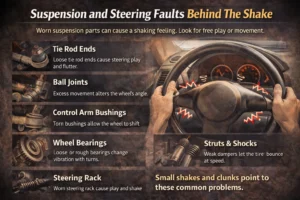
If tires and wheels check out, look at the parts that guide the wheels. Worn parts let the wheel flutter and feed that shake to your hands.
- Tie rod ends. Play here sends a quick wiggle through the steering wheel.
- Ball joints. Excess movement lets the wheel change its angle over bumps.
- Control arm bushings. Torn bushings let the wheel shift under load and at speed.
- Wheel bearings. Rough or loose bearings cause a growl and a shake that changes with turns.
- Struts and shocks. Weak dampers let the tire bounce, which feels like a hop at speed.
- Steering rack. Internal wear can add free play and amplify small vibrations.
A shop can check these with the car lifted. But you can spot clues at home too. If you hear clunks with the shake, suspect worn joints. If the shake changes when you turn, suspect a bearing or tire.
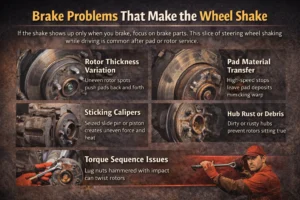
Brake problems that make the wheel shake
If the shake shows up only when you brake, focus on brake parts. This slice of steering wheel shaking while driving is common after pad or rotor service.
- Rotor thickness variation. Uneven rotor spots push the pads back and forth. You feel a pulse.
- Pad material transfer. Hard stops from high speed can leave deposits. This mimics warp.
- Sticking calipers. A seized slide pin or piston creates uneven clamp force and heat.
- Hub rust or debris. If rotors sit on dirty hubs, they will not run true even when new.
- Bad torque sequence. Hammering lugs with an impact can twist rotors. Use a torque wrench.
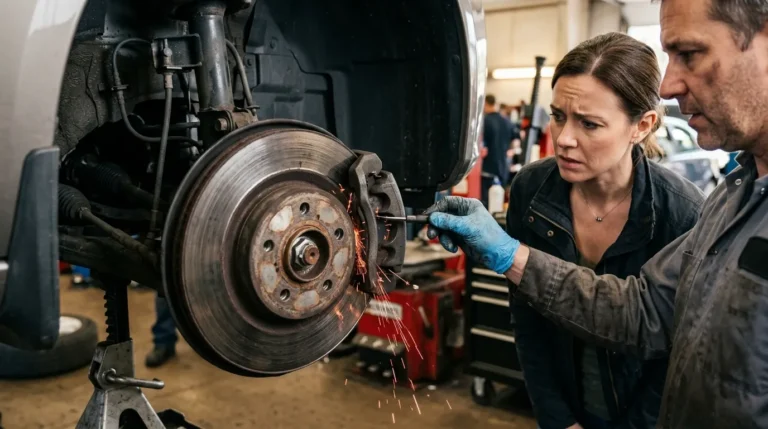
Good shops clean the hub faces, measure rotor runout, and torque lugs in steps. That is how you stop brake-linked steering wheel shaking while driving for good.
A simple step-by-step diagnosis you can do
You can solve most steering wheel shaking while driving with a few safe checks. Here is a home workflow.
- Check tire pressure cold. Set all tires to the door sticker PSI.
- Inspect tires. Look for bubbles, cuts, cords, cupping, or odd wear.
- Spin test. Jack up safely, spin each wheel, and watch for side-to-side wobble.
- Lug nuts. Verify all lugs are present and torqued to spec.
- Wheel swap. Move front wheels to the rear. If the shake moves, the issue is with those wheels or tires.
- Brake test. Light brake from 60 to 30 mph. If the wheel pulses, suspect rotors.
- Road feel log. Note speed, road type, braking, and turning. Patterns point to causes.
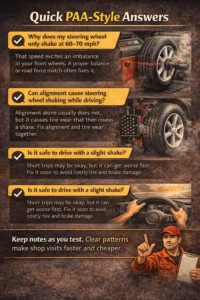
Quick PAA-style answers
- Why does my steering wheel only shake at 60–70 mph? That speed excites an imbalance in your front wheels. A proper balance or road force match often fixes it.
- Can alignment cause steering wheel shaking while driving? Alignment alone usually does not, but it causes tire wear that then creates a shake. Fix alignment and tire wear together.
- Is it safe to drive with a slight shake? Short trips may be okay, but it can get worse fast. Fix it soon to avoid costly tire and brake damage.
Keep notes as you test. Clear patterns make shop visits faster and cheaper.
Fixes, expected costs, and timelines
You can stop steering wheel shaking while driving with repairs that match the cause. Here are common fixes and ballpark US costs.
- Wheel balance. 15–30 minutes. 40–120 dollars for two front wheels. Road force balance may cost more.
- Tire replacement. Same day. 100–250 dollars per tire installed, depending on size and brand.
- Bent wheel repair or replacement. One day. 100–200 dollars to straighten, 150–600 dollars for a new wheel.
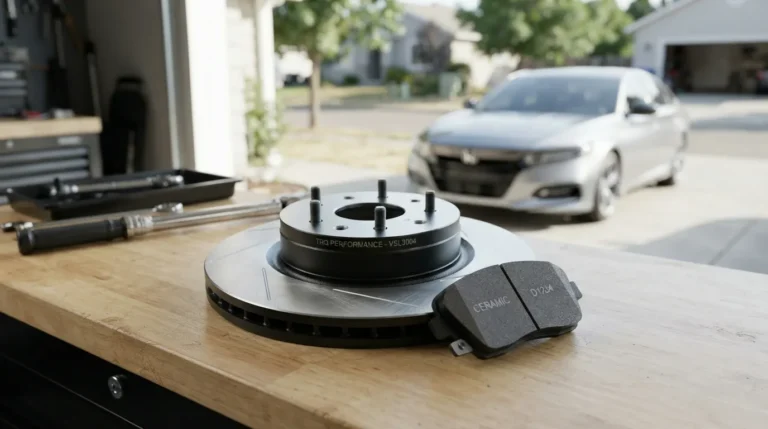
- Brake rotors and pads. 1–2 hours per axle. 200–600 dollars per axle for parts and labor.
- Hub cleaning and retorque. 30–60 minutes. 60–150 dollars.
- Suspension parts like tie rods or ball joints. 1–3 hours. 200–800 dollars per side depending on parts. Add an alignment.
- Wheel bearings. 1–3 hours. 250–650 dollars per wheel.
Ask for before-and-after measurements like road force numbers, rotor runout, and alignment printouts. Data proves the fix and builds trust.

Source: autofairfordofhaverhill.com
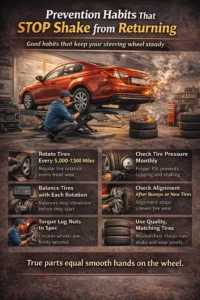
Prevention habits that stop shake from returning
Most steering wheel shaking while driving can be prevented. Small habits make a big difference.
- Rotate tires every 5,000–7,500 miles. This evens wear.
- Balance tires with each rotation if you feel any new buzz.
- Check PSI monthly and before road trips. Correct pressure stops cupping.
- Get an alignment after curb hits, potholes, or new tires.
- Clean hub faces and torque lug nuts to spec after any wheel-off work.
- Avoid cheap, mismatched tires. Consistent brands and sizes track better.
- Inspect suspension yearly or at each brake job.
These steps keep the rolling parts true. True parts equal smooth hands on the wheel.
When to stop driving and call a pro
Some signs are not worth testing on the road. Park it and get help if you see these with steering wheel shaking while driving.
- A sudden, violent wobble at any speed.
- Loose or missing lug nuts, or a wheel that looks off-center.
- Smoke, burning smell, or a hot wheel after a short drive.
- A shake with loud clunks or a grinding growl in turns.
These point to failures that can lead to wheel loss or brake fade. It is not worth the risk.
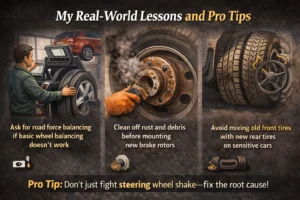
My real-world lessons and pro tips
In my first year at a busy tire shop, a sedan came in with a highway shimmy that three balances did not fix. A road force test showed a tire with a high spot that basic spinning missed. We matched it to the wheel’s low point, and the steering went smooth. The lesson: when basic balance fails, ask for road force.
Another case was a pickup with a brake shake after new rotors. The hub faces were rusty and pitted. After cleaning the hubs and re-torqueing the lugs by hand, the shake was gone. The lesson: clean mating surfaces matter.
A simple mistake to avoid is mixing old front tires with brand-new rears on a sensitive chassis. That mismatch can upset feel. When you fight steering wheel shaking while driving, fix the root cause, not the symptom.
Frequently Asked Questions of steering wheel shaking while driving
Why does the steering wheel shake right after new tires?
Fresh tires may need a re-balance after the first 100–200 miles as they settle. Ask the shop for a complimentary recheck.
Can bad motor mounts cause a steering shake?
Engine mounts can add vibration at idle, but they rarely cause a speed-based shake. If the shake grows with speed, think wheels and tires first.
Do warped rotors cause shaking at highway speeds without braking?
Usually no. Rotor issues show up during braking. A cruise-only shake points to wheel imbalance or a bent rim.
Could a wheel bearing cause steering wheel shaking while driving?
Yes, but it often comes with a hum that changes when you turn. Check for play and noise before replacing.
How do I know if it is alignment or balance?
A pull or uneven tire wear points to alignment. A steady-speed buzz points to balance.
Does tire pressure affect steering wheel shaking while driving?
Yes. Low or uneven PSI can cause cupping and heat, which leads to vibration. Set PSI to the door sticker.
Will an alignment fix shaking right away?
Only if worn angles caused the tire wear that made the shake. You may still need new tires or a balance.
Conclusion
Steering wheel shaking while driving is not a mystery when you match the symptom to the cause. Start with tires and wheels, verify brakes, and then check suspension. Use simple tests, log patterns, and ask for measurements to confirm the fix.
Take action today. Do a quick pressure check, inspect tread, and schedule a balance if you feel a buzz. If this guide helped, share it, subscribe for more hands-on car tips, or leave your question in the comments.